Shopping Cart
(0)
Free shipping included — no minimum on any US order

Quick Search:

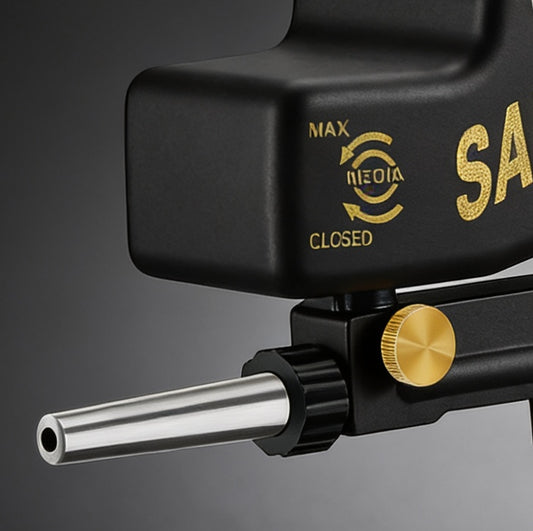
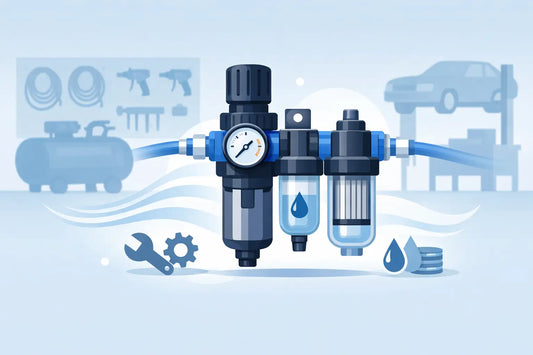
Selecting the best air compressor filter is critical for ensuring the performance, longevity, and quality of compressed air systems. Whether you are working with a portable air tank or a large industrial compressor, choosing the right filter affects air purity, protects equipment, and prevents costly downtime. In this guide, we’ll explain how to pick the proper air compressor filter tailored to diverse needs and applications, including dealing with contaminants like moisture and oil using an air compressor water separator and other filter types. Follow along to make an informed, application-driven choice.
Air compressors draw in air that often contains dust, dirt, moisture, oil, and other contaminants. Without proper filtration, these impurities can damage tools, degrade product quality, and increase maintenance costs. The air compressor filter traps particulate matter and prevents contaminants from entering or circulating within the compressed air system.
Proper filtration ensures these contaminants are removed or significantly reduced to protect equipment and maintain air quality.
These filters remove solid particles such as dust and dirt from the air. Usually installed at the intake or inline after compression, dry particulate filters protect the internal compressor parts and downstream equipment by preventing abrasive particles from circulating. They are essential when air quality requirements are moderate, such as in general pneumatic tool use or inflating tires using a portable air tank.
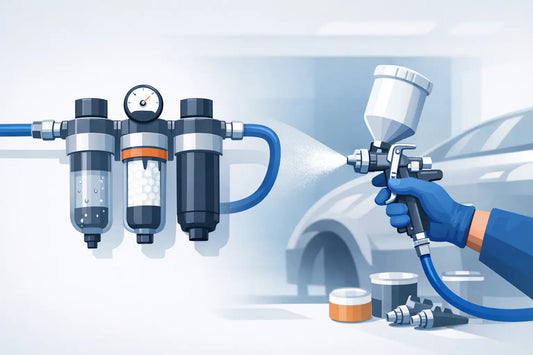
Coalescing filters specialize in removing oil aerosols and water droplets from compressed air. The filter media causes tiny droplets of oil and water to merge into larger drops that then drain away from the airflow. An air compressor water separator is often incorporated with or after these filters to efficiently remove condensed moisture, helping to prevent corrosion and freezing in cold environments.
For industrial uses, such as manufacturing or painting, air purity standards are stringent. Selecting multi-stage filtration systems combining dry particulate filters, coalescing filters, and activated carbon filters often becomes necessary to meet these demands.
In contrast, portable or light-duty setups, such as using a portable air tank for inflating tires, may only require a basic particulate filter, since air quality standards are less critical, and the system is less exposed to contaminants.
Always verify filter compatibility with your compressor type for optimal results.
Filtration efficiency relates to the particle size a filter can trap, measured in microns. For basic protection, filters capturing particles down to 5–10 microns may suffice, but sensitive applications, like food processing or spray painting, require filtration down to 0.01 microns or finer to remove aerosols and ultrafine particulates.
Filters create resistance to airflow, known as pressure drop. Higher filtration efficiency often means higher pressure drop, which can increase energy consumption. Balancing filtration needs with acceptable pressure drop levels ensures your compressor functions efficiently without undue power costs.
Common filter media include polyester, cellulose, glass fiber, and synthetic blends. Durable media extend filter life and improve contaminant retention, reducing replacement frequency. Consider your operating environment—humid or dusty conditions may shorten filter life and require more frequent changes.
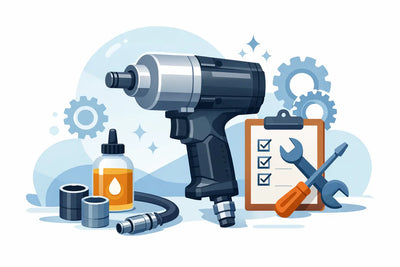
Check intake and inline filters routinely for dirt buildup. Clogged filters reduce airflow, cause pressure drop, and increase compressor workload. For portable applications, inspect filters before and after transport to ensure no debris has accumulated.
Proper maintenance extends equipment life and sustains air quality.
An air compressor water separator removes bulk liquid water and moisture created during compression before it reaches filters or tools. This reduces corrosion risk and filter saturation, improving compressed air system reliability.
When filling or using a portable air tank, integrating an inline air compressor filter protects the tank and connected tools from contaminants introduced during compression or environmental exposure. Lightweight, easy-to-install filters designed for portable tanks offer practical air cleaning for on-the-go applications.
Choosing the right air compressor filter depends on your compressor type, operating environment, air purity requirements, and application. Dry particulate filters suit basic needs, while coalescing filters combined with air compressor water separators provide advanced contamination control for sensitive or industrial uses. Regular maintenance and correct filter selection improve compressed air quality, conserve energy, and protect your investment.
Explore our range of air compressor filters and accessories to find the ideal solution for your application needs. Ensuring you have the right air compressor filter in place will lead to cleaner air, enhanced system longevity, and fewer interruptions in your workflow.
Factory direct from Le Lematec — professional quality, competitive prices.




 AIR REGULATORS

 ACCESSORIES