Description
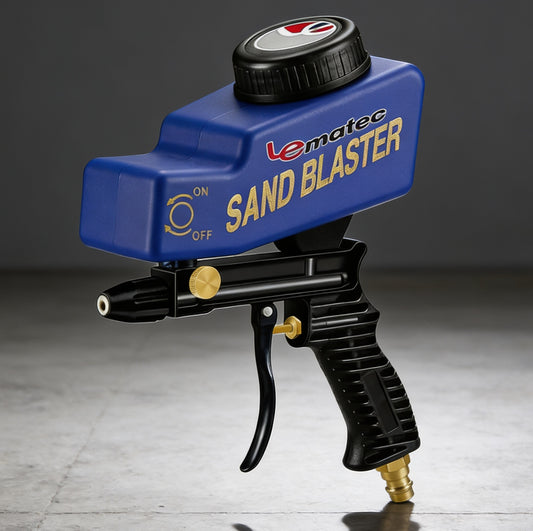
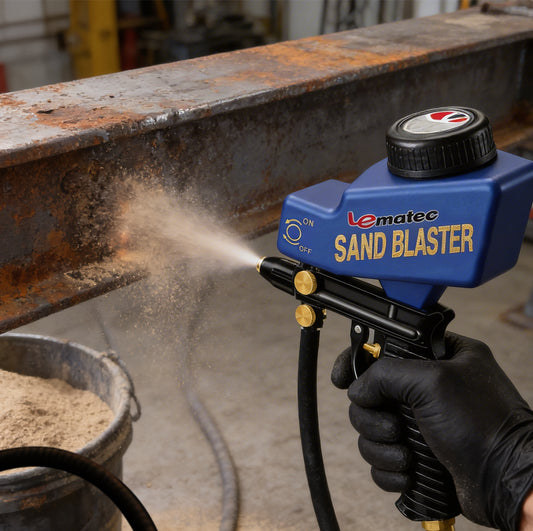
Need to strip rust, paint, or scale off a part too big for a blast cabinet — or you don't own one? A handheld sandblaster does that job at a fraction of the cost of a pressure-pot setup. The LE LEMATEC AS118 is gravity-fed (the hopper sits on top), connects to any compressor pushing 4–6 CFM at 90 PSI, and accepts the full range of standard blast media: aluminum oxide for aggressive rust removal, glass beads for finishing, walnut shell for soft surfaces, or soda media when you need to clean without etching the underlying metal. Restoration hobbyists, auto-body shops doing spot work, glass etchers, and small fabrication shops use the same gun for very different jobs — the media does the work, the gun just delivers it.
Is this the right blaster for what you're trying to do?
-
Restoring a car or motorcycle part: Yes. Pull the part off, set up outdoors or in a tarped-off corner, and you'll strip a fender to bare metal in under an hour with aluminum oxide.
-
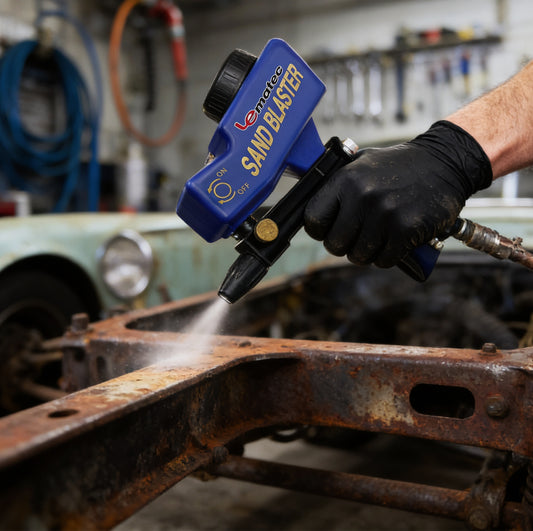
Cleaning rust off a structural frame still mounted to a vehicle: Yes — that's exactly where a handheld beats a cabinet. You bring the tool to the work.
-
Stripping paint off a whole car body: It works, but a pressure-pot setup will finish in a quarter of the time. For one car, the AS118 is fine. For three cars a month, step up to a pot.
-
Etching glass, memorial stones, or detail work: Yes — drop pressure to 40–60 PSI and use a stencil. The gravity feed gives finer control than siphon-feed designs.
-
Cleaning chrome, fiberglass, or food-contact surfaces: The handheld is fine but you want soda media, not abrasive. See the inline link above.
-
High-volume cabinet work: No — buy a cabinet blaster. The handheld is for portability.
Whether you're restoring classic car parts, stripping old furniture, or need a reliable tool for sandblast rust removal, the AS118 gives you the power and control you need to get the job done right the first time.
Your Projects, Perfected
This handheld sandblaster connects to any standard 1.5HP+ air compressor (90-150 PSI), so you can get started without needing expensive, specialized equipment. The premium, heavy-duty ceramic tip dramatically outlasts standard steel nozzles, saving you time and money on replacements over the life of the tool.
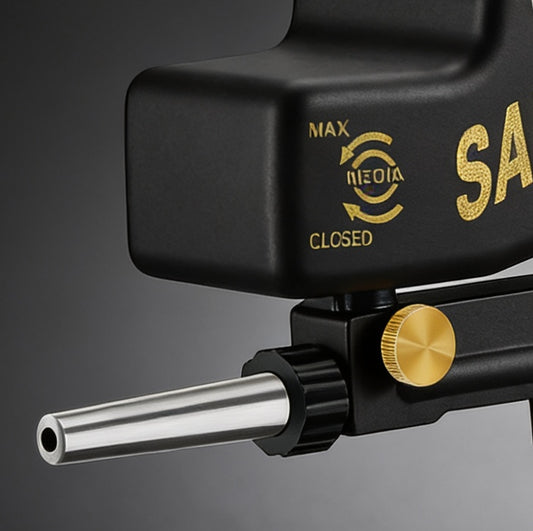
As a true gravity-feed unit, it offers simple, reliable operation with no complex siphon tubes to clog. The AS118 is fully compatible with a wide range of blasting media from 40 to 200 grit—including sand, glass beads, and aluminum oxide—giving you the versatility for any surface. The built-in media flow regulator lets you dial in the perfect pressure, preventing media waste and protecting delicate surfaces from damage.
Reliability You Can Trust
Unlike cheaply made alternatives, the AS118 is engineered in the USA for superior suction and dependable, clog-free performance. It's the workshop-proven tool you can count on to tackle your toughest jobs, from small spot blaster detail work to larger rust removal projects.
Technical Specifications
Operating Pressure: 90-150 PSI
Media Compatibility: 40-200 Grit
Minimum Compressor: 1.5 HP
Air Inlet: 1/4" NPT
What's In The Box
This all-in-one portable kit includes everything you need to start blasting right away:
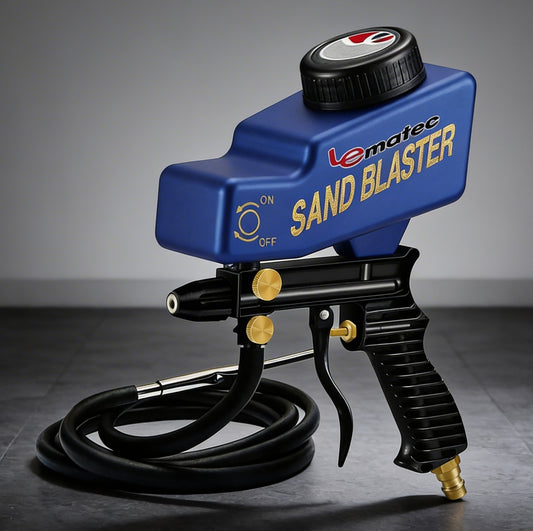
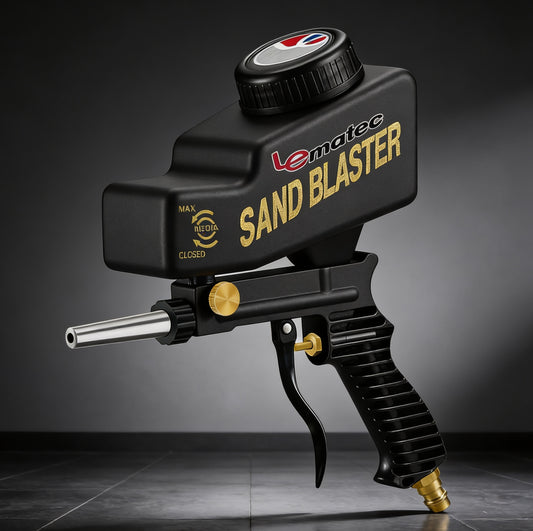
Blaster Gun: The main AS118 unit with ergonomic grip.
Ceramic Tip: Premium, long-lasting nozzle for consistent performance.
Stainless Steel Mesh Filter: Prevents clogs and ensures smooth media flow.
Safety Glasses: Essential eye protection for safe operation.
Quick Connector: Standard 1/4" NPT for easy hookup.
Frequently Asked Questions
Q: What size air compressor do I need for this sandblaster gun? A: This portable unit works with any standard home or workshop air compressor that is 1.5 HP or larger and can produce a consistent pressure of 90-150 PSI. You do not need a large, industrial-grade compressor for most projects.
Q: What kind of abrasive media can I use? A: You can use a wide variety of abrasive media, depending on your project. The nozzle supports media from 40 to 200 grit, including sand, glass beads, aluminum oxide, steel grit, and walnut shells. For best results, always use dry, high-quality media to prevent clogging.
Q: Is this handheld sandblaster suitable for beginners? A: Yes, absolutely. The simple design of this gravity feed tool and its adjustable media flow make it very easy to use, even for those with no prior sandblasting experience. We always recommend starting at a lower pressure and testing on a scrap piece of material to get a feel for it first.
Q: What safety equipment do I need to wear? A: Safety is extremely important when sandblasting. We include a pair of safety glasses in the kit, but we strongly recommend you also use a respirator or dust mask, gloves, and full-coverage clothing to protect yourself from airborne media and debris.
Q: Can I use this for delicate surfaces like glass etching? A: Yes. The built-in media flow regulator gives you the precision to work on more delicate surfaces. By reducing the pressure and using a finer grit media (like 100-200 grit glass beads), you can clean or etch surfaces without causing damage. Always test on an inconspicuous area first.
Q: What makes this handheld sandblaster different from cheaper models? A: Our unit is engineered in the USA for superior suction and reliability. It features a premium ceramic tip that lasts significantly longer than the cheap steel tips found on many competing models. This means you get consistent, clog-free performance and a lower total cost of ownership.
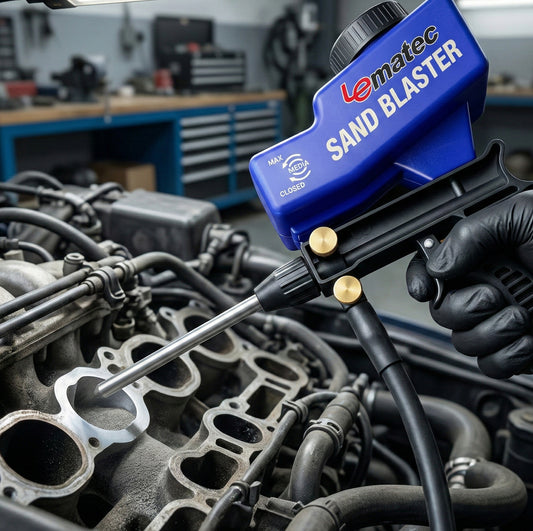
Q: Is this a good tool for sandblast rust removal on car parts? A: Absolutely. This tool is ideal for automotive restoration and sandblast rust removal on calipers, engine parts, brackets, and other small-to-medium components. As a gravity-fed spot blaster, it's perfect for detail work.
Fill the gravity hopper with your chosen media (aluminum oxide for rust removal, glass beads for finishing, or baking soda for gentle cleaning). Connect to your air compressor using the 1/4" NPT fitting — ensure your compressor delivers at least 7 CFM at 90 PSI. Adjust the flow control valve to regulate media feed rate: start low and increase until you achieve the desired aggressiveness. Always wear a respirator, safety glasses, and gloves. For glass etching, use a stencil and reduce pressure to 40-60 PSI.

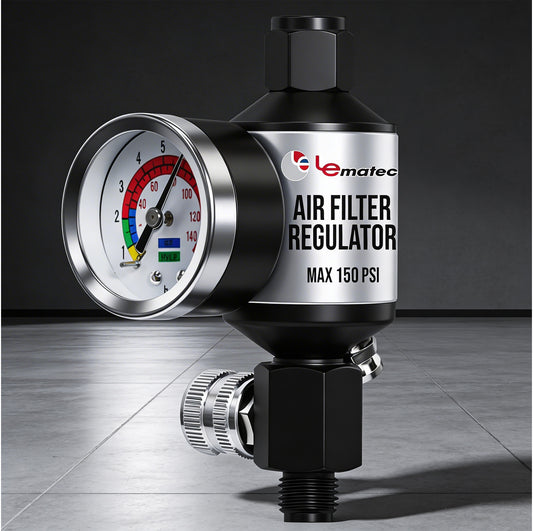



 AIR REGULATORS

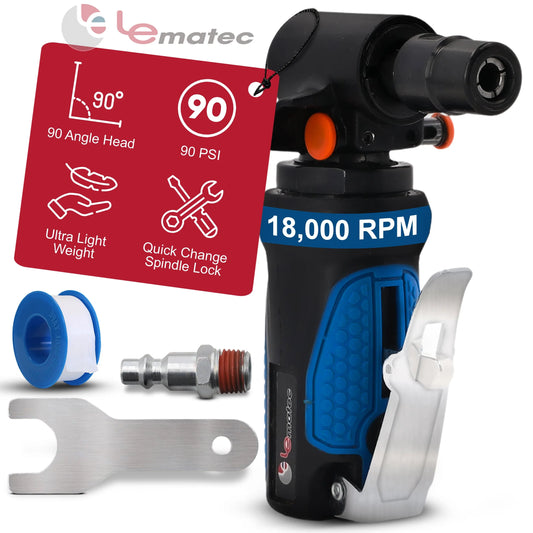
 ACCESSORIES