Shopping Cart
(0)
Free shipping included — no minimum on any US order

Quick Search:

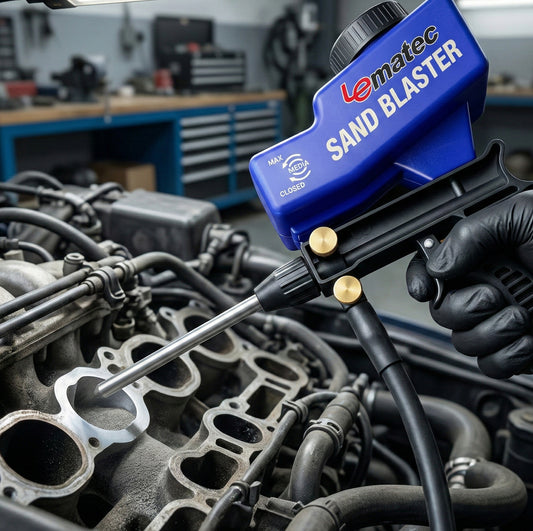
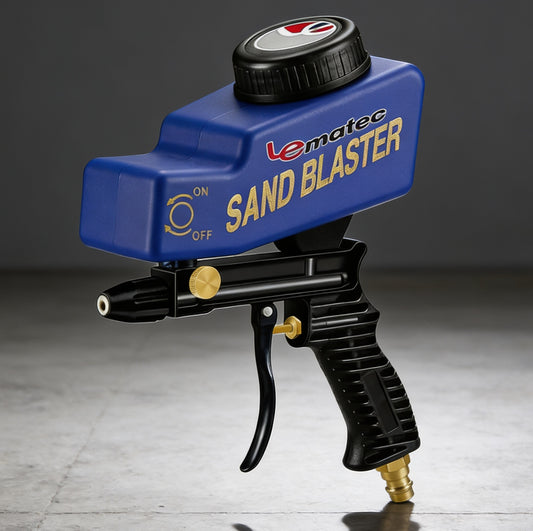

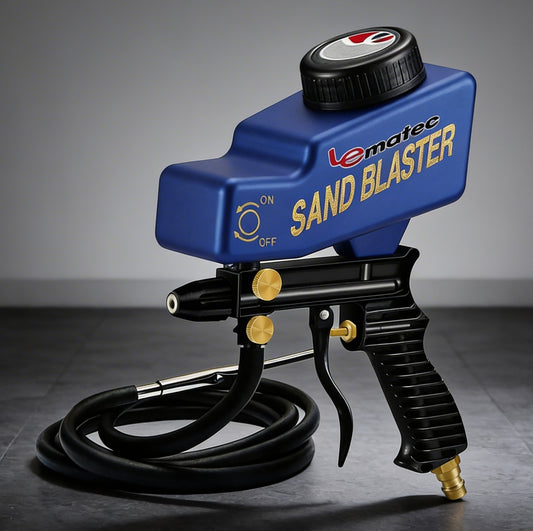

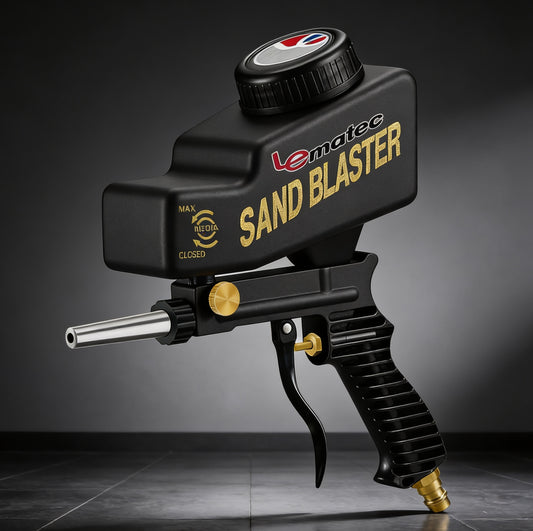
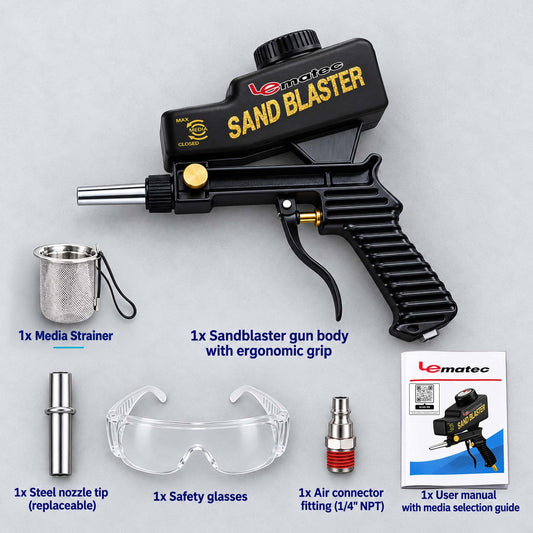

Aluminum can go from clean to ruined fast under a blast gun. That is why choosing the best sandblasting media for aluminum is less about picking the hardest abrasive and more about controlling surface profile, heat, and material removal.
If you are stripping oxidation off wheels, cleaning cast parts, or prepping sheet aluminum for coating, the wrong media can leave you with warped panels, deep anchor patterns, or a finish that needs extra rework. The right one gets the job done faster and keeps the part usable.
Aluminum is softer than steel, and many parts are thinner than they look. That matters because aggressive media can cut too fast, especially when combined with high air pressure or a tight nozzle distance.
You are usually balancing three goals at once. You want to remove paint, corrosion, or contamination. You want a finish that fits the next step, whether that is polishing, powder coating, or paint. And you want to avoid embedding abrasive or stretching the surface.
That is why there is no single best choice for every aluminum job. The best sandblasting media for aluminum depends on the part, the finish you need, and how much material you can afford to remove.
For most aluminum work, crushed glass, glass bead, aluminum oxide, and plastic media are the main options worth considering. Each has a place. The mistake is treating them as interchangeable.
Glass bead is one of the safest starting points for aluminum when the goal is cleaning rather than heavy stripping. It peens the surface instead of cutting aggressively, so it leaves a smoother, more uniform finish than sharper abrasives.
This makes it a strong choice for intake manifolds, transmission housings, motorcycle parts, and aluminum castings that you want to clean up without giving them a rough profile. It also works well when appearance matters and you want a consistent satin look.
The trade-off is speed. Glass bead is not the fastest option for thick coatings or heavy oxidation. If the part has multiple layers of paint or stubborn corrosion, you may spend more time in the cabinet than you want.
Crushed glass cuts more aggressively than glass bead, which makes it useful for removing oxidation, paint, and surface contamination from aluminum. It is a practical middle ground when you need more bite but do not want to jump straight to a very hard abrasive.
For many users, this is the best value option because it works across a wide range of prep jobs. On heavier castings and tougher coatings, it can move the work along without being as severe as some industrial abrasives.
The downside is surface texture. Crushed glass leaves a more etched finish, so it may be too rough for parts you want to keep cosmetic. On thin aluminum, you need to stay disciplined with pressure and standoff distance.
If you need a stronger mechanical bond for primer, paint, or powder coating, aluminum oxide can make sense. It is hard, angular, and cuts quickly. On aluminum parts that need a defined surface profile before coating, it is effective.
This is not usually the first pick for delicate or visible parts. Aluminum oxide can be too aggressive for soft alloys, thin panels, and cosmetic work if used carelessly. It is better suited to durable components where adhesion is more important than a smooth finish.
Used correctly, it saves time. Used too aggressively, it creates extra sanding, filling, or even part replacement.
Plastic media is a smart option when you need to strip coatings without changing the base metal much. It is commonly used on softer substrates because it removes paint while reducing the risk of gouging or over-profiling.
This can be a strong choice for aircraft-style aluminum panels, thin body panels, and parts where dimensional stability matters. It is slower than harder abrasives, but that is the point. You are buying control.
If the part has heavy corrosion or thick scale, plastic media may not be enough on its own. But for coating removal on sensitive aluminum, it is one of the safest options available.
Some abrasives can work on aluminum in narrow cases, but they are risky enough that most buyers should think twice.
Silicon carbide is extremely aggressive. It cuts fast, but on aluminum that speed can turn into damage just as fast. Steel shot and steel grit are also poor fits for most aluminum work because they can contaminate the surface and create finishing problems later, especially before coating.
Sand is another one to avoid. Beyond health concerns, it is inconsistent and unnecessarily harsh for a material this soft. If you are after predictable results, there are better media choices that remove less guesswork.
Media type matters, but grit size changes the result almost as much. A fine grit generally gives you more control and a smoother finish. A coarse grit removes material faster but leaves a heavier profile.
On aluminum, finer is often safer. Fine glass bead is a common choice for cleaning and cosmetic restoration. Fine to medium crushed glass can work for paint removal without going too aggressive. Aluminum oxide is usually better in a finer grade unless you are working on a thick, durable part that truly needs more profile.
If you are not sure, start finer than you think you need. It is easier to step up aggression than to fix a surface that was blasted too hard.
A lot of blasting problems get blamed on the abrasive when the real issue is pressure. Even the best sandblasting media for aluminum can leave damage if you are running more pressure than the part can handle.
For softer aluminum parts, lower pressure gives you more control and reduces heat buildup. Thin sheet, trim pieces, and cosmetic panels should always be approached conservatively. Heavier castings can take more pressure, but there is still no advantage in overdriving the job.
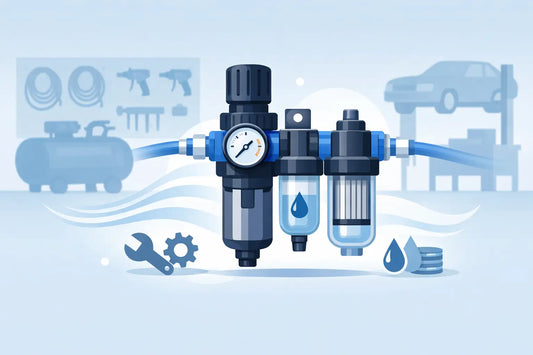
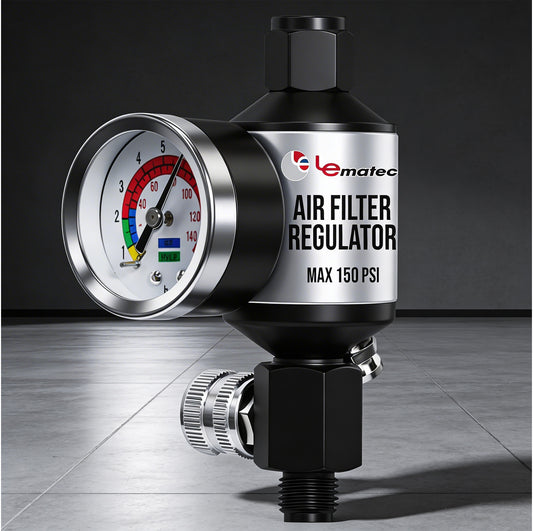
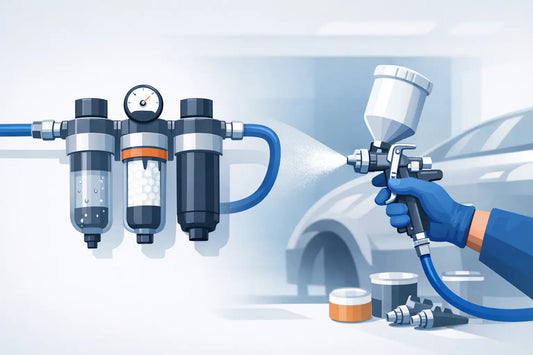
A steady air supply also matters. Pressure drop, moisture in the line, and inconsistent flow all make blasting less predictable. That is one reason buyers who do this work regularly pay attention not just to media, but also to regulators, filters, and the overall air setup.
A lot of rework starts with a simple mistake - blasting for removal instead of blasting for the end result. Before you load the hopper, decide what the part needs to look like when blasting is done.
If you want a clean factory-style appearance, glass bead is usually the better fit. If you need to strip paint and move on to coating prep, crushed glass or aluminum oxide may make more sense depending on how much profile you need. If you are trying to protect a sensitive part while removing coatings, plastic media is often the safer route.
That is the practical way to choose. Not by what cuts fastest, but by what gets you to the next step with the least extra work.
For general-purpose aluminum cleaning and restoration, glass bead is often the best all-around answer. It is forgiving, leaves a clean satin finish, and works well on a wide range of cast and machined parts.
For aluminum that needs coating removal or stronger prep, crushed glass is often the better balance of cutting power and control. If the job is strictly about coating adhesion on a tougher part, aluminum oxide can be the right tool. And if the part is thin or sensitive, plastic media earns its place.
That means the real answer to the best sandblasting media for aluminum is this: glass bead for appearance, crushed glass for stripping, aluminum oxide for profile, and plastic media for protection.
If you are buying for a shop or garage, it makes sense to stock at least two media types instead of forcing one abrasive to do every job. That gives you better finishes, fewer ruined parts, and less time fixing what blasting should have solved in the first place.
If you are setting up a blast cabinet or restocking media, Pro Air Tools keeps the selection focused on job-ready abrasives and equipment that help you get parts through the shop faster. Pick the media based on the finish, keep pressure under control, and let the part tell you how aggressive you can afford to be.


 AIR REGULATORS

 ACCESSORIES