Shopping Cart
(0)
Free shipping included — no minimum on any US order

Quick Search:


You can tell when someone bought air tools “online cheap” the moment the job starts: the impact stalls on lug nuts, the die grinder screams, and the moisture in the line turns paint prep into a mess. If you’re searching for the best air compressor tools online, you’re not really shopping for shiny tools—you’re buying uptime. The right pneumatic setup hits harder, runs cooler, and stays predictable when your schedule doesn’t have room for surprises.
This is a practical way to think about what to buy, what to skip, and what to match to your compressor so you don’t end up with a cart full of tools you can’t actually feed with air.
The best air tools aren’t automatically the most expensive, and they’re not the ones with the most aggressive marketing. “Best” usually means three things: the tool does the work you need at the air you can supply, it holds up under the duty cycle you’ll actually run, and you can get parts/support without turning your project into a waiting game.
There are trade-offs. Pneumatic tools are great for high-output work because the motor is simple and heat stays manageable, but air tools are only as good as the air system behind them. If your compressor is small (or you’re running a long hose), you’ll get better real-world results from tools that are efficient at lower CFM—even if the catalog specs look similar.
Most “bad tool” complaints are really air delivery problems. Before you pick tools, sanity-check four basics: CFM, pressure, hose setup, and air quality.
CFM is the limiter. Many tools will say they run at 90 PSI, but what matters is how much air they consume while cutting, grinding, or blasting. If your compressor can’t keep up, pressure drops, output falls off, and you end up leaning harder on the tool (which wears it out faster).
Hose diameter and fittings matter more than people think. A long 1/4-inch hose with restrictive couplers can starve an impact wrench even if the compressor is fine. If you need distance, consider stepping up hose size and keeping fittings high-flow so the tool gets the air you paid for.
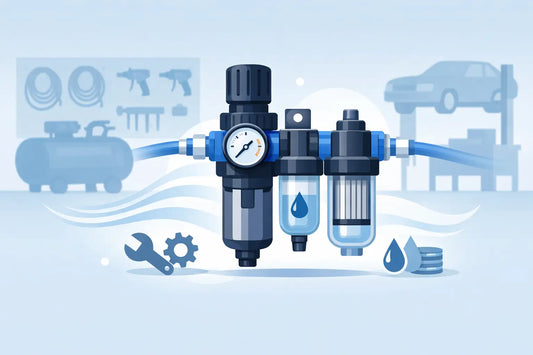
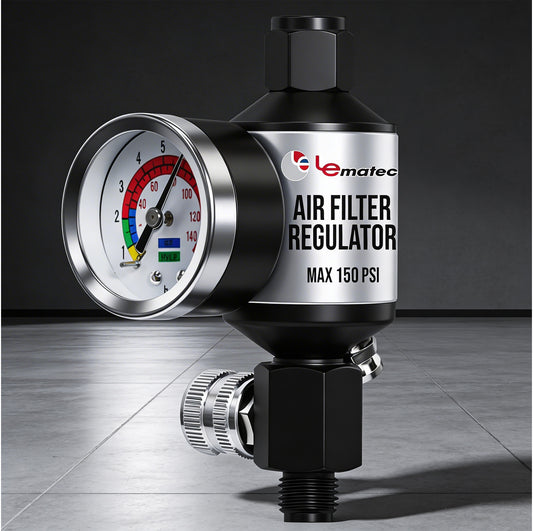
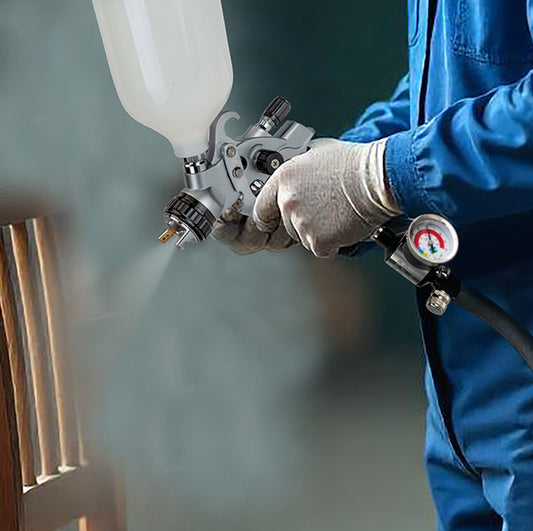
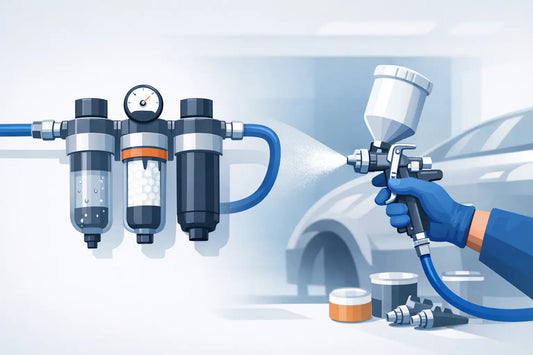
Air quality is the unglamorous part that protects everything. Moisture and grit in the line shorten tool life and ruin surface prep. If you’re serious about sanders, grinders, or blasting, a filter/regulator and moisture control is not “extra”—it’s how you keep performance consistent.
If you’re building a capable shop kit, you don’t need twenty tools. You need the right few that cover fasteners, cutting, surface prep, and inflation—then add specialty tools when the work demands it.
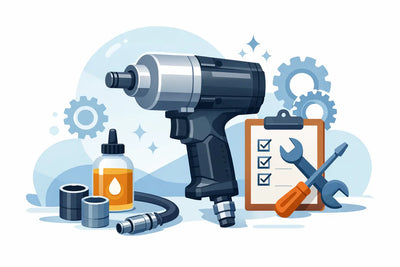
For automotive and equipment work, an impact wrench is usually the first air tool that feels like a real upgrade. The right one breaks fasteners without drama and saves your wrists compared to fighting a breaker bar all day.
What to look for is matching drive size to the job. A 1/2-inch impact is the workhorse for lug nuts and chassis hardware. If you do lighter work or tight spaces, a compact 3/8-inch can be easier to control. Pay attention to air consumption and real torque delivery—some high-advertised numbers don’t hold up when your compressor is mid-sized.
It depends on your workflow: if you’re removing wheels daily, you’ll notice the difference between a tool that hits consistently and one that fades when the compressor cycles.
An air ratchet isn’t a replacement for an impact; it’s a time-saver for running bolts in and out once they’re broken free. The “best” use case is repetitive fasteners in engine bays, interiors, and light assembly where you want control and speed.
The trade-off is torque. If you expect it to crack seized bolts, you’ll be disappointed. Pair it with a good impact or breaker for removal, then let the ratchet handle the spin-off and run-down.
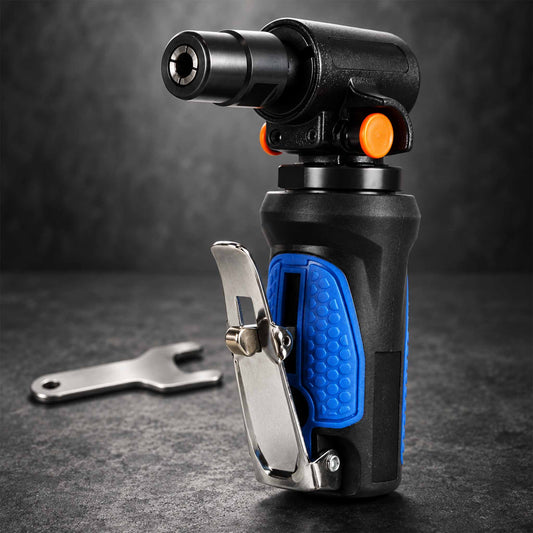
If you cut, deburr, port, or prep metal, a die grinder becomes the tool you grab without thinking. It’s also the one that punishes poor air quality—dirty air and moisture shorten vane life fast.
Choose based on control and duty cycle. A compact die grinder is great for detail work and tight areas. A larger air grinder can be better for sustained material removal. Either way, plan on a steady air supply; grinders are often more CFM-hungry than people expect.
An air drill is a solid fit for shop drilling, especially when you’re doing repeated holes where electric drills get hot or bulky. They’re simple and durable, but the real deciding factor is speed range and control.
If you do sheet metal, a drill with predictable trigger control makes clean holes easier. If you’re drilling thicker material, make sure your compressor can keep pressure stable; a drill that bogs mid-hole is how bits snap.
For HVAC, body work, or fabrication, air cutters/scissors are a practical upgrade over fighting with hand snips. They cut cleanly and reduce fatigue.
The key is to match the cutter style to the material thickness and the type of cut. If you’re doing tight curves, you’ll care more about maneuverability than raw speed. If you’re doing long straight cuts all day, you’ll care about smoothness and air efficiency.
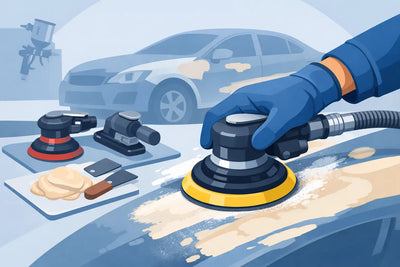
When you need surfaces flat, clean, and ready for paint or weld, sanders matter. A belt sander removes material fast and is great for shaping and smoothing. An angle grinder handles heavier stock removal and blending.
The “best” sander is the one you can run continuously without starving it for air. Surface prep is a duty-cycle game. If your compressor is on the smaller side, you may do better with shorter bursts and a tool that doesn’t demand peak CFM for basic work.
Air hammers are problem solvers: stuck pins, exhaust work, panel separation, and rusted hardware. They’re not finesse tools, but they save hours in the right situation.
They’re also loud and air-hungry, so plan for hearing protection and a setup that won’t drop pressure instantly. If you only use one occasionally, you don’t need the biggest model—reliability and a good set of attachments matter more.
A tire inflator is one of those tools you’ll use more than you expect. The best ones are accurate, easy to read, and durable enough to live on a hook in the shop.
Inflators are also where leaks and bad couplers show up first. If your inflator struggles to hold pressure or the gauge drifts, treat it as a hint to check your fittings and hose connections.
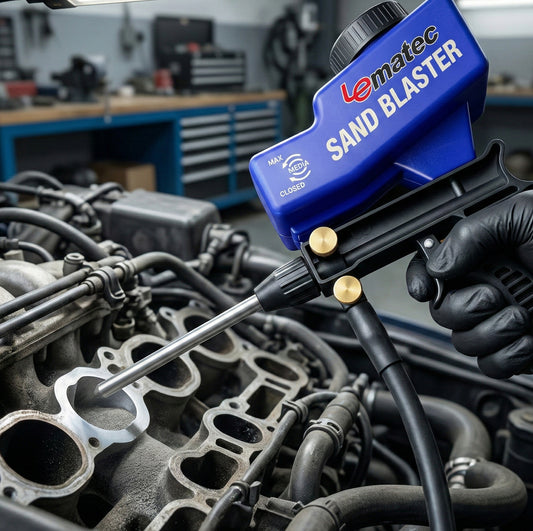
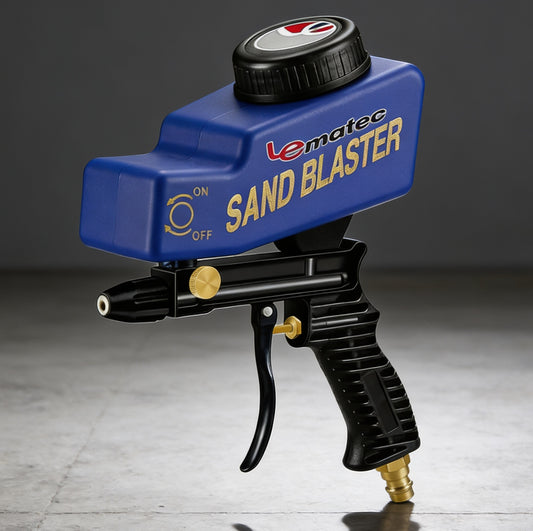
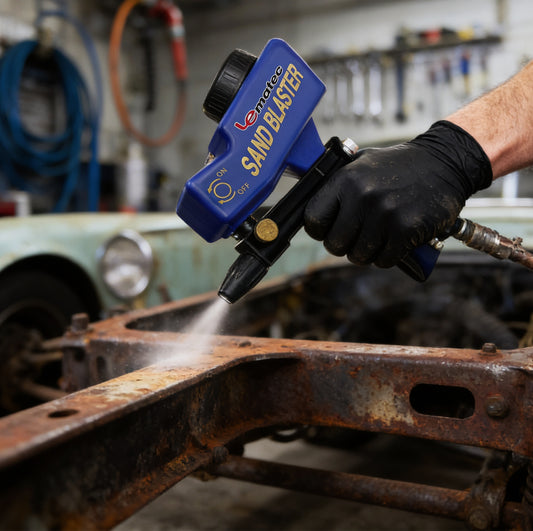
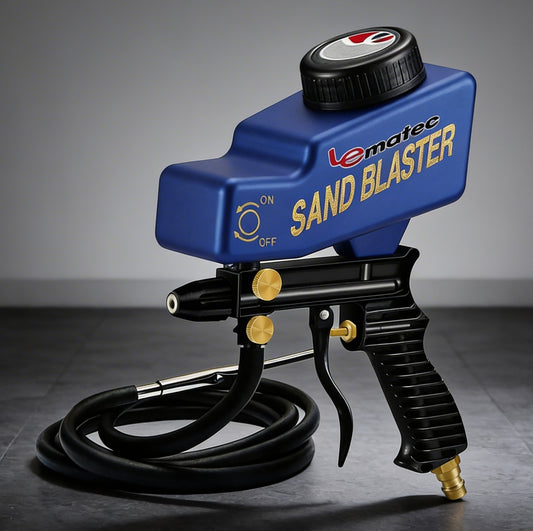
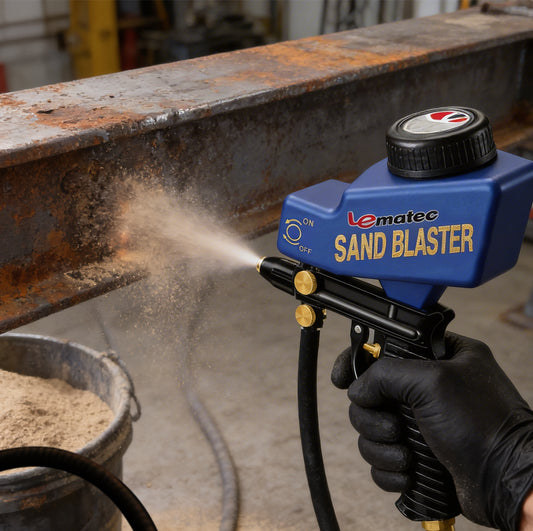
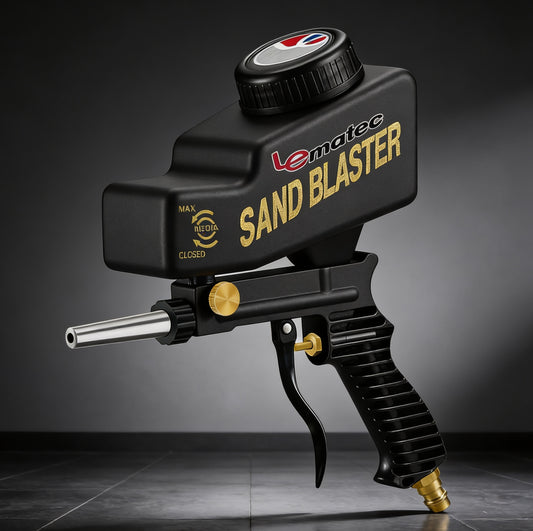
If you’re shopping for blasting equipment online, don’t start by picking the biggest blaster. Start with the job: rust removal, paint stripping, profile for coating, or cleanup on parts.
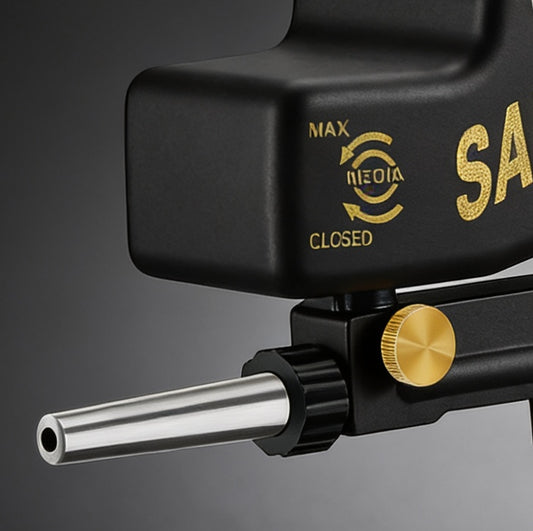
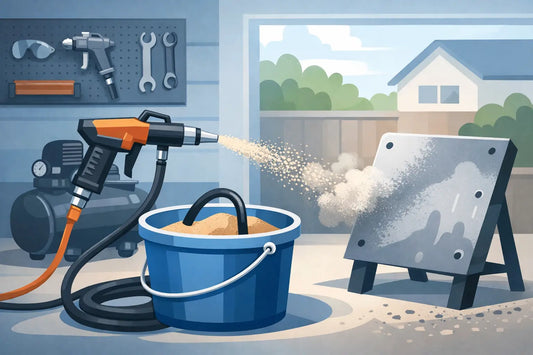
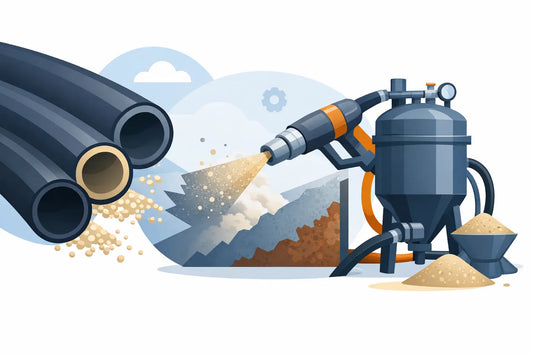
Dedicated sandblasters can be a game-changer for frames, wheels, brackets, and fabrication prep, but blasting is one of the fastest ways to outgrow a compressor. Media choice, nozzle size, and duty cycle will decide whether your setup feels productive or painfully slow.
Also, blasting is unforgiving about moisture. If you blast with wet air, media clumps, flow becomes inconsistent, and you get uneven results. A serious moisture strategy—filters, separators, and managing hose runs—often matters as much as the blaster itself.
Most people hunt for the best impact or grinder and ignore the accessories until something fails. That’s backwards.
A regulator helps keep tools running at the pressure they’re designed for, which improves control and extends life. Filters protect your investment from grit and water. The right fittings and couplers reduce pressure drop so your tools hit harder with the same compressor.
If you’re doing paint prep or blasting, air quality is the difference between a clean surface and rework. If you’re doing mechanical work, stable pressure is the difference between one clean trigger pull and three frustrating ones.
Buying pneumatic tools online can be a win—better selection, faster ordering, and easier comparison—but only if the seller is set up for real shop needs.
Look for clear specs (especially air consumption), straightforward warranty coverage, and shipping you can rely on. Air tool buyers don’t just hate bad tools; they hate downtime. A long warranty helps, but so does fast fulfillment when you need to keep a job moving.
If you’re building a kit from scratch or replacing high-use tools, buying from a focused pneumatic supplier can reduce the guesswork because the catalog is built around air systems, not every product category under the sun. For buyers who want factory-direct value, fast fulfillment, and a free 36-month warranty, Pro Air Tools is set up like a shop supplier rather than a marketplace listing.
If you want the best results quickly, build around the work you do most. For automotive: start with a 1/2-inch impact, an air ratchet, a tire inflator, and the filter/regulator setup that keeps them consistent. For fabrication: start with a die grinder, an angle grinder, a cutter, and air quality gear. For surface prep: prioritize sanders and moisture control before chasing higher-powered tools.
Then let your compressor be the guardrail. If you’re regularly outrunning it, you can either step up compressor capacity or choose tools that give you better output per CFM. Either path works—what doesn’t work is pretending the air supply doesn’t matter.
A good shop runs on predictable tools and predictable delivery. Buy the tools that match your air, protect them with clean dry supply, and you’ll spend more time finishing jobs and less time troubleshooting why a “new” tool already feels worn out.
Factory direct from Le Lematec — professional quality, competitive prices.
Match tools to your compressor's delivered CFM and PSI, not just the tank pressure. Check each tool's air consumption rating and add them up if running multiple tools. Always leave 20-30% headroom so your compressor isn't running flat-out continuously. A tool rated for 10 CFM on a compressor that delivers only 12 CFM is undersized for real work.
PSI is pressure (how hard the air pushes), CFM is volume (how much air flows). Most pneumatic tools need both—adequate pressure to start, but CFM to keep them running under load. A tool can have good pressure but feel weak if CFM is insufficient. Always check both specs when sizing tools and compressors.
Low-cost tools often use lower-grade motors, thinner materials, and tighter tolerances that wear quickly under continuous load. They also tend to be less efficient, consuming more air for the same output, which stresses your compressor. Quality tools run cooler, use air efficiently, and maintain consistent performance. The cost difference usually pays back within the first season of heavy use.


 AIR REGULATORS

 ACCESSORIES