Shopping Cart
(0)
Free shipping included — no minimum on any US order

Quick Search:

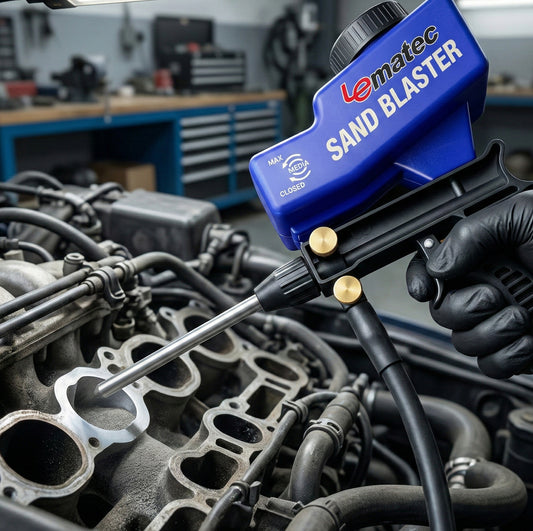
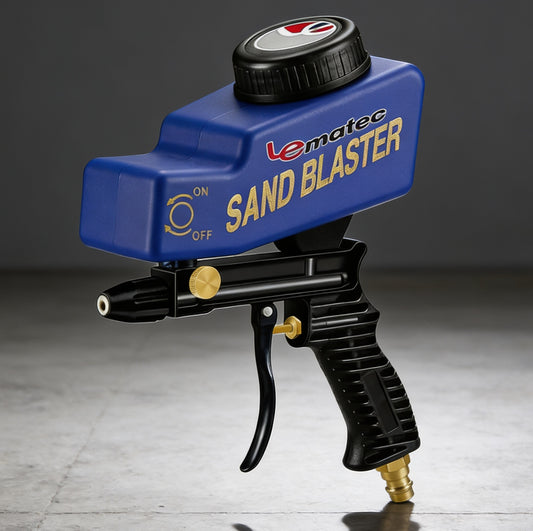

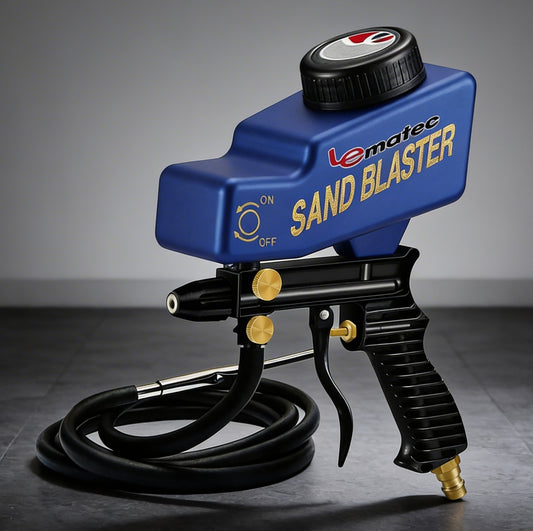

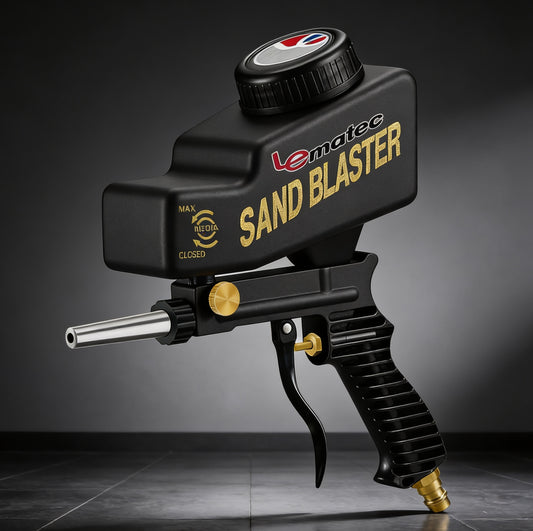
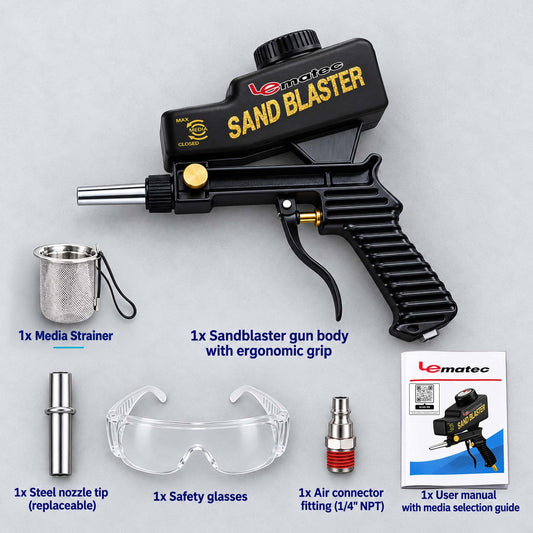

A cast-aluminum intake, wheel, valve cover, or fabricated panel can go from stained and tired to clean in minutes. It can also come out rough, warped, or permanently dull if the blasting setup is too aggressive. So, can you sandblast aluminum safely? Yes - but aluminum demands lighter media, controlled pressure, clean air, and more restraint than steel.
Aluminum is soft compared with steel, and its surface can be easily etched. The goal is not to blast as hard as possible. The goal is to remove the coating, corrosion, or oxidation while leaving a consistent finish that fits the job.
You can safely blast aluminum when you match the media and pressure to the part. Thin sheet aluminum, polished trim, machined surfaces, and old castings all need different treatment. A one-size-fits-all setting is where most damage starts.
The common failures are easy to recognize: a surface that looks gray and fuzzy, deep media impact marks, rounded edges, embedded grit, or a panel that has distorted from heat and prolonged blasting. These are setup problems, not proof that aluminum cannot be blasted.
For paint removal on a sturdy casting, a moderately aggressive media may be appropriate. For cleaning oxidation from a wheel or restoring an aluminum engine cover, fine glass bead, plastic media, or soda is usually a better starting point. If the part has critical sealing faces, threads, bearings, bushings, or precision-machined areas, mask them before blasting or choose another cleaning method.
Media choice has more effect on aluminum than most operators expect. The wrong abrasive can remove material quickly, leave an uneven profile, and create extra finishing work.
Glass bead is a practical choice for many aluminum parts. Fine glass bead can clean oxidation, light corrosion, and old finish while leaving a uniform satin appearance. It is commonly used on cast engine parts, brackets, housings, and wheels, provided the pressure stays under control.
Soda media is gentler. It is useful for removing paint, grease residue, and light oxidation without producing a heavy surface profile. It works well when preserving the base metal matters more than creating a coating-ready anchor pattern. It also requires thorough cleanup, since residue can interfere with paint adhesion if it is not fully removed.
Plastic media is another low-aggression option for paint and coating removal. It is especially useful on delicate aluminum panels and parts where you want to avoid changing dimensions. It will not cut heavy corrosion as quickly as harder media, but that trade-off can save a good part.
Aluminum oxide is hard and cuts fast. Despite the name, it can be too aggressive for general aluminum cleaning, particularly in a coarse grit. It has a place when a part needs a defined profile for coating or when corrosion is severe, but use fine grit, lower pressure, and a test area first. Do not assume aluminum oxide is automatically safe because the workpiece is aluminum.
Avoid silica sand. Breathing silica dust can cause serious, permanent lung disease, and sand is also harder to control than safer purpose-made blasting media. It is not the bargain it appears to be once health risk, cleanup, and finish quality are factored in.
Pressure should be treated as a starting point, not a fixed rule. Many aluminum jobs respond well in the 30 to 60 PSI range, especially with fine glass bead, soda, or plastic media. Thick castings may tolerate more pressure, while thin panels may need less.
Begin at the low end, blast a hidden test spot, and inspect the surface before moving forward. Increase pressure only if the media is not removing the contaminant at a reasonable pace. If the finish turns rough or the part heats up quickly, back down.
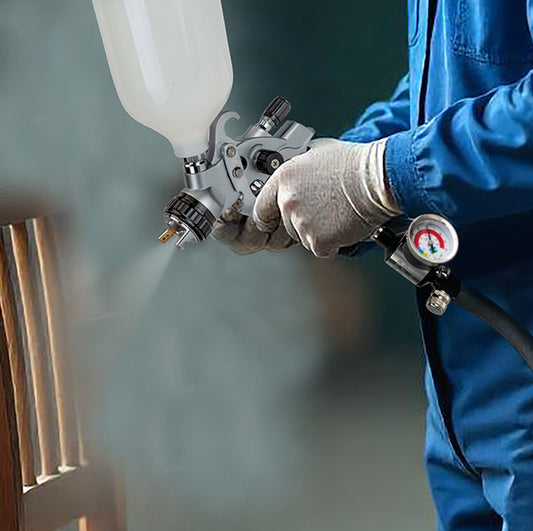
Distance and nozzle angle matter just as much. Hold the nozzle roughly 8 to 12 inches from the work and keep it moving. A shallow angle is generally safer for delicate surfaces than aiming straight at the metal. Do not dwell on edges, corners, or one stubborn patch of coating. Make several light passes instead.
A smaller nozzle gives more control on detailed parts, but it still needs adequate compressor output. Starving a blaster for air causes inconsistent media flow and encourages operators to stay too long in one spot. Check the blaster and nozzle air-consumption rating, then make sure your compressor can maintain the required CFM at working pressure.
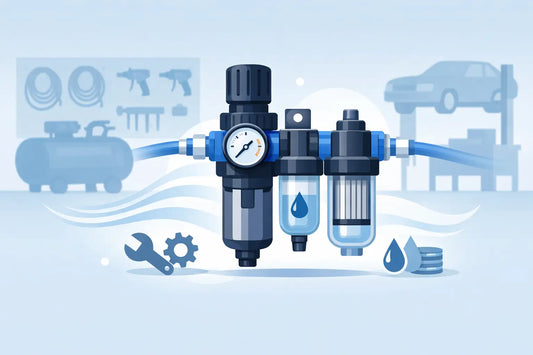
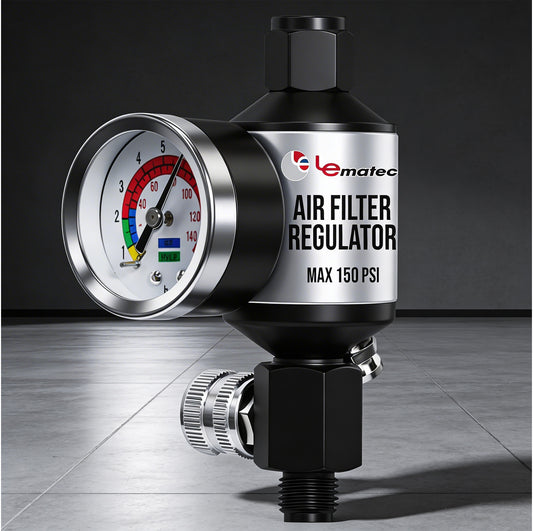
Oil and water contamination can ruin an otherwise good blasting job. Compressor moisture can make media clump, interrupt flow, and leave a contaminated surface that creates problems during painting or coating. Oil carryover can do the same.
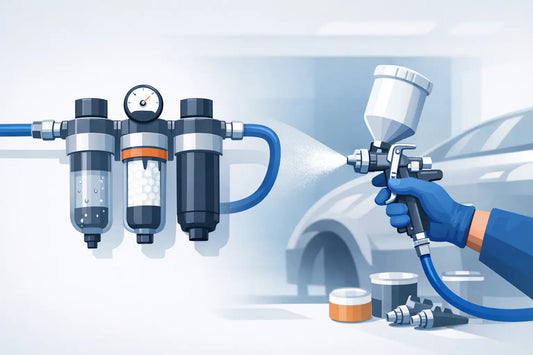
Use a properly sized moisture separator and air filter close to the blasting equipment. Drain the compressor tank before starting, especially in humid conditions or during long sessions. If the job requires a clean coating surface afterward, use fresh media rather than recycled media that may carry oil, rust, or debris.
Do not mix steel-shot residue or dirty reclaimed abrasive into a job on bare aluminum. Cross-contamination can embed ferrous particles in the surface, which may later show up as rust staining. Dedicated media and a clean cabinet are worth the effort when appearance matters.
Blasting aluminum safely also means controlling dust and airborne debris. A hood, eye protection, gloves, hearing protection, and a properly rated respirator are baseline equipment. For frequent blasting or enclosed blasting, a supplied-air blasting helmet provides a higher level of respiratory protection than a basic dust mask.
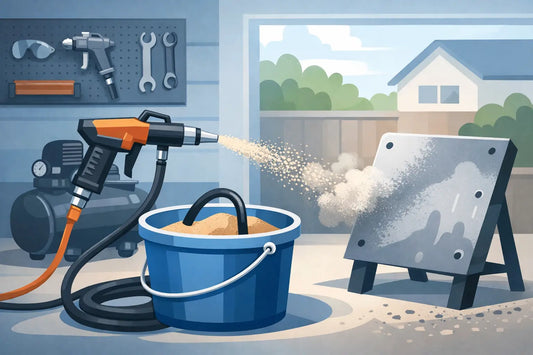
Never blast in an unventilated garage with the door shut. Use a blasting cabinet for smaller parts or a contained outdoor setup where dust cannot drift toward people, vehicles, neighboring property, or open doors. Collect and dispose of used media according to the material removed from the part.
Old paint and coatings add another risk. Automotive and industrial finishes can contain hazardous metals or chemicals. If you do not know what is on the aluminum, treat the dust as potentially hazardous. Do not blast it into the open air, and do not use ordinary shop cleanup practices that spread dust around the work area.
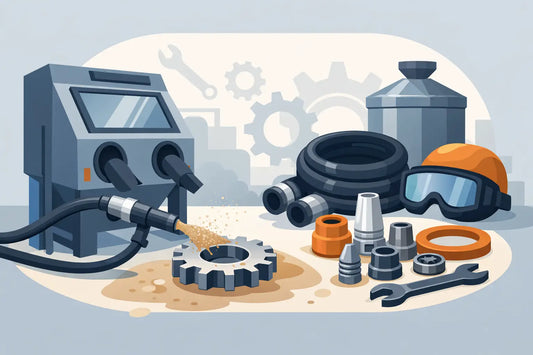
Before blasting assembled parts, remove seals, bearings, rubber components, wiring, and anything that can trap abrasive. Tape off threads, gasket surfaces, machined bores, identification tags, and polished areas. Media inside an engine cover, brake component, or bearing bore can create expensive problems long after the part looks clean.
Freshly blasted aluminum starts oxidizing quickly. That does not mean it is ruined, but it does mean the next step should be ready before you start blasting. Blow the part off with clean, dry air, then wash or wipe it with a compatible cleaner to remove residual dust and media.
If you plan to paint, prime, powder coat, or apply a protective finish, follow the coating manufacturer's surface-prep requirements. A finish that needs tooth may benefit from a controlled profile. A polished or bare-metal restoration may need a gentler media and additional finishing after blasting.
For bare cast aluminum, many shops use glass bead for the appearance, then protect the part with a suitable clear coating or corrosion inhibitor. On parts exposed to engine heat, fuel, or brake cleaner, confirm that the protective product is rated for the actual service conditions.
The best aluminum blasting result usually comes from a modest setup used with discipline: fine, appropriate media; dry filtered air; low starting pressure; and steady nozzle movement. More air power is useful only when the media, nozzle, and part can handle it.
If you are setting up for regular restoration or fabrication work, Pro Air Tools offers the sandblasting equipment, media, filters, and accessories needed to keep the process consistent. For a single irreplaceable part, take the extra few minutes to test your settings on an inconspicuous area. That small check is cheaper than trying to repair a finish that was blasted too far.


 AIR REGULATORS

 ACCESSORIES