Shopping Cart
(0)
Free shipping included — no minimum on any US order

Quick Search:



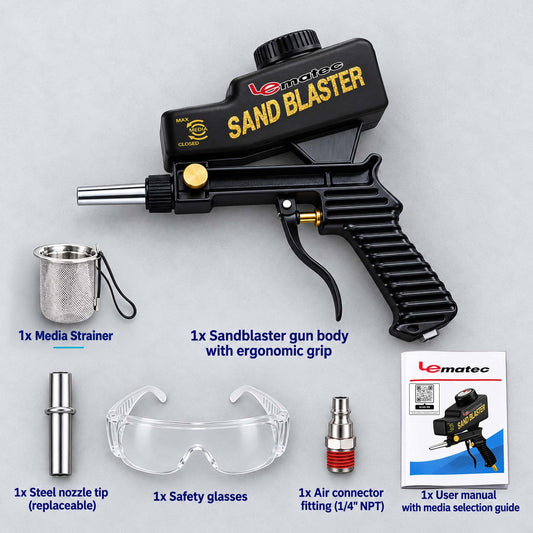

A cheap blast hood, fogged-up eye protection, and the wrong respirator can turn a routine job into a health risk fast. This guide to sandblasting safety gear is built for people who actually use blasting equipment - auto restorers, fab shops, maintenance crews, and serious DIYers who need protection that works for real conditions, not just a box to check.
Sandblasting is hard on surfaces, and it is just as hard on lungs, eyes, skin, and hearing when your setup is wrong. The mistake many buyers make is treating safety gear like an add-on after they have already picked the blaster, media, and compressor. In practice, your protective gear needs to match the abrasive, the pressure, the environment, and how long you will be in the blast stream.
The right setup starts with one question: what are you being exposed to? Abrasive blasting creates rebounding media, fractured dust, coating particles, and a lot of airborne contamination. If you are stripping rust off a frame, cleaning cast parts, or removing paint from sheet metal, the hazard profile changes with every material.
That is why there is no single best gear package for every user. A cabinet operator handling short, enclosed sessions may need something different from someone running a pressure blaster outdoors for hours. The goal is not buying the most expensive kit. The goal is covering the main exposure points without slowing your work down so much that you stop using the gear correctly.
If you only focus on one category, make it breathing protection. Fine blasting dust travels everywhere, and once it is airborne, it is easy to underestimate how much you are taking in. A paper dust mask is not a sandblasting solution.
For lighter-duty tasks or cabinet work, some users rely on properly rated respirators with replaceable filters, but the exact choice depends on the media, the coating being removed, and the ventilation around the work area. If there is any chance you are disturbing hazardous coatings or generating high dust loads, you need to think beyond a basic face mask.
For more demanding open blasting, supplied-air systems are often the safer route. They deliver clean breathing air to the operator and reduce the chance that you are inhaling dust that bypasses a filter or enters around a poor seal. This matters even more if you have facial hair, work in heat, or spend long stretches blasting, because fit and fatigue start to work against you.
The trade-off is cost and setup. Supplied-air helmets and systems ask more from your budget and air planning, but that extra protection is usually worth it for frequent blasting. If you are already investing in a reliable blasting setup, cutting corners on air quality for the operator is the wrong place to save money.
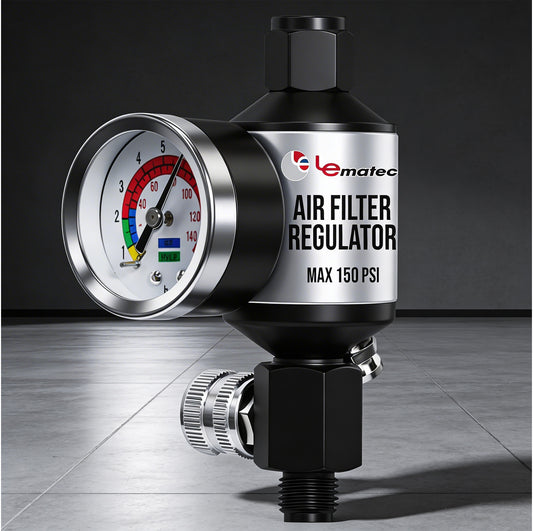
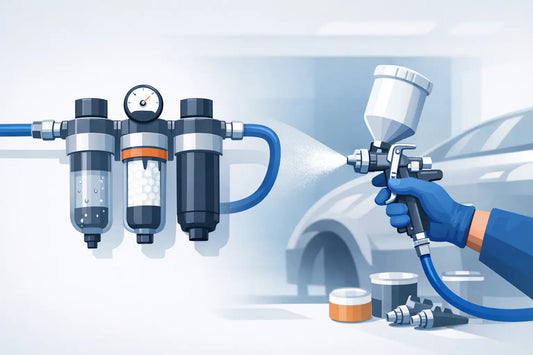
Clean breathing air and clean tool air are not the same thing by default. Moisture, oil, and contaminants in the line can affect both performance and safety. A proper air control setup with filters and regulators helps keep pressure consistent and reduces contamination issues. It also helps your blasting equipment run the way it should.
If your compressor is undersized or your air is dirty, the whole job gets harder. You end up with inconsistent blasting, more downtime, and a stronger temptation to rush. Safety failures often start with a system that is fighting the operator.
Abrasive rebound is not minor debris. It hits hard, finds gaps, and keeps coming. Standard safety glasses alone are not enough for open blasting. Even in shorter jobs, you need full face coverage designed for abrasive environments.
A dedicated blasting helmet or hood does more than shield your face. It protects your neck, helps manage dust exposure around the head, and gives you a viewing window built for this kind of work. Better hoods also reduce the frustration factor. If your lens scratches immediately or visibility drops after a few minutes, productivity goes with it.
That is why replaceable lens systems matter. Outer tear-off covers and inner lenses help you maintain visibility without replacing the entire assembly. If you do detailed work on automotive parts or fabrication pieces, clear sight is not a luxury. It directly affects finish quality and control.
For cabinet blasting, you still need eye protection, even with the work enclosed. Cabinets leak dust, gloves fail, seals wear out, and media can escape during loading and unloading. Safety glasses with side protection are the bare minimum there, and many users still prefer a face shield when handling media outside the cabinet.
Blasting media does not need a direct hit to tear up exposed skin. Rebound finds wrists, forearms, ankles, and the gap between your glove and sleeve. After enough time, even lighter media can leave you with irritation or cuts.
Heavy gloves made for abrasive blasting are the safest choice for open work. You want length through the cuff, solid grip, and enough flexibility to control the nozzle without hand fatigue. Regular shop gloves wear out fast here and usually fail where you need protection most.
The same goes for jackets, sleeves, aprons, or full blasting suits. The right level depends on your job type. If you are doing short cabinet sessions, built-in cabinet gloves may handle most of the exposure. If you are running a pressure pot on larger metal surfaces, reinforced blasting clothing makes more sense.
Heat is the usual complaint. Heavier gear gets uncomfortable, especially outdoors or in warm shops. But that is not a reason to skip it. It is a reason to choose gear that fits well, breathes where possible, and matches the length of the job. Protection you can actually wear for the full task is better than overbuilt gear you take off halfway through.
Compressed air systems are loud. Add abrasive impact, cabinet noise, compressor cycling, and shop echo, and your ears take a beating. Hearing loss happens gradually, which is why many experienced operators still underprotect here.
Earplugs or earmuffs rated for noisy shop work should be standard whenever blasting starts. In some setups, especially with helmets, plugs are the easier fit. In others, muffs may be more convenient during prep and cleanup. What matters is using something consistently.
If communication matters on your jobsite or in your shop, think through that before you start. Some operators skip hearing protection because they need to hear instructions or equipment changes. That is a system problem, not a reason to expose yourself to noise all day.
Boots do not get much attention until media fills them up or a hose whips across your shin. Durable work boots with good ankle support and long pants are basic requirements for blasting work. For heavier jobs, extra lower-leg coverage can make sense, especially when rebound is strong.
Fit matters more than people expect. Loose cuffs, open collars, and exposed seams all give dust and media a path in. A safer setup feels closed off without restricting movement. You should be able to bend, brace, and handle the hose without constantly readjusting your gear.
The best guide to sandblasting safety gear is not one fixed shopping list. It is a way to match your protection to your actual process.
If you are blasting inside a cabinet for short sessions, your focus may be eye protection, dust control around the cabinet, hand protection, and a respirator appropriate to the dust exposure during loading, unloading, and maintenance. If you are open blasting with a pressure system, the bar goes up fast. Full head and face protection, respiratory protection suited to heavy dust, hearing protection, gloves, body coverage, and dependable air management all move from recommended to necessary.
The abrasive matters too. Finer media can create different dust behavior than heavier grit. Old coatings and corrosion products add another layer of risk. So does the work location. Outdoor blasting may disperse dust better, but it also creates visibility issues, weather complications, and more chances for bystanders to be exposed.
This is where buying from a supplier that understands complete blasting systems helps. It is easier to get the right result when your gear, media, air components, and blasting equipment are chosen to work together, not pieced together from random listings. That is the practical side of buying from a shop like Pro Air Tools - less guesswork, faster turnaround, and fewer weak links in your setup.
The most common mistake is buying the blaster first and treating safety gear as leftovers in the budget. The second is assuming a respirator that works for painting, grinding, or sweeping dust will automatically work for abrasive blasting. It may not.
Another problem is ignoring maintenance. Scratched lenses, worn gloves, bad seals, wet air lines, and overloaded filters all reduce protection. Safety gear is only effective when it is in working condition. If you cannot see clearly, breathe comfortably, or move well, your performance drops and your exposure risk goes up.
There is also the issue of false economy. Cheap gear often fails faster, fits worse, and gets abandoned sooner. For serious hobbyists and working shops, that usually means buying twice, or dealing with downtime and frustration on a job that should have gone smoothly the first time.
The right safety gear does not just protect you from injury. It lets you keep working with control, visibility, and less fatigue. When your blasting setup is built around that standard, the job gets easier, the results get better, and you are a lot more likely to finish the work without paying for shortcuts later.


 AIR REGULATORS

 ACCESSORIES