Shopping Cart
(0)
Free shipping included — no minimum on any US order

Quick Search:




If you've ever reached for a grinder and stopped to ask whether this job needs finesse or brute force, that's where the air die grinder vs angle grinder decision really starts. Both tools remove material, clean surfaces, and prep parts, but they do it in very different ways. Pick the wrong one and the work gets slower, rougher, or just harder than it needs to be.
For most shops, this is not an either-or question forever. It is a question of which tool solves the job in front of you with less effort, better control, and fewer headaches. If you do automotive work, metal fabrication, maintenance, or serious DIY projects, understanding the gap between these two grinders can save time and protect your finish.
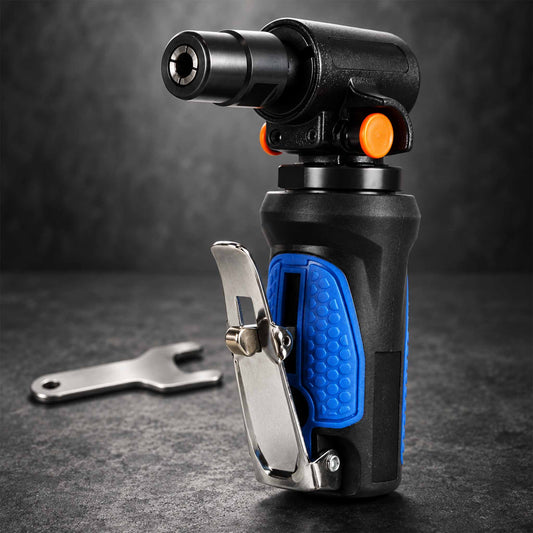
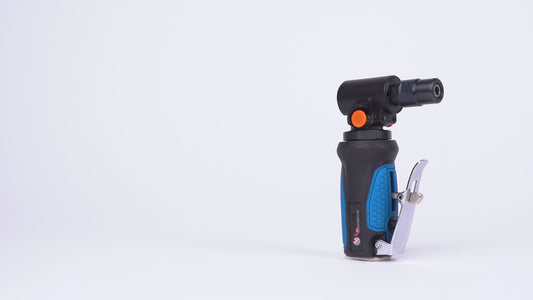
The simplest way to look at it is size, speed, and purpose. An air die grinder is a smaller pneumatic tool built for precision work. It usually runs at very high RPM and uses smaller accessories like carbide burrs, mounted stones, flap wheels, and surface prep attachments. It shines when you need access, control, and detail.
An angle grinder is larger, heavier, and built to remove more material fast. Whether pneumatic or electric, it typically uses larger discs or wheels for grinding, cutting, flap sanding, and surface cleanup. If the job involves thick metal, larger welds, broad rust removal, or aggressive stock removal, the angle grinder usually has the advantage.
That difference matters on real jobs. Cleaning up an intake port, deburring a bracket, or smoothing a tight weld seam points toward a die grinder. Cutting bolts, grinding down heavy welds, or stripping a larger section of steel points toward an angle grinder.
An air die grinder earns its keep anywhere space is tight or the finish matters. In automotive work, that often means gasket cleanup, port matching, spot weld dressing, smoothing inside corners, and reaching around engine bay components without fighting a bulky tool body.
The big advantage is control. A die grinder feels more like a shaping tool than a demolition tool. With the right burr or abrasive, you can work carefully around edges, contours, and smaller parts. That is hard to match with an angle grinder, especially when the workpiece is delicate or the target area is narrow.
High RPM is another benefit, but only when matched to the right accessory. A die grinder can remove material surprisingly fast on small areas, especially in steel, aluminum, and cast parts. It is also a strong choice for surface prep in tight spots where a larger wheel simply cannot reach.
There are trade-offs. A die grinder is not the tool for wide-area grinding or heavy cutting. It can do a lot, but it does its best work in a smaller zone. It also depends on a capable air system. If your compressor cannot keep up with sustained air demand, performance drops fast.
An angle grinder is the workhorse. When the material is thicker, the weld is heavier, or the surface area is larger, this tool gets there faster. It has the torque and wheel size to tackle jobs that would feel slow and frustrating with a die grinder.
Fabricators lean on angle grinders for a reason. They can grind mill scale, blend welds, cut rod or plate, knock down rough edges, and prep larger metal surfaces without switching to a dozen tiny accessories. For maintenance teams, they are also useful for rust removal, bolt cutting, and general cleanup where precision matters less than productivity.
The downside is finesse. Even in experienced hands, an angle grinder removes material more aggressively. That can be a problem on thin metal, shaped parts, or anything that needs a controlled touch. It is also harder to get into corners, channels, and recessed areas.
If your work is mostly broad cleanup and material removal, the angle grinder is usually the right first purchase. If your work includes detail finishing or tight access, it stops being enough on its own.
In auto and fabrication shops, these tools often end up side by side because they solve different parts of the same job. After welding a patch panel, for example, you might use an angle grinder to knock the weld down quickly, then switch to an air die grinder to refine the seam, clean the edges, and reach the spots the larger wheel misses.
That pattern repeats across a lot of work. On exhaust fabrication, an angle grinder handles cutoff and bigger weld cleanup, while a die grinder helps with fit-up corrections and inside-edge cleanup. On rust repair, the angle grinder strips broader areas and the die grinder cleans seams, corners, and tricky contours.
So if the question is which one is better for automotive or fab work, the honest answer is that it depends on where the work happens. Open surfaces and heavier material favor the angle grinder. Tight spaces and finish-sensitive work favor the die grinder.
This is where people get tripped up. More RPM does not automatically mean more useful cutting or grinding power. Air die grinders often spin much faster than angle grinders, but they are driving smaller accessories and are intended for a different kind of work.
Angle grinders typically feel stronger under load because they are built to keep a larger disc moving through more demanding material. That gives them an edge in sustained grinding, cutting, and blending over bigger sections.
Control goes the other direction. A die grinder is easier to guide with precision, especially when using a carbide burr or small abrasive point. If you need to remove just enough material without touching the surrounding area, the die grinder gives you a better chance of getting it right on the first pass.
Weight also matters over a long day. A compact air die grinder is easier on the wrist in detail work, while an angle grinder can wear you out faster, especially overhead or in awkward positions.
A lot of buyers compare sticker prices and stop there. That is only part of the decision.
If you already have a solid compressor setup, an air die grinder can be a very efficient addition to the shop. Pneumatic tools are popular for good reason - they are simple, durable, and well suited for repeated shop use. For buyers who care about uptime, a dependable air tool backed by a strong warranty often makes more sense than chasing the cheapest option.
But accessory cost and air demand matter. Die grinders can go through burrs, stones, Roloc-style discs, and specialty abrasives depending on the work. Angle grinders use larger discs that can be cost-effective for broad tasks, but they also wear through consumables quickly on heavy jobs.
The better question is not which tool is cheaper. It is which tool gets the job done with fewer passes, less rework, and less wasted time.
If you handle heavier metalwork, general cutting, rust removal, and weld grinding, start with an angle grinder. It covers more broad-use tasks and gives you the most immediate versatility for fabrication and maintenance.
If your work centers on detail grinding, deburring, porting, gasket cleanup, and hard-to-reach areas, start with an air die grinder. It is the better fit for precision jobs and smaller components.
For a lot of buyers, the answer comes down to job mix. If 70 percent of your work is large-surface removal, the angle grinder is the first buy. If 70 percent is detail and access work, the die grinder makes more sense. Once your workload expands, having both is not overkill. It is a faster workflow.
The best shops do not force one tool to do everything. They match the tool to the stage of work. That saves time, improves finish quality, and reduces fatigue.
If you're building out a pneumatic setup, this is where buying from a supplier that understands air tools matters. You want equipment that is ready for shop use, backed by a real warranty, and shipped fast enough that a failed tool or missing accessory does not stall the job. That is the practical side of tool buying, and it matters just as much as RPM or wheel size.
When you are choosing between an air die grinder and an angle grinder, think less about which one sounds more powerful and more about where the tool needs to work. The right grinder is the one that makes the job easier, cleaner, and faster the moment it hits your hand.





 AIR REGULATORS

 ACCESSORIES