
Shopping Cart
(0)


 AIR REGULATORS

 ACCESSORIES
Gravity Feed vs Siphon Feed Sandblaster: Which Design Is Right for Your Project?
Gravity Feed vs Siphon Feed Sandblasters — Which Design Wins for Your Application?
When shopping for a portable sandblaster, you'll encounter two fundamental designs: gravity feed and siphon feed. Both propel abrasive media using compressed air, but they work differently, perform differently, and excel at different jobs. This guide explains exactly how each system works, compares their strengths and limitations, and helps you choose the right one — or get a gun that does both.
Written by Charles Rosenstein, Le Lematec / Factory Direct — over 15 years in pneumatic tools and surface preparation equipment.
How Gravity Feed Sandblasters Work
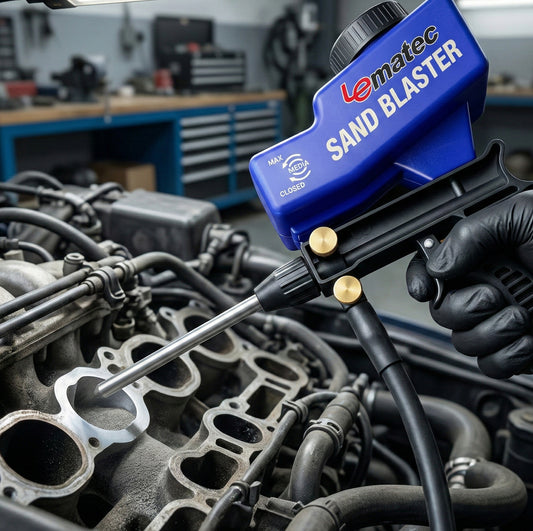
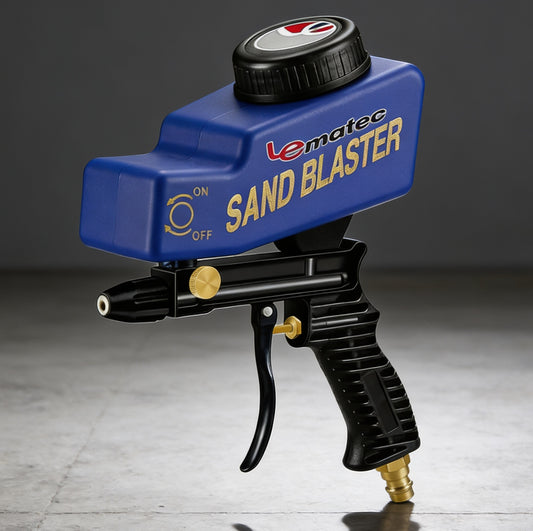
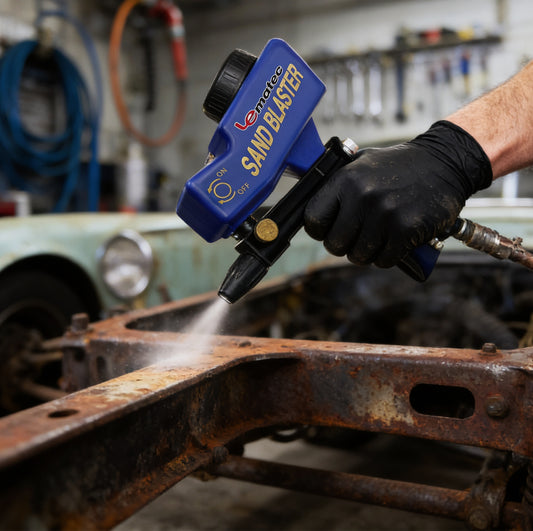
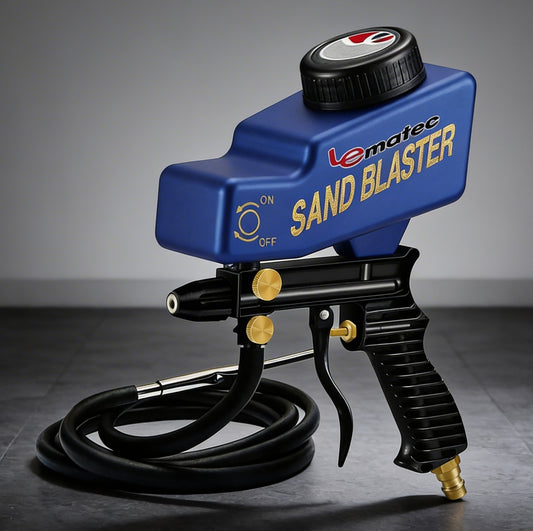
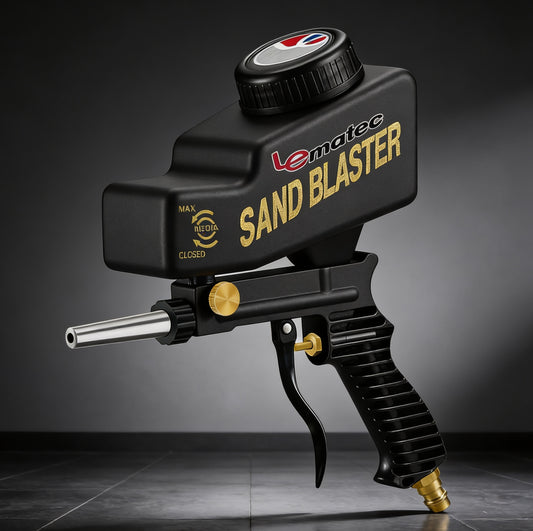
In a gravity feed design, the media hopper sits on top of the gun. Media flows downward into the air stream by gravity alone. Compressed air enters the gun body, creates a venturi effect at the mixing chamber, and pulls media into the high-velocity air stream. The combined flow exits through the nozzle at high speed.
Because gravity assists media delivery, these guns work reliably at lower air pressures (as low as 40 PSI) and use less compressed air than siphon designs. The trade-off is hopper capacity — top-mounted hoppers are typically smaller (12–18 oz) because larger hoppers would make the gun unwieldy.
How Siphon Feed Sandblasters Work
In a siphon feed (also called suction feed) design, the media container sits below the gun. Compressed air flowing through the gun body creates negative pressure (suction) at the pickup tube, which draws media upward from the container into the air stream. This is the same venturi principle, but working harder because it must lift media against gravity.
Siphon designs can use larger media containers — from external bottles to bucket setups holding several pounds of media. The trade-off is they need higher minimum air pressure (typically 60+ PSI) and more CFM to create enough suction to reliably lift media.
Head-to-Head Comparison
| Feature | Gravity Feed | Siphon Feed |
|---|---|---|
| Media Flow Direction | Down (gravity-assisted) | Up (suction-powered) |
| Minimum PSI | 40 PSI | 60 PSI |
| CFM Requirements | Lower (4–8 CFM typical) | Higher (6–12 CFM typical) |
| Hopper Capacity | Smaller (12–18 oz typical) | Larger (can use external containers) |
| Media Flow Control | Very precise, consistent | Good, but can be inconsistent with fine media |
| Best for Detail Work | Excellent — precise media delivery | Good — works but less precise |
| Best for Large Areas | Frequent refills needed | Better — larger media capacity |
| Works Upside Down | No — media spills out | Yes — suction still draws media |
| Compressor Compatibility | Works with smaller compressors | Needs larger compressors |
| Weight (loaded) | Heavier (top-heavy) | Lighter gun (container is separate) |
When to Choose Gravity Feed
Gravity feed sandblasters excel in these scenarios:
- Detail work and precision blasting: The consistent, gravity-assisted media flow gives you precise control over exactly where and how much media hits the surface. Ideal for etching, small part cleaning, and touch-up work.
- Working with a smaller compressor: If your compressor delivers 4–6 CFM, a gravity feed gun will perform well while a siphon feed may starve for air.
- Fine media applications: Fine-grit media (150+ grit) flows more reliably in gravity feed because it doesn't need to be sucked upward through a tube where it can clump or bridge.
- Portable field work: The self-contained design (gun + hopper as one unit) is easier to carry and use in tight spaces.
When to Choose Siphon Feed
Siphon feed sandblasters are better for:
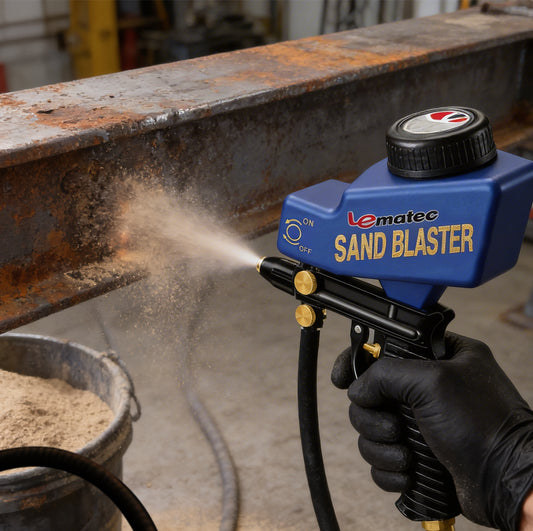
- Large surface coverage: Bigger media containers mean fewer refill interruptions. When you're blasting an entire car frame or a large gate, siphon feed keeps you working longer.
- Overhead work: Since the container is below the gun, you can point the nozzle upward without media falling out of the hopper. Critical for blasting undersides of vehicles, overhead beams, and ceilings.
- Coarser media: Heavy, coarse media (24–60 grit) is easier to manage in a siphon pickup system where the weight of the media doesn't make the gun unwieldy.
- High-volume production: For shops doing continuous blasting, siphon systems can be connected to large media hoppers for uninterrupted operation.
The Best of Both Worlds: Dual-Feed Sandblasters
You don't actually have to choose. Dual-feed sandblaster guns accept both gravity hoppers and siphon attachments, letting you switch between modes based on the job at hand.
Our Professional Dual-Feed Sandblaster Gun Kit (AS118-2) is engineered for exactly this versatility. It ships with an 18 oz gravity hopper for precision work and converts to siphon feed for larger jobs. The ceramic nozzle tip handles everything from baking soda to silicon carbide without wearing out prematurely.
If you already own a sandblaster and want to optimize your media delivery, the AS118-2C Accessory Kit includes ceramic replacement tips and conversion parts to maximize your gun's lifespan and versatility.
Air Supply Requirements
Your compressor capacity determines which design will actually work for you:
- 2–4 CFM compressor: Gravity feed only. Small detail jobs with fine media.
- 4–8 CFM compressor: Gravity feed works great. Siphon feed will work but may have inconsistent flow.
- 8–12+ CFM compressor: Both designs work at full potential. Choose based on the job, not the compressor.
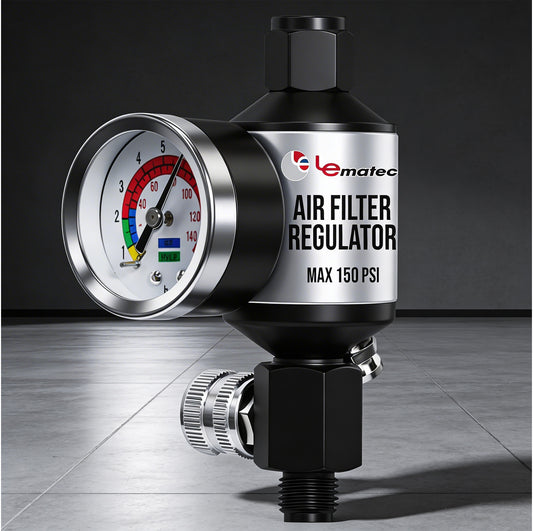
Regardless of design, clean dry air is critical. Moisture in the air line clumps media and causes spitting. Use an inline air filter and consider a desiccant dryer for humid environments. An air filter/regulator combo lets you dial in exact pressure for optimal results.
Media Compatibility
Both designs work with most media types, but some pairings work better than others:
- Gravity feed + fine aluminum oxide (150–220 grit): Excellent pairing for detail rust removal
- Gravity feed + baking soda: Best method for controlled soda blasting on delicate surfaces
- Siphon feed + coarse aluminum oxide (60–100 grit): Strong pairing for heavy paint and rust removal
- Siphon feed + glass bead: Good for large-area cosmetic finishing
- Either + silicon carbide: Both work well — choose based on job size
For a complete breakdown of which media to use for each application, see our Sandblasting Media Comparison Guide.
Maintenance Tips for Both Designs
Whichever design you choose, these practices extend the life of your sandblaster:
- Empty the hopper/container after each use. Moisture absorption overnight can clump media and clog passages.
- Clean the nozzle and mixing chamber. Media residue builds up and restricts flow. A quick blow-out with compressed air after each session keeps things clear.
- Inspect pickup tubes (siphon feed). Worn or cracked pickup tubes cause inconsistent suction. Replace them at the first sign of wear.
- Replace ceramic tips before they're oval. A worn nozzle tip wastes air and produces an uneven blast pattern. Keep spares on hand — our Accessory Kit includes ceramic replacements.
- Oil the trigger mechanism. A drop of pneumatic tool oil on the trigger valve every few sessions keeps it responsive.
The Verdict
For most home shops and small professional operations, a dual-feed sandblaster is the smartest investment. You get gravity feed precision for detail work and siphon feed capacity for bigger jobs — without buying two guns. The LE LEMATEC AS118-2 Dual-Feed Kit gives you both modes, a ceramic tip, and 150 PSI working pressure for under $50 factory direct.
If you only blast large surfaces and have a big compressor, go siphon feed. If you only do precision detail work with a smaller compressor, go gravity feed. For everyone else — get both in one gun.
Shop Sandblaster Kits
Factory direct from Le Lematec — professional quality, competitive prices.
Shop Related Products
All products ship free to the US with same-day processing.
Tags:
Previous
Sandblasting Media Comparison Guide: Choose the Right Abrasive for Every Job
Next
Air Compressor Accessories Buying Guide: Essential Tools for Every Workshop
Related articles
Air Angle Grinder Disc Selection Made Simple
Jun 15 2026
Pneumatic Cutoff Tool for Sheet Metal
Jun 13 2026
Compressed Air Tool Buying Guide
Jun 11 2026
9 Best Pneumatic Tools for Garage Work
Jun 09 2026
Sandblasting Cabinet vs Siphon Blaster
Jun 07 2026