Shopping Cart
(0)
Free shipping included — no minimum on any US order

Quick Search:

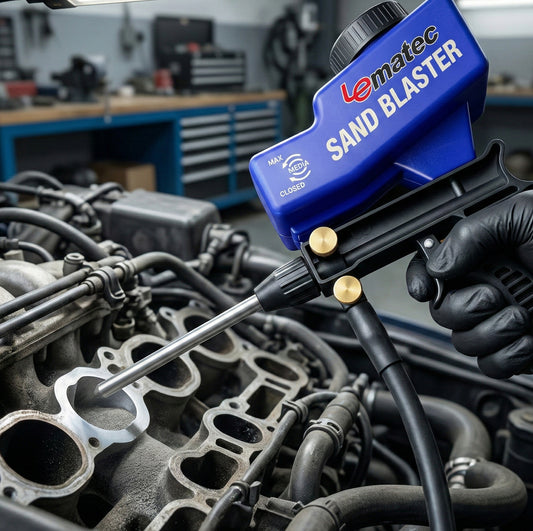
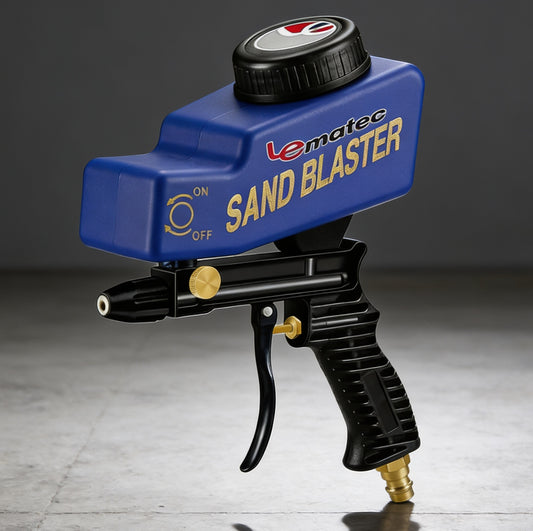
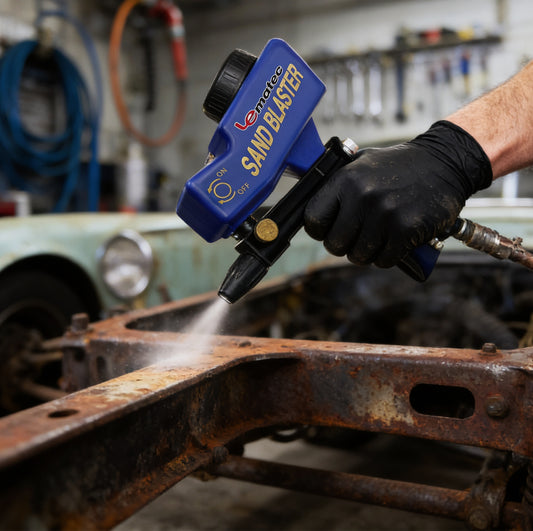
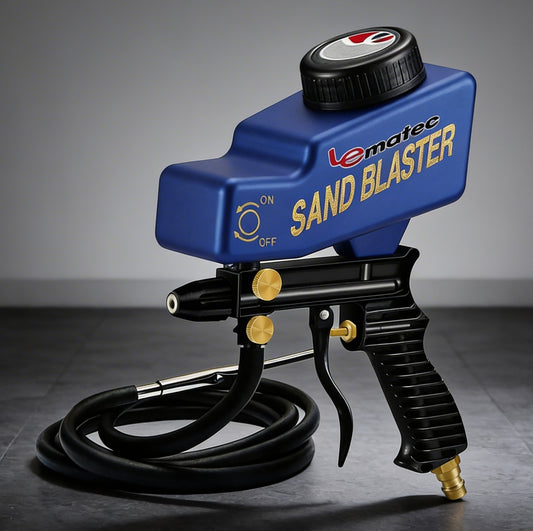
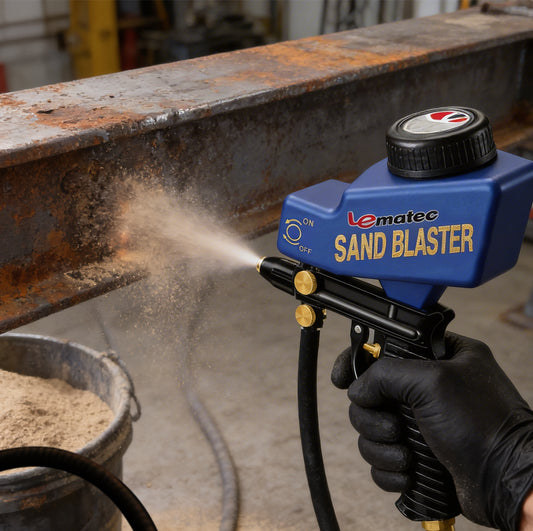
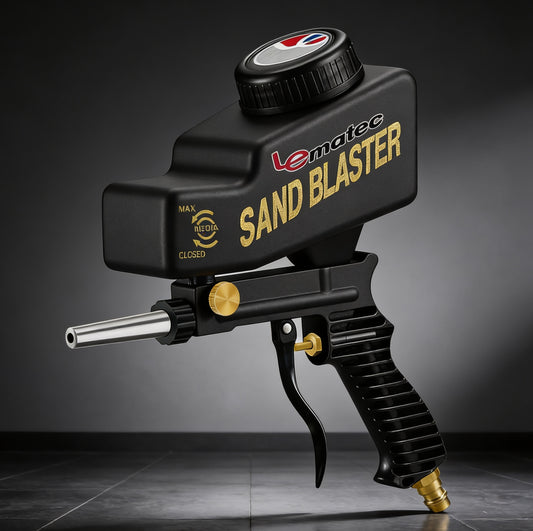
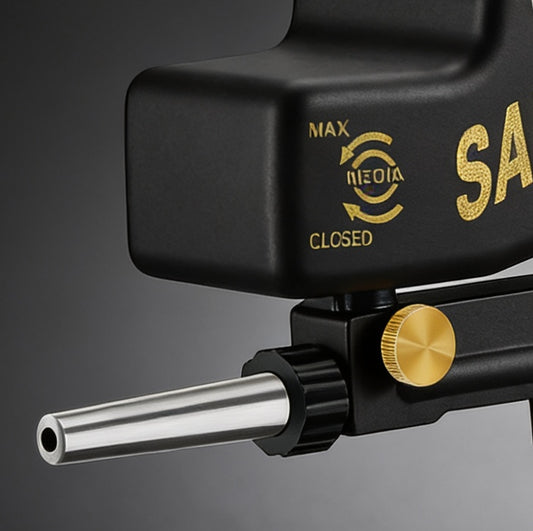

Quick answer: Use a needle scaler for thick rust, weld slag, and heavy paint on sturdy steel — it chips coatings off mechanically. Use a sandblaster for large areas, complex shapes, and finish-grade surface prep — it cleans down to bare metal evenly. Many shops use both: scaler first to knock off heavy scale, blaster to finish.
A needle scaler hammers a bundle of hardened steel needles against the surface thousands of times per minute (our AN67 needle scaler runs at 4,500 BPM with 19 needles). The needles conform to irregular surfaces — bolt heads, welds, corners — and shatter brittle rust and old coatings off.
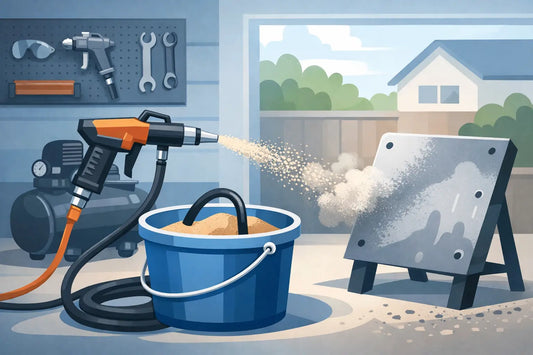
A sandblaster accelerates abrasive media (sand, soda, aluminum oxide) with compressed air. It strips uniformly and reaches places needles can't, but needs media, containment, and more air volume.
Needle scalers sip air compared to blasters — a typical home compressor (3+ CFM @ 90 PSI) runs one continuously. Sandblasting wants significantly more CFM for sustained work, which is the most common reason a blaster "feels weak."
Needles wear — dull or bent needles are the usual reason performance fades. A 19-piece replacement needle set restores full impact. For chisel-style work (gaskets, seams, spot rust), swap to 125 mm air hammer chisels on a standard air hammer.
Will a needle scaler damage good metal? On structural steel, no — needles remove brittle coatings, not sound base metal. Avoid using one on thin sheet metal or aluminum.
Is a needle scaler good for rust removal? Yes — it's one of the fastest ways to remove thick, layered rust before priming. For finish-grade prep, follow with blasting or sanding.
Can I use one compressor for both? Yes. A scaler runs on almost any compressor; check your blaster's CFM rating against the compressor's output at 90 PSI.


 AIR REGULATORS

 ACCESSORIES