Shopping Cart
(0)
Free shipping included — no minimum on any US order

Quick Search:
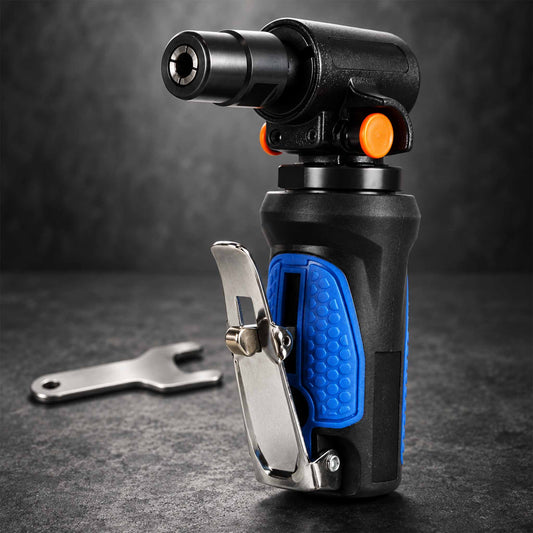




A grinder that feels underpowered, chatters across the workpiece, or burns through discs usually has a matching problem, not a tool problem. Air angle grinder disc selection matters because the disc decides how fast you cut, how clean the finish looks, how much heat you create, and how hard the tool has to work.
If you use pneumatic grinders for metal fab, auto repair, body prep, or maintenance work, the wrong disc costs time fast. It can load up, glaze over, grab an edge, or leave more cleanup than the original job. The right disc makes the tool feel sharper, smoother, and more predictable.
Most jobs come down to four variables - material, task, disc size, and grinder speed. Get those right first, and the rest is fine-tuning.
Material is the starting point. Mild steel, stainless, aluminum, cast iron, and painted surfaces all respond differently to abrasion. A disc that cuts steel well may clog instantly on aluminum. A wheel that removes weld fast may be too aggressive for thin sheet metal.
The task matters just as much. Cutting, grinding, blending, deburring, surface prep, rust removal, and paint stripping all call for different disc designs. This is where many buyers go wrong. They shop by grinder size alone and expect one wheel to handle every stage of the job.
Then there is size. Your grinder is built for a certain disc diameter, arbor, and maximum RPM. That is not a suggestion. Running the wrong size or a disc with a lower speed rating than the tool creates a real safety risk and usually a bad finish to go with it.
If you are cutting bolts, exhaust tubing, rod, or plate, use a cutoff wheel. Thin cutoff wheels remove less material and cut faster, which means less heat and less effort from the air motor. They are great when you want speed and a narrow kerf. The trade-off is that they wear faster and do not like side pressure.
If you are knocking down welds or shaping heavy steel, a grinding wheel makes more sense. These thicker wheels handle pressure better and last longer in aggressive stock removal. They are not ideal when you need a clean finish, but they save time when material needs to move.
For blending welds, smoothing edges, and cleaning up visible surfaces, flap discs usually give the best balance. They cut and finish at the same time, which is why they are popular in fab shops and automotive work. On thinner metal, they are easier to control than a hard grinding wheel.
For rust, paint, gasket residue, and general surface cleaning, conditioning discs and wire wheels are often the better choice. They remove coatings without gouging the base material as badly as a hard wheel can. If the goal is prep instead of heavy removal, this matters.
Steel is the easiest place to start because most abrasive discs are built around it. Cutoff wheels, grinding wheels, and flap discs all work well here, depending on the task. For general fab work, this is the most forgiving setup.
Stainless steel needs more care. Heat discoloration, contamination, and over-grinding show up fast. Use discs rated for stainless and avoid products that can leave behind contaminants that contribute to corrosion. A cooler-cutting flap disc can be a better option than a hard wheel when appearance matters.
Aluminum is where selection mistakes show up quickly. Standard grinding discs can load up and smear instead of cutting cleanly. Look for discs specifically made to resist loading on non-ferrous metals. If you are removing material on aluminum, lighter pressure and the right abrasive make a big difference.
Thin sheet metal, especially in bodywork, needs a gentler approach. An aggressive wheel can warp panels or remove too much material before you catch it. Thin cutoff wheels and finer flap discs give you more control.
Air grinders are popular because they stay lighter and run cooler over long sessions, but they also spin fast. Before mounting any disc, check the grinder's free speed and compare it to the maximum RPM printed on the disc.
The disc's RPM rating must meet or exceed the tool's speed. If it does not, do not use it. This is one of the fastest ways to turn a simple job into a safety issue.
Diameter matters too. Larger discs cover more area and can be useful on bigger workpieces, but they also change control and access. Smaller discs are easier to manage in tight spaces and often feel better for detail work, edge cleanup, and automotive jobs where space is limited.
If your grinder accepts 4-inch or 4-1/2-inch accessories, stick with what the tool was designed to run. Forcing a different size because it is on the shelf usually creates vibration, poor tracking, or guard fitment problems.
Grit controls how aggressively the disc cuts and how refined the finish looks afterward. Lower grit numbers cut faster and leave a rougher surface. Higher grit numbers cut slower and leave a cleaner finish.
For heavy stock removal, a coarse grit is usually the right call. It removes weld material and scale quickly, which is useful in fabrication and repair. The trade-off is a rougher finish and more visible scratch pattern.
For blending and prep before coating or paint, move into medium grit. This is often the sweet spot for general-purpose flap disc work because it balances removal speed with finish quality.
For finishing work, finer grits help reduce cleanup and rework. They take longer to remove material, but that slower action is exactly what you want on visible surfaces, stainless pieces, or body panels where control matters more than speed.
If you are not sure where to start, think in stages. Use a coarser disc to do the work, then step up to a finer grit to clean the surface. Trying to do everything with one grit usually wastes time either on removal or on finish correction.
A disc tells on itself pretty quickly. If it is glazing over, loading up, bouncing, burning the material, or disappearing faster than expected, something is off.
Sometimes the issue is the abrasive type. Sometimes it is too much pressure. Air tools work best when you let the speed do the cutting. Leaning hard on the grinder can stall performance, increase air consumption, and destroy the disc faster.
Bad vibration is another warning sign. That can come from a mismatched disc, improper mounting, worn backing hardware, or a damaged wheel. Do not try to work through it. A smooth-running grinder is more accurate, less tiring, and safer to use.
If you keep one setup for cutting and another for grinding or finishing, jobs move faster and disc life improves. Constantly swapping a single wheel to force it through every task is where frustration starts.
For general maintenance and fabrication, it makes sense to stock three basics - thin cutoff wheels for fast cuts, grinding wheels for weld removal and shaping, and flap discs for blending and finish work. That covers most steel jobs without overcomplicating the rack.
If your work includes stainless, aluminum, or body prep, add specialty discs where they actually solve a problem. This is not about buying every accessory in the catalog. It is about avoiding cheap shortcuts that cost more in wasted time, poor finish, and disc burn-up.
This is also where buying from a supplier that understands pneumatic tools helps. Pro Air Tools focuses on job-ready air tools and accessories that are built around real use, not guesswork, which matters when downtime costs more than the disc.
The best air angle grinder disc selection is the one that fits the material, the finish requirement, and the speed of your tool without forcing compromises you do not need. Cutoff wheels for cutting, grinding wheels for removal, flap discs for blending, and surface-prep accessories for cleaning is a solid rule until the material says otherwise.
When the grinder feels right, the work usually gets easier fast. The disc tracks better, the air motor stays in its power band, and the finish needs less correction afterward. That is the kind of upgrade you notice on the first pass, not after the invoice.
The smart move is simple - buy discs for the job you actually do most, keep a few purpose-built options on hand, and let the tool work the way it was meant to.



 AIR REGULATORS

 ACCESSORIES