Shopping Cart
(0)
Free shipping included — no minimum on any US order

Quick Search:

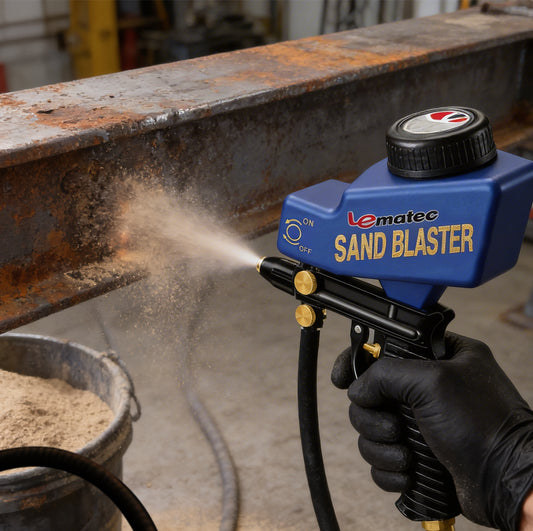
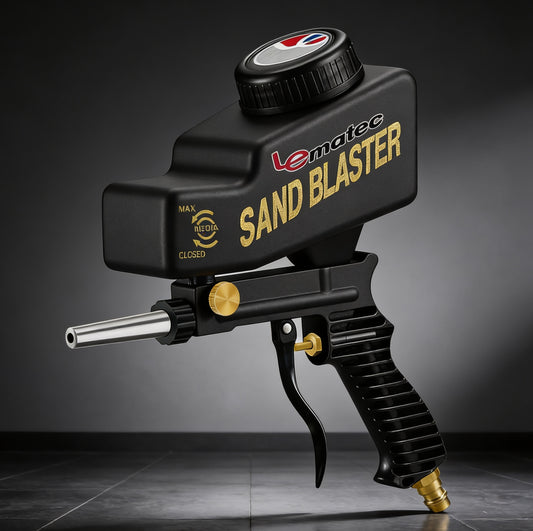
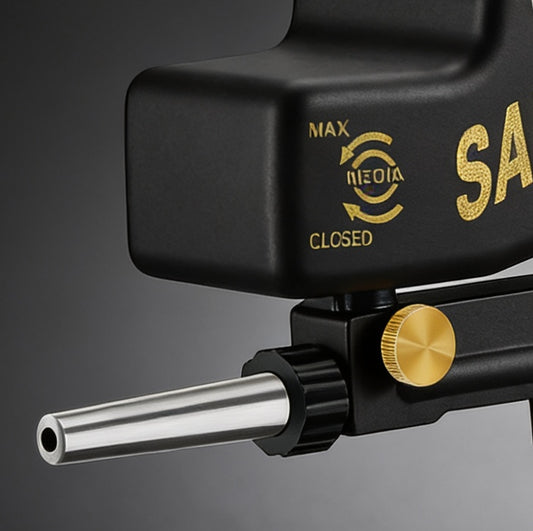

If you are stuck on sandblasting cabinet vs siphon blaster, the real question is not which one is better on paper. It is which one fits your parts, your air supply, your workspace, and how much mess you are willing to deal with after the job is done. A setup that works great for a frame bracket in a driveway can be the wrong choice for carb parts, sheet metal, or repeat shop work.
That is where buyers usually get tripped up. They compare blasting power and price, but the smarter comparison is control versus flexibility. One gives you a contained work area and cleaner operation. The other gives you portability and lower entry cost. Both can do useful work, but they solve different problems.
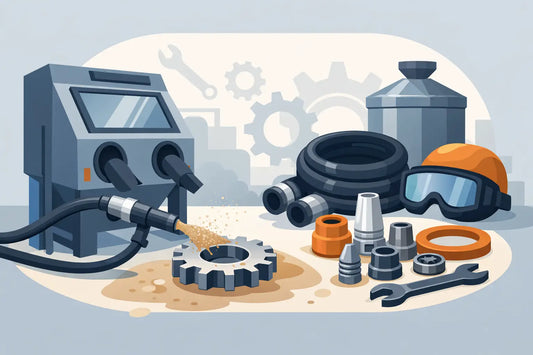
A sandblasting cabinet is an enclosed blasting system. You place the part inside, close the lid or door, and work through gloves while media circulates in a contained space. Most cabinets are built for bench or floor use and are designed to keep abrasive, dust, and debris where they belong.
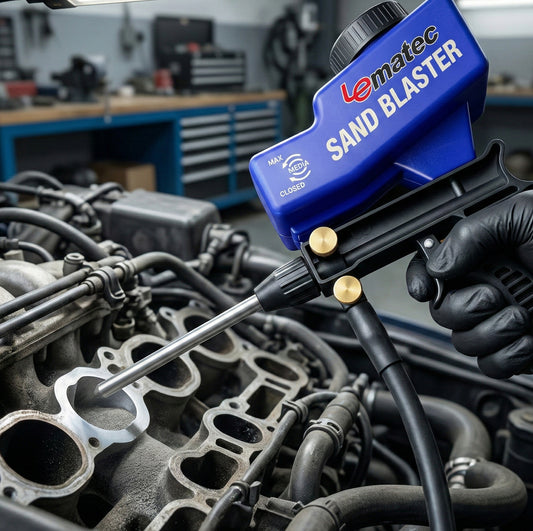
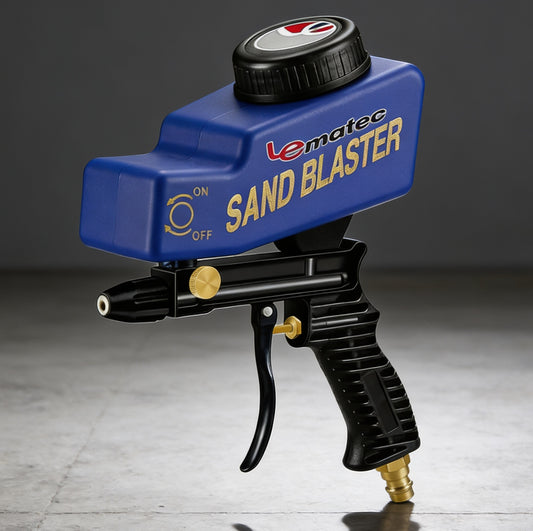
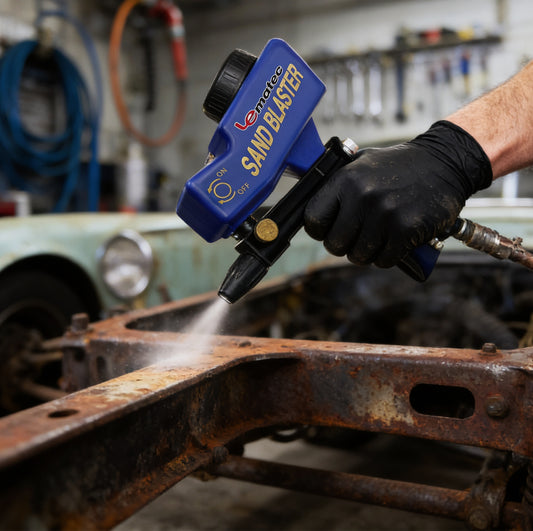
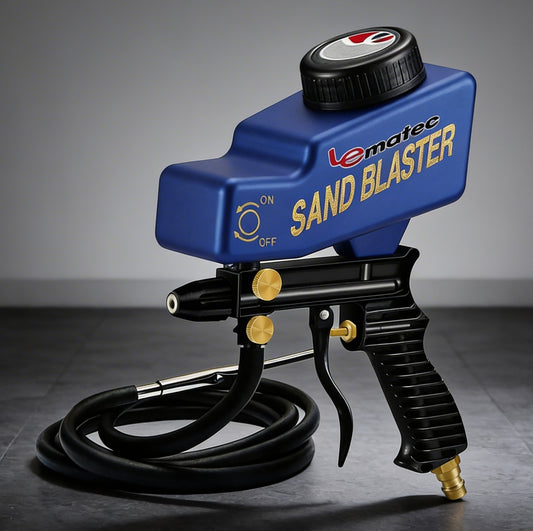
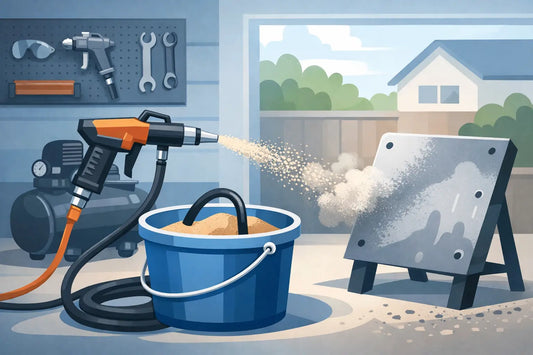
A siphon blaster, by contrast, pulls media through a pickup tube using air pressure and sends it out through the gun in an open blasting setup. It is simpler, more mobile, and usually cheaper to get started with. But because it is typically used in the open, it brings more cleanup, more media loss, and less control over dust.
For many buyers, the cabinet feels like a shop tool and the siphon blaster feels like a jobsite tool. That is not a perfect rule, but it is close enough to help narrow the decision.
If you regularly clean smaller parts, a cabinet usually earns its keep fast. Think brackets, wheels, valve covers, hardware, fabricated components, motorcycle parts, and batches of rusty or painted metal pieces. The big advantage is containment. Media stays inside the cabinet, dust is easier to manage, and visibility is better when the cabinet is paired with decent lighting and dust collection.
That matters more than people expect. A lot of blasting time gets wasted because the operator cannot clearly see the surface, keeps chasing media across the floor, or has to stop and reset parts. A cabinet cuts down on those interruptions.
It also tends to be more economical over time. Because the media is captured and reused, you waste less abrasive on every job. If you blast often, that adds up. Shops doing repeat work generally benefit from this right away, especially when they are trying to keep work moving instead of cleaning up after every part.
Surface consistency is another strong point. A cabinet gives you a stable environment, which helps when you want even coverage and less risk of overblasting a spot. That is useful for restoration work, prep before coating, and any part where finish quality matters.
The trade-off is size and mobility. A cabinet takes up floor or bench space, and the part has to fit inside. If you need to blast a mower deck, a trailer component, or a large welded assembly, the cabinet may simply not be an option.
A siphon blaster works well when portability matters more than containment. If you need to move around a part, blast outdoors, or work on pieces that will never fit in a cabinet, it makes sense. Large metal parts, fences, outdoor equipment, frames, and irregular shapes are the usual use cases.
It also appeals to buyers who want a lower-cost entry point. If you are only blasting occasionally, the simplicity of a siphon-fed setup can be a practical advantage. You can get started without dedicating permanent shop space to a cabinet.
For maintenance teams and DIY users, that flexibility is often the deciding factor. You pull it out when needed, use it on the part in place, and put it away. That is hard to beat if your blasting work is intermittent and varied.
The downside is that open blasting is messier, less efficient with media, and more affected by your environment. Wind, humidity, poor visibility, and awkward part positioning all make the work slower. If you are blasting in a driveway or outdoor work area, cleanup and media recovery are part of the job whether you plan for them or not.
This is where the comparison gets more practical. Neither setup performs well if the air supply is undersized. Sandblasting is air-hungry, and buyers often blame the blaster when the real issue is compressor output, pressure drop, or restricted hose size.
A siphon blaster generally depends heavily on steady airflow to pull media consistently. If your compressor struggles, the pickup can become uneven, which hurts cutting speed and finish consistency. You end up waiting on pressure recovery or fighting a weak blast pattern.
A cabinet can run into the same air limitations, especially if the gun and nozzle setup are not matched to the compressor. But because the work is contained and more controlled, the overall process often feels more efficient. You lose less time repositioning, recovering media, and dealing with visibility problems.
Finish quality also tends to favor the cabinet on smaller precision work. The enclosed area makes it easier to hold a steady angle and distance from the part. That means more predictable cleaning and less accidental damage to edges or soft materials.
If your jobs are mostly rough cleanup on larger steel pieces, the siphon blaster may be perfectly adequate. If your jobs demand repeatable results on visible or delicate parts, the cabinet usually gives you more control.
On upfront price alone, a siphon blaster often looks like the easy winner. Lower initial cost is attractive, especially for occasional use. But purchase price is only part of the decision.
With a siphon setup, media loss is higher and cleanup takes longer. You may also spend more on protective setup, dust management, and repeated refills. That does not always make it expensive, but it does make it less efficient than the sticker price suggests.
A cabinet usually costs more at the start, but it can save time and abrasive over the long run. For anyone blasting parts weekly, or even a few times a month, that operating efficiency can matter more than the entry price.
There is also the cost of frustration. A tool that technically works but slows down every job is not a bargain. That is especially true if you are trying to keep vehicles moving, turn around customer work, or finish weekend projects without losing half a day to setup and cleanup.
If you are an automotive user cleaning hardware, suspension parts, wheel components, intake pieces, or small fabricated items, a cabinet is usually the stronger fit. It is cleaner, easier to control, and better for repeat use.
If you are working on larger outdoor equipment, structural steel pieces, or items that cannot be moved onto a bench, a siphon blaster is often more practical. It gives you reach and flexibility, even if it asks more from your cleanup routine.
For mixed-use buyers, the decision often comes down to volume. If blasting is going to become part of your regular workflow, buy for efficiency. If it is an occasional task on oversized parts, buy for access.
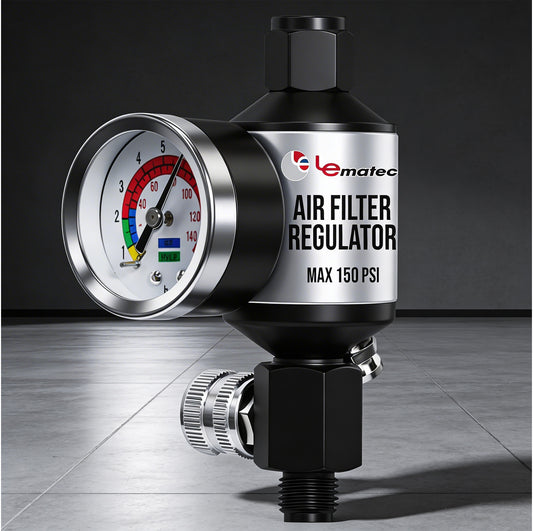
This is also where dependable support matters. Buying the right blaster is only half the job. You also need the right media, hoses, fittings, filters, and air control to make the setup perform the way it should. That is why buyers who want fewer surprises tend to stick with tool suppliers built around shop use, fast shipping, and solid warranty coverage, not random marketplace listings. Pro Air Tools fits that model well because the buying experience stays focused on getting equipment in the shop fast and keeping it working.
If your priority is clean operation, media reuse, and better control on smaller parts, go with a cabinet. If your priority is mobility, lower startup cost, and blasting larger pieces in place, a siphon blaster is the better fit.
Neither option is the right answer for every shop. The better question is what kind of work shows up most often and what slows you down right now. Buy for that bottleneck, and your blasting setup will start paying you back on the first real job.



 AIR REGULATORS

 ACCESSORIES