Shopping Cart
(0)
Free shipping included — no minimum on any US order

Quick Search:




A die grinder only works as well as the bit you put in it. If you have ever fought chatter, burned up a burr, or left a finish rougher than the part started, this guide to pneumatic die grinder bits will save you time, money, and rework.
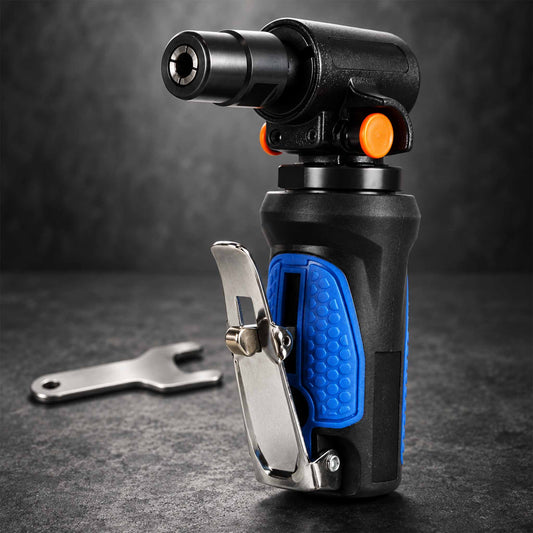
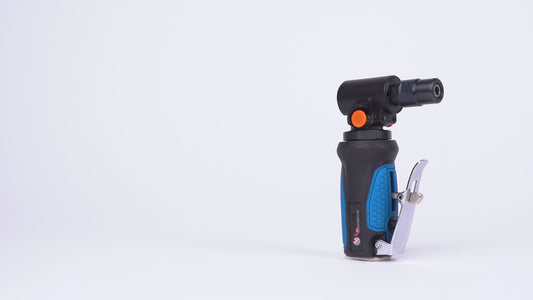
Pneumatic die grinders are fast, compact, and easy to control in tight spaces. That makes them a shop staple for deburring welds, porting, cleaning gasket surfaces, knocking down rust, and blending metal. But the wrong bit can slow the job down fast. The shape matters. The material matters. Even the shank size matters.
Most die grinder problems are not tool problems. They are accessory problems. A quality air die grinder can run strong all day, but if the bit is wrong for the material or the cut, you get poor control, excess heat, and shorter accessory life.
A carbide burr that is perfect for steel can load up badly on aluminum. A mounted stone that works for light edge cleanup can glaze over if you lean on it too hard. A flap wheel can give a smooth finish, but it is not the choice for heavy stock removal. Matching the bit to the task is what separates quick, clean work from wasted time.
When most buyers say die grinder bits, they are talking about several different accessory categories. They all fit the same basic tool, but they do very different jobs.
Carbide burrs are the go-to choice for aggressive material removal. They are commonly used on steel, stainless, cast iron, and weld cleanup. If you need to shape metal, open up a hole, smooth a weld bead, or remove casting flash, this is usually where you start.
They come in several head shapes. Cylinder burrs work well on flat areas and edges. Ball shapes help in rounded pockets. Tree and flame shapes are useful for contour work and tighter access. Oval burrs give you good control for blending curved surfaces. The shape is not just preference - it changes how easily you can reach the work and how stable the cut feels.
Cut style matters too. Double-cut burrs are a common all-around option because they remove material quickly while giving better control and a smoother finish than single-cut. Single-cut burrs can work well for fast stock removal and certain ferrous applications, but they tend to leave a rougher surface. For aluminum and other non-ferrous metals, look for burrs designed to resist loading.
Mounted stones are better for grinding than cutting. They are useful for smoothing edges, cleaning up small imperfections, and reaching areas where a bench grinder cannot. You will see them in general metalwork, maintenance, and automotive jobs.
The trade-off is that stones wear down faster than carbide burrs and are less aggressive. They also need a lighter touch. Push too hard and they can glaze, lose effectiveness, or wear unevenly. For detail work and modest cleanup, they still earn their place.
If your goal is blending and finishing rather than heavy removal, flap wheels and sanding rolls are often the better call. They conform better to irregular surfaces and leave a more controlled finish than a burr or stone.
This is where grit selection becomes the key decision. Coarser grits remove material faster and help with weld blending. Finer grits are better for surface prep and finish work before coating or paint. In bodywork and fabrication, these accessories are often what take a part from functional to clean and presentable.
Wire accessories are best for rust removal, paint stripping, weld cleaning, and general surface prep. They are not precision finishing tools, but they are fast for cleaning metal before the next step.
Cup brushes cover broader areas. End brushes work better in tighter spots and inside corners. The main caution here is control. Wire can throw debris, and aggressive brushing on softer material can damage the surface if you stay in one place too long.
Some pneumatic die grinders can run small cutoff wheels and specialty abrasive heads, depending on the tool setup and guard requirements. These are useful for trimming bolts, cutting sheet metal, or handling niche tasks. Just make sure the accessory is rated for the grinder speed and the tool is configured safely for that use.
Start with the material. That sounds obvious, but it solves most selection mistakes. Ferrous metals, stainless, aluminum, plastic, and composite materials all respond differently.
For steel and cast iron, carbide burrs and quality grinding stones are common choices. For stainless, carbide still works well, but heat management matters more because stainless can work-harden. For aluminum, you want burr geometry that clears chips instead of packing them. For lighter finishing on any metal, abrasives like flap wheels or sanding rolls usually give you better control.
Then look at the job itself. Are you removing a lot of material, cleaning a weld, opening a port, or just smoothing an edge? If the job is aggressive shaping, carbide is usually the answer. If the job is blending and finish control, abrasives usually make more sense. If the job is surface cleanup, wire may be fastest.
Access matters too. A burr that cuts great on an open edge may be useless in a recessed pocket. Long-shank bits help with reach, but they can introduce more vibration if you overextend them. Sometimes the best bit is simply the one that lets you keep the grinder stable.
Most pneumatic die grinder bits use a 1/4-inch shank or 1/8-inch shank. Your collet has to match the accessory. Trying to force the wrong size is a quick way to create runout, poor grip, and unsafe operation.
Speed rating matters just as much. Pneumatic die grinders run fast, often much faster than people realize. Every accessory must be rated for the RPM your tool can produce. If the grinder outruns the bit rating, do not use it.
Bit diameter also changes the feel of the tool. Larger heads can remove more material, but they need more control and may feel less stable in tight work. Smaller heads are slower on broad surfaces but better for detail and precise cleanup.
The biggest mistake is using one bit for every job. That usually leads to poor finish quality and burned-up accessories. Shops that get the best results keep a few categories on hand and switch based on the task.
The second mistake is applying too much pressure. Pneumatic die grinders work best when the accessory is doing the cutting. If you force the tool, you build heat, wear the bit faster, and make the grinder harder to control.
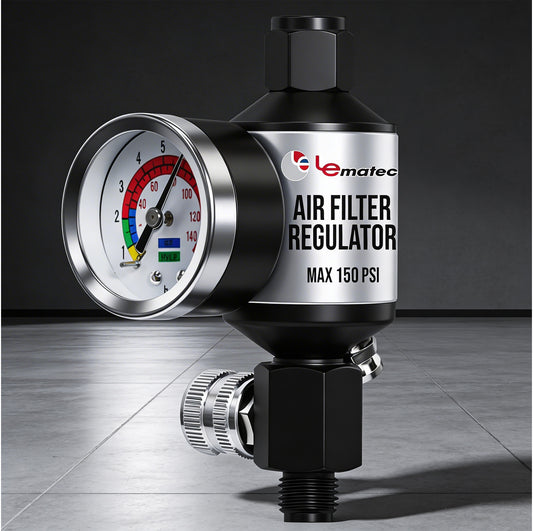
The third mistake is ignoring air supply. An undersized hose, poor regulator setup, or low CFM can make the tool feel weak and inconsistent. Buyers sometimes blame the bit when the real problem is air delivery.
A practical starter setup usually includes a few carbide burr shapes for metal removal, a small assortment of mounted stones for detail grinding, flap wheels in two or three grits for blending, and a wire brush or two for cleanup. That covers a wide range of automotive, fabrication, and maintenance work without overbuying.
If you work mostly on steel fabrication, put more emphasis on burrs and flap wheels. If you do restoration or body prep, wire accessories and finishing abrasives may see more use. If you are working on aluminum parts, invest in burrs made for non-ferrous material instead of trying to make a standard burr do everything.
For buyers who want jobsite-ready reliability, it makes sense to source tools and accessories from the same place you trust for the rest of your air setup. That keeps compatibility simpler and cuts down on trial and error.
Keep the bit moving. Let the shape of the accessory guide the cut instead of digging in with one edge. Use a light, steady grip and approach the work at an angle that gives you control without bouncing.
Check the accessory often. A loaded burr, glazed stone, or worn flap wheel will not suddenly get better if you keep pushing it. Swapping early usually saves time.
And do not overlook basic maintenance on the grinder itself. Clean air, proper lubrication when required, and a solid collet setup all help the bit run true and last longer. Pro Air Tools customers usually care about uptime first, and this is one of the easiest ways to protect it.
The right die grinder bit does not just make the job faster. It makes the work cleaner, more predictable, and easier on your hands. If you choose based on material, task, and access instead of guessing by shape alone, you will get better cuts and fewer headaches every time you pull the trigger.


 AIR REGULATORS

 ACCESSORIES