Shopping Cart
(0)
Free shipping included — no minimum on any US order

Quick Search:

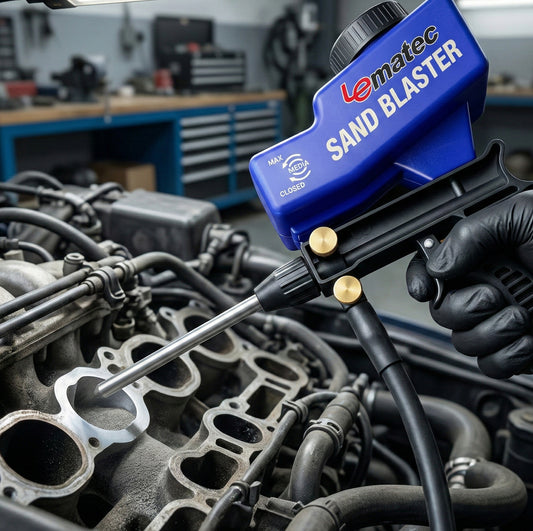
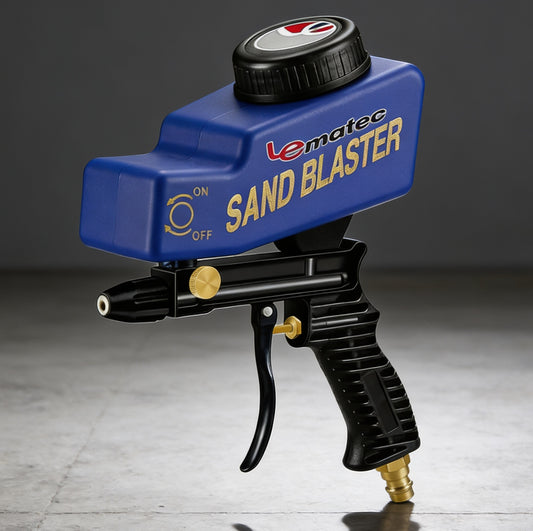

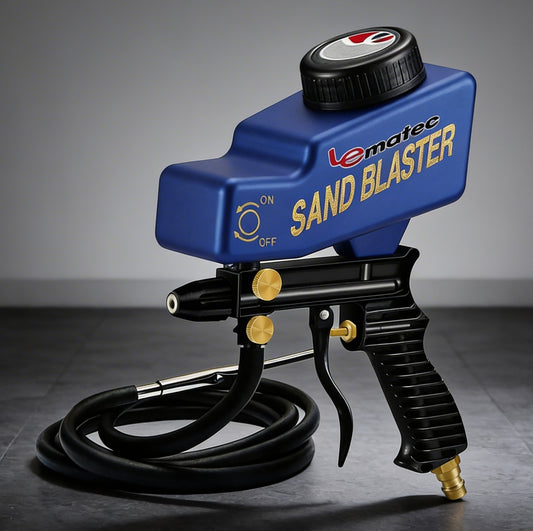

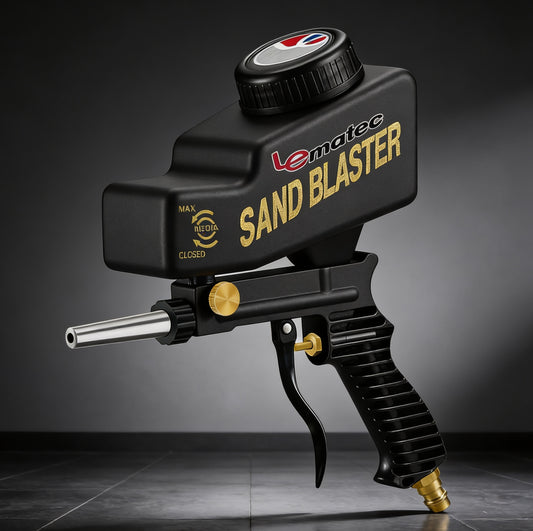
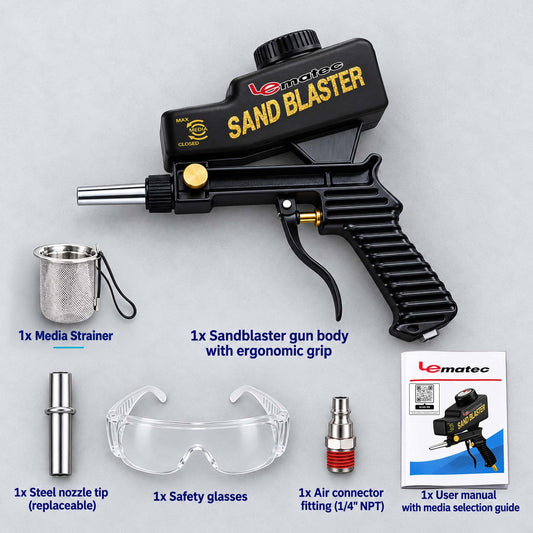

If you are comparing a gravity feed vs siphon sandblaster, you are probably not shopping for theory. You want the setup that matches your compressor, your media, and the kind of work sitting on your bench right now. That choice matters because the wrong blaster can slow production, waste abrasive, or leave you fighting clogs when you should be finishing parts.
For most buyers, the real question is not which design is better on paper. It is which one makes the job easier with the air system and blasting workload you already have. Gravity feed and siphon sandblasters both remove rust, paint, scale, and coatings, but they do it in different ways, and those differences show up fast once you start blasting.
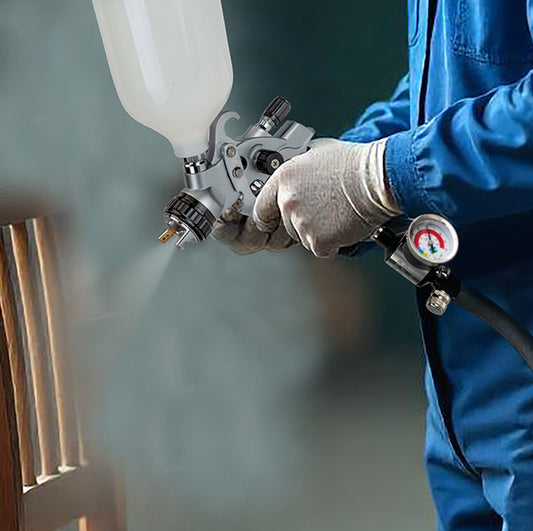
A gravity feed sandblaster stores media in a cup mounted above the gun. The abrasive falls down into the airstream by gravity, so the gun does not have to work as hard to pull media into the nozzle. That usually means a simpler feed path and a more direct delivery of abrasive.
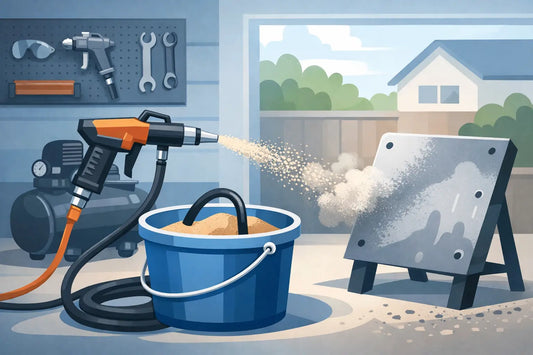
A siphon sandblaster pulls media up through a pickup tube from a hopper, bottle, or bucket below the gun. Compressed air moving through the gun creates suction, which draws the abrasive into the stream before it exits the nozzle. It is a proven design and a common choice for larger media reservoirs and longer blasting sessions.
That one difference affects almost everything else - feed consistency, air demand, portability, refill frequency, and how forgiving the tool is with different abrasives.
Gravity feed units are usually the better fit for detail work, smaller parts, and shorter blasting runs. If you are cleaning brackets, fasteners, motorcycle parts, weld seams, or spot rust on automotive pieces, a gravity feed gun often feels quicker and more precise in the hand.
Because the media drops directly into the gun, gravity feed setups can be efficient with abrasive use. They often respond well when you need controlled blasting rather than sheer coverage. That can help if you are trying to avoid overblasting softer surfaces or if you are working in a cabinet where visibility and control matter.
They also tend to be convenient when you want a compact setup. Fill the cup, connect air, and go. For a small shop or home garage, that simplicity has real value. There is less hose and container management, and setup can feel faster when the job is only a few parts.
The trade-off is capacity. Cup size is limited, so you will refill more often. On bigger jobs, that gets old fast. If you are stripping larger panels, frames, or batches of parts, a small gravity feed cup can become the bottleneck.
Siphon sandblasters are often the more practical choice for longer sessions and larger jobs because they can draw from a bigger media supply. That matters when you are cleaning wheels, suspension components, fabricated steel, or multiple parts in one run. Less stopping to refill means better workflow.
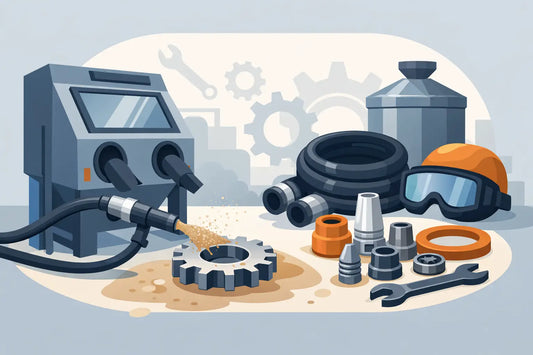
They also make sense in cabinet blasting systems where the media is already sitting in a hopper below the work area. In that setup, the siphon design fits the system naturally. It keeps the gun lighter in hand since the abrasive is not carried in a cup on top of the tool.
For repetitive work, that lighter gun can reduce fatigue. If you are blasting for an hour instead of ten minutes, ergonomics matter. A siphon gun with a well-matched pickup system can be easier to manage during steady production work.
The catch is that siphon systems depend on good suction. That means the gun, pickup tube, hose, media condition, and air pressure all need to work together. If the abrasive is damp, too heavy for the setup, or inconsistent in size, feed problems tend to show up sooner.
This is where buyers usually want a straight answer. In many small-job situations, gravity feed can feel more efficient because the abrasive reaches the nozzle with less effort. Feed can be steady, and the gun may perform well without as much tuning.
Siphon systems can absolutely move material effectively, especially in cabinet use and on longer jobs, but they are usually more sensitive to setup details. Hose length, pickup angle, media quality, and nozzle wear all affect performance. When everything is dialed in, they work well. When something is off, production drops.
That does not mean gravity feed always blasts faster. On larger jobs, a siphon setup with a larger abrasive reservoir can keep you moving longer, which may produce better real-world throughput even if the feed method itself is less direct.
So if you are comparing blasting speed, separate short-burst speed from all-day productivity. Gravity feed often wins the first one. Siphon can win the second.
Your compressor should decide more purchases than most people admit. A sandblaster that looks like a bargain becomes expensive if your air supply cannot keep up.
Gravity feed guns can be a good fit for users trying to get practical performance from smaller shop compressors. Since the media is assisted by gravity, the system may feel a little less demanding in use, especially on lighter-duty work. That said, sandblasting in general is air-hungry, and even small guns can outrun marginal compressors.
Siphon sandblasters often benefit from strong, consistent airflow because they are doing double duty - moving air and creating enough suction to pull media reliably. If your compressor struggles to maintain pressure and volume, the siphon feed will usually show that weakness faster.
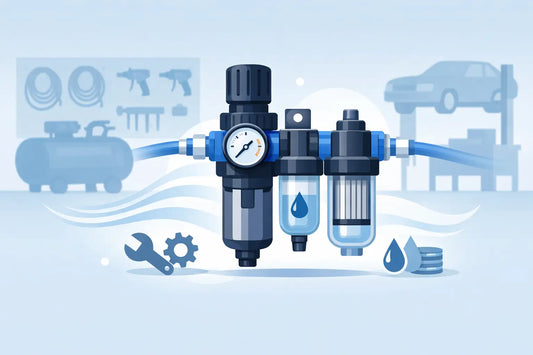
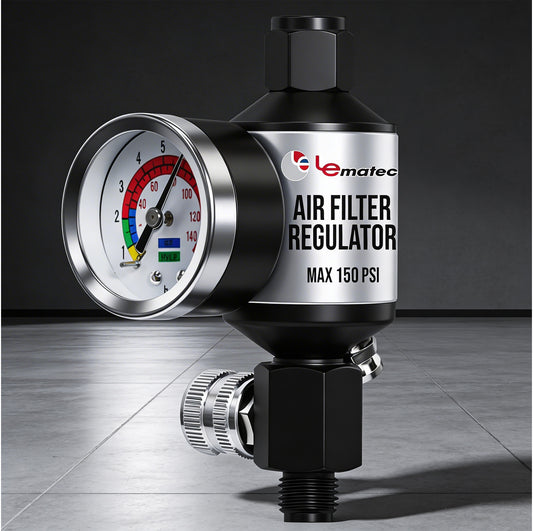
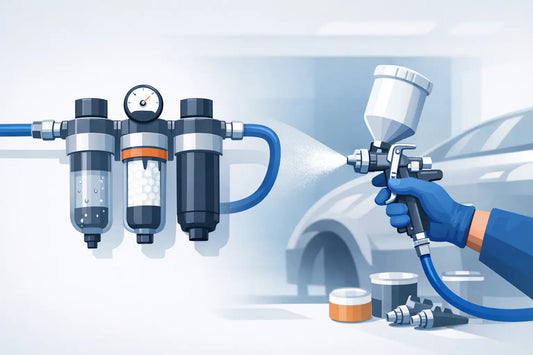
For either style, stable pressure, clean dry air, and proper hose sizing matter. Wet air creates clogs. Pressure drop reduces blasting performance. A good regulator and moisture control setup are not accessories in the optional sense. They are part of a sandblasting system that actually works.
Not every abrasive behaves the same way, and this is one reason there is no universal winner in the gravity feed vs siphon sandblaster debate.
Finer, consistent media can work very well in either design when the gun and nozzle are matched correctly. Heavier or less uniform media may be more temperamental in siphon setups because the system has to pull it upward through the feed path. Gravity feed can be more forgiving there, but cup size and gun design still matter.
Dirty, damp, or recycled media causes trouble in both systems. If you want consistent blasting, keep media dry, screened, and matched to the nozzle size. A lot of feed complaints are really media handling problems.
For spot work, restoration parts, and smaller automotive components, gravity feed is often the easy recommendation. It is compact, quick to set up, and well suited for controlled blasting on limited areas. If you are cleaning rust around brackets, prepping hardware, or handling smaller fabricated pieces, it can be the faster way to get in and out.
For cabinet blasting, batch work, and jobs where you want more media on tap, siphon usually makes more sense. It is a common shop choice for cleaning multiple parts without stopping every few minutes to refill a cup. If your air system is solid and your media stays dry, it can be a dependable production option.
If you run a small shop, the answer may not be either-or. A gravity gun can be the right tool for quick bench work, while a siphon setup covers the longer cabinet sessions.
Buy a gravity feed sandblaster if your jobs are smaller, your blasting time is shorter, and you want a simple setup with good control. It is a strong fit for detail work, touch-up blasting, and users who do not want extra media containers and pickup hoses to manage.
Buy a siphon sandblaster if you blast more often, want a larger media supply, or plan to use a cabinet system for repeated parts cleaning. It rewards a better air setup and more consistent media handling, but it can pay off in workflow when the jobs get bigger.
If your compressor is borderline, be honest about that before you choose. The best gun in the catalog will not make up for weak air delivery. Matching the blaster, nozzle, hose, regulator, and media to your compressor is what gets predictable results.
That is also why buyers who care about uptime usually shop from a source that understands the whole pneumatic system, not just the gun itself. At Pro Air Tools, that practical match between tool, accessory, and air setup is what keeps projects moving instead of turning into troubleshooting sessions.
The right sandblaster is the one that fits your workload without wasting air, media, or time. Start with the parts you blast most often, then choose the feed style that makes those jobs easier every single time.


 AIR REGULATORS

 ACCESSORIES