Shopping Cart
(0)
Free shipping included — no minimum on any US order

Quick Search:



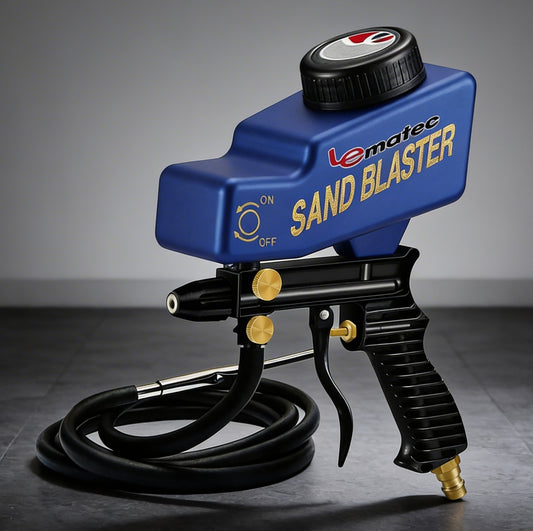

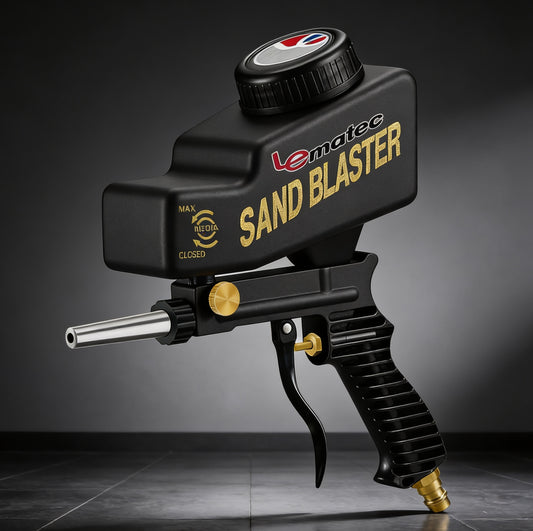
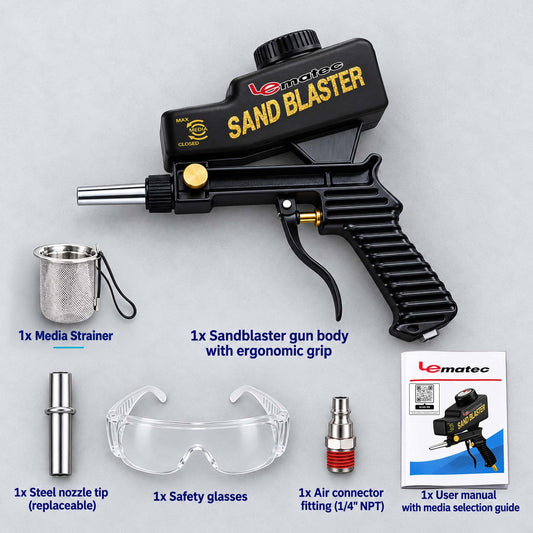

If you’ve ever swapped from an impact to a blow gun and heard that familiar hiss that won’t quit, you already know quick connects are not “just a fitting.” They’re the handshake between your hose and your tool, and they can either keep air moving or quietly choke your setup.
Quick connect fittings for air tools matter most when you’re trying to work fast: tire rotations, suspension work, fab grinding, paint prep, or blasting where your air supply is already working hard. The wrong coupler style can leak, bind, or restrict flow enough to make a good tool feel weak. The right one makes tool changes quick, reduces downtime, and keeps your compressor from cycling more than it needs to.
A quick connect is two pieces: the female coupler (usually on the hose) and the male plug (usually on the tool). Inside the coupler is a sleeve and a valve. When you snap in the plug, the valve opens and air flows.
That valve and the internal passage diameter are the whole story. A “small” coupler can be perfectly fine for a brad nailer, but feel like a bottleneck on an impact wrench, air hammer, die grinder, or any tool that wants high CFM. Even if your compressor and regulator are set right, a restrictive coupler can drop pressure at the tool under load.
Leakage is the other piece. A coupler that doesn’t seal cleanly, has worn internals, or doesn’t match the plug standard will bleed air constantly. That costs you money, but it also costs you productivity because your compressor is running more and your pressure is less stable.
Most frustration comes from mixing plug and coupler “profiles.” In the US, you’ll see a few common patterns, and they are not automatically interchangeable even when the threads match.
Industrial (often called M-style) is the most common in general shop use. Automotive (T-style) shows up in some tool kits and older shop setups. ARO (A-style) is also out there, especially in certain regions and with some legacy equipment.
Here’s the key: a 1/4-inch NPT plug can thread into your tool no problem, but that does not mean it will snap and seal correctly in every 1/4-inch coupler you own. If your coupler takes Industrial plugs and you try to jam in an Automotive plug, you might get a connection that “kind of” works, then pops loose, leaks, or restricts flow.
If you’re standardizing a shop, pick one profile and stick to it. Consistency is how you avoid wasting time during tool changes and how you prevent the mystery leak that follows one specific hose around.
A lot of people think “1/4-inch” means the passage is 1/4-inch. Usually, it’s referring to the thread size (typically 1/4-inch NPT) and a general category of coupler body. The actual internal diameter can be much smaller.
For light-demand tools (inflators, blow guns, small nailers), a typical 1/4-inch body coupler is usually fine. For higher-demand tools (die grinders, cut-off tools, sanders, air hammers), stepping up to a high-flow style or a 3/8-inch body coupler can make the tool feel more responsive, especially on longer hose runs.
It depends on your whole system. If you’re running 25 feet of 3/8-inch hose straight from the regulator to a single tool, you may notice less difference than someone running 50-100 feet, multiple fittings, and a couple of reducers. Restrictions stack up. Every adapter, swivel, or undersized coupler is another pinch point.
A practical way to think about it is this: if you’ve invested in pro-grade air tools because you want faster removal, smoother grinding, or better control, don’t leave performance on the table at the coupler.
Brass fittings resist corrosion well and are common in shop air setups. Steel is tougher and can handle abuse, but it’s more prone to corrosion if you’re in a humid environment or your air system carries moisture.
If you do any sandblasting or heavy paint prep, you already know moisture control is half the battle. Water in the air line doesn’t just affect media flow and finish quality - it also shortens the life of couplers by promoting rust and internal wear.
There’s no magic material that solves a wet air system. If your couplers are corroding or sticking, the fix is usually upstream: drainage habits, a decent filter/regulator, and keeping hoses and fittings out of the dirt when you’re working.
Not all quick connects behave the same when you disconnect. Standard couplers can “snap” off under pressure, and that can whip a hose if you’re not controlling it.
A safer option is a venting or “safety” coupler that bleeds off downstream air pressure before fully releasing the plug. In a busy shop, this can be a real quality-of-life upgrade. It reduces the violent pop and makes disconnects more controlled, especially with higher PSI or larger hoses.
The trade-off is that safety couplers can be slightly bulkier and sometimes cost more. If you’re disconnecting a lot during the day, that added control usually pays you back in fewer annoyances and less risk.
Most air tool fittings in the US are NPT (tapered pipe thread), usually 1/4-inch NPT at the tool inlet. NPT seals by thread interference, but it still needs a sealant to prevent micro-leaks.
Teflon tape works fine when applied correctly: wrap in the direction of tightening, keep it back from the first thread so you don’t send tape into the tool, and don’t overdo it. Thread sealant paste also works and is often cleaner for frequent changes.
Over-tightening is a common mistake. It can crack brass, distort threads, and make future service miserable. Snug plus a bit is typically enough when you’re using the right sealant.
If your impact wrench hits hard for one second and then feels like it runs out of breath, that’s often airflow restriction, not the tool. Couplers, undersized hose, and cheap swivels show up under sustained load.
For grinders and sanders, restriction shows up as a tool that bogs down easily and runs hotter. For sandblasting, it shows up as inconsistent media flow and a compressor that can’t seem to catch up. Your nozzle size and CFM demand matter a lot, but the fittings still play a role because blasting is continuous air use.
If you’re diagnosing a weak tool, don’t start by blaming the compressor. Check the simple stuff: regulator setting under load, hose diameter and length, and the couplers and plugs. A single high-restriction coupler can make an otherwise solid setup feel frustrating.
If you have a mix of couplers already, the cleanest path is to pick your standard profile and convert in a controlled way.
Start at the hose end because that’s where most swapping happens. Put matching couplers on your main hoses, then change plugs on the tools you use most. Adapters can help you get through the transition, but they add restriction and another leak point, so they should be temporary.
If you run multiple work areas, standardizing also helps with speed. Nobody wants to hunt for the “right” hose when a car is on the lift and the clock is running.
For buyers who want one place to grab the right couplers, plugs, hoses, and air tool accessories without guessing, Pro Air Tools is set up for that kind of practical, jobsite-ready shopping.
Quick connects are wear items. The internal seals and valves take a beating, especially if you’re connecting and disconnecting all day or dragging hoses through a dusty shop.
If a coupler leaks even after you confirm the plug matches the profile, it’s usually not worth babying. If it sticks, needs two hands to connect, or starts “half latching,” it’s telling you it’s near the end.
Keeping your air clean helps. A decent filter and regular compressor tank draining reduce moisture and grit that chew up seals. Also, don’t let couplers slam into the floor repeatedly. It sounds obvious, but that’s how sleeves get gritty and internals get knocked out of tolerance.
Quick connect fittings aren’t glamorous, but they’re a control point for airflow, reliability, and how fast you can move from tool to tool. Pick a profile, size for the air demand you actually run, and don’t tolerate chronic leaks. The payoff is simple: your tools feel stronger, your compressor runs less, and your work stays moving when you’re trying to get a job done instead of messing with hardware.
Factory direct from Le Lematec — professional quality, competitive prices.




 AIR REGULATORS

 ACCESSORIES