Shopping Cart
(0)
Free shipping included — no minimum on any US order

Quick Search:
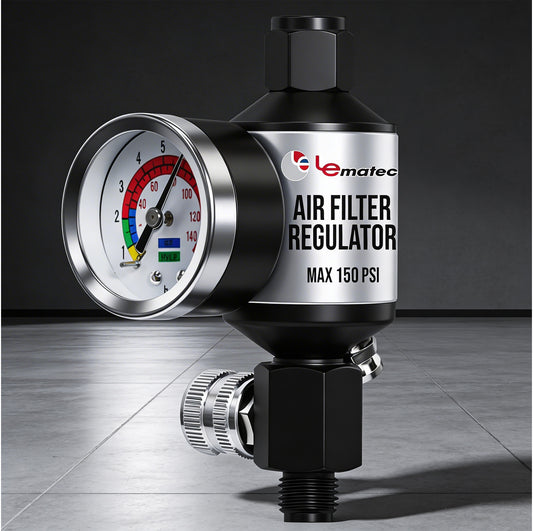
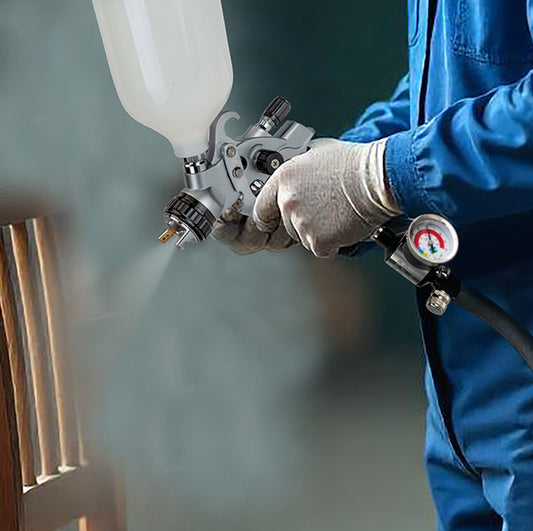

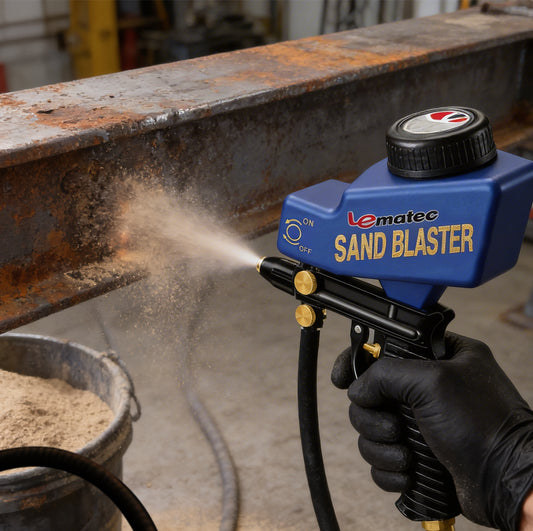
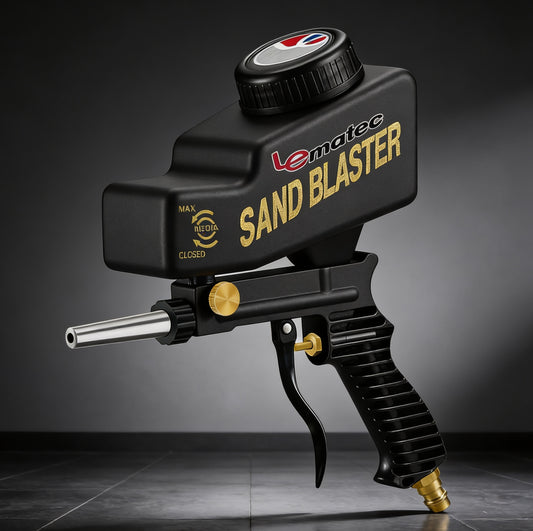
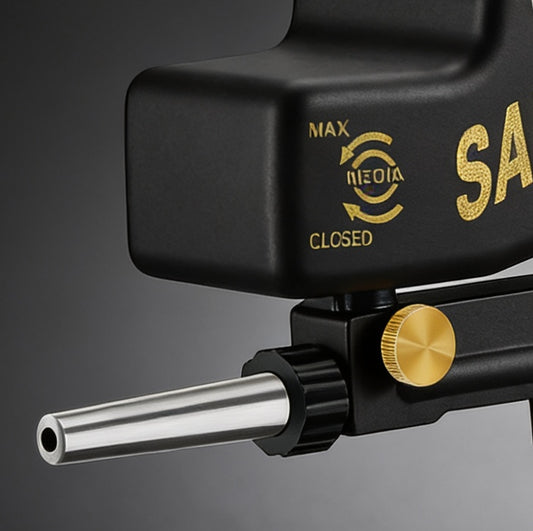

A compressor can be putting out 120-175 PSI all day long and still feel “weak” at the tool. Most of the time, it’s not the pump. It’s pressure control and air quality - and the regulator is where those two problems either get solved or get worse.
If you’re trying to pick the best air regulator for compressor use in a real shop (impact guns, DA sanders, sandblasting, paint prep), you’re not shopping for a fancy dial. You’re shopping for stable outlet pressure at the flow your tools actually demand, plus a setup that doesn’t choke your line or flood your air with water and oil.
The practical definition: the best regulator is the one that (1) passes enough CFM for your hungriest tool, (2) holds outlet pressure steady when flow changes, (3) matches your line size without reducing it, and (4) fits the air quality you need - either by pairing with filtration or by choosing a regulator/filter combo.
General-purpose regulators work fine when flow is modest and intermittent: tire inflators, blow guns, trim nailers, light ratchets. They’re usually compact, easy to mount, and accurate enough for 40-120 PSI work.
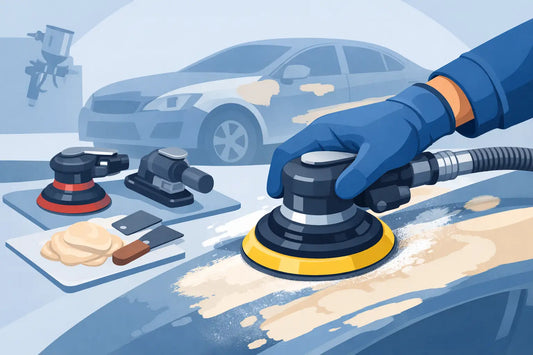
High-flow regulators are the better choice when flow is continuous or the tool is sensitive to pressure drop: DA sanders, air grinders, cut-off tools, paint guns, and sandblasters. These applications expose a regulator fast - you set 90 PSI static, pull the trigger, and the outlet falls into the 60s. That’s not your compressor “running out.” That’s restriction.
If you do blasting or long sanding sessions, treat “high-flow” as non-negotiable. You can’t tune around a regulator that’s too small.
A safer approach is to choose a regulator with a flow rating comfortably above your highest-demand tool, especially for continuous draw. That extra capacity is what keeps outlet pressure stable when you feather a trigger, cycle a blast gun, or load a sander.
Match the regulator’s inlet and outlet to your drop size. For most small shops, that’s commonly 3/8 in NPT at the point of use. For higher demand (especially blasting), 1/2 in at the drop and through the regulator can make a visible difference.
A larger, easy-to-read gauge helps you set pressure fast and repeatably. That matters when you’re switching between tasks like running a blow gun at 90 PSI, then dropping to a lower, tool-specific pressure, then going back up.
You also want a regulator that doesn’t drift. If you set it and it creeps up or down while the compressor cycles, you’ll feel it in tool response and finish quality.
If you’re only running durable tools (impacts, ratchets) and you oil them properly, you can often run a regulator at the point of use and handle water management upstream with a tank drain routine and a basic water separator.
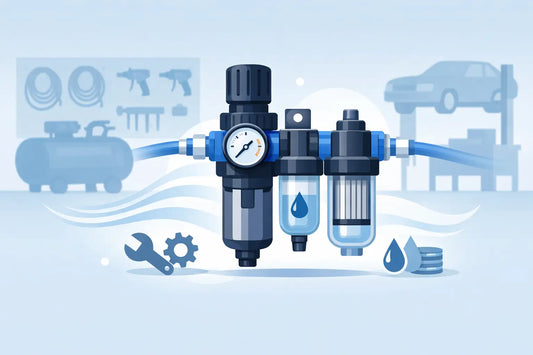
If you’re doing any sandblasting, paint prep, or anything where moisture shows up as clogs or surface defects, a regulator/filter combo at the drop is usually the smarter buy. It saves space, simplifies mounting, and gives you one station that both cleans and controls.
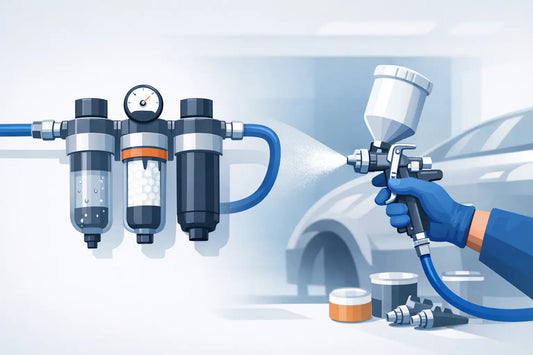
For paint spraying specifically, many users step up to a multi-stage approach: a separator at the compressor, a filter/regulator at the drop, and a final filter at the gun. That’s not hype - it’s because cooling air dumps water as it travels, so the “last chance” filtration closest to the tool is what protects the finish.
If you regulate at the tank and run a long hose, the pressure drop happens after the regulator. You may set 90 PSI and still starve the tool at the far end when flow increases.
For most shops, the best results come from regulating at the drop or point of use, after the main line and close to the tool. That way the regulator is compensating for downstream changes, not trying to guess what’s happening 50 feet away.
There are exceptions. If you have a dedicated line feeding a single machine (for example, a sandblast cabinet), regulating closer to the compressor can work if the plumbing is sized right and the run is short. But for mixed-use drops, point-of-use regulation wins.
The main trade-off is cost versus stability. Cheaper regulators can work, but you’ll see more pressure swing when you hammer a trigger. If you care about repeatable tool feel, buy for flow capacity, not the smallest footprint.
If your tool is rated at 90 PSI, you want the regulator to hold close to that while flowing, not only when the tool is idle.
Here, a high-flow regulator paired with serious water separation is typically the best path. Also pay attention to gauge visibility - blasting setups get adjusted often as you change media, nozzle size, and surface profile goals.
The trade-off is complexity. A filter/regulator station takes a few more minutes to install, but it saves hours of rework.
Undersized quick couplers and plugs can drop pressure as much as a small regulator. If you’re chasing performance, make sure your couplers match your line size and are designed for high-flow when needed.
Long, skinny hoses are another silent killer. A 1/4 in hose feeding a hungry tool will show pressure drop no matter how good the regulator is. If you’re investing in regulation, match it with a hose that can deliver.
Finally, don’t ignore maintenance. A clogged filter element or a bowl full of water will restrict flow and contaminate air. Draining and servicing takes minutes. Troubleshooting around it takes hours.
First, can it pass the air your tools need without becoming the narrowest point? That’s port size and flow capacity.
Second, does it adjust smoothly and stay put? That’s build quality and internal design, and it shows up as stable outlet pressure under changing demand.
Third, does it fit your environment? If it’s going on a busy shop wall, you want a solid mounting option, a gauge you can read quickly, and a bowl style (metal or protected) that won’t crack the first time something bumps it.
If you want to keep purchasing simple, buying your regulator and filtration from the same supplier that supports the rest of your air system is usually the lowest-risk move. Pro Air Tools at https://proairtools.com/ is built around that kind of practical, jobsite-ready shopping - the parts that keep your air tools and blasting setups running without downtime.
Factory direct from Le Lematec — professional quality, competitive prices.



 AIR REGULATORS

 ACCESSORIES