Shopping Cart
(0)
Free shipping included — no minimum on any US order

Quick Search:

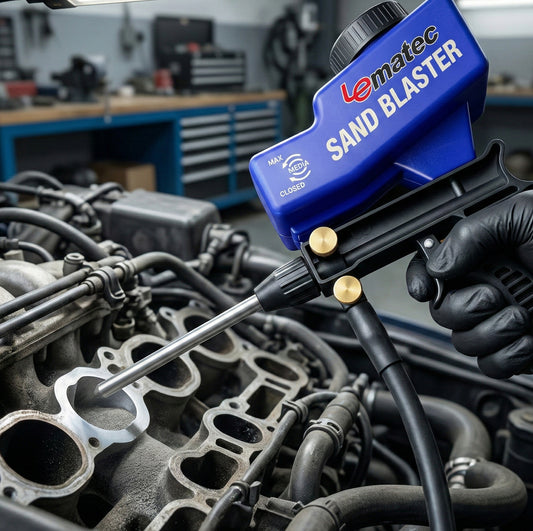
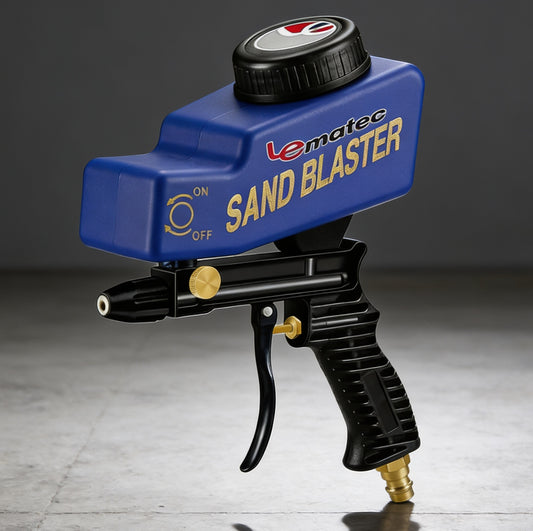
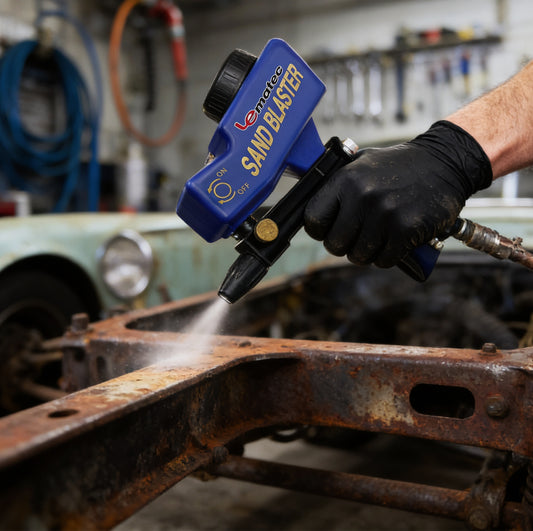
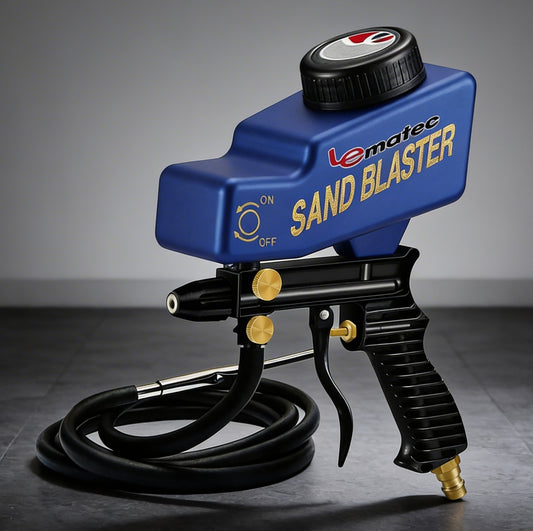
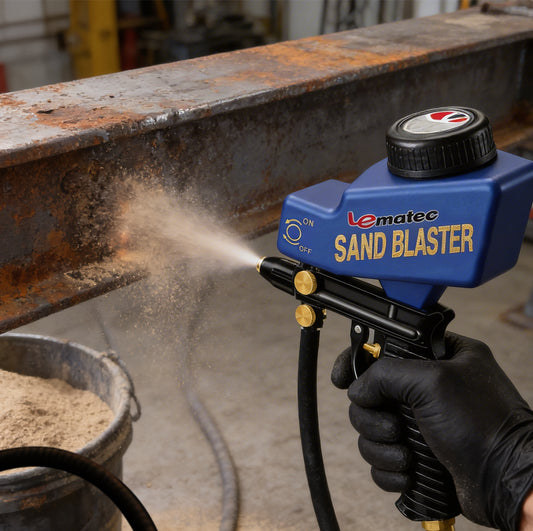
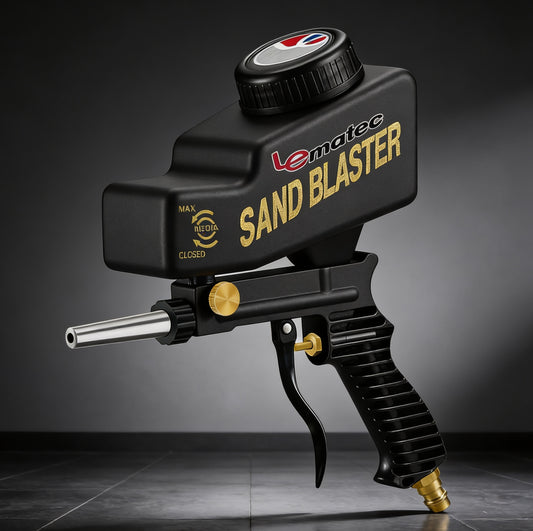
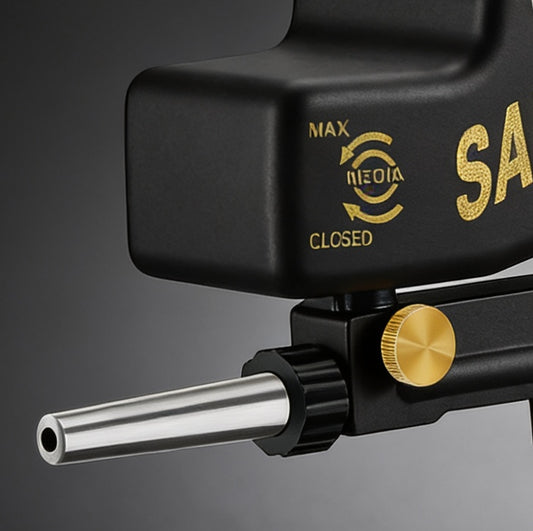

You can have a solid blast pot, clean media, and a big compressor - and still get a frustrating, weak blast pattern that feels like it takes forever. A lot of the time, it comes down to the nozzle. Not the brand name, not the handle, not the hose color - the nozzle size.
This is “sandblaster nozzle sizes explained” the way most shops actually need it: how nozzle size changes cutting speed, air demand, media flow, and finish quality - and how to pick a size that works with the air you really have.
When people talk about sandblasting nozzle size, they usually mean the orifice diameter - the hole the air and abrasive pass through. It is commonly measured in fractions of an inch (like 1/8 inch) or in numbered sizes (like a #4).
That tiny change in diameter is a big deal because nozzle area grows fast. Jumping up one size does not increase flow “a little.” It can increase air consumption and abrasive throughput enough to overwhelm an otherwise capable compressor, or it can turn a controlled surface prep job into an aggressive cut that leaves a rougher profile than you wanted.
The second measurement that matters is nozzle length and shape (straight bore vs venturi). Length and profile affect how efficiently the nozzle accelerates abrasive and how wide the blast pattern is, but the orifice size is still the main driver of air demand.
A bigger orifice typically means faster cleaning because it can move more air and media. It also usually means a wider pattern (especially with venturi nozzles), which helps on large, flat areas like frames, trailers, and equipment housings.
The cost of that speed is CFM. If the compressor cannot supply the nozzle’s demand at your working pressure, pressure drops while you blast. That pressure drop makes the stream inconsistent and reduces cutting power - so you end up slower anyway, plus you burn time waiting for air recovery. This is why a “bigger is better” nozzle choice often backfires in small shops.
On the other side, a smaller nozzle is easier to feed with limited CFM. That can give you steadier pressure and better control for detail work or thin metal. But if you are trying to strip heavy rust or mill scale across a large surface, a too-small nozzle makes the job feel endless.
Your compressor has a delivered CFM rating at a given PSI. Your nozzle “asks” for CFM at your blasting pressure. The goal is to match them so you can blast continuously without the pressure sagging.
A practical way to choose is to work backward from your air supply. If your compressor is happiest delivering air at 90 PSI, and you need to blast around there, pick a nozzle size that your compressor can feed with some cushion. That cushion matters because real systems lose air to hose length, fittings, moisture separators, and normal inefficiencies.
If you are constantly blasting with the regulator wide open and the needle still falls, it is usually not a mystery restriction. It is typically a nozzle that is simply too large for the available CFM, or a nozzle that has worn larger over time.
Most handheld or cabinet blasting setups fall into a few common orifice sizes. You will frequently see sizes around 3/32 inch, 1/8 inch, 5/32 inch, and 3/16 inch. Many manufacturers also label nozzles by number, where each step up corresponds to a larger orifice.
Rather than memorize a table, treat these like “bands.” Around 3/32 inch is common when you need control and you are working with moderate CFM. Around 1/8 inch is a popular middle ground for general-purpose work. 5/32 and 3/16 inch get into higher air demand territory where a small compressor will struggle to maintain pressure.
If you are unsure, start smaller. A stable blast at the right pressure usually beats a bigger nozzle that you cannot feed.
Nozzle size does not live alone. Abrasive type and grit size matter.
As a rule, larger orifices handle a wider range of media and are less prone to clogging, especially with angular abrasives or slightly damp media. Smaller nozzles can be perfectly reliable if your media is dry, properly screened, and matched to the nozzle, but they give you less tolerance.
If you have ever had a blast gun “spit” or stop because of a jam, the cause is often one of these:
Blasting pressure is not one number for every job. Paint removal, rust removal, and surface profiling can all like different pressure ranges depending on the substrate and media.
Higher pressure generally increases cutting action and speed. If you choose a nozzle that pushes your compressor to the limit, you may never actually blast at the pressure you think you are blasting at. You set 100 PSI at the regulator, pull the trigger, and the system drops to 65-75 PSI under flow.
If you want to run higher pressure reliably, you either need more compressor capacity or a smaller nozzle that lets you hold pressure under load.
Two nozzles with the same orifice size can behave differently because of internal design.
A straight bore nozzle is simple and tends to produce a tighter, narrower pattern. It can be useful for spot work, small parts, or getting into corners. A venturi nozzle has a converging-diverging shape that accelerates the abrasive and usually creates a wider, more uniform pattern. Venturi designs often feel “faster” on large surfaces because they cover more area with effective energy.
That said, venturi nozzles can increase air consumption compared to straight bore designs in real setups. If you are already close on CFM, a venturi may tip you into pressure drop territory even if the orifice measurement looks the same.
Nozzles wear. As the orifice erodes, the hole gets larger. That means your “same” nozzle is not the same anymore. You will notice it as a gradual loss of performance: the compressor runs more, the pressure drops more when blasting, and you may need to open the media metering more to get the same cleaning action.
This is where a lot of shops get stuck chasing filters, regulators, and hose upgrades. Those things matter, but a worn nozzle can quietly increase CFM demand enough to make a stable setup unstable.
If your blasting used to feel strong and now it feels like it takes twice as long with the same media and pressure settings, check the nozzle first. Measuring the orifice with drill bits or pin gauges is a quick reality check.
For small parts, brackets, wheels, weldments, and anything with edges and pockets, a smaller to mid-size nozzle often makes the work easier. You get a tighter stream, you can control the cut, and you are less likely to over-profile the surface. If you are doing body work or paint prep on thinner panels, that control is not optional - it is how you avoid warping and avoid digging into the metal.
For large surfaces - frames, heavy equipment parts, trailers, industrial railings - you usually want more flow and a wider effective pattern. That is where stepping up a nozzle size makes sense, but only if the compressor can keep up. If you cannot maintain pressure, you are better off using a slightly smaller nozzle and blasting continuously instead of cycling.
For delicate substrates like aluminum, fiberglass, or soft woods, nozzle size is only part of the risk management. Media choice and pressure matter more, but a smaller nozzle helps keep the stream controlled so you can “feather” the work instead of accidentally gouging.
If you are trying to decide between two nozzle sizes, test them like a shop, not like a spreadsheet.
Pick a representative sample - the same rust level, the same paint system, the same metal thickness. Set your regulator and media metering once. Blast for a fixed time window with nozzle A, then nozzle B. Pay attention to the pressure gauge while blasting, not just at static.
The nozzle that wins is usually the one that keeps pressure steadier while still removing material at a good rate. If nozzle B cleans faster for 10 seconds but then forces constant recovery pauses, it will lose over a full hour.
Also look at finish. If you are blasting for coating adhesion, you want a consistent profile. Too big a nozzle at too high a pressure with aggressive media can make a surface rougher than the coating system wants.
Nozzle size is the headline, but restrictions and losses can make a “right” nozzle feel wrong. Long hoses, undersized fittings, quick connects that choke flow, and water in the air line all reduce performance.
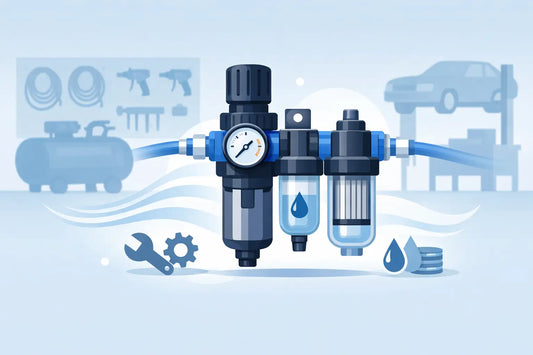
If you are close to the edge on CFM, upgrading to a larger ID blast hose and minimizing restrictive couplers can effectively “give back” airflow. Good filtration and moisture control matter too, because wet media creates clogs and inconsistent feed that people often mistake for a nozzle problem.
If you want a single shopping source for blasting gear, media, and the air-tool basics that keep a shop moving, Pro Air Tools is built around the stuff that affects uptime - with factory-direct value, a free 36-month warranty, and 1-day shipping so a stalled job does not stay stalled.
A sandblaster can be brutally simple: steady pressure, dry air, consistent media feed, and the right nozzle orifice for the air you actually have. When those are aligned, blasting stops being a fight and becomes predictable work.
If you are torn between “faster” and “more controllable,” choose the nozzle that lets you blast continuously at your target pressure, then tune the cut with media type and pressure. You can always step up later once you know your system has the air to support it - and that is a lot cheaper than buying big performance you cannot keep fed.
Factory direct from Le Lematec — professional quality, competitive prices.


 AIR REGULATORS

 ACCESSORIES