Shopping Cart
(0)
Free shipping included — no minimum on any US order

Quick Search:

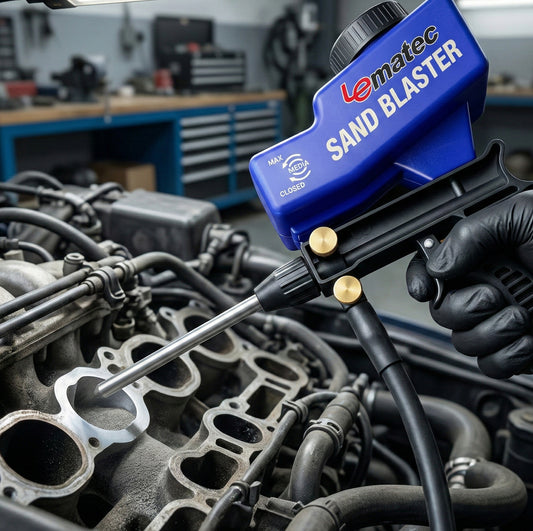
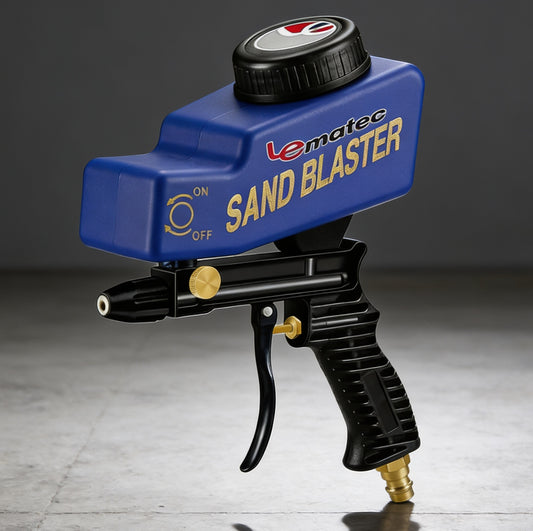
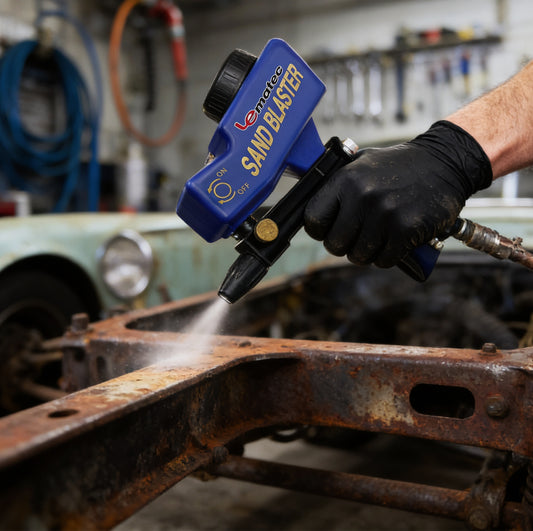
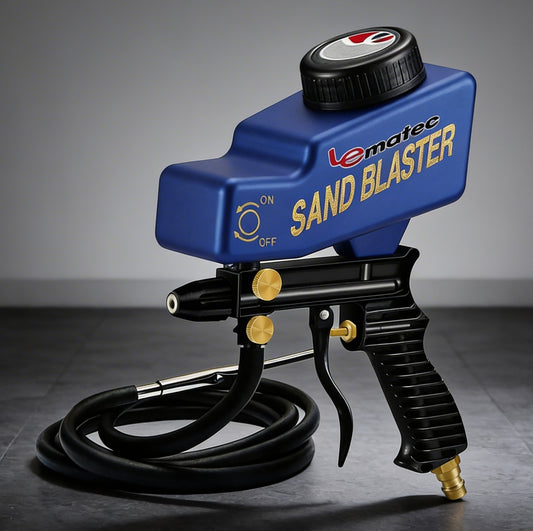
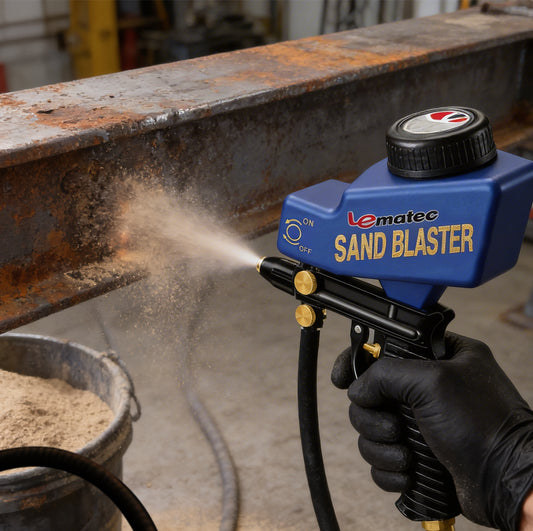
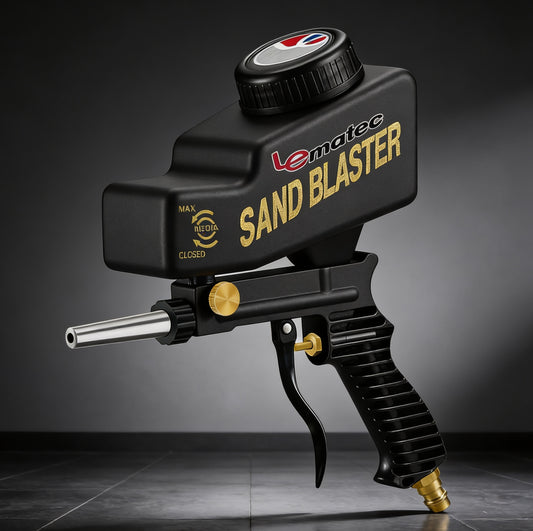
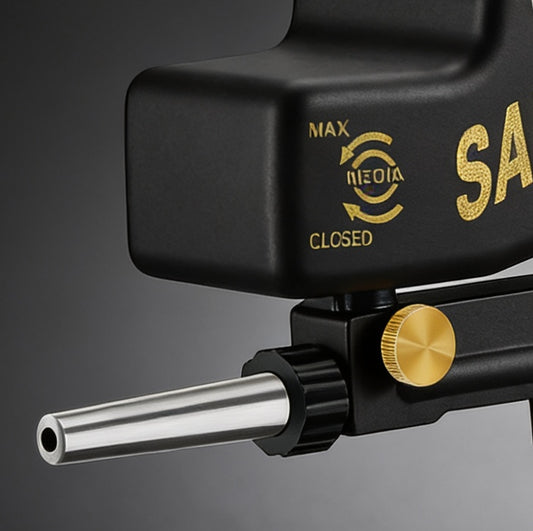

Rust removal has two price tags: what you spend on media, and what you spend in time fixing a surface you accidentally chewed up. Grit choice is where most of that cost gets decided. If you have ever watched rust disappear fast - then realized you also just frosted a panel, rounded an edge, or peened a bearing seat - you already know why “what grit for sandblasting rust” is not a one-size answer.
This guide is practical on purpose. You will pick grit based on three things you can see and control: how deep the rust is, what the base material is, and what finish you need next (primer, paint, powder, weld, or bare metal).
Two other variables change how any grit behaves: media type (crushed glass, aluminum oxide, garnet, etc.) and air pressure/nozzle size. A “fine” aggressive media can outperform a “coarse” mild media. Still, grit size remains the easiest way to steer the outcome when you are standing at the blast cabinet or holding a nozzle.
The trade-off is surface profile. On mild steel, this grit range can leave an aggressive tooth that is great for high-build primers and some industrial coatings, but it can be too rough for thin body panels or any surface that needs a tight cosmetic finish. If you can catch your fingernail in the blast pattern, you are creating extra work for filler or surfacer later.
If your goal is adhesion for primer, this range usually gives a solid anchor pattern without being overkill. It is also more forgiving if you are still dialing in your air settings.
Finer grit does not automatically mean “safe,” though. If you dwell in one spot at high pressure, you can still warp a panel. The advantage is that the media is less likely to dig craters, so your finish work stays predictable.
Do not expect 180 grit to be a miracle on deep pits. You can make rusty pits look “clean,” but you cannot blast metal back into existence.
On thick steel and cast iron, coarse grit is mostly a productivity choice. On thin steel, coarse grit becomes a risk decision. With aluminum or softer alloys, grit selection matters even more because aggressive media can erode edges fast and embed contamination if you use the wrong type of media. For stainless, you will usually want a media that avoids ferrous contamination and a grit that does not leave a coarse profile unless the coating system demands it.
If you are blasting something that must hold tight tolerances - sealing surfaces, bearing bores, gasket faces - mask it or avoid blasting it. No grit size is “precision safe.”
If you are going straight to epoxy primer on steel, a medium profile is typically your friend. Too smooth and you can reduce mechanical adhesion. Too rough and you force extra primer build and sanding time.
If you are powder coating, you generally want a consistent profile and zero contamination. That often points to a controlled grit range (commonly 60-120 depending on the substrate and coating system) and very clean air.
If you are welding after blasting, keep grit and media type in mind. Any residual dust or embedded media can affect weld quality. Blast, blow off, and clean the joint properly.
If you notice the blast stream surging, media bridging, or inconsistent cutting, fix air delivery first: check your water separator, drain the tank, and make sure your hose and fittings are not choking flow.
Start with 40-60 to break rust and scale quickly. Then switch to 80-120 for a short “finish pass” that evens out the profile and removes the coarse scratches that will print through paint. You use a little more media, but you usually save time on primer build and sanding.
On heavy, pitted steel, go 20-40 first, then 60-80 to calm the profile before coating. This is especially helpful if you are trying to make a rusty part look professional without burying it under thick paint.
If the rust is flaky or scaly, do not start finer than 60 grit. You will waste air and time.
If the metal is thin enough to flex by hand, do not start coarser than 80 grit, and keep pressure conservative.
If the part is headed for a show finish, prioritize surface control over speed. That usually means 80-120, then let your coating system do the rest.
If the part is headed for industrial primer and it is thick steel, prioritize removal speed. That usually means 40-60, or 20-40 for true scale.
Keep nozzle distance consistent. Too close concentrates energy and increases the chance of warping or gouging. Too far wastes media and reduces cut.
Use steady motion and avoid dwelling on edges. Edges disappear first, especially with coarse grits.
Dial pressure for control, not ego. If you have to crank pressure to make a fine grit cut heavy rust, it is usually the wrong grit for the job.
And if you are buying media and blasting gear for regular rust work, it helps to source everything from one place so your setup is predictable. Pro Air Tools is built around that kind of jobsite reliability, with sandblasting media, accessories, and air tool support in one catalog, plus a free 36-month warranty and 1-day shipping on orders at https://proairtools.com/.
Pick the grit that matches the job you want finished, not just the rust you see today - the right choice is the one that removes rust fast and still leaves you proud of the surface when the coating goes on.
Factory direct from Le Lematec — professional quality, competitive prices.


 AIR REGULATORS

 ACCESSORIES