Shopping Cart
(0)
Free shipping included — no minimum on any US order

Quick Search:

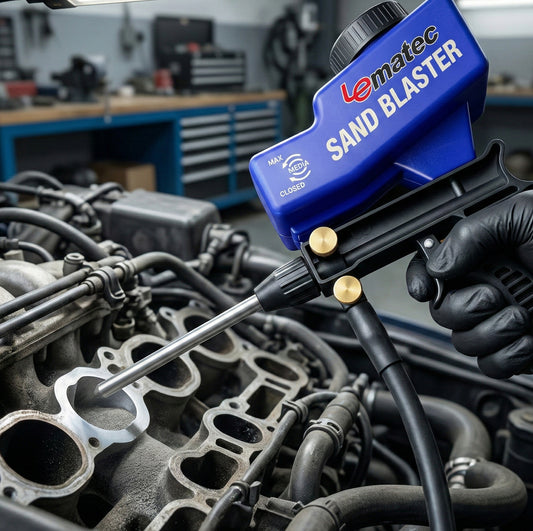
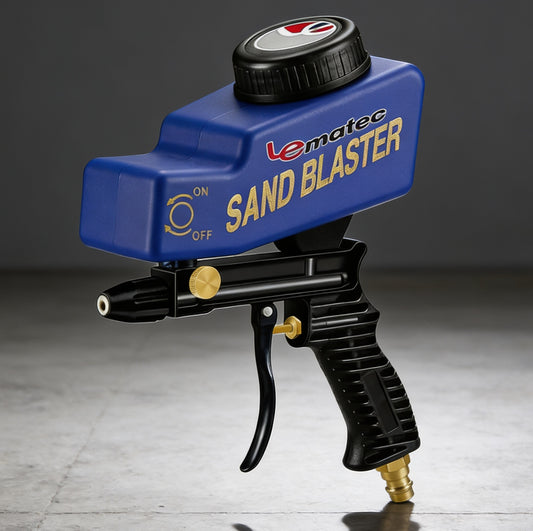

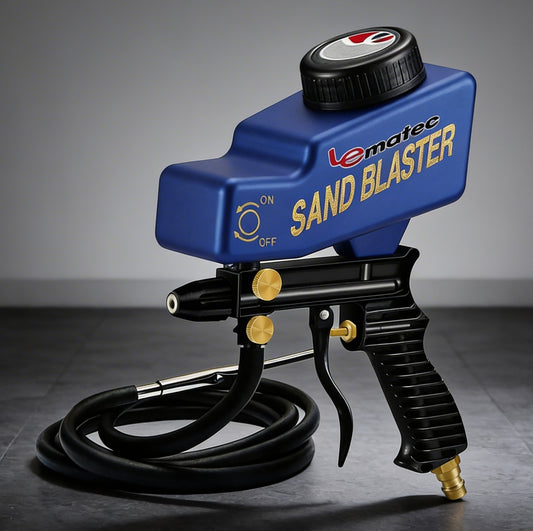

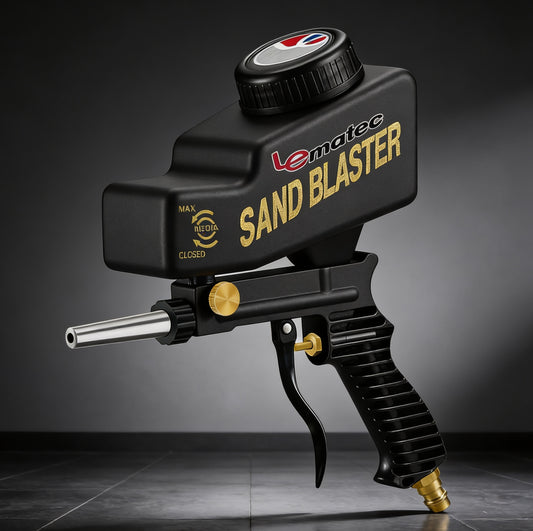
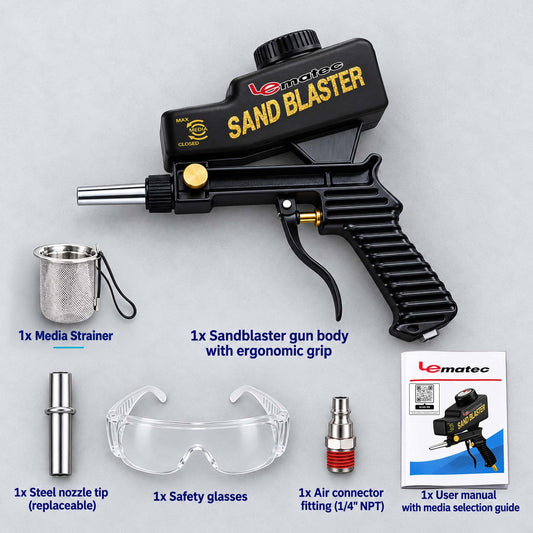

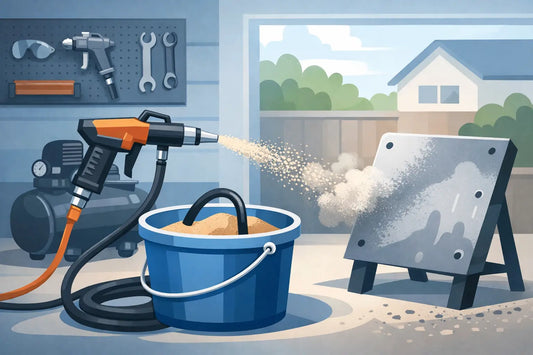
Soda blasting and sandblasting both use compressed air to propel media at a surface, but they produce dramatically different results. Sandblasting is aggressive — it cuts through heavy rust, mill scale, and industrial coatings fast. Soda blasting is gentle — it removes paint, grease, and carbon deposits without damaging the substrate underneath. Choosing the wrong method can mean warped panels, etched glass, or hours wasted on a job that barely budges. This guide explains exactly when to use each method, what equipment you need, and how to set up for optimal results.
Written by Charles Rosenstein, Le Lematec / Factory Direct — over 15 years in surface preparation equipment and abrasive media.
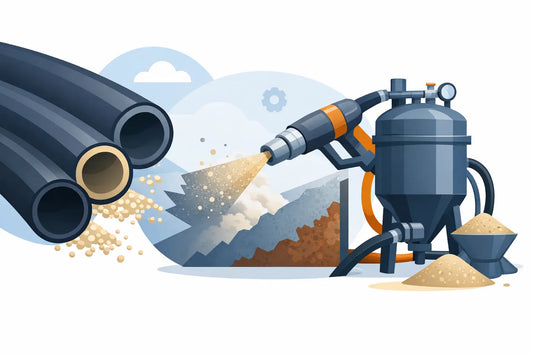
Sandblasting uses hard, angular abrasive media (aluminum oxide, silicon carbide, garnet, or actual sand) propelled at high velocity. The sharp particles physically cut into the surface, removing material through abrasion. This creates a rough surface profile — which is exactly what you want when preparing metal for paint or coating adhesion.
Soda blasting uses sodium bicarbonate (baking soda) crystals that are much softer (2.5 Mohs vs 9.0 for aluminum oxide). The crystals explode on impact, lifting contaminants through micro-energy release rather than cutting. Because baking soda is water-soluble, it leaves no embedded particles and can be rinsed away completely.
| Factor | Sandblasting | Soda Blasting |
|---|---|---|
| Aggressiveness | High — cuts into surface | Low — lifts contaminants only |
| Surface Profile | Creates anchor pattern (1–4 mil) | No profile change |
| Substrate Damage Risk | High on thin metals, glass, plastic | Minimal — safe for most substrates |
| Rust Removal | Excellent — removes to bare metal | Limited — removes light surface rust only |
| Paint Removal | Fast and complete | Effective but slower |
| Grease/Carbon Removal | Poor — embeds rather than removes | Excellent — dissolves on contact |
| Media Reusability | 15–20+ cycles (aluminum oxide) | Single use (dissolves on impact) |
| Media Cost per Job | Low (due to reuse) | Higher (single use) |
| Environmental Impact | Requires containment/cleanup | Non-toxic, water-soluble, biodegradable |
| Food-Safe | No | Yes — FDA-recognized safe material |
| Heat Generation | Significant at high pressures | Minimal |
| Air Requirements | 80–100 PSI, 6–12 CFM | 30–50 PSI, 3–8 CFM |
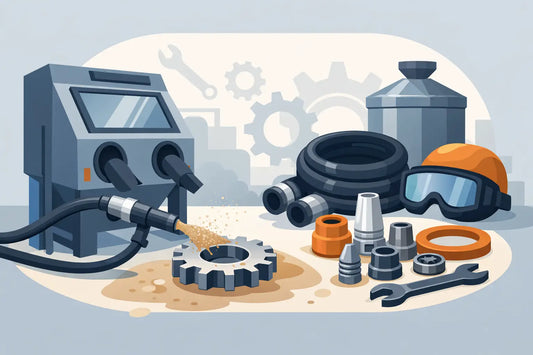
Our AS118-2 Dual-Feed Sandblaster Kit handles all hard abrasive media with a ceramic nozzle that resists wear. Pair it with 220-grit aluminum oxide for general rust removal or 100-grit silicon carbide for maximum cutting power.
Our Professional Soda Blaster Kit (AS118) is purpose-built for multi-media use — it handles baking soda, fine sand, and aluminum oxide so you can switch between gentle and aggressive blasting with one gun.
Yes — and this is the smartest approach for most shops. A multi-media sandblaster gun handles both soda and abrasive media, letting you switch based on the job. Start with soda for delicate surfaces, switch to aluminum oxide for heavy rust. The AS118 Multi-Media Blaster and AS118-2 Dual-Feed Kit both support this workflow.
Important: When switching media, always purge the gun thoroughly with compressed air. Cross-contamination between soda and abrasive media produces inconsistent results.
Soda blasting works at lower pressures and CFM than sandblasting, making it compatible with smaller compressors:
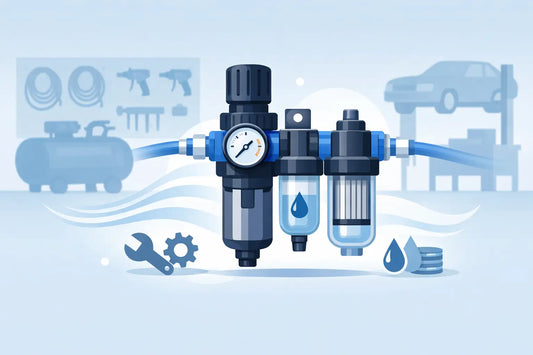
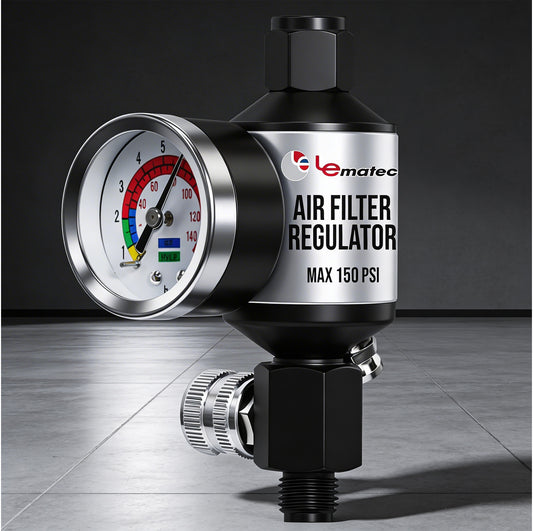
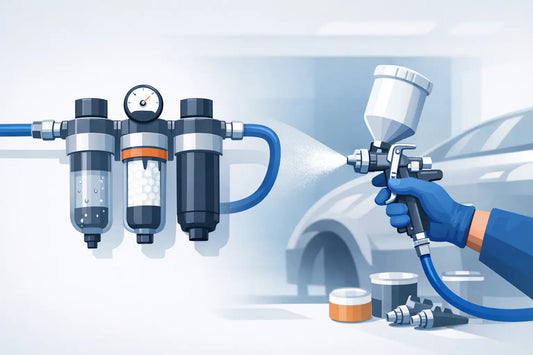
Regardless of method, clean dry air is essential. Moisture clumps baking soda instantly, rendering it unusable. Use an inline air filter and a desiccant dryer for consistent results. See our CFM & PSI Chart for detailed compressor sizing.
Soda blasting costs more per job because baking soda is single-use — it dissolves on impact. Sandblasting media like aluminum oxide can be recycled 15–20 times. However, soda blasting eliminates the cost of masking (you can blast over glass, rubber, and chrome) and reduces post-blast cleanup since soda is water-soluble.
For a complete breakdown of media costs and reusability, see our Sandblasting Media Comparison Guide.
There's no universal winner — it depends on your project. For heavy rust, weld prep, and coating adhesion profiles, sandblasting wins every time. For delicate surfaces, automotive restoration, food equipment, and fire damage, soda blasting is the clear choice. For shops that do both, invest in a multi-media gun and keep both media types on hand. That's the factory-direct advantage — one tool, every application.
Factory direct from Le Lematec — professional quality, competitive prices.


 AIR REGULATORS

 ACCESSORIES