Shopping Cart
(0)
Free shipping included — no minimum on any US order

Quick Search:


Sheet metal is where a drill shows its manners.
On a frame bracket, you can muscle through a sloppy setup and nobody cares. On a body panel or thin stainless, a drill that grabs, walks, or overheats leaves you with an oval hole, a warped edge, and an hour of fixing work you did not plan for. The right air drill turns drilling sheet metal into a repeatable, clean process: center punch, drill, deburr, move on.
Thin metal does not give your bit much time to stabilize. If the tip skates at the start, you end up off-mark. If the drill surges when the bit breaks through, it can yank the panel, burr the backside, or make the hole egg-shaped. That is why control matters more than raw power for sheet metal.
Pneumatic drills earn their spot here because they are typically compact, smooth, and easy to modulate when paired with a decent regulator. They also tolerate long sessions well because the air motor sheds heat differently than many electric drills. The trade-off is simple: you are only as good as your air supply. If your compressor, hose, fittings, or filtration choke the drill, the tool will feel weak and inconsistent.
The best “air drill for sheet metal” is usually not the biggest or fastest on paper. It is the one you can start precisely, keep straight, and stop instantly.
High RPM is helpful for small bits in thin material, but only if you can feather it. A drill that jumps straight to full speed is a recipe for skating and blown-out holes. Look for a trigger you can modulate and a setup that lets you fine-tune pressure. In real shops, the easiest win is running the drill at the lowest pressure that still cuts cleanly for the bit size you are using.
As a rule of thumb, small bits (like 1/8 inch) like more speed, while larger holes need less RPM and more control. If you are stepping up to 3/8 inch or opening holes for rivnuts, you will appreciate a drill that does not run away from you.
Most sheet metal drilling lives in 3/8 inch chucks. That covers the common bit sizes, step bits, and deburring tools you will reach for. A solid chuck that does not slip matters because slipping is heat, and heat is how you blue stainless and dull bits fast.
If you do a lot of tiny holes, a 1/4 inch capacity can feel tighter and more precise, but you give up flexibility. For mixed work - body panels, brackets, and occasional larger holes - 3/8 inch is the practical choice.
Sheet metal drilling is about steady cutting, not twisting your wrist. Too little torque stalls and work-hardens stainless. Too much torque with a dull bit causes the classic grab right as the bit breaks through. You want enough torque to keep the bit cutting smoothly, plus a controlled trigger so you can ease up as you approach breakthrough.
A straight air drill is the general-purpose pick. It is easy to keep square to the surface, especially on flat panels or work on the bench.
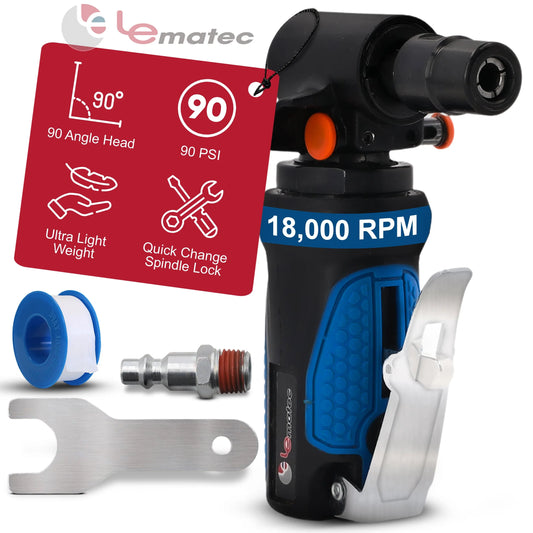
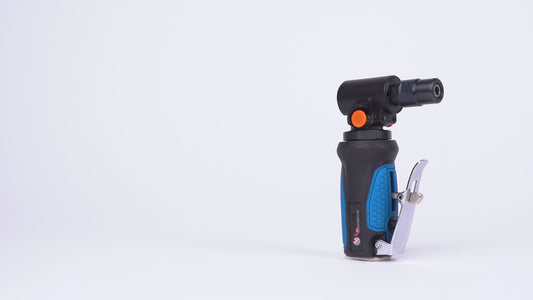
A right-angle drill earns its keep in engine bays, inside cabinets, and around flanges where you cannot line up a straight tool. The compromise is feel - it can be harder to keep perfectly aligned if you rush. If you work on vehicles or tight equipment, right-angle convenience can outweigh the learning curve.
Many drilling complaints are really air system problems. If the drill needs more CFM than your setup can deliver, it will sag under load. You will push harder, the bit will chatter, and the hole quality goes downhill.
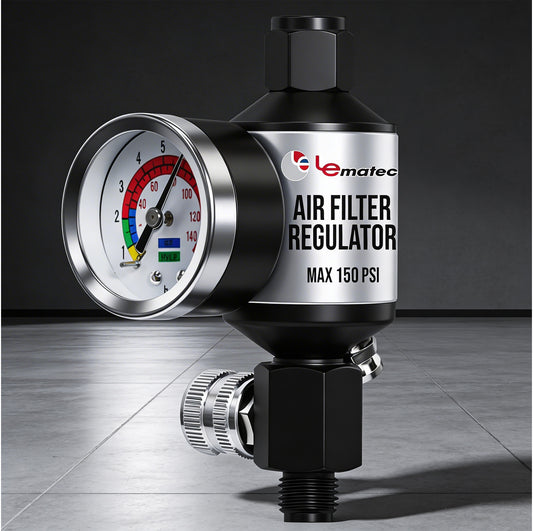
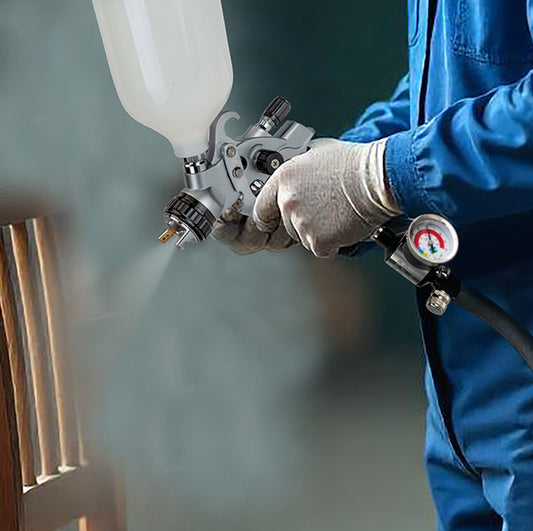
Before blaming the tool, check the basics: hose diameter that is not restrictive, couplers that flow, and a regulator near the tool if you want consistent control. A filter helps keep water out, which matters because moisture plus metal fines equals gritty wear inside air tools.
You can buy a great drill and still hate drilling sheet metal if your bits are wrong or your technique is rushed.
For clean holes in thin material, sharp bits win every time. Dull bits force you to push, and pushing is what causes the bit to grab and the panel to deform.
Step bits are a favorite for sheet metal because they cut progressively and leave round holes with less grabbing. They also let you sneak up on the final size, which is useful when you need a grommet, rivnut, or pass-through to fit just right.
For larger holes, a hole saw can work on sheet metal, but it is easy to catch and chatter if the panel is not supported. If you go that route, clamp the work, pilot accurately, and keep speed conservative.
Lubrication is another separator between clean work and frustration. On mild steel you can often get away with minimal cutting fluid for quick holes, but on stainless, aluminum, and painted panels, a little lube reduces heat and makes the cut smoother. Just be mindful if you are drilling a surface that is headed to paint - clean it properly afterward.
You do not need a complicated process. You need a repeatable one.
Start with layout and a real center punch mark. On thin sheet, that punch is what stops skating. If the panel is flexible, support it with wood or a backup plate so it cannot vibrate.
When you start drilling, start slow to establish the hole. Once the bit is seated, bring speed up to where the chips come off clean. As you feel the bit get close to breaking through, ease off pressure and be ready for the change in resistance. That moment is where most ugly holes happen.
If you are drilling a lot of holes, do not ignore deburring. A quick deburr on both sides makes fasteners seat better, reduces cracking around holes, and keeps you from slicing a hand open later.
Not all sheet metal jobs are the same. Here is how the “right” choice changes based on what you actually do.
If you are doing body work and restorations, you want maximum control and minimal panel distortion. That usually means a comfortable, light drill you can feather, sharp bits, and lots of step-bit use for clean openings.
If you are doing HVAC, trailer skins, or general fabrication in thin gauge, speed and repetition matter. You will care about chuck durability, quick bit changes, and a drill that stays consistent over long runs.
If you are doing stainless panels or marine hardware, torque consistency and lubrication matter more than top-end RPM. A drill that holds steady without stalling will save bits and keep edges cleaner.
The most common issue is drilling too fast with too much pressure. That is how you overheat the bit, smear metal, and end up with a ragged edge.
Another common problem is drilling unsupported sheet. If the metal flexes, the bit chatters, the hole goes out of round, and you get a burr that is harder to remove.
Finally, people try to “fix” a wandering hole by leaning the drill sideways. That just makes an oval. If you are off, stop, reassess, and either step up with a step bit carefully or re-drill properly after correcting the pilot.
Air tools are simple, but they are not maintenance-free. A few drops of air tool oil keeps the motor happy. Clean, dry air extends life and keeps performance predictable. If you notice the drill losing power, do not automatically assume it is worn out - check fittings, hose restrictions, regulator settings, and water in the line.
Also pay attention to what “good” feels like. When the drill is fed properly, the sound stays steady under load and chips come off clean. When the air supply is struggling, you will hear it sag and you will feel yourself pushing harder to compensate.
If you are setting up or upgrading your pneumatic lineup and want a drill that is built for shop use, Pro Air Tools focuses on job-ready air tools and accessories with a free 36-month warranty and fast fulfillment that ships out in 1-day - helpful when a stalled project is costing you time.
Drilling sheet metal should feel boring in the best way. When your drill starts clean, cuts without drama, and leaves a hole that needs only a quick deburr, the job moves faster and the work looks sharper - and that is the whole point of choosing the right tool in the first place.
Factory direct from Le Lematec — professional quality, competitive prices.








 AIR REGULATORS

 ACCESSORIES