Shopping Cart
(0)
Free shipping included — no minimum on any US order

Quick Search:
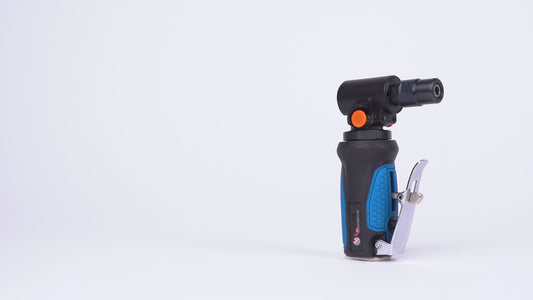




If you have ever watched a cutoff wheel stall halfway through a bracket, you already know the real cost is not the wheel - it is the rework, the heat, and the extra minutes that stack up all day. In metal fabrication, an air grinder is usually the tool you grab when the “real” work starts: knocking mill scale off before a weld, dressing a bead so a part fits, or cutting a tack without warping the piece.
This is a practical guide to picking an air grinder for metal fabrication that stays controllable under load, matches your compressor, and does not become the bottleneck in your workflow.
An air grinder can run hard without you worrying about cooking a motor. If you are doing repetitive deburring or weld dressing, that matters. Pneumatic tools also tend to be slimmer and easier to reposition around tubing, inside corners, and tight fixtures. And when you pair the right grinder style with the right abrasive, you get a more predictable “feel” at the surface - less grabbing, less sudden torque reaction, and better touch when you are blending.
The trade-off is simple: air grinders are only as good as the air system behind them. If your compressor, hose, couplers, and filtration are undersized, any grinder will feel weak.
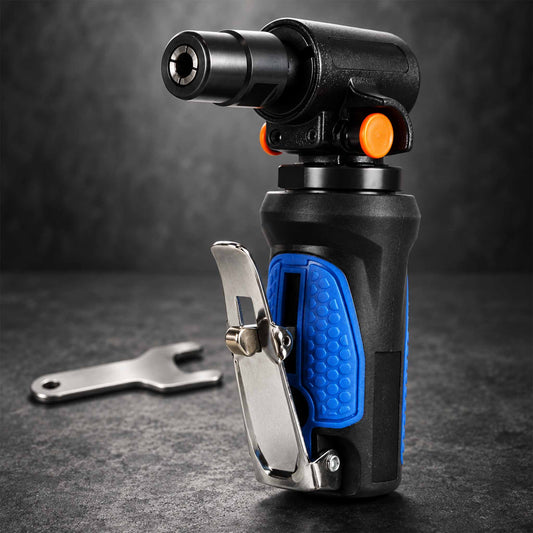
A straight (die) grinder is the go-to for burrs, cartridge rolls, flap wheels on mandrels, and detail work. It is what you reach for when you need to clean a coped tube joint, open a hole slightly, or blend a weld where an angle head cannot sit flat.
An angle air grinder is more at home on edges, outside corners, and general grinding where you want the disc face working. If you spend time beveling plate for weld prep or removing heavy material, this style is usually faster.
A cut-off tool is its own category. Yes, you can cut with other grinders, but a tool designed for cut-off wheels gives better guarding, better wheel alignment, and less temptation to side-load a wheel that was never meant for it.
If you are only buying one air grinder for metal fabrication, most shops get the most value from a 1/4-inch collet die grinder plus a separate dedicated cut-off tool when cutting becomes routine.
If you do a lot of blending with cartridge rolls, you want a grinder that keeps speed up when you lean into it lightly. If you are using burrs for material removal, you want stable speed without chatter.
If your compressor is marginal, you can still run air tools - you just need to be honest about duty cycle. For occasional deburring and short bursts, you can get away with less. For continuous grinding or production work, you want enough compressor capacity that the pressure does not sag after the first minute.
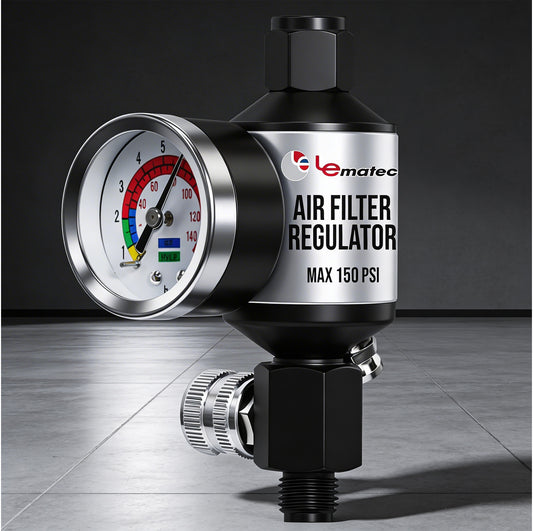
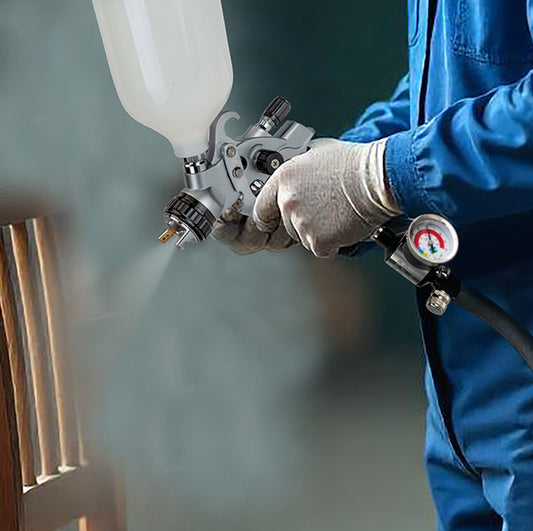
Start with a regulator and filter that are sized for the tool family you run. Fine grinding throws abrasive dust everywhere, and that dust ends up on couplers and fittings. Clean filtration helps tool life and keeps valves from sticking. If you paint or do bodywork in the same space, dry air becomes even more important.
Hose diameter matters more than most people want to admit. For higher-demand tools, a larger ID hose and quality couplers reduce pressure drop. If you are using a long hose reel run, it is common to feel the difference immediately when you move up in hose size.
Oil is another “depends.” Many pneumatic grinders are designed to be oiled, and they last longer when they are. If you are also running paint or plasma operations where oil contamination is a problem, you may avoid inline oilers and instead add a few drops directly to the tool as part of your routine.
For weld dressing, a flap disc or flap wheel tends to be more controllable than a hard grinding wheel and leaves a more blendable finish. For mill scale removal, a surface conditioning disc can strip fast without digging grooves. For tight inside corners, cartridge rolls and small flap wheels on mandrels do clean work without the “catch” you get from larger discs.
Carbide burrs are where a die grinder can surprise you. With the right burr shape and cut pattern, you can remove material quickly with good control, especially on thick steel where a small disc would be slow.
Whatever you choose, stay strict about speed ratings and guarding. Side-loading cut-off wheels and running over-speed accessories are two easy ways to turn a quick task into a bad day.
Look for a body shape you can hold without cocking your wrist at a bad angle. If you are doing long blending passes, a slimmer housing reduces fatigue. Exhaust direction matters too. A rear exhaust that blasts your hands with cold air sounds minor until you have used it for two hours.
Noise is part of grinding, but hearing protection should be automatic. Eye protection and a face shield are not optional with cutoff and burr work. If you do stainless, aluminum, or mixed metals, keep your abrasives separated. Cross-contamination is real, and it shows up later as rust or surface defects.
If your work is more TIG-focused and cosmetic, prioritize controllability and finish. That usually means a grinder that feathers smoothly and accessories that cut cool and blend clean. If you are doing heavy fabrication on thick plate, prioritize torque and airflow, and be realistic about compressor capacity.
If you are setting up or upgrading your pneumatic tool lineup, Pro Air Tools focuses on jobsite-ready air tools and accessories with a free 36-month warranty and fast 1-day shipping, which is the kind of coverage that matters when a grinder is part of your daily output.
The best setup is the one that keeps moving. Buy the grinder that fits your hands, feed it clean air with enough flow, and pair it with abrasives that match the finish you are chasing - your welds will look better, your parts will fit faster, and your schedule will stop getting wrecked by a tool that quits halfway through the job.
Factory direct from Le Lematec — professional quality, competitive prices.





 AIR REGULATORS

 ACCESSORIES