Shopping Cart
(0)
Free shipping included — no minimum on any US order

Quick Search:

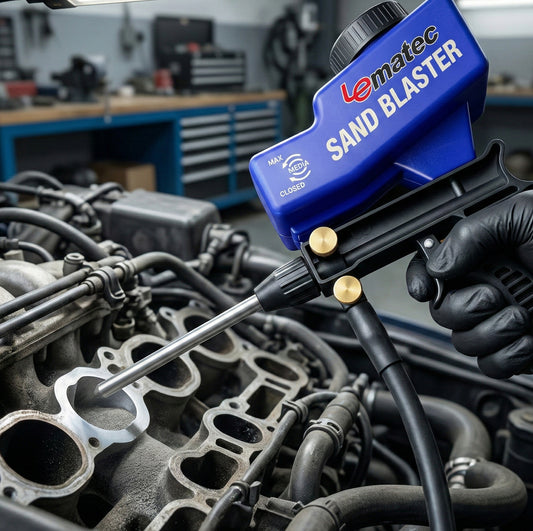
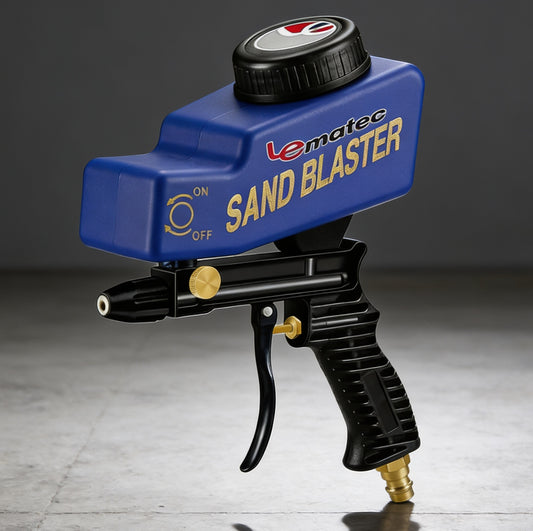
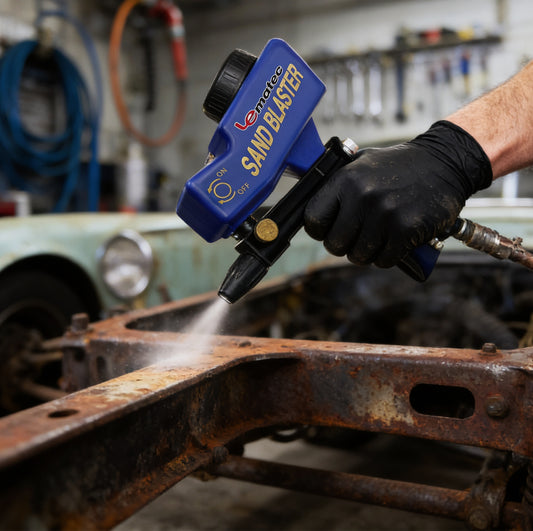
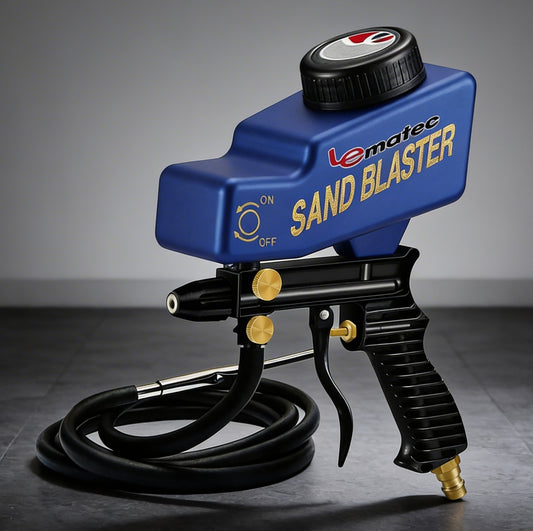
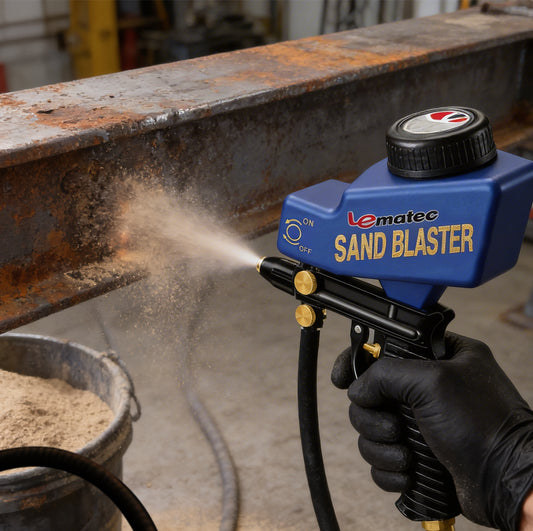
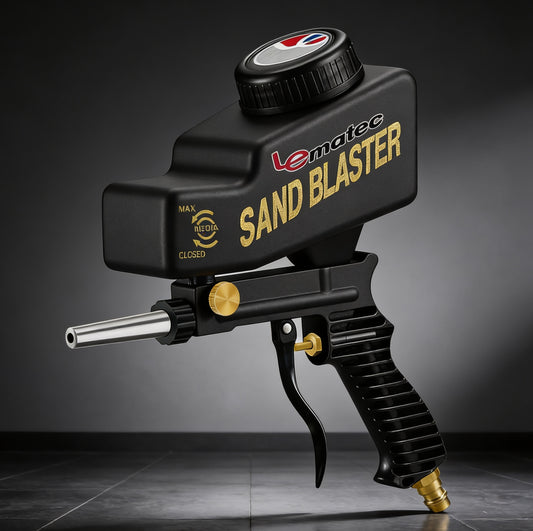
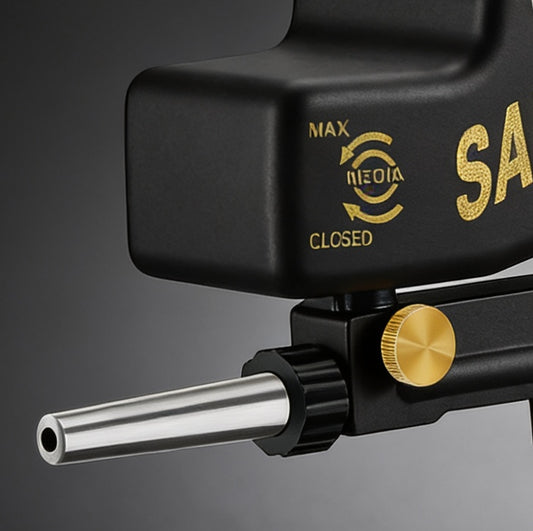

You can have a solid blaster, a steady air supply, and still get lousy results if the media is wrong. Too aggressive and you warp panels or erase details. Too mild and you burn hours (and air) polishing rust that should have been gone in minutes. If you want predictable stripping, consistent profile, and fewer clogs, the decision starts with the media - not the nozzle.
If you are removing thick rust on heavy steel, you can run a harder, sharper abrasive and accept a coarser profile. If you are cleaning oxidation off aluminum, you need something that cleans without digging. Paint removal sits in the middle, and the “right” media depends on whether you are stripping a frame, a wheel, or a body panel.
Aluminum, brass, and thin sheet metal are where people get into trouble. Aggressive abrasives and high pressure can peen or warp thin panels, and coarse media can leave a profile that shows through paint. For those jobs, your goal is usually controlled cleaning - not maximum cutting.
Wood, fiberglass, and composites need an even softer touch. Many traditional abrasives are simply too aggressive, and dust control becomes a bigger deal.
Rust and scale usually need either a sharp abrasive that fractures and keeps cutting, or a hard media that can break through the surface quickly. Thick mill scale on steel is a different animal than light surface rust on a bracket.
Paint can be brittle or gummy depending on age and type. A media that shreds powder coat efficiently may be overkill for single-stage paint on thin metal.
Grease and heavy grime are their own category. Abrasive blasting is not a degreaser. If you blast oily parts, media can cake, siphon lines can clog, and you end up wasting time. Degrease first if you want consistent flow.
If you are prepping for epoxy primer, powder coat, bedliner, or industrial coatings, the profile matters. Too smooth and coatings can delaminate. Too rough and you can fight pinholes, excess film build, or a textured finish you did not want.
For cosmetic parts, your finish target is usually “uniform and controllable.” That typically means a finer grit or a less aggressive media that leaves an even look.
The trade-off is that it is still an aggressive abrasive. On thin sheet metal, it can be too much if you run high pressure or linger in one area. If you want speed on frames, brackets, suspension parts, and heavy steel, it’s a strong pick.
The trade-off is cost and aggressiveness. It can remove material quickly, which is great for heavy rust and tough coatings, but it demands more discipline on softer metals and thin panels. If you are cabinet blasting regularly and want predictable cutting, it earns its keep.
The trade-off is speed on heavy rust and thick coatings. If you need to strip, you may be waiting a long time. If you need a clean, consistent finish on aluminum parts or stainless pieces, it’s a smart choice.
The trade-off is that it is not always the cheapest option, and depending on your setup and containment, reclaim may or may not be worthwhile. If you want a capable “do a lot of things well” media, garnet is often a safe answer.
The trade-off is that it won’t solve heavy rust, and it can struggle with hard coatings. It also requires thoughtful cleanup since soft media can break down.
The trade-off is that it is not the most forgiving path for small shops, and it is not appropriate for many mixed-material jobs. If you’re not set up for it, it’s usually more hassle than help.
Coarser grit removes material faster and leaves a deeper profile. Finer grit is slower but leaves a smoother finish and more control on thin or cosmetic surfaces.
Shape matters too. Angular particles (like crushed glass and aluminum oxide) cut. Rounder particles (like glass bead) peen and clean.
If you are chasing adhesion for a coating, you usually want an angular media and a grit that matches the coating system you plan to use. If you are chasing appearance, a finer grit or bead-style media tends to look better.
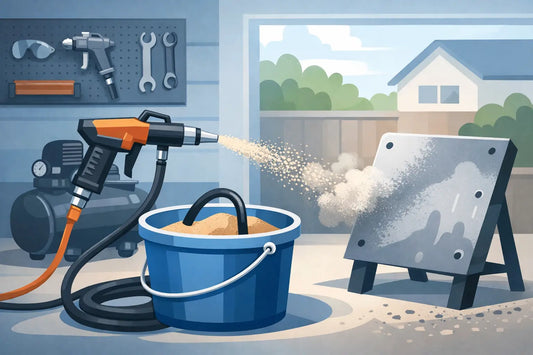
Pressure-pot blasters generally handle a wider range of media and flow more aggressively. Siphon-feed guns can be pickier, especially with heavier media, damp media, or inconsistent grit.
Your compressor matters just as much. Higher CFM supports larger nozzles and coarser media without pressure drop. If your compressor is on the edge, you can still get good results by stepping down grit size, using a smaller nozzle, and accepting a slower cut. What you want to avoid is blasting for 20 seconds, waiting for pressure to recover, and repeating - that kills productivity and creates uneven finishes.
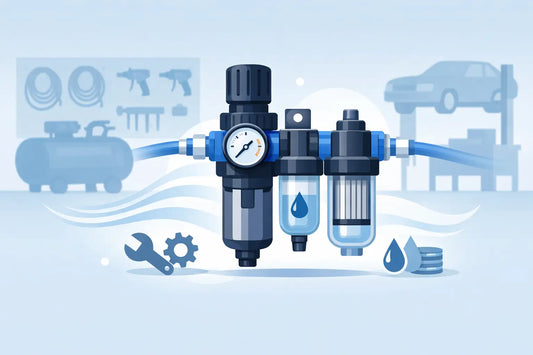
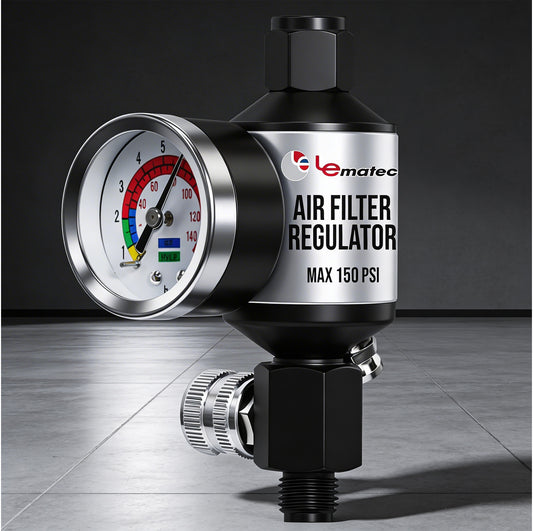
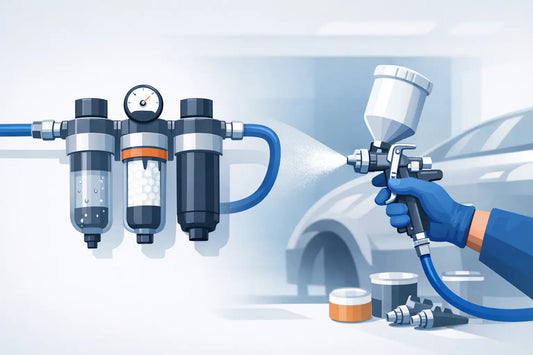
Moisture control is non-negotiable. Damp media clumps, pulses, and sticks to metering valves. A filter and dryer setup is not a “nice to have” if you want consistent flow.
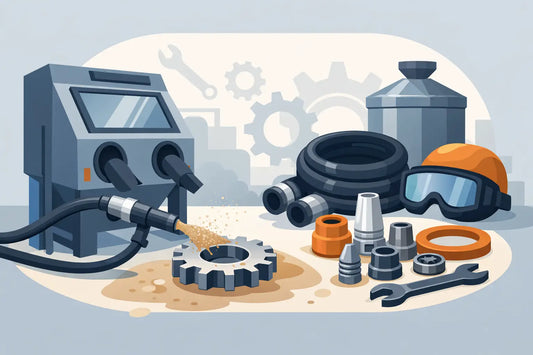
If you blast in a cabinet, reusability and dust extraction matter more. If you blast outdoors or in a temporary enclosure, you may prioritize media that cuts fast and is easy to sweep up, even if you do not reclaim it.
Also think about where the spent media ends up. Complex parts trap grit in seams, threads, and cavities. If that is a problem, choose a media that is easier to remove or plan for blow-out and washing steps.
The key is to test on a scrap or hidden spot first. Ten minutes of testing beats redoing a panel or chasing a finish you accidentally ruined.
If you need a straightforward place to grab media, blasters, and the filters that keep them running, Pro Air Tools keeps the sandblasting section organized for quick buying, and orders ship out in 1 day with a free 36-month warranty on products: https://proairtools.com/.
The second is ignoring air quality. If your media flow surges, clogs, or spits, fix moisture and filtration before you blame the abrasive.
The third is running too coarse a grit because it “feels” productive. Coarse grit can leave a profile you then have to bury under primer or sand back down, which is wasted work.
The last is trying to make one media do every job. Most shops end up with at least two: one for stripping and profiling, and one for cleaning and finishing.
A good blasting setup is predictable. When the media matches the surface, the coating, and your air supply, the job stops feeling like a fight and starts feeling like a process you can repeat anytime you need it.
Factory direct from Le Lematec — professional quality, competitive prices.


 AIR REGULATORS

 ACCESSORIES