Shopping Cart
(0)
Free shipping included — no minimum on any US order

Quick Search:



If your impact wrench runs fine one day and your paint gun starts fisheyeing the next, the problem may not be the tool. In a filter regulator vs desiccant dryer decision, you are really deciding how much air treatment your setup needs and what failure you are trying to prevent.
That matters because these two parts do different jobs. A filter regulator helps clean up compressed air and control pressure. A desiccant dryer removes moisture vapor that basic filtration often leaves behind. They can work together, but they are not interchangeable.
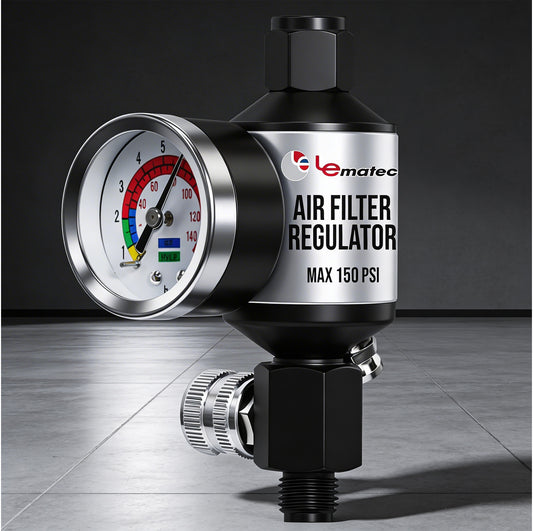
A filter regulator is usually the first line of defense. It pulls out liquid water, traps some dirt and oil contamination depending on the element, and gives you adjustable outlet pressure. For general air tool use, that solves a lot of day-to-day problems. Your tools see steadier pressure, less junk gets downstream, and you avoid some of the water that condenses in the line.
A desiccant dryer goes after a different problem. It is designed to remove moisture from the air stream at a much lower level, including water vapor that has not yet turned into visible droplets. That is the difference that matters for paint work, blasting in humid conditions, and any job where dry air affects finish quality or media flow.
If you remember one thing, remember this: a filter regulator manages pressure and catches contaminants you can reasonably separate. A desiccant dryer is for when "pretty dry" is not dry enough.
For many garages and small shops, a filter regulator is the right starting point because it handles the most common compressed air issues without adding much complexity. If your main goal is running ratchets, impact wrenches, grinders, inflators, or drills, a quality filter regulator is often enough.
The filter section separates out condensed water and particles. Depending on the model, it may also reduce oil carryover. The regulator section then lets you dial air pressure to the tool's operating range. That helps performance and can extend tool life because you are not overfeeding air pressure every time you pull the trigger.
This setup is practical for general-use pneumatic systems where small amounts of residual moisture are not a deal-breaker. That includes a lot of automotive work, maintenance tasks, and fabrication jobs where the air tool just needs clean, stable air to run correctly.
The trade-off is that a filter regulator does not remove all moisture vapor. If warm compressed air cools farther down the line, more water can still condense out after the filter. That is why someone can drain the tank, install a filter regulator, and still see moisture problems at the tool.
Whichever you choose, start with clean air.
A quality inline water/oil separator is the foundation for dry, contaminant-free air to your tools.
Shop the Inline Air Filter →A desiccant dryer uses moisture-absorbing material to pull water vapor out of compressed air. That makes it a better fit when dry air is tied directly to the quality of the result, not just tool function.
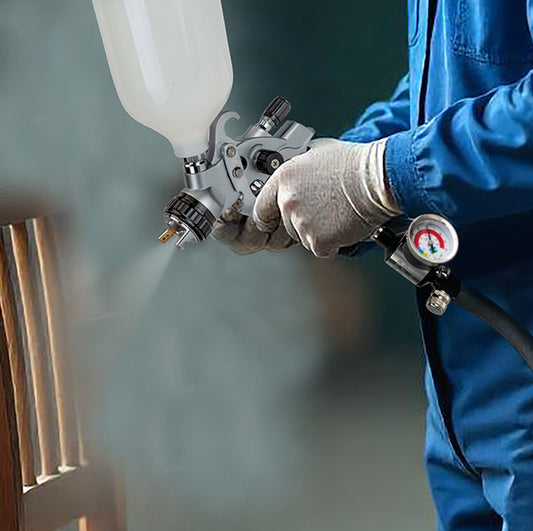
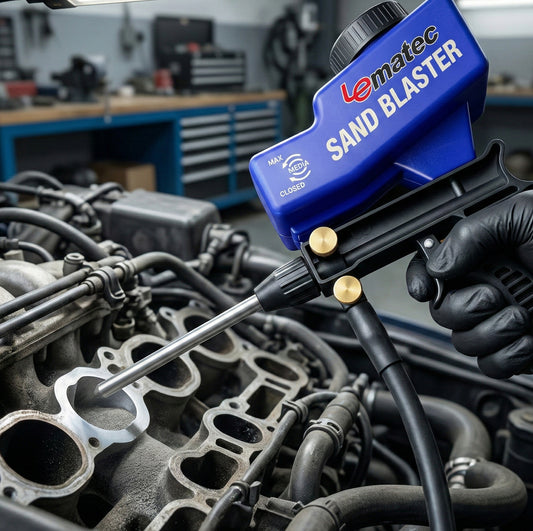
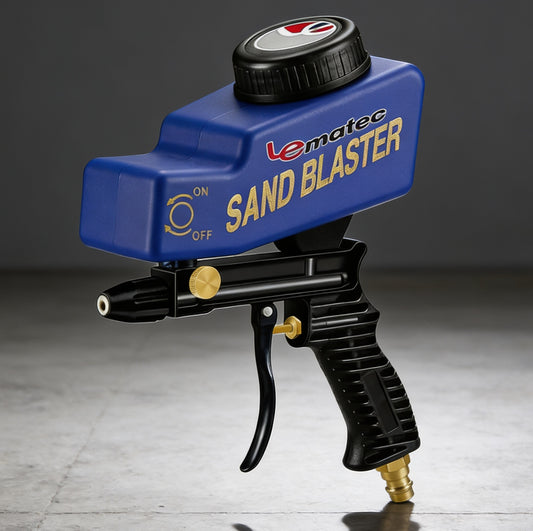
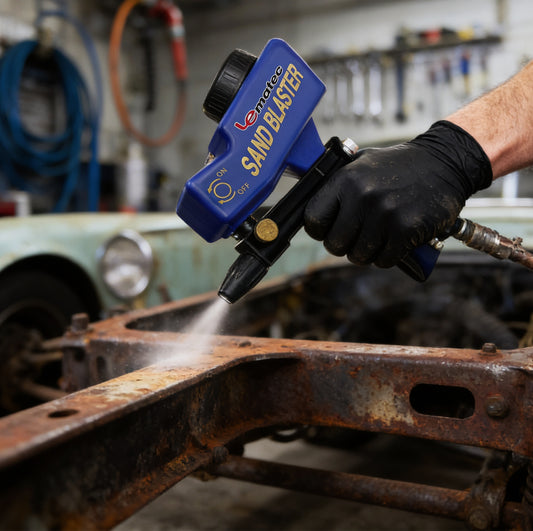
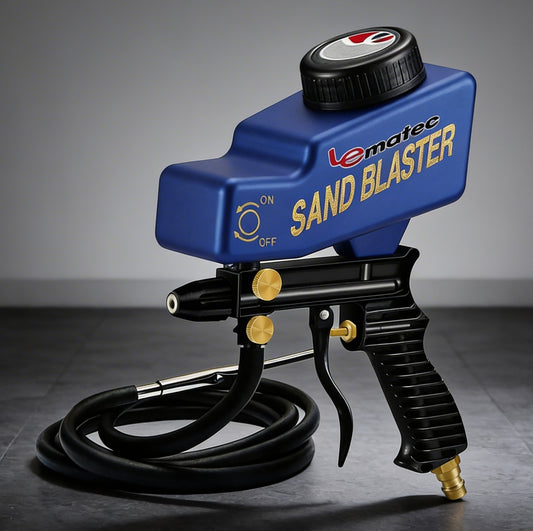
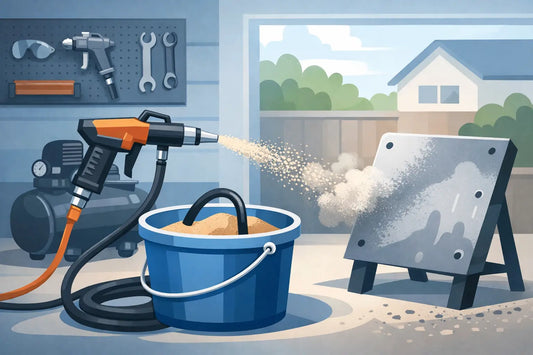
Paint is the obvious example. Moisture in the line can cause finish defects, inconsistent spray patterns, and wasted material. Sandblasting is another one. Damp air can make blasting media clump, reduce flow consistency, and slow the whole job down. If you are trying to keep a cabinet or blasting pot running cleanly, moisture control matters more than many buyers expect.
Desiccant dryers also make sense in humid climates, in shops with long hose runs, or in systems that see heavy compressor use. All three conditions increase the chance that water shows up where you do not want it.
The trade-off here is maintenance and capacity. Desiccant gets saturated and needs to be replaced or regenerated depending on the style. If you push a lot of wet air through an undersized dryer, it will not keep up for long. A dryer is not a magic fix for a poorly managed air system.
If you mostly run air tools and are not chasing finish-critical results, a filter regulator is usually the practical buy. That covers most home garages, general repair bays, mobile setups, and workstations where speed and simplicity matter.
Use cases where a filter regulator often makes sense include impact work, tire service, air hammers, blow guns, and general-purpose grinders. In these jobs, the bigger threat is dirty air, unstable pressure, or obvious line water, not trace vapor levels.
This is also the better choice if you are building out a system in stages. A good filter regulator gives immediate value because it improves air quality and pressure control across multiple tools. Then, if your work later moves into painting or moisture-sensitive blasting, you can add a dryer where it counts.
A desiccant dryer earns its keep when moisture creates expensive mistakes. If a bad paint finish means sanding, rework, and wasted material, dry air is cheaper than doing the job twice. The same logic applies if blasting media keeps clogging or if humidity is causing recurring headaches in your setup.
This is where buyers get tripped up: they assume any water separator solves moisture issues. It does not. If the air still contains vapor, that moisture can show up later once the air cools. A desiccant dryer addresses that deeper level of dryness.
For body and paint prep, detail finishing, plasma systems with dry-air requirements, and abrasive blasting where media performance matters, a dryer is usually the safer choice. Not because a filter regulator is bad, but because it is solving a different problem.
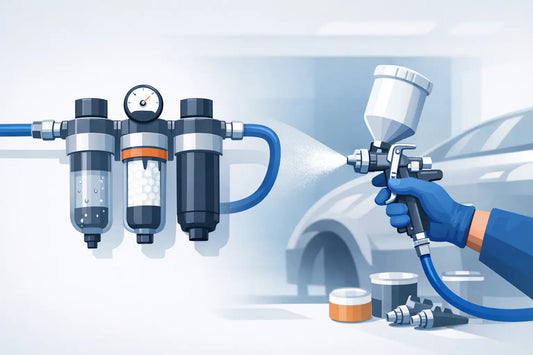
For sandblasting and painting, the answer is often not filter regulator vs desiccant dryer. It is filter regulator and desiccant dryer.
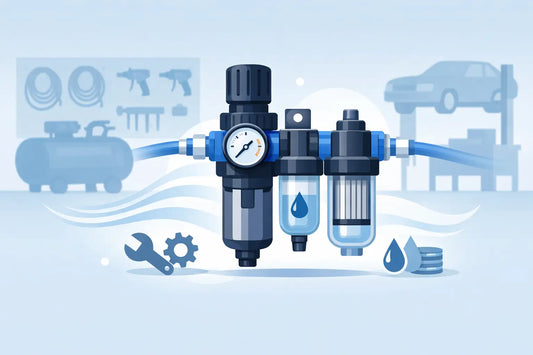
That combination works because each component handles part of the job. The filter regulator takes out bulk water, debris, and pressure swings before they create problems downstream. Then the desiccant dryer removes remaining moisture vapor to get the air much drier before it reaches the gun, pot, or cabinet.
This staged approach is more effective and more economical than asking one component to do everything. It also helps the dryer last longer because you are not feeding it as much raw moisture. If you skip the upstream filter and push wet, dirty air straight into desiccant, you burn through the drying media faster and add maintenance costs.
For buyers who want fewer interruptions and more predictable results, this paired setup usually makes the most sense for finish work and blasting.
Compressor size matters. A small compressor that cycles hard can generate a surprising amount of heat and moisture. As that air cools, water drops out in the line. If your system runs hot and often, moisture control becomes more important.
Line layout matters too. Longer hose runs, uncooled air, and poor tank draining all make water problems worse. In some cases, fixing the system setup improves results almost as much as adding a new component. Draining the tank regularly, using proper line routing, and avoiding oversized expectations from a small compressor can save money.
Climate matters more than many people think. In dry regions, a filter regulator may cover most general shop needs. In humid areas, especially during summer, a desiccant dryer becomes much easier to justify.
Buy for the result you need, not the part name that sounds more advanced. If you need cleaner air and controlled pressure for everyday pneumatic tools, start with a filter regulator. If you need truly dry air for paint, blasting, or moisture-sensitive work, add a desiccant dryer or build a system around both.
Also think about cost beyond the checkout page. A cheaper setup that causes rework, downtime, media clumping, or finish defects is not actually cheaper. On the other hand, if you are only running impacts and inflators, buying a dryer-first setup may be more than the job requires.
That is the practical way to look at it. Match the air treatment to the work. Keep the system maintained. And if your results are inconsistent, do not blame the tool until you know what is happening in the air line.
The right air setup is the one that keeps the job moving without surprises. If moisture is costing you time, the fix is usually simpler than the rework it prevents.







 AIR REGULATORS

 ACCESSORIES