
Shopping Cart
(0)


 AIR REGULATORS

 ACCESSORIES

Guide to Sandblaster Air Requirements
If your sandblaster keeps falling flat after a minute or two, the problem usually is not the media - it is air. A real guide to sandblaster air requirements starts with one hard truth: blasting performance is controlled by airflow, not just pressure. You can have a tank full of compressed air and still end up with weak cutting power if your compressor cannot keep up with CFM demand.
That is where a lot of setups go wrong. Buyers often focus on PSI because it is easy to spot on a compressor label, but sandblasting is one of the hungriest air jobs in any shop. If you size for PSI and ignore sustained CFM, you get pulsing, pressure drop, long recovery times, and a job that should take 30 minutes stretching into half a day.
What actually matters in sandblaster air requirements
For most sandblasting setups, the key numbers are CFM, PSI, nozzle size, and duty cycle. They all work together. PSI is the force behind the blast stream, but CFM is the volume of air that keeps that force consistent. Nozzle size determines how much air the blaster will consume, and duty cycle tells you whether your compressor can produce that air for as long as the job lasts.
A small siphon-feed blaster may run acceptably on a lighter compressor for short bursts. A pressure pot with a larger nozzle is a different story. It can eat through air so fast that an undersized compressor never catches up. That is why two sandblasters running at the same PSI can have very different air demands.
In practical terms, most users should think in this order: nozzle first, required CFM second, compressor output third. If you build the setup in reverse, you risk buying around the wrong bottleneck.
Got the air sorted? Get the blaster.
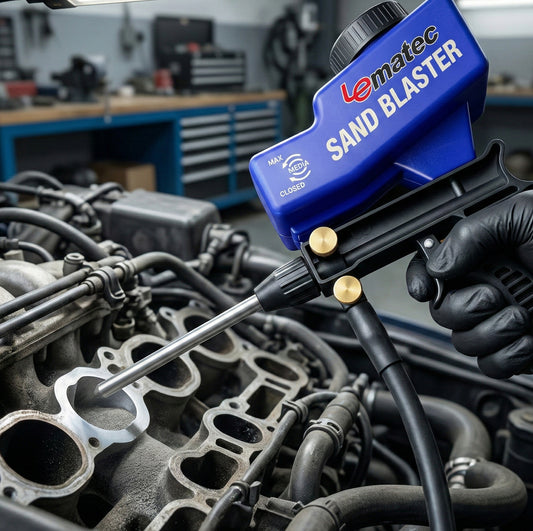
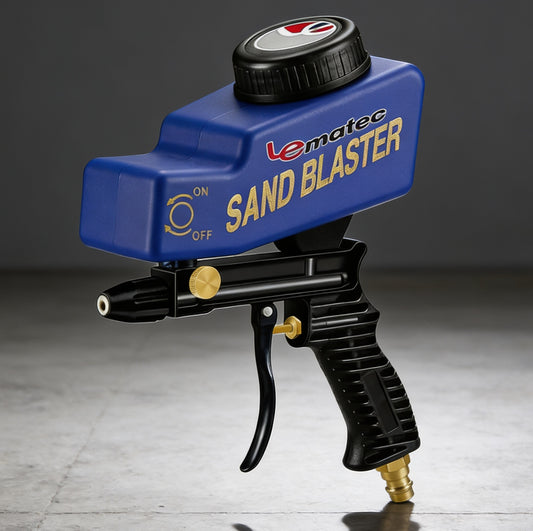
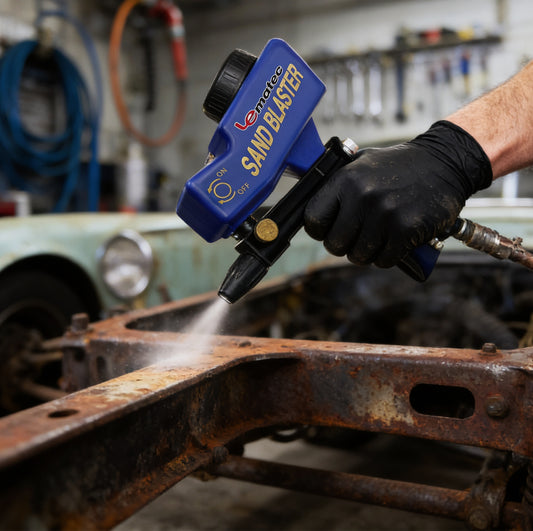
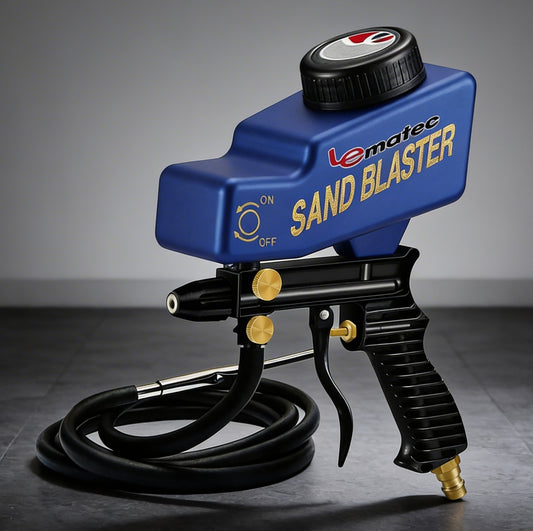
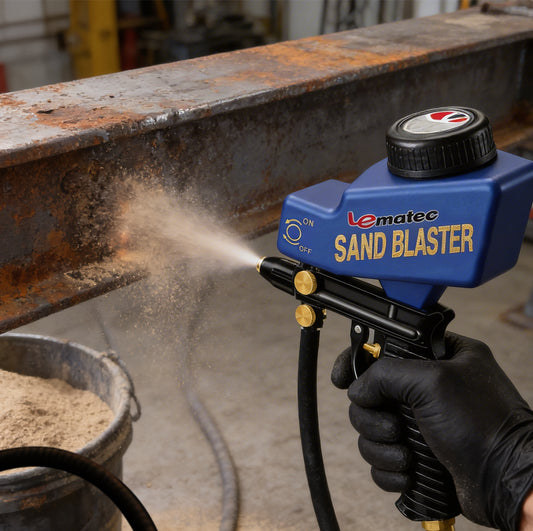
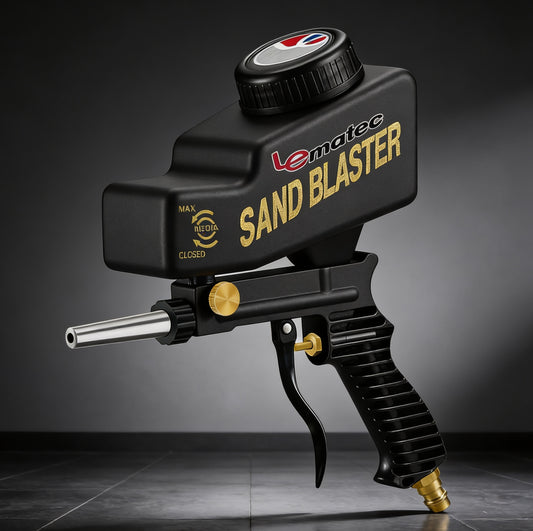
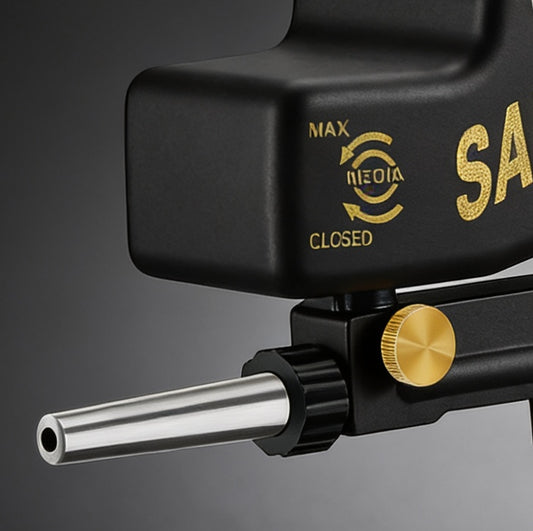
The AS118-2 Professional Sandblaster Kit matches the air requirements covered in this guide.
Shop the AS118-2 Sandblaster Kit →Why nozzle size changes everything
The nozzle is the biggest variable in any guide to sandblaster air requirements because it directly controls air consumption. As nozzle diameter increases, CFM demand climbs fast. That is good when you want faster material removal, but it puts real pressure on the air system.
A smaller nozzle can be the right call for detail work, rust spots, brackets, wheels, and intermittent use. A larger nozzle makes more sense for frames, sheet metal, fabricated parts, gates, and heavier surface prep where productivity matters. The trade-off is simple: bigger nozzle, faster blasting, more compressor required.
As a general working range, a small hobby or spot-repair setup may operate around 10 to 20 CFM depending on nozzle and pressure. Mid-range shop blasting often lands around 20 to 40 CFM. Larger production-style or heavy-duty blasting setups can go well beyond that. Exact numbers vary by blaster design and nozzle material, but the pattern does not change.
Nozzle wear matters too. As a nozzle wears out, the opening gets larger, and the blaster starts drawing more air than it did when new. That means a setup that worked fine last month can suddenly feel underpowered even though nothing else changed.
PSI matters, but not the way most buyers think
Most blasting work happens somewhere around the 80 to 100 PSI range, though some applications run lower or higher depending on the surface and media. Higher PSI generally increases cutting power, but only if the compressor can maintain that pressure while delivering enough airflow.
This is where advertised compressor numbers can mislead people. A unit might claim a high maximum PSI, but max PSI is not the same as delivered CFM at working pressure. Sandblasting does not care what the compressor can hit briefly. It cares what it can sustain.
If your blaster is rated for 90 PSI and needs 25 CFM, you want a compressor that can actually deliver at least that amount at 90 PSI, not one that reaches 125 PSI on paper and runs out of breath under load. A little overhead is smart because real-world systems lose air through hose length, fittings, filters, and normal wear.
How to size the compressor correctly
The safest way to size a compressor for blasting is to start with the blaster's air demand at your intended working pressure, then add margin. If a sandblaster requires 18 CFM at 90 PSI, do not shop for an 18 CFM compressor and call it done. Build in extra capacity so the machine is not running at its limit the entire time.
A good rule for many users is to target at least 20 percent more delivered CFM than the minimum requirement. More margin can make sense if you run long sessions, use long hose runs, or expect nozzle wear over time. That extra capacity helps maintain stable pressure and cuts down on constant cycling.
Tank size helps with short bursts, but it is not a substitute for compressor output. A larger tank gives you a reserve, which is useful, but once that reserve is drained, performance comes down to pump capacity. For continuous blasting, pump output is what keeps the job moving.
If you are deciding between a setup for occasional spot work and one for longer blasting sessions, be honest about how you actually work. Plenty of buyers think they only need a small setup until they start cleaning multiple parts in a row and realize recovery time is killing productivity.
The rest of the air system can choke performance
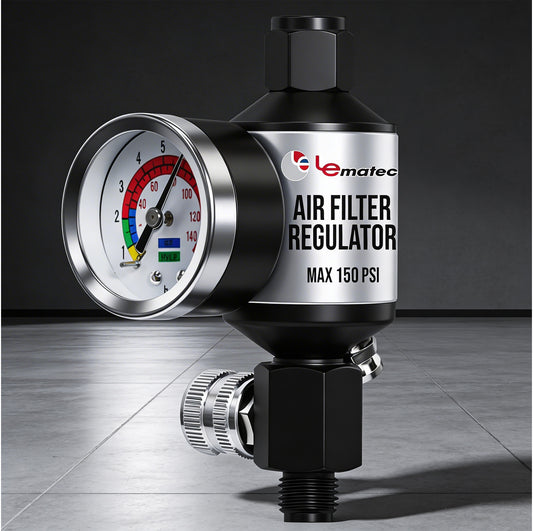
A compressor can be properly sized and still deliver disappointing results if the rest of the air path is restrictive. Hose diameter, hose length, fittings, regulators, and filters all affect how much usable air reaches the blaster.
Long hose runs create pressure drop. Undersized hoses do the same thing. Quick-connect fittings that are too restrictive can quietly rob flow before the air even reaches the pot or gun. In a high-demand application like blasting, those losses add up fast.
Moisture is another issue. Wet air causes media clumping, inconsistent flow, and blockages that look like air problems even when the compressor itself is fine. A proper filter and moisture control setup is not an extra - it is part of a reliable blasting system. This matters even more in humid shops or during long operating cycles when compressors generate more heat and condensation.
The practical takeaway is simple: match the air accessories to the job. A serious blaster needs serious airflow from the tank to the nozzle.
Matching air requirements to the kind of blasting you do
Not every user needs the same setup. If you are stripping a few suspension parts, cleaning weld zones, or removing rust from small components, a lighter system can make sense. You may accept pauses between passes if it keeps the initial investment down.
If you are handling wheels, body panels, fabricated assemblies, trailers, equipment parts, or recurring shop work, undersizing gets expensive quickly. The blast pattern weakens, media use becomes less efficient, and labor time goes up. That is when a larger compressor and a better-matched pressure pot setup pay for themselves.
There is also a surface-quality angle. Inconsistent air supply can produce an uneven blast pattern, which means uneven surface prep. If you are prepping for coating, paint, or restoration work, stable air matters for finish quality as much as speed.
Common mistakes buyers make
The biggest mistake is buying by tank size or horsepower without checking delivered CFM at working PSI. The second is assuming a sandblaster will perform like an impact wrench or tire inflator. It will not. Blasting is far more demanding and exposes weak links in the air system fast.
Another common problem is ignoring nozzle wear and media choice. Heavier or more aggressive media can increase demand on the system in practical use, especially if you are trying to maintain production speed. Running a worn nozzle while blaming the compressor is also common.
Then there is the accessories issue. A cheap hose, restrictive coupler, or weak moisture control setup can undercut an otherwise solid compressor. For buyers who care about uptime, that is false economy.
A practical way to choose without overbuying
Start with the largest nozzle you realistically plan to run, not the smallest one you hope will be enough. Check the blaster's CFM requirement at your target PSI. Then choose a compressor that exceeds that output at the same pressure, with enough margin for line loss and normal wear.
After that, make sure the hose ID, fittings, regulator, and moisture control are not holding the system back. If you are shopping for components, it makes sense to buy from a supplier that understands sandblasting as a full system, not just as a standalone tool category. That saves time, cuts guesswork, and lowers the chance of building a setup with mismatched parts.
For a lot of shops and serious DIY users, the right answer is not the biggest compressor on the market. It is the setup that delivers steady air for the nozzle you actually use, with enough reserve to keep working instead of waiting.
When your blaster has the air it needs, everything gets easier - faster surface prep, more consistent results, and fewer interruptions that drag out the job.
Tags:
Related articles
Compressed Air Tool Buying Guide
Jun 11 2026
9 Best Pneumatic Tools for Garage Work
Jun 09 2026
Sandblasting Cabinet vs Siphon Blaster
Jun 07 2026
How to Choose Blast Hose Size Right
Jun 05 2026
High Torque Impact Wrench: How Much Is Enough?
Jun 03 2026