Shopping Cart
(0)
Free shipping included — no minimum on any US order

Quick Search:


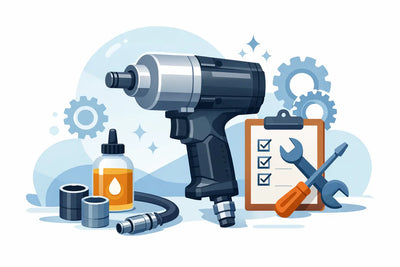
A lug nut that refuses to move will tell you very quickly whether your tool is rated for real work or just good marketing. That is where a high torque impact wrench earns its keep. When you are breaking loose rusted suspension bolts, heavy truck fasteners, or over-tightened shop hardware, torque numbers matter - but so do air supply, control, and how long you can use the tool without wearing yourself out.
If you are buying for a home garage, a repair bay, or a maintenance shop, the right choice is not always the biggest number on the spec sheet. A stronger tool can save time, but only if your compressor can feed it and only if the extra size does not slow you down on the job.
A high torque impact wrench is built for stubborn fasteners that standard-duty tools struggle to move. Think axle nuts, suspension hardware, heavy equipment service, truck wheels, agricultural equipment, and corrosion-heavy maintenance work. In those jobs, breakaway torque matters more than convenience specs because the tool has one main job - remove fasteners without wasting your time.
That does not mean every user needs the most aggressive wrench available. If most of your work is tire rotation, light brake service, or general automotive repair, a mid-torque model often gives you better balance. It is lighter, easier to control, and less likely to overrun smaller fasteners. High torque starts to make sense when seized hardware is common, when fastener sizes increase, or when downtime costs more than the price difference between tools.
The first number buyers look at is torque, and for good reason. But there is a difference between fastening torque, working torque, and breakaway torque. Breakaway torque is the headline figure because it tells you what the wrench can do when a bolt is already stuck. That is useful, but it is also the easiest number to advertise.
In real shop use, the more telling question is whether the wrench can repeatedly loosen the fasteners you deal with every day. A tool rated for huge breakaway torque may still feel disappointing if your air system cannot keep up. Pneumatic impact wrenches depend on steady pressure and enough air volume. If the compressor is undersized, the hose is too restrictive, or fittings choke flow, the tool will not perform at its rated level.
That is why two buyers can own the same impact wrench and have completely different results. One has a properly matched compressor, correct hose size, and clean, dry air. The other is feeding the tool through a long undersized line with pressure drop at every connection. Same wrench, very different output.
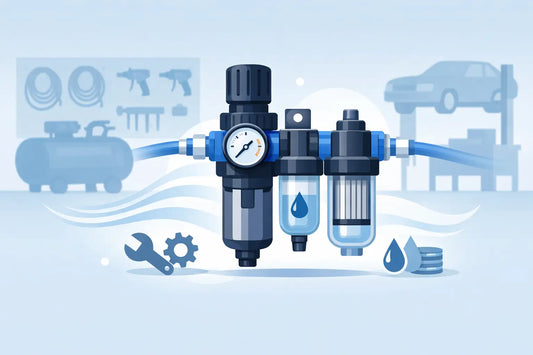
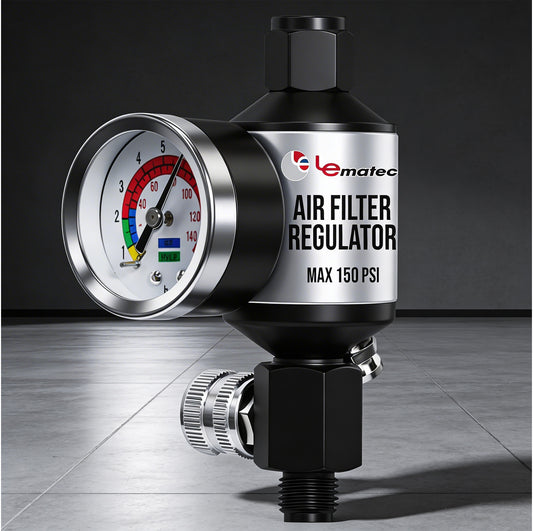
When you shop for a high torque impact wrench, treat the compressor, hose, couplers, and regulator as part of the same system. A powerful wrench paired with weak airflow is money left on the table. For higher-demand pneumatic tools, air volume is just as important as PSI.
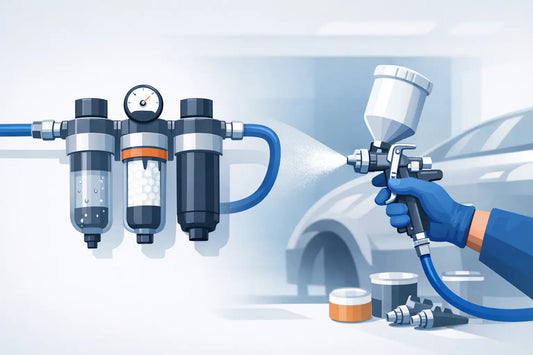
Shorter hoses, larger inside diameter, and high-flow fittings can make a noticeable difference. So can a clean filter and proper lubrication. If your current setup struggles with grinders or sanders, it will probably hold back a large impact wrench too. Before blaming the tool, look at the system feeding it.
There is a reason experienced mechanics do not automatically reach for the strongest wrench on the shelf. Bigger torque usually means a bigger housing, more weight, and less room to work. On an open wheel stud, that may not matter. Under a vehicle, inside a frame rail, or around suspension components, it matters a lot.
A heavy wrench that wears out your arm by midday can cost more in lost pace than it saves in raw power. If you use the tool all day, ergonomics become a performance issue, not a comfort issue. Handle shape, trigger response, balance, and vibration control all affect how productive the wrench feels after the first few fasteners.
For some buyers, the best setup is not one impact wrench that does everything. It is a lighter everyday tool for common service work and a dedicated high torque unit for the worst fasteners. That approach usually gives better control, less fatigue, and fewer damaged parts.
If your work includes rust-belt vehicles, fleet maintenance, truck service, industrial repair, or older equipment, a high torque impact wrench can pay for itself quickly. Time spent heating bolts, adding cheater bars, or fighting seized hardware costs labor. It also increases the chance of snapped fasteners and damaged components.
A stronger impact wrench reduces those fights. It can turn jobs that normally stall into routine removals. That matters even more for small shops and maintenance teams where one stuck fastener can tie up a bay or push other work behind schedule.
There is also a reliability angle. Buyers who depend on air tools every week are usually better off buying for consistent output, service life, and warranty coverage rather than chasing the cheapest spec sheet. A tool that arrives fast, holds up under repeated use, and is backed by a real warranty lowers risk in a way bargain tools do not.
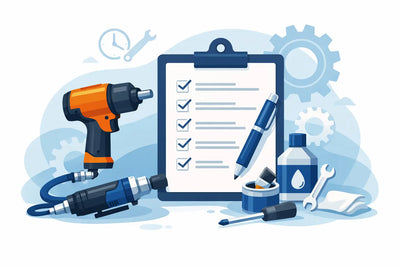
Start with the fasteners you actually remove, not the ones you might see once a year. Look at wheel lugs, suspension bolts, axle hardware, equipment mounts, and anything exposed to corrosion. If those jobs are common, move up in torque. If they are occasional, a mid-torque wrench plus a breaker bar may still be the smarter buy.
Then check your air system honestly. Compressor capacity, hose diameter, line length, and fittings all affect output. If your setup is marginal, either upgrade the air side or choose a wrench that matches what your system can support. Overspending on a tool you cannot feed does not improve results.
Next, think about access and runtime. A big 1/2-inch or 3/4-inch impact may be perfect for open access and heavier hardware, but it can become frustrating in tighter spaces. If your work shifts between heavy removal and tighter automotive service, balance matters as much as max torque.
Finally, look at durability and support. Air tools work in dirty, demanding environments. They get dropped, run hard, and expected to perform on schedule. Good warranty coverage, fast fulfillment, and a straightforward replacement process are not extras. They are part of what makes the purchase practical. That is one reason buyers who want job-ready value often look for suppliers like Pro Air Tools that back products with a 36-month warranty and ship fast.
One of the biggest mistakes is buying by torque number alone. On paper, the highest-rated model always wins. In the shop, the better tool is the one that matches the work, fits the air system, and stays manageable through a full day.
Another mistake is ignoring air restrictions. A large impact wrench fed through a small hose and standard restrictive couplers will feel underpowered. Many performance complaints start there.
Over-torquing is another problem. A powerful impact wrench can remove stubborn fasteners fast, but it can also overrun studs and smaller hardware if used carelessly. Variable power settings and trigger control matter, especially if the same tool handles both disassembly and reassembly prep. Final torque should still be verified with the proper torque wrench when the job calls for precision.
Not every serious buyer needs the heaviest hitter available. If your work is mostly passenger vehicles, light truck service, brake jobs, and standard wheel service, high torque may be more tool than you need most days. It is useful, but not always efficient.
If your workload includes corroded hardware, commercial vehicles, farm equipment, industrial maintenance, or repeated teardown work, then the equation changes. In those environments, extra torque is not bragging rights. It is time saved, less frustration, and fewer jobs getting stuck halfway through.
The best buy is usually the one that solves your hardest regular problem without creating new ones. That means enough torque to break loose what you face most often, enough air supply to run it properly, and enough control that the tool still feels useful after the first burst of power.
If you are shopping for a high torque impact wrench, think past the headline number. Buy for the fasteners in front of you, the compressor you actually own, and the kind of work that has to get done today. That is how you end up with a tool that makes the job easier instead of just sounding impressive on the box.


 AIR REGULATORS

 ACCESSORIES