Shopping Cart
(0)
Free shipping included — no minimum on any US order

Quick Search:

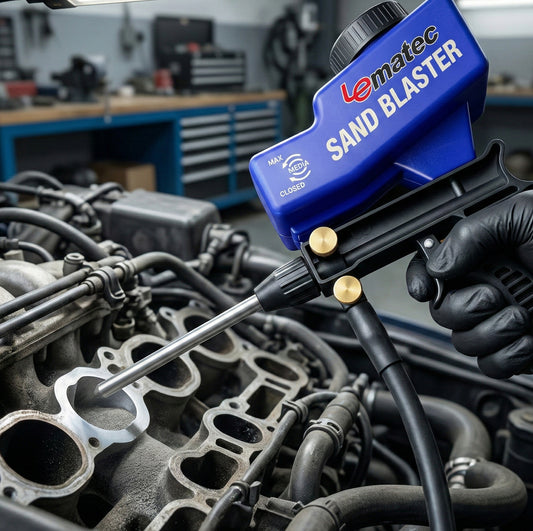
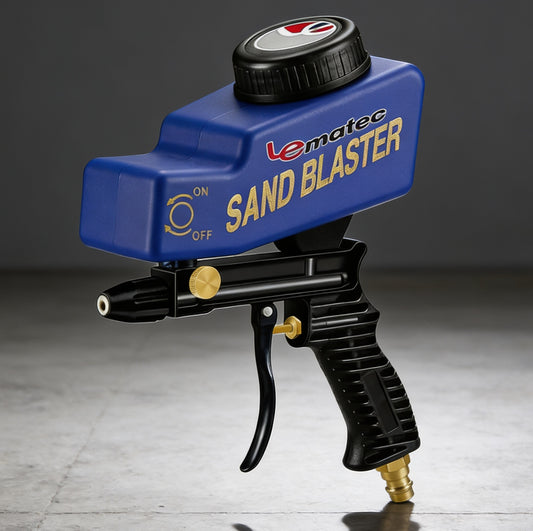
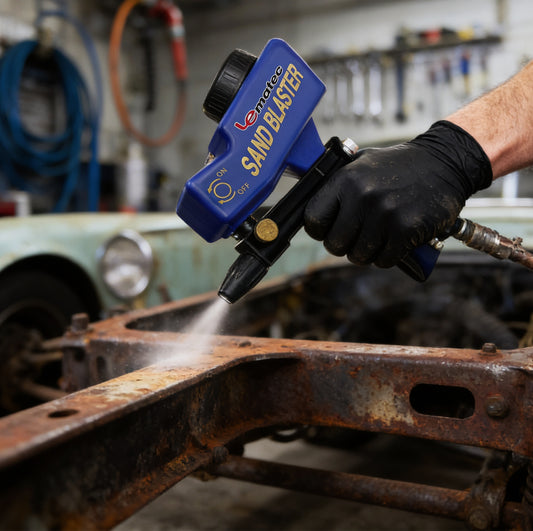
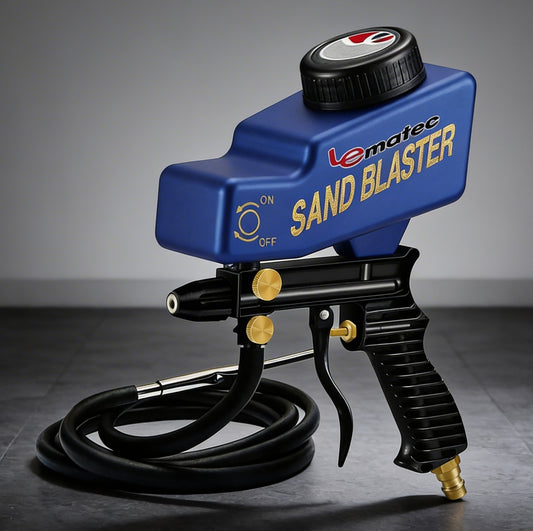
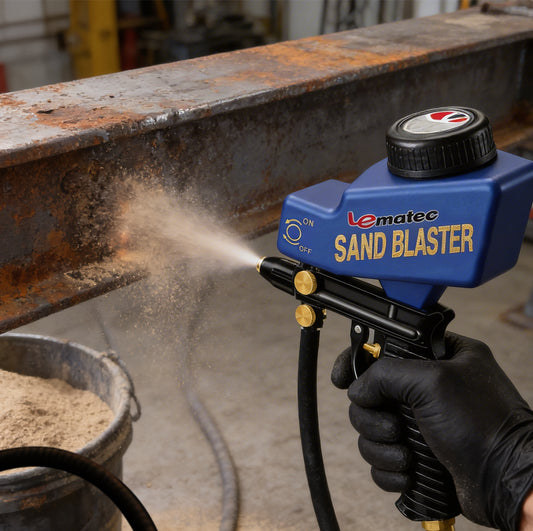
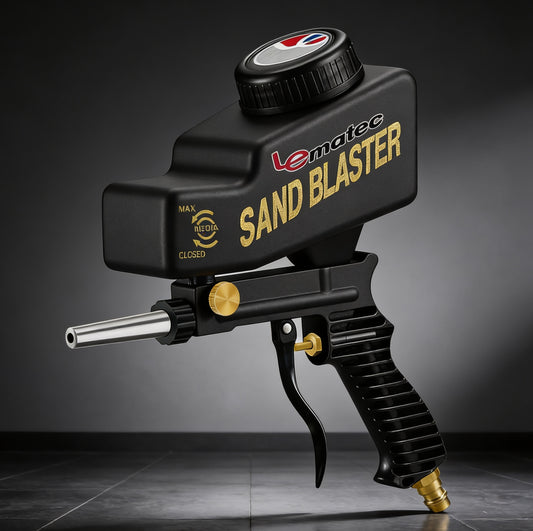

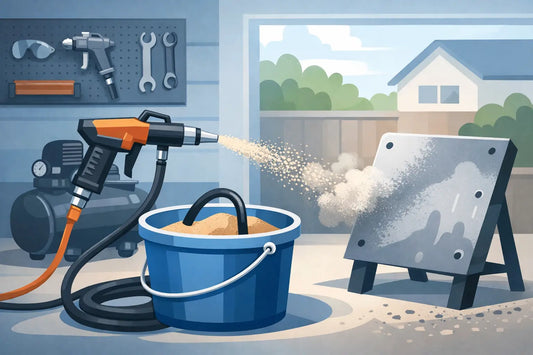
If your blaster keeps cutting out, pressure drops halfway through a pass, or rust removal feels painfully slow, the problem usually is not the gun. It is the air supply. When people ask what size air compressor for sandblasting, the real answer comes down to sustained CFM, stable PSI, and how long you need to blast without stopping.
Sandblasting is one of the hungriest jobs you can ask an air compressor to handle. An impact wrench or air ratchet uses air in short bursts. A blast gun wants a steady stream the entire time the trigger is pulled. That is why a compressor that feels strong with other air tools can still fall flat on blasting work. Soda blasting is gentler on air supply than abrasive blasting — if you're working with a smaller compressor, a soda blaster setup often runs comfortably where a pressure-pot sandblaster wouldn't.
There is no one-size answer because blasting demand changes fast based on nozzle size, pressure setting, and the kind of work you are doing. Cleaning a small bracket in a blast cabinet is a different job than stripping a frame, wheel, or body panel.
The first number to watch is CFM, not tank size and not peak horsepower claims. CFM tells you how much air the compressor can actually deliver continuously. For sandblasting, that matters more than almost anything else.
PSI matters too, but most blasting setups live in a familiar range. Many operators work around 80 to 100 PSI at the nozzle, depending on media, material, and how aggressive they want the cut. If the compressor cannot keep up with the CFM demand at that pressure, performance drops and the work slows down.
Tank size helps, but it is not the main fix for an undersized machine. A big tank gives you a little buffer. It does not create more airflow. If your compressor produces less air than the blast gun consumes, the tank just delays the pressure drop.
This is where buyers either get the setup right or waste money. Sandblasting air consumption is closely tied to nozzle size. A small nozzle may be manageable with a modest shop compressor. Step up one or two nozzle sizes and the air requirement jumps quickly.
As a working rule, very small nozzles around 1/8 inch can need roughly 20 to 25 CFM at common blasting pressures. Move to 3/16 inch and demand can climb into the mid-40 CFM range. Larger nozzles can push beyond what most home and light-shop compressors can deliver.
That is why small spot repairs and cabinet blasting are often realistic with a serious garage compressor, while open blasting larger parts usually needs a true shop-grade unit. If you size the compressor first and ignore the nozzle, you can end up with a blaster that technically runs but works too slowly to be worth your time.
Compressor sorted — now the blaster.
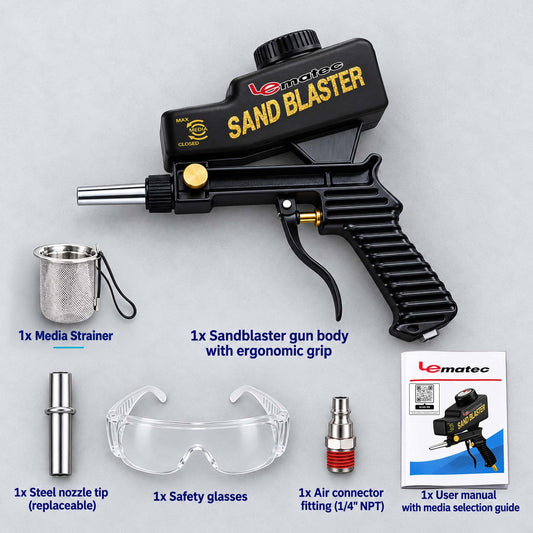
Once your compressor is sized right, the AS118-2 Professional Sandblaster Kit is ready to run.
Shop the AS118-2 Sandblaster Kit →For small blast cabinets, detail work, and occasional rust removal, many users can get by with a compressor delivering around 10 to 15 CFM at 90 PSI, especially if they use a smaller nozzle and work in shorter cycles. It is not fast, but it is workable.
For frequent cabinet use, heavier parts cleaning, and more consistent performance, a compressor in the 15 to 25 CFM range is a much better fit. That gives you more usable blasting time and less waiting for pressure recovery.
For outdoor blasting, larger parts, or production-style work, you are usually looking at 25 CFM and up, and often well beyond that. Full-frame blasting, body shells, or broad surface prep can quickly move into territory where a typical consumer compressor is simply undersized.
If you are shopping for a compressor specifically to support sandblasting, the practical floor is higher than many expect. For anything beyond light hobby use, a 60-gallon vertical compressor is often the minimum size worth considering, paired with real CFM output that matches your blaster.
In many garages and small shops, a 5 HP class unit producing around 15 to 18 CFM at 90 PSI is the point where sandblasting starts to become more productive and less frustrating. That setup can handle smaller nozzles, cabinet blasting, and spot work much better than portable pancake or hot dog compressors.
If your plan is to blast larger surfaces regularly, move up from there. A two-stage compressor with stronger sustained output is usually the better buy than trying to force a smaller unit to do a big job. The cheaper compressor often becomes expensive once you count time lost, moisture issues, and uneven results.
A compressor can look good on paper and still struggle in real blasting conditions. The reason is duty cycle. Sandblasting is a long-run application, which means the compressor may stay on for extended periods trying to keep up.
If the pump is not built for that kind of workload, heat builds up, moisture increases, and wear comes faster. That leads to pressure inconsistency and more maintenance. For regular blasting, a heavy-duty cast iron pump and a compressor designed for frequent or continuous shop use will hold up better than lighter homeowner-grade units.
This is one of those cases where buying the cheapest acceptable option rarely feels like a good deal later. Reliability matters when the work is halfway done and the compressor is already maxed out.
Compressed air gets hot, and hot compressed air creates moisture. Sandblasting and moisture do not work well together. Wet media clogs lines, disrupts flow, and turns an already slow job into a stop-and-start mess.
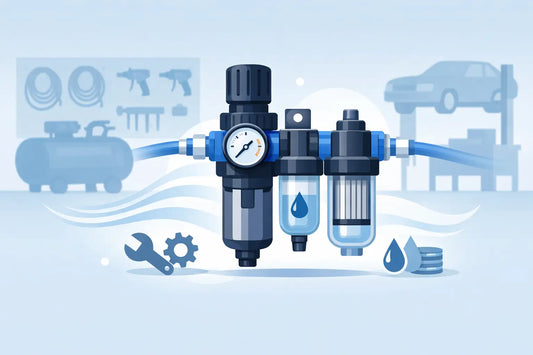
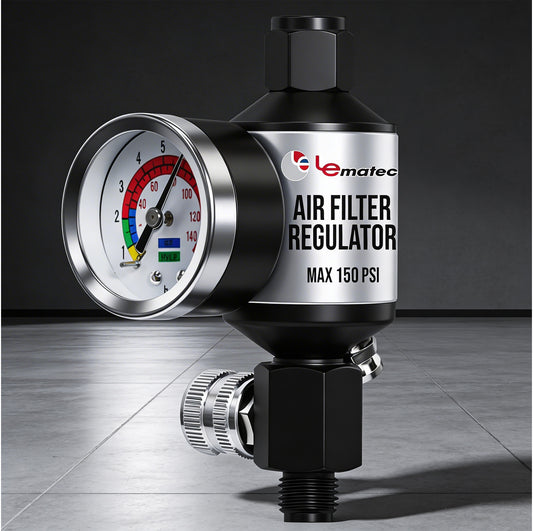
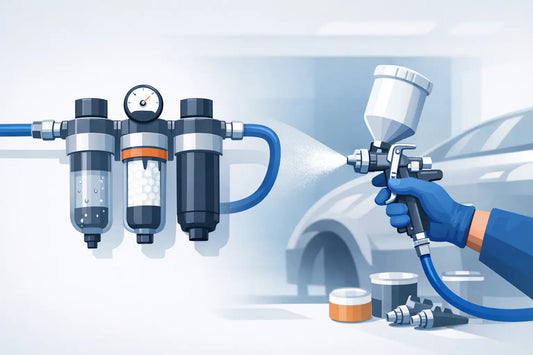
That is why the right setup is not just compressor plus blaster. You also need proper air treatment. A regulator, moisture separator, and suitable hose layout help keep the airflow usable. If you are running a compressor hard for blasting, moisture control stops being optional.
A larger compressor with stable output can actually make the whole system easier to manage because you are not running at the ragged edge all the time. The harder a small unit works, the more heat and moisture it tends to create.
For light-duty blasting, a single-stage compressor may be enough if the delivered CFM matches your blaster and your work cycles are short. That can make sense for occasional cabinet use, hobby restoration, and spot cleanup.
For more demanding blasting, two-stage compressors usually make more sense. They are built to deliver higher pressure more efficiently and are often paired with larger tanks and more serious pumps. In a small commercial shop or active home garage, that extra capacity can be the difference between steady work and constant waiting.
The trade-off is cost, size, and power requirements. A larger two-stage compressor may need 240V service and dedicated space. But if sandblasting is part of your regular workflow, buying enough compressor once is usually better than replacing an undersized unit later.
The most common mistake is buying based on tank size alone. A 60-gallon tank sounds impressive, but if the pump output is low, it still will not support meaningful blasting for long.
The next mistake is trusting peak numbers instead of delivered CFM at working pressure. Ignore inflated marketing language and look for real performance specs at 90 PSI or your intended operating range.
Another problem is matching the compressor to the blaster but forgetting the rest of the system. Hose diameter, fittings, regulator restrictions, and moisture control all affect blasting performance. Even a strong compressor can feel weak if the air path is restricted.
Last, some buyers choose a setup that only works on paper. If your blaster needs 18 CFM and the compressor delivers 18 CFM under ideal conditions, you do not really have margin. In practice, some extra capacity makes the system easier to live with.
Start with the blast nozzle you plan to use and the pressure you expect to run. Check the blaster's air consumption, then add some safety margin so the compressor is not operating at its absolute limit. If you are a hobby user doing short bursts, you can live closer to the edge. If you are running a shop, you want room to spare.
Then look at your electrical setup, available floor space, and whether the compressor will also run other tools. If the same machine has to support blasting, die grinders, and impact work, size for the heaviest continuous demand, not the lightest tool in the drawer.
For many buyers, the smart middle ground is a shop compressor in the 15 to 25 CFM range with a 60- to 80-gallon tank, good filtration, and a blaster matched to realistic nozzle size. That covers a lot of automotive, fabrication, maintenance, and restoration work without pretending a small portable unit can do a production job.
If you are building or upgrading a blasting setup, it pays to buy for performance instead of guesswork. At Pro Air Tools, that usually means choosing equipment the way working shops do - by airflow, reliability, and whether it keeps the job moving. A compressor that keeps up is not just a spec choice. It is what makes sandblasting faster, cleaner, and a lot less frustrating.
All products ship free to the US with same-day processing.


 AIR REGULATORS

 ACCESSORIES