Shopping Cart
(0)
Free shipping included — no minimum on any US order

Quick Search:


An air compressor vacuum attachment converts your existing compressor into a powerful cleaning tool. Instead of buying a separate shop vac, you connect a pneumatic vacuum kit to your air line and handle dust, metal shavings, and debris in one step. It's one of the most versatile accessories you can add to a home garage or professional workshop.
In this guide, we cover how air compressor vacuums work, what to look for when buying one, and how to get the most out of your setup.
Air compressor vacuum attachments use the Venturi effect — compressed air flows through a narrow nozzle, creating suction that pulls debris into a collection bag or canister. Most units double as blowers by reversing the airflow direction, giving you a 2-in-1 cleaning tool.
The key advantage over electric shop vacs is portability. If you already run an air compressor for pneumatic tools, adding a vacuum attachment means no extra cords, no extra motor, and no extra storage space. The Le Lematec 2-in-1 Vacuum & Blower Kit includes six interchangeable nozzles for different cleaning tasks — from tight crevices to broad surface dusting.
Most pneumatic vacuums need 4–6 CFM at 90 PSI. Before buying, check your compressor's output. If you're running a small pancake compressor under 3 CFM, you may experience intermittent suction. A 20-gallon or larger tank compressor handles vacuum duty easily alongside other tools. For help sizing your compressor, see our compressor sizing guide.
The most practical units serve double duty. Blow mode clears sawdust off work surfaces, blasts debris from engine bays, and dries parts after cleaning. Vacuum mode sucks up chips, filings, and dust. Look for quick-switch designs that toggle between modes without disassembly.
Versatility comes from the nozzle set. A good kit includes a crevice nozzle for tight spaces, a wide brush for surfaces, an inflation adapter for tires and inflatables, and a rubber-tipped nozzle for delicate work. The Le Lematec kit ships with six specialized attachments covering all common use cases.
Pneumatic vacuums are generally quieter than electric shop vacs since there's no motor in the handpiece. The noise comes from your compressor, which you can place farther from your workspace. For even quieter blowing, consider a dedicated low-noise air blow gun for precision work.
Metal shavings from grinding and cutting are the number one use case. After using an air angle grinder or cut-off tool, a quick pass with the vacuum attachment clears your bench without touching sharp chips by hand.
Combined with a professional detailing kit, an air vacuum handles interior cleaning — seats, carpet, dashboard crevices — while the blower mode dries surfaces after washing. The car cleaning gun with brush is another excellent companion for exterior decontamination.
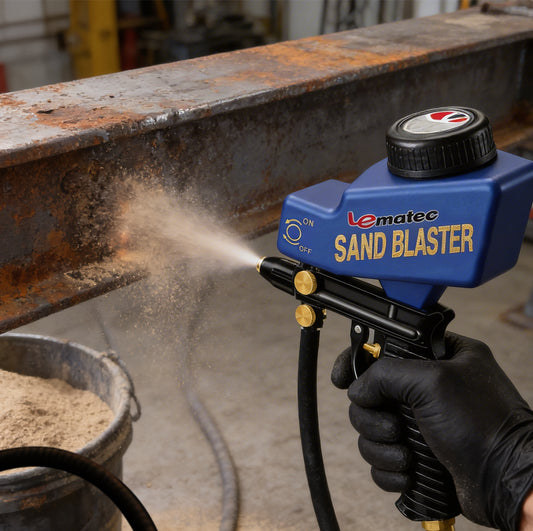
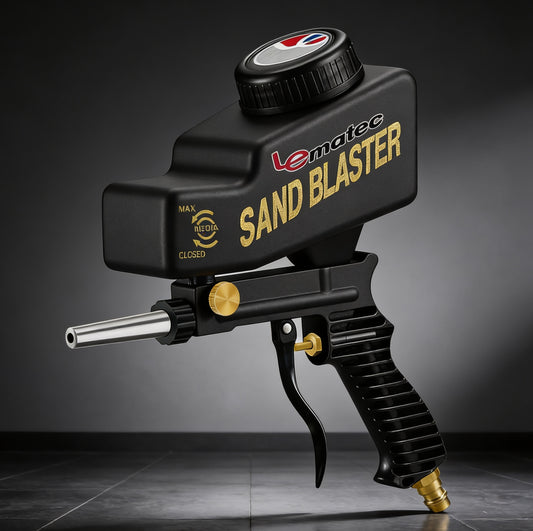
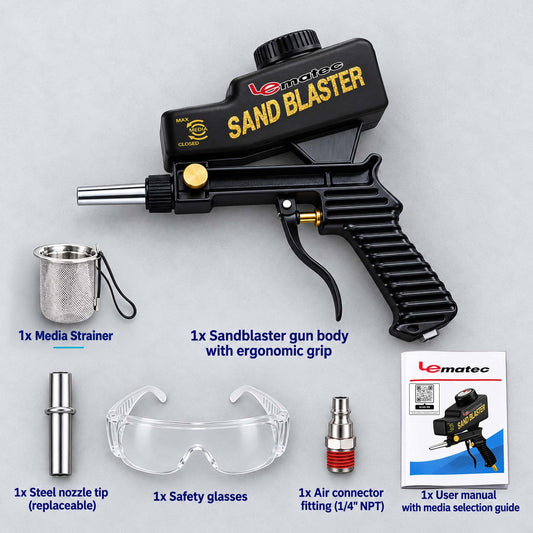
After sandblasting with a soda blaster or sandblaster kit, spent media needs to be collected. The vacuum attachment handles this efficiently, especially in enclosed spaces where sweeping isn't practical.
Many kits include inflation adapters for tires, sports balls, and pool floats. While a dedicated digital tire inflator gives more precise pressure control, the vacuum kit's inflation adapters work well for casual use.
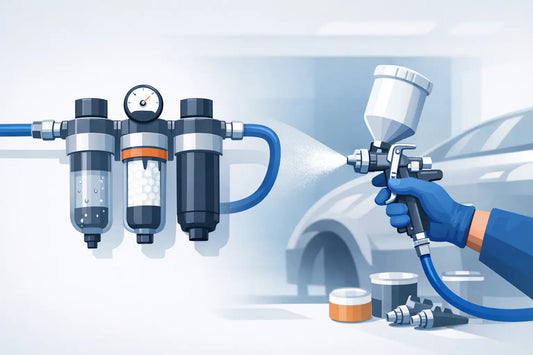
Maintenance is minimal compared to electric vacuums since there's no motor, belt, or filter to replace. Key steps include emptying the collection bag before it's full (overfilling reduces suction), checking the air fitting for leaks, and keeping nozzles clear of blockages. Always run clean, dry air through the tool — an inline filter upstream protects the vacuum and all your other pneumatic tools from moisture and oil contamination.
Yes, with a vacuum attachment kit. The attachment uses Venturi suction powered by your compressor's air output. You need at least 4 CFM at 90 PSI for effective suction.
A compressor delivering at least 4 CFM at 90 PSI works well. Most 20-gallon and larger compressors meet this requirement. Smaller pancake compressors may struggle with sustained vacuuming.
For workshops that already have a compressor running, a pneumatic vacuum is more compact, portable, and requires less maintenance. For heavy-duty continuous vacuuming of large volumes, a dedicated shop vac may be more practical.
Most pneumatic vacuum attachments are designed for dry debris only. Liquids can damage the Venturi mechanism and collection bag. For wet cleanup, use a wet/dry shop vac instead.



 AIR REGULATORS

 ACCESSORIES