Shopping Cart
(0)
Free shipping included — no minimum on any US order

Quick Search:
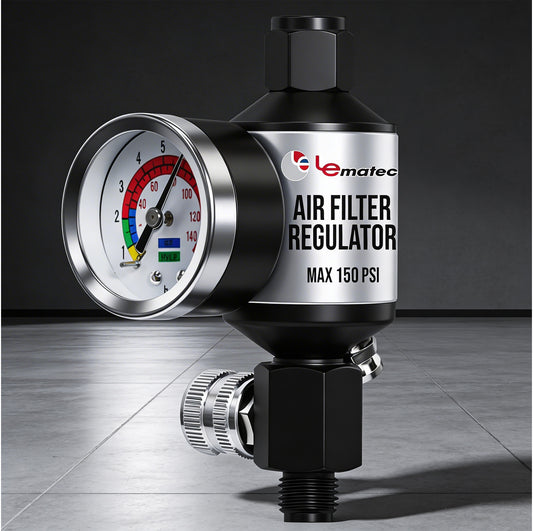
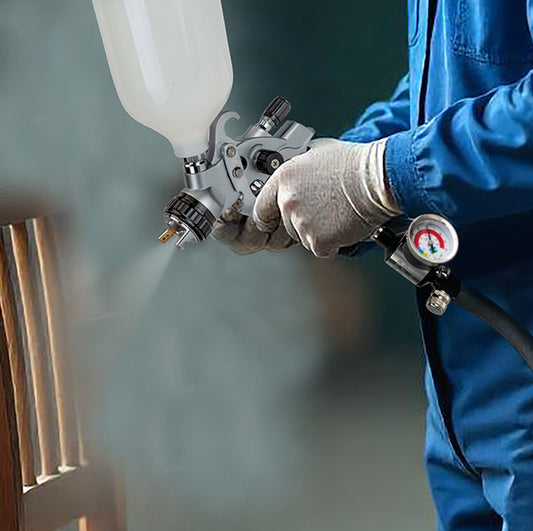

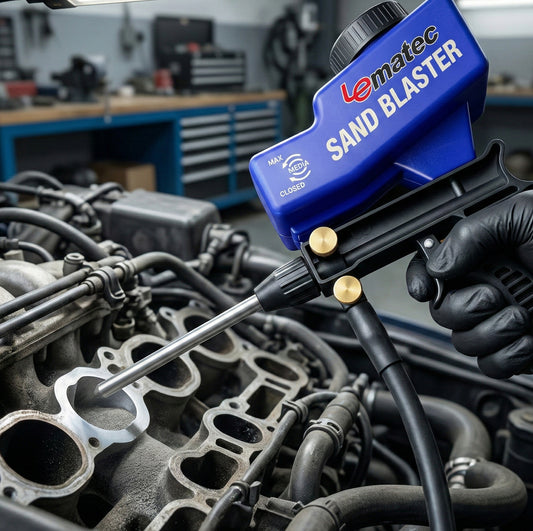
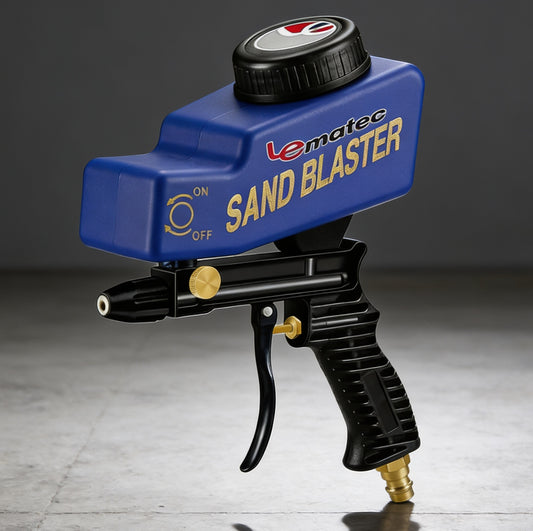
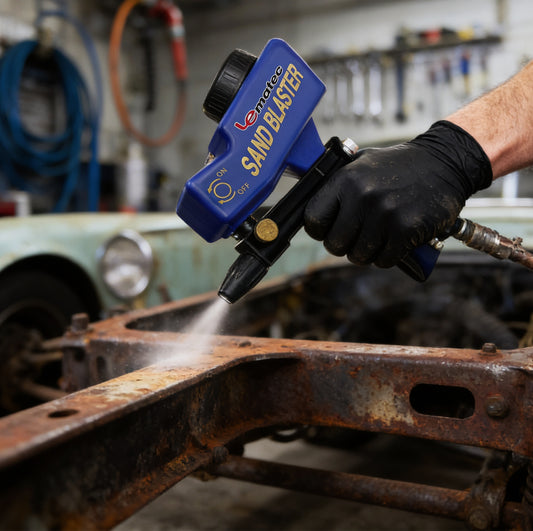
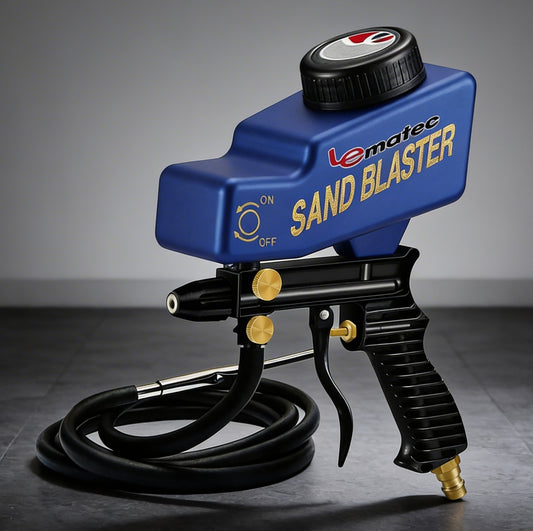
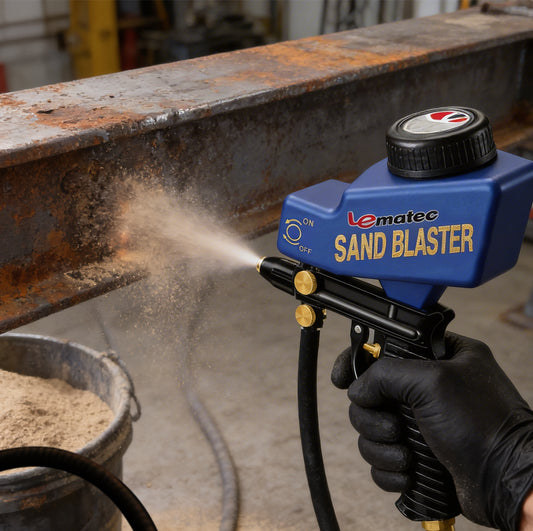
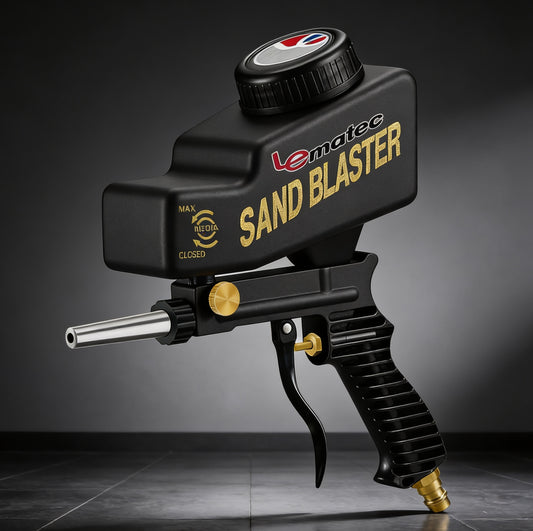

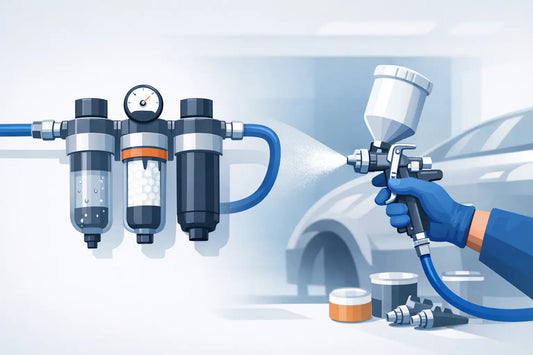
An inline air regulator mounts directly in the air line between your hose and tool, giving you precise pressure control exactly where it matters — at the point of use. Unlike wall-mounted or tank-mounted regulators that control your entire system, an inline regulator lets you fine-tune pressure for each individual tool or workstation. This is critical for spray guns, sandblasters, and any application where even 5 PSI of variance affects results.
Written by Charles Rosenstein, Le Lematec / Factory Direct — over 15 years designing precision air control systems for professional pneumatic applications.
Your compressor's tank regulator sets the pressure leaving the tank. But by the time air travels through 50 feet of hose, passes through couplers and fittings, and reaches your tool, the actual pressure at the tool inlet can be 5–15 PSI lower than what the tank gauge reads. Pressure also fluctuates as the compressor cycles between cut-in and cut-out. An inline regulator at the tool end eliminates these variables — you set exactly the pressure your tool needs, and it stays there.
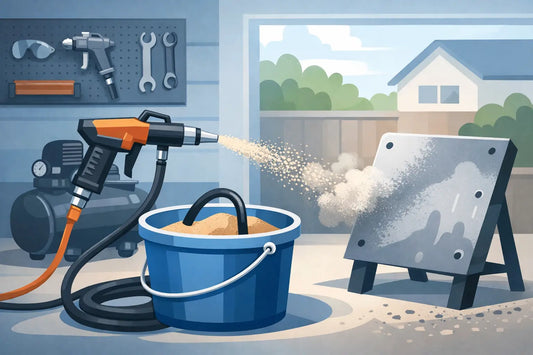
This matters most for:
Diaphragm regulators use a flexible membrane to sense and control downstream pressure. They respond quickly to pressure changes and provide the most consistent output. They're the standard for spray gun applications where pressure stability is critical.
Our AR-02 Diaphragm Regulator is a professional-grade inline unit with a heavy-duty gauge, 140 PSI rating, and 1/4" NPT ports — purpose-built for HVLP spray guns and precision air tools. The diaphragm design ensures smooth, responsive pressure control without the sticking or hysteresis common in piston-style units.
Piston regulators use a sliding piston instead of a diaphragm. They handle higher flow rates and are more durable in dirty environments, but they can exhibit more pressure variation (hysteresis) than diaphragm types. Best for general-purpose workshop regulation where absolute precision isn't critical.
Analog (mechanical gauge): Simple, reliable, no batteries. Easy to read at a glance. The AR-01 Analog Regulator delivers up to 89 SCFM at 150 PSI with a large, easy-to-read gauge — ideal for high-flow applications where you want maximum throughput with simple adjustment.
Digital (LCD display): Precise readout to 0.1 PSI in multiple units (PSI, BAR, kPa, kg/cm²). The DAR03B Digital Regulator is the professional choice for applications requiring exact, repeatable pressure settings. The multi-unit display is especially useful if you work with international equipment specs or follow metric-based paint system recommendations.
For the ultimate in digital precision, the DAR01B Digital Regulator and DAR02B Digital Regulator offer different form factors with the same multi-unit LCD technology.
| Feature | Inline (Point-of-Use) | System (Tank/Wall) |
|---|---|---|
| Location | At or near the tool | At the compressor or wall drop |
| Controls | One tool or workstation | Entire air distribution system |
| Pressure Accuracy | Excellent — minimal line loss | Good at source, but degrades over distance |
| Best For | Spray guns, precision tools, multi-tool shops | Setting maximum system pressure |
| Cost | $20–80 per station | $30–100 (one per system) |
The best approach: Use both. Set your system regulator to your maximum working pressure (typically 90–100 PSI), then use inline regulators at each workstation to fine-tune for specific tools. This gives you system-level protection with tool-level precision.
An undersized regulator restricts airflow and starves your tool. Match the regulator to your highest-demand tool at that station:
Check your specific tool's CFM requirements in our Pneumatic Tool CFM & PSI Chart.
For a complete overview of how regulators fit into your full air system, see our Complete FRL Unit Guide and Air Compressor Accessories Buying Guide.
An inline air regulator is a $20–80 investment that transforms inconsistent shop air into precise, tool-specific pressure delivery. For spray painting, it's essential — not optional. For sandblasting, it eliminates media waste and substrate damage. For every other air tool, it extends tool life by ensuring proper operating pressure. Start with a diaphragm regulator for your most demanding tool, and add inline regulators at each workstation as your shop grows.
Factory direct from Le Lematec — professional quality, competitive prices.







 AIR REGULATORS

 ACCESSORIES