Shopping Cart
(0)
Free shipping included — no minimum on any US order

Quick Search:
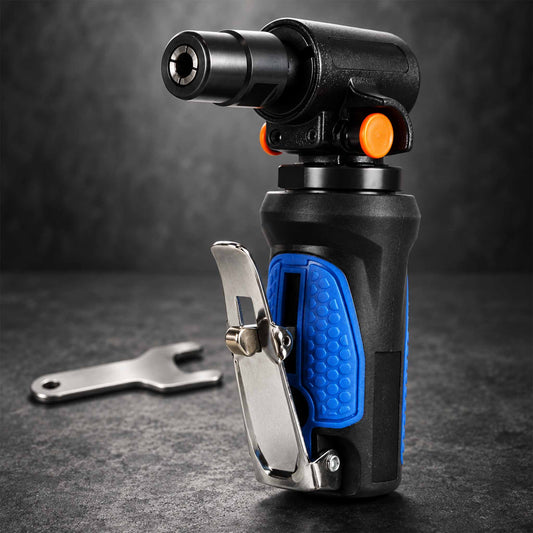
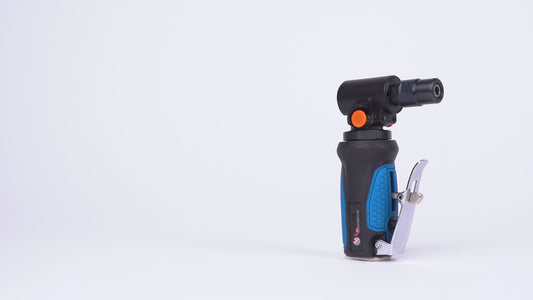


An air needle scaler is a pneumatic descaling tool that uses a cluster of hardened steel needles to blast away rust, mill scale, old paint, and weld spatter. Where grinders and sanders remove material by abrasion, needle scalers work by rapid percussion — thousands of impacts per minute that shatter and dislodge surface coatings without cutting into the base metal.
This guide covers how needle scalers work, when to use one instead of a grinder, and how to pick the right model for your application.
Inside the housing, a piston driven by compressed air oscillates at 4,000–5,000 beats per minute (BPM). The piston drives a bundle of 12–19 loose needles against the work surface. Each needle independently follows the surface contour, making scalers highly effective on irregular surfaces like welds, castings, and corroded structures that would defeat flat sanding tools.
The LE-AN324K needle scaler kit delivers 4,500 BPM with 19 needles and includes a chisel attachment for switching between scaling and chipping tasks. The LE-AN67 pushes 4,800 BPM for faster material removal on heavy industrial work.
Grinders like the LE-G804 remove material aggressively — great for cutting and heavy stock removal, but they can gouge or overheat thin metal. Needle scalers remove surface contaminants without removing base material, making them safer on structural steel, ship hulls, and anything where maintaining material thickness matters.
Wire wheels polish as they clean, which can smear surface contaminants into pores. Needle scalers lift and shatter coatings cleanly. For surfaces that need to be coated or painted afterward, needle scaling produces a better bonding profile than wire brushing.
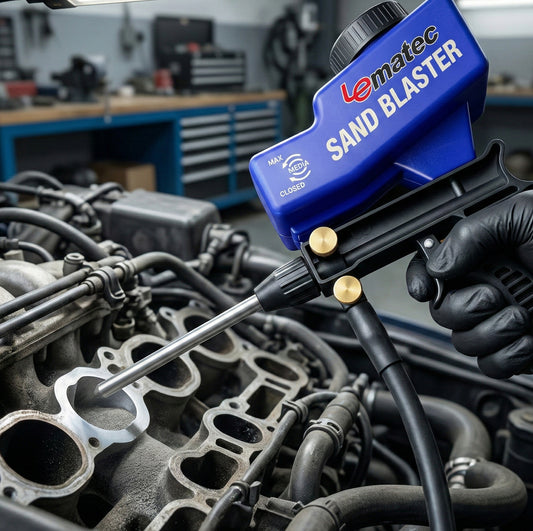
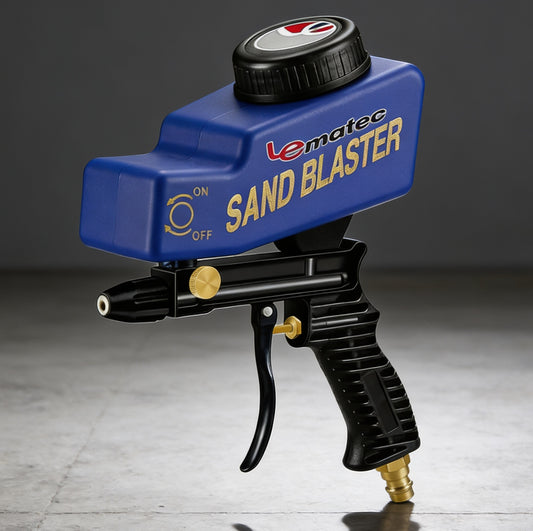
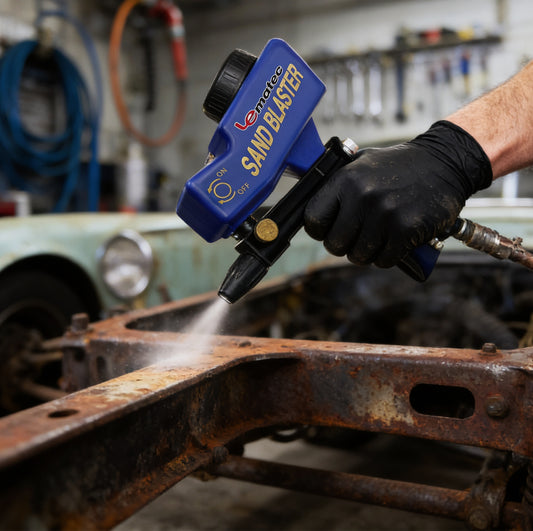
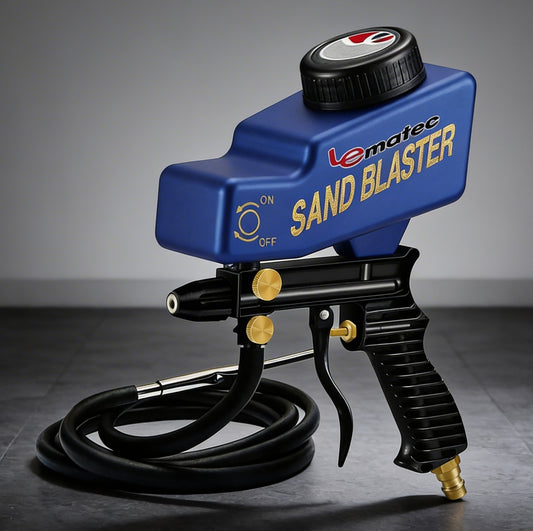
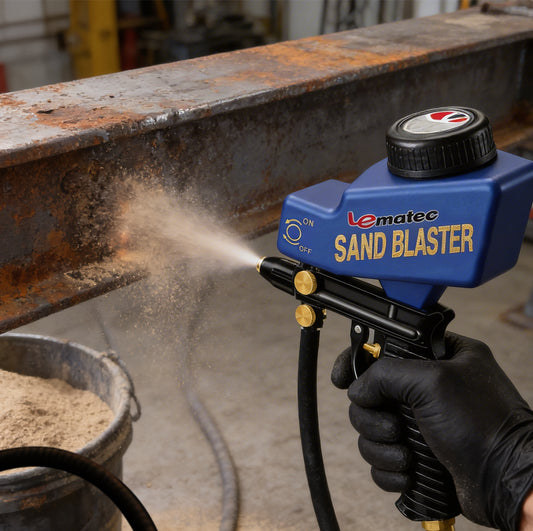
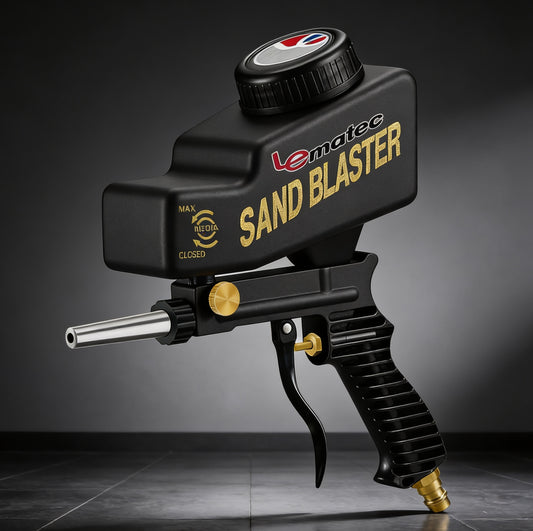
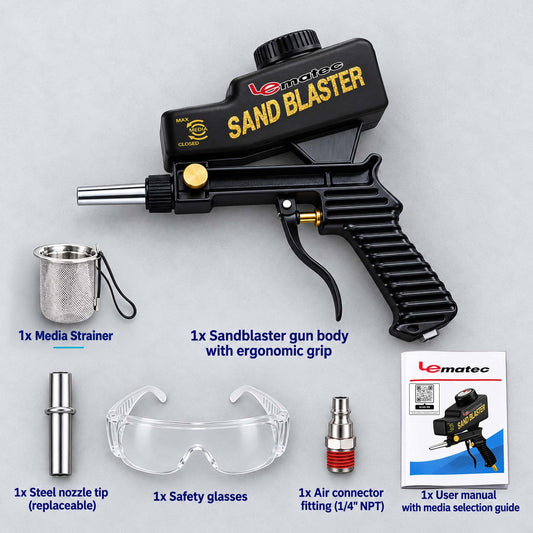
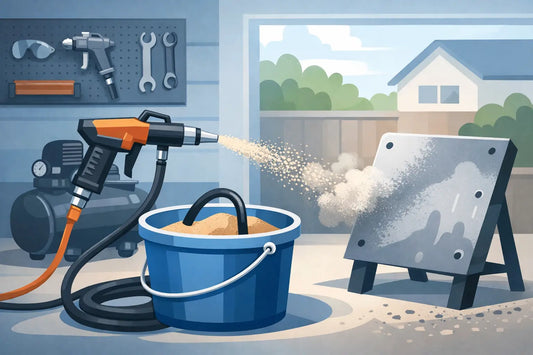
A sandblaster is faster for large flat areas and gives a uniform surface profile. But sandblasters need media, containment, and cleanup. Needle scalers need only compressed air — no media, no dust cloud, no containment setup. For spot repairs, weld cleanup, and small areas, a scaler is far more practical.
Higher BPM means faster descaling. The 4,500–4,800 BPM range covers most applications. The LE-AN324K at 4,500 BPM is suited for general workshop use, while the LE-AN67 at 4,800 BPM is built for sustained industrial work where speed matters.
More needles cover more surface area per pass. 19-needle models work faster on flat surfaces. For detailed work in tight corners, fewer needles provide more concentrated impact. Both the LE-AN324K and LE-AN67 include 19 needles, with replacement needle sets available when they wear down.
Some kits include interchangeable chisel heads for scraping gaskets, cutting sheet metal, and breaking tack welds. The LE-AN324K ships with both the needle bundle and a chisel set, making it versatile for multiple tasks. Round chisels and quick-change retainers let you swap between scaling and chipping modes in seconds.
Needle scalers vibrate heavily by design. Look for rubber grips, balanced weight distribution, and manageable overall mass. Lighter units reduce operator fatigue during extended descaling sessions.
Removing marine growth, rust, and old bottom paint from hulls is the classic needle scaler application. The tools work without generating sparks (important near fuel systems) and don't require abrasive media containment.
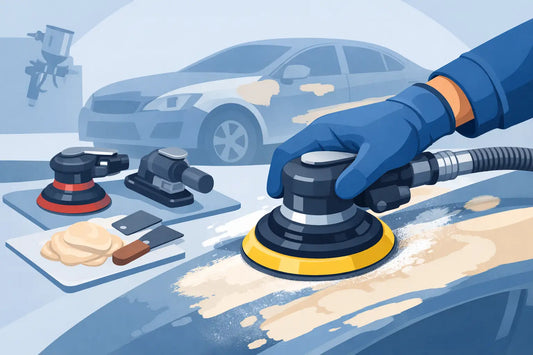
After welding, slag and spatter need to come off before inspection or painting. Needle scalers clean welds quickly without damaging the heat-affected zone. Pair with a belt sander afterward for final smoothing.
Bridges, storage tanks, and industrial structures develop mill scale and corrosion that need removal before recoating. Needle scalers prep these surfaces faster than hand tools and without the setup overhead of sandblasting.
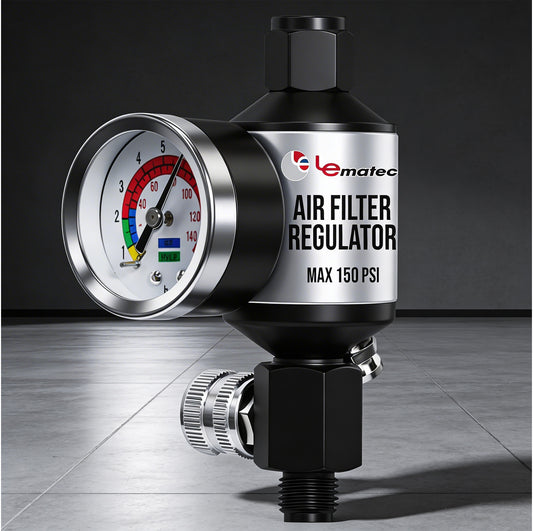
Frame rails, suspension components, and undercarriage cleaning benefit from needle scaling before rust converter or primer application. Combined with a filter-regulator for clean dry air, the scaler produces paint-ready surfaces.
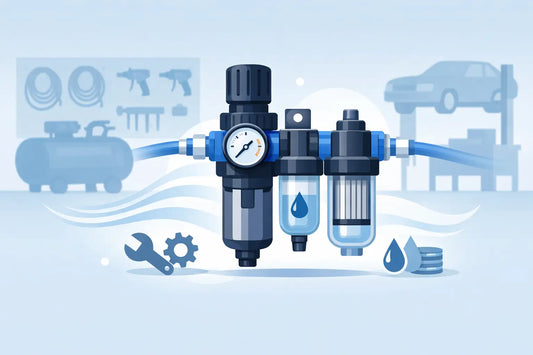
Oil the air inlet before each use with a few drops of pneumatic tool oil. Inspect needles weekly for bending or mushrooming — bent needles reduce efficiency and can damage work surfaces. Replace the full set when more than 3–4 needles show wear. Always use an inline air filter to keep moisture out of the tool's internals.
Most needle scalers operate at 90 PSI and require 4–6 CFM. Check your compressor's output to ensure it can sustain the airflow needed for continuous operation.
Yes, needle scalers are highly effective at removing old paint, especially heavy industrial coatings, marine paint, and multi-layer finishes. They work faster than manual scraping and don't generate the dust that sanding produces.
Needle life depends on the surface being scaled. On mild steel rust, a set can last 40–80 hours. On hardened scale or concrete, expect 20–40 hours. Keep spare sets on hand for production work.
Use caution on aluminum — the percussive action can peen and deform soft metals. For aluminum cleaning, a sandblaster with glass bead media or a die grinder with a flap disc is usually a better choice.
Browse our full lineup of air hammers, needle scalers and chisel accessories — built for rust removal, weld cleanup and surface prep at 4500 BPM. All models are factory direct from Le Lematec with free US shipping.
Need a quick-change retainer for chisel changes? See the Le Lematec Quick-Change Retainer — fits standard 0.401" shanks.



 AIR REGULATORS

 ACCESSORIES