Shopping Cart
(0)
Free shipping included — no minimum on any US order

Quick Search:


Rust doesn't care about your timeline. Whether it's creeping across a trailer frame, eating into a cast iron manifold, or pitting the underside of your truck, you need it gone before you can paint, weld, or reassemble. The question isn't whether to remove it — it's which method to use.
The three most common approaches are mechanical needle scaling, wire wheel grinding, and chemical rust removers. Each has a clear sweet spot and clear limitations. This guide breaks down when to reach for each one so you stop wasting time with the wrong tool.
A pneumatic needle scaler uses a bundle of hardened steel needles driven by a reciprocating air hammer at 4,500 to 4,800 BPM (blows per minute). The needles strike the surface individually, chipping away rust, scale, old paint, and weld spatter without removing the base metal underneath.
Needle scalers are purpose-built for heavy, layered rust on structural steel, ship hulls, I-beams, frames, and thick plate. They're the go-to tool in welding shops, fabrication facilities, and marine maintenance because they strip aggressive corrosion that would burn through wire wheels or take days with chemicals.
The key advantage is that needle scalers conform to irregular surfaces. The individual needles independently follow contours, pits, and weld beads, reaching into areas that flat abrasive tools skip over. This makes them especially effective on textured castings, corrugated surfaces, and structural connections where rust hides in crevices.
Needle scalers are loud, aggressive, and leave a textured surface. They're not the right tool for thin sheet metal (they can dimple it), finished surfaces, or anything that needs to look smooth afterward without additional prep. They also require a compressor capable of sustaining 4+ CFM at 90 PSI.
Wire wheels attach to angle grinders or bench grinders and use steel or brass bristles spinning at high RPM to abrade rust from surfaces. They come in various configurations — cup brushes for flat surfaces, wheel brushes for contours, and twisted-knot versions for aggressive removal.
Wire wheels are the most versatile rust removal method for moderate surface corrosion. They work well on auto body panels, fenders, frames, brackets, exhaust components, and any surface where the rust hasn't penetrated deeply into the metal. They're also excellent for cleaning weld joints before and after welding.
The biggest practical advantage is accessibility. Most shops already own an angle grinder, and wire wheels are inexpensive and widely available. There's essentially zero setup time — mount the wheel and start working.
Wire wheels struggle with deep, layered scale. They remove surface rust efficiently but can glaze over heavy pitting rather than cleaning it out. They also remove base metal more aggressively than needle scalers on prolonged contact, which is a problem on thin material. The other concern is safety — wire wheels throw bristles, and those hardened steel fragments are serious eye and skin hazards. Full face shields and heavy gloves are mandatory, not optional.
Wire wheels also can't reach into tight recesses, pits, or complex geometry the way individual needle scaler needles can. On heavily corroded structural work, you'll spend more time with a wire wheel than a needle scaler for the same result.
Chemical removers use acids (phosphoric, citric, or oxalic) or chelating agents to dissolve iron oxide without mechanical abrasion. You apply the product, wait (anywhere from 30 minutes to overnight depending on the formula), and rinse or wipe away the dissolved rust. Some products convert rust into a paintable iron phosphate layer rather than removing it entirely.
Chemicals are the best choice for delicate parts, precision components, threaded fasteners, and anything where mechanical abrasion would damage the part. Small parts can be soaked in a bath — just drop them in and come back later. This is ideal for hardware, brackets, hinges, small castings, and restoration work where preserving the original surface profile matters.
Chemicals also work in places tools can't physically reach: inside tubes, inside threaded holes, between stacked plates, and inside closed sections.
Chemical removers are slow. Even fast formulas take 30 minutes for light surface rust, and heavy corrosion can require multiple applications over days. They're also limited to relatively thin rust — deep scale and heavy pitting overwhelm most consumer-grade products. Chemicals produce waste that needs proper disposal, some formulas are hazardous, and they require thorough neutralization and drying before painting or the rust comes back quickly.
For large surface areas, chemicals become impractical. Coating an entire trailer frame in rust remover and waiting overnight isn't realistic when a needle scaler finishes the job in an afternoon.
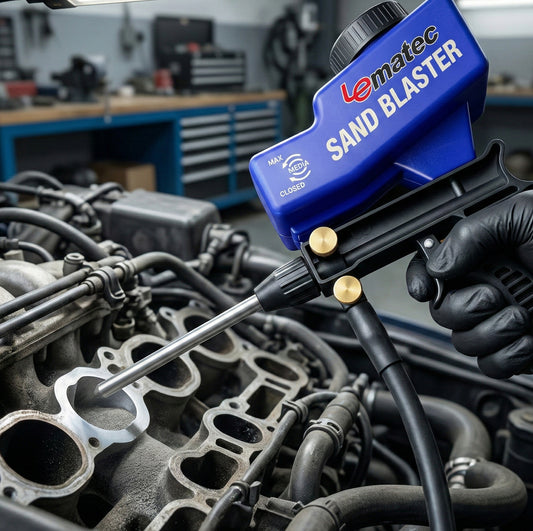
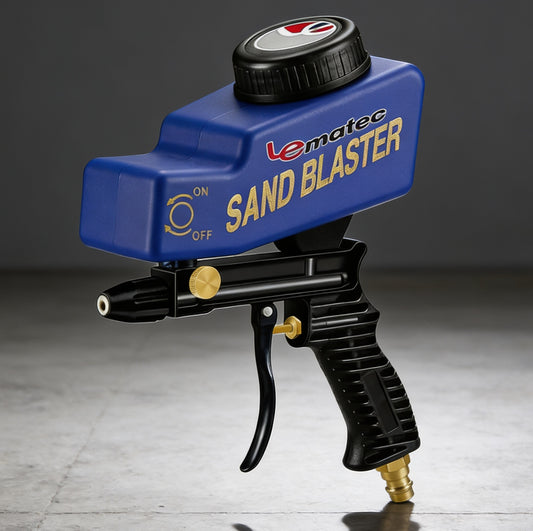
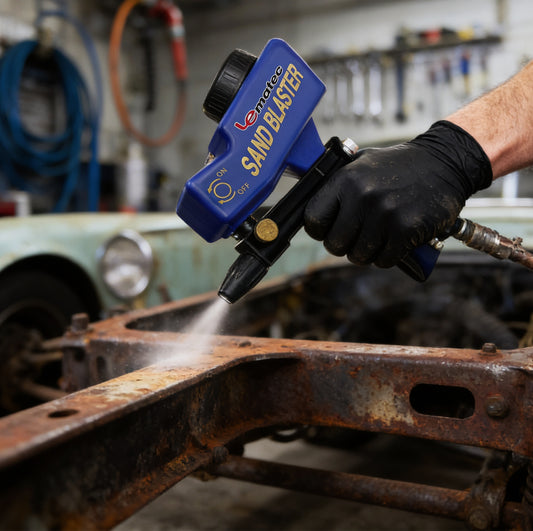
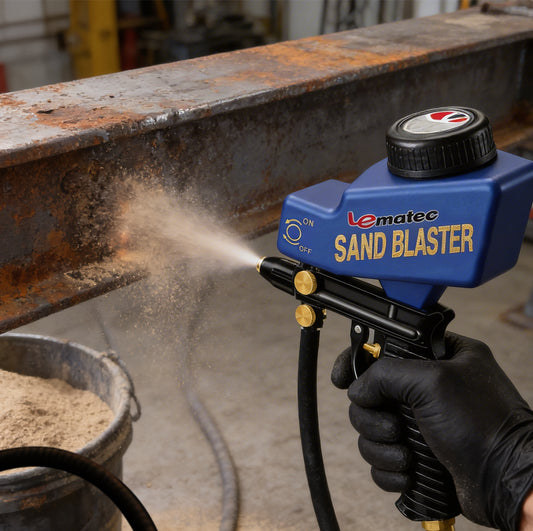
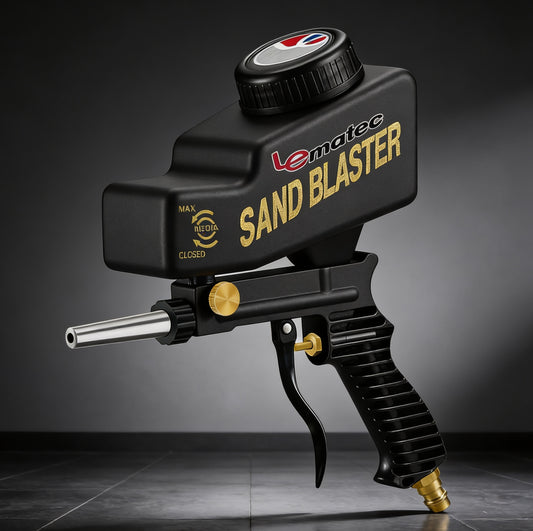
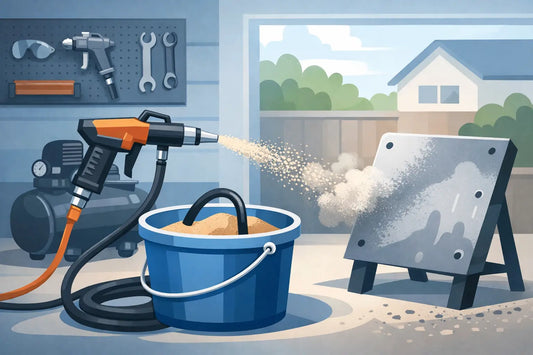
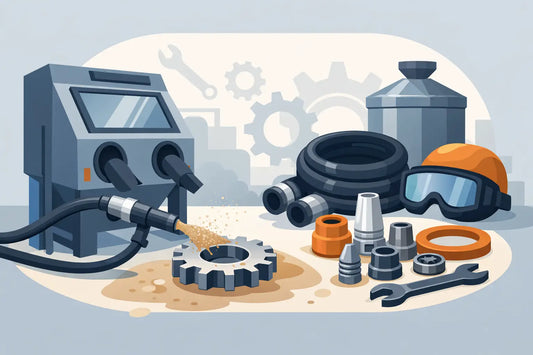
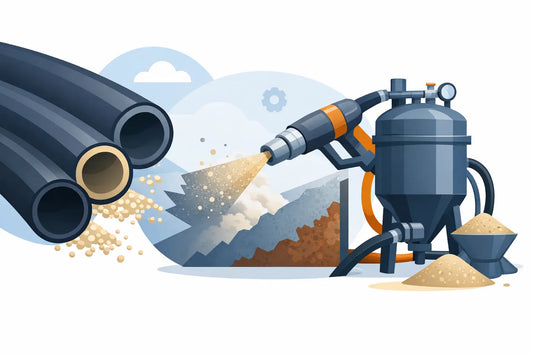
There's a fourth method worth mentioning that combines the speed of mechanical removal with better surface coverage than any of the above: sandblasting. Abrasive blasting strips rust, paint, and scale uniformly across a surface, reaches into pits and crevices, and leaves a profile that's ideal for paint adhesion.
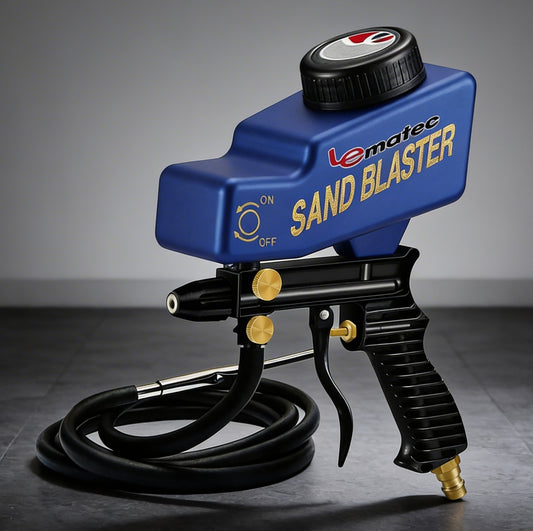
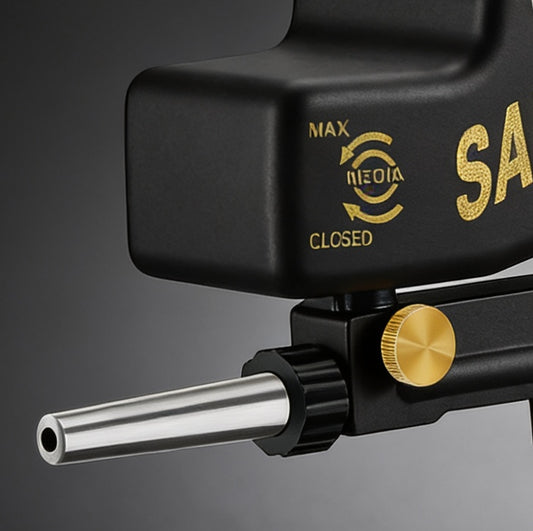
For large rust removal projects — vehicle frames, equipment bodies, metal furniture, fencing — sandblasting is often the fastest and most thorough single method. The trade-off is setup: you need a compressor, blasting gun, media, and containment (or an outdoor workspace).
| Factor | Needle Scaler | Wire Wheel | Chemical Remover | Sandblasting |
|---|---|---|---|---|
| Speed (heavy rust) | Fast | Moderate | Very slow | Fast |
| Speed (light rust) | Fast | Fast | Moderate | Fast |
| Surface finish | Textured | Smooth to brushed | Original profile | Uniform matte |
| Thin metal safe? | No — can dimple | Caution needed | Yes | Yes (with fine media) |
| Reaches crevices? | Good | Poor | Excellent | Good |
| Setup required | Compressor + tool | Grinder + wheel | Apply and wait | Compressor + gun + media |
| Cost to start | $65–$156 | $15–$30 (wheel only) | $10–$25 per bottle | $37–$65 (gun) + media |
| Best for | Heavy structural rust | Moderate surface rust | Small/delicate parts | Large surface areas |
Match the method to the job, not the other way around. Heavy rust on a truck frame? Needle scaler or sandblaster. Surface corrosion on a fender? Wire wheel. Rusted bolts and small brackets? Chemical soak. Classic car body that needs original contours preserved? Soda blasting.
Most active shops end up with all four methods available because each one handles a category of work the others don't. If you're building your rust-removal toolkit from scratch, start with whichever method matches 80% of your current work, then add the others as specific jobs require them.


 AIR REGULATORS

 ACCESSORIES