Shopping Cart
(0)
Free shipping included — no minimum on any US order

Quick Search:




A 1/2-inch impact that feels weak, a die grinder that bogs down, a sander that never quite stays on pace - most of the time, the tool is not the problem. The air supply is. If you're asking what CFM do air tools need, the short answer is this: it depends on the tool, how long it runs at a time, and whether your compressor can keep up under load instead of just on paper.
That last part matters more than most buyers realize. Air tools are only as good as the compressor, hose, fittings, regulator, and tank feeding them. If one part of the setup is undersized, performance drops fast.
CFM means cubic feet per minute. In plain terms, it tells you how much air a tool consumes or how much air a compressor can deliver. When you're matching tools to compressors, the number that matters is delivered CFM at the tool's working pressure, usually around 90 PSI for many pneumatic tools.
Tool manufacturers often list average CFM consumption, but average use can be misleading. An air ratchet used in short bursts may have a modest average draw. A grinder or dual-action sander can pull air continuously and expose a weak compressor almost immediately. That's why two tools with similar catalog numbers can behave very differently in the shop.
The practical rule is simple: buy for real operating demand, not the lowest published number. If a tool lists 4 CFM, don't pair it with a compressor that only just meets 4 CFM at 90 PSI and expect smooth operation all day.
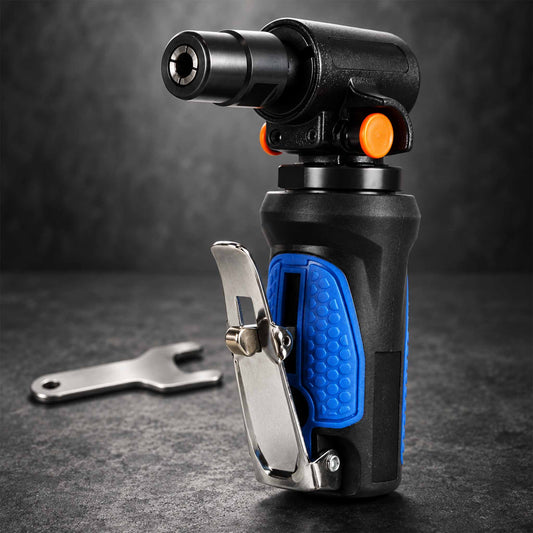
There is no single CFM number that covers every pneumatic tool, but most tools fall into predictable ranges. Tire inflators and blow guns usually need relatively little air. Air ratchets and drills often land in the low-to-mid range. Impact wrenches vary, with smaller 3/8-inch models drawing less than larger high-torque 1/2-inch or 3/4-inch impacts. Continuous-use tools like die grinders, cutoff tools, sanders, and sandblasting equipment usually demand much more.
As a general guide, many common shop tools land around these ranges:
If you mainly run impacts for lug nuts, suspension work, or general mechanical jobs, your compressor can often be smaller than someone doing body prep or fabrication. That is because impacts are usually used in short bursts. The compressor gets small breaks between pulls of the trigger.
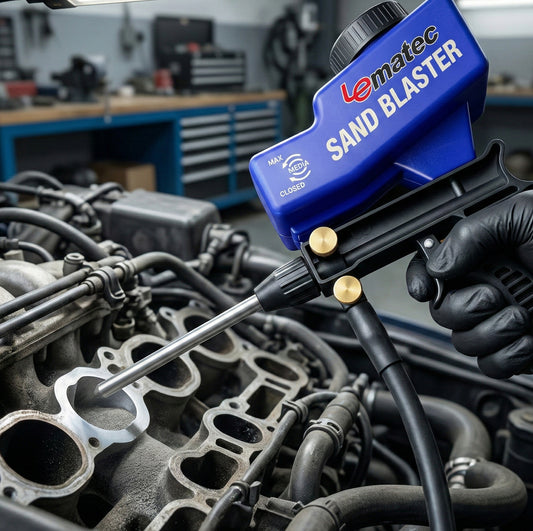
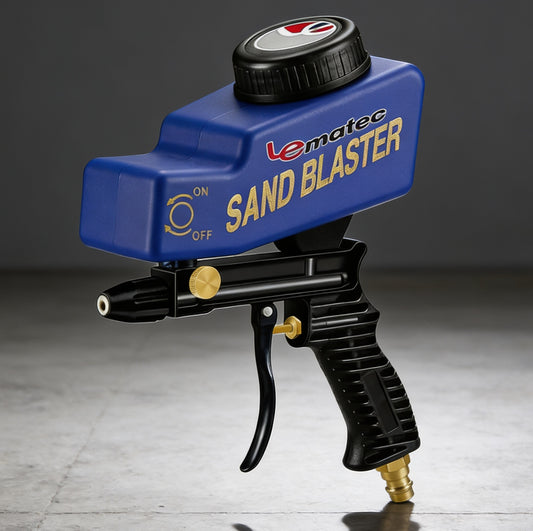
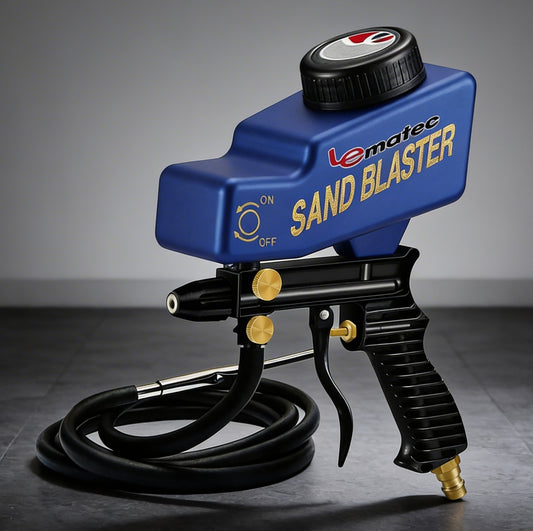
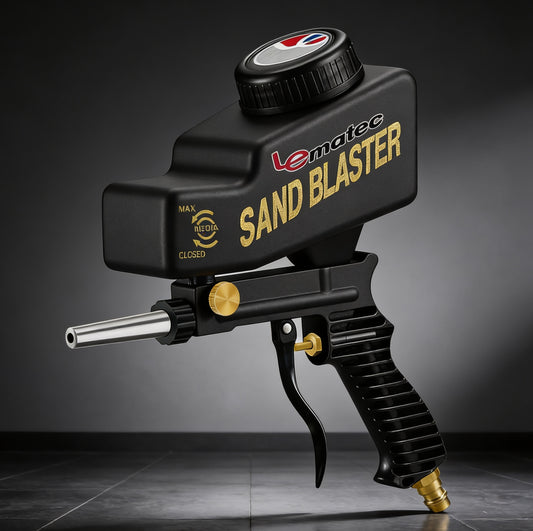
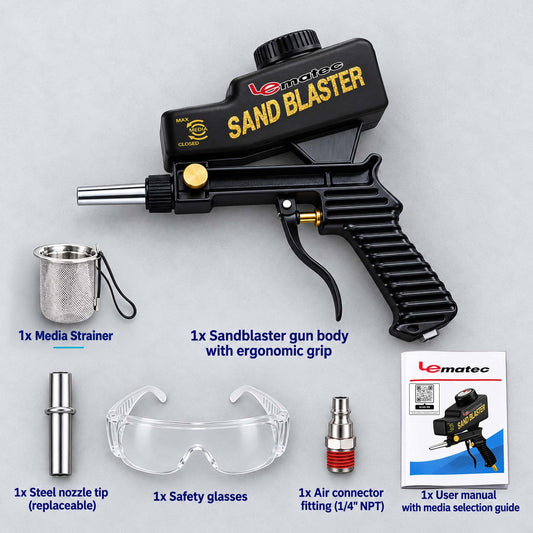
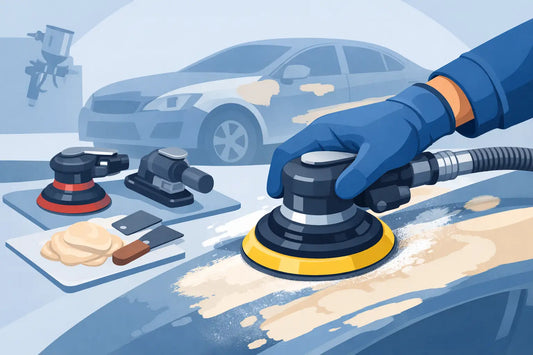
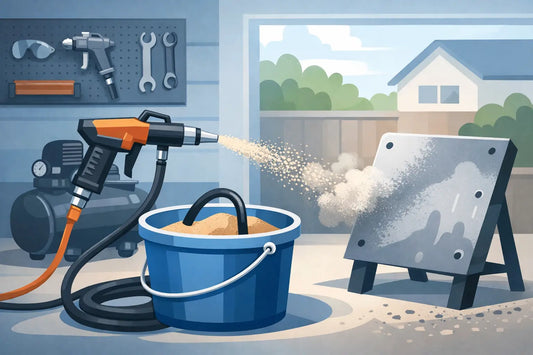
Grinders, sanders, and cutoff tools do not give you that luxury. They stay open and flowing while you work. The same goes for sandblasting. A compressor that feels fine with an impact wrench can fall behind badly with a DA sander or blast gun.
This is where buyers get tripped up. They see a compressor rated for a decent PSI and assume it will run everything in the garage. PSI gets attention, but CFM is what keeps a tool alive under continuous use.
When comparing compressors, ignore the biggest marketing number first and look for delivered CFM at 90 PSI. That is the number most useful for shop air tools. A high maximum PSI rating does not help much if the compressor cannot maintain the air volume your tool needs.
Tank size matters too, but not in the way many people think. A bigger tank gives you a larger reserve, which helps for short bursts. It does not create more air. If the pump output is too low, a large tank only delays the drop in pressure.
Duty cycle is another factor. Some compressors are not built to run continuously. If you're sanding panels, grinding welds, or blasting parts for long stretches, you need enough output and a machine designed to handle that workload.
A good working margin is 25 to 50 percent above the tool's stated air consumption. That cushion helps account for pressure drop, real-world load, and normal wear in the system.
For example, if your impact wrench calls for 5 CFM at 90 PSI, a compressor delivering 6.5 to 7.5 CFM at 90 PSI is a safer match. If your DA sander needs 11 CFM, a compressor rated at 13 to 16 CFM at 90 PSI is much more realistic for steady use.
If you run more than one tool at a time, add the CFM demands together and then leave room above that number. This matters in a two-person garage, maintenance shop, or fabrication setup where downtime costs time and money.
They usually need more support than the catalog suggests. Long hoses, small inside diameters, quick-connect fittings, water separators, and regulators all create restriction. The tool may technically need the same CFM, but your system has to deliver that air through components that can choke flow.
That is why a strong compressor can still produce weak tool performance. A 1/4-inch hose may be fine for inflating tires or light-duty use, but higher-demand tools often perform better with a 3/8-inch hose and high-flow fittings. If you're feeding grinders, sanders, or blast cabinets, undersized plumbing can quietly rob performance.
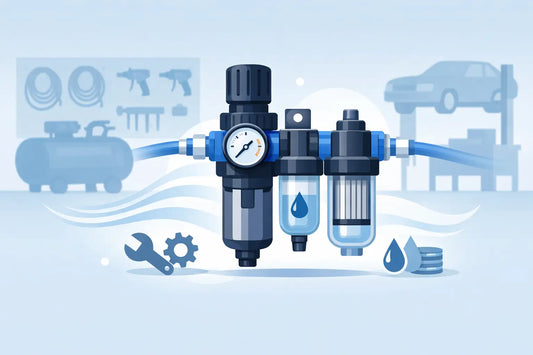
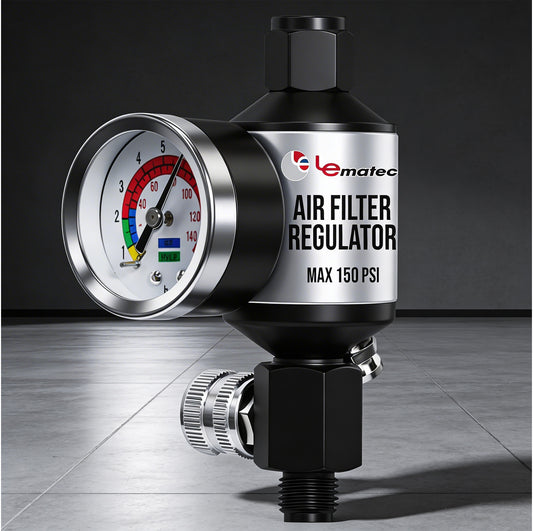
Regulators also need to be matched to the application. A cheap or undersized regulator can become the bottleneck in an otherwise capable system.
For light-duty home garage work, such as inflating tires, running a ratchet, and occasional impact use, a compressor in the 4 to 6 CFM at 90 PSI range may be enough. It will not be ideal for long-run grinding or sanding, but it can handle intermittent tool use.
For automotive repair and regular impact wrench work, stepping into the 6 to 10 CFM range at 90 PSI gives you more dependable performance and less waiting for recovery. This is usually the sweet spot for many serious DIYers and smaller shops.
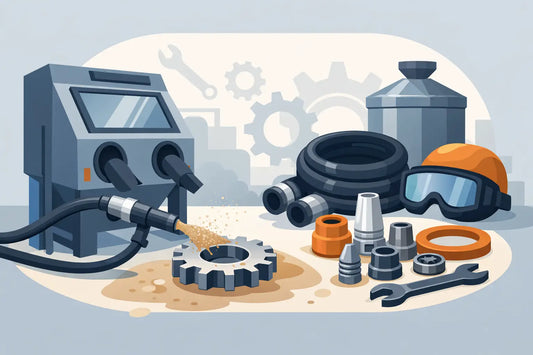
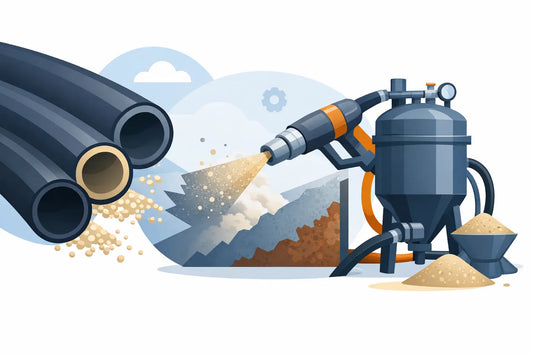
For fabrication, bodywork, sanding, and frequent grinder use, you usually want 10 CFM and up at 90 PSI, with enough tank and duty cycle to support continuous work. Once sandblasting enters the picture, demand rises quickly. Many blasting setups need well beyond what a small portable compressor can deliver consistently.
The biggest mistake is buying to the minimum spec. The second is focusing on tank size and ignoring delivered CFM. The third is assuming every air tool behaves like an impact wrench.
Another common issue is stacking restrictions across the system. A capable compressor feeding a narrow hose, standard fittings, a restrictive filter, and a bargain regulator can still leave the tool starving for air. If the tool slows under load, sounds inconsistent, or forces the compressor to run nonstop, the system is telling you something.
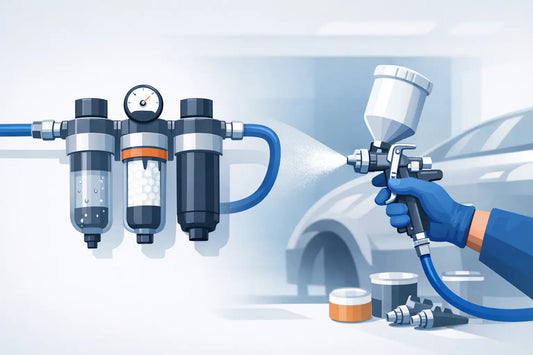
Moisture control matters too. Wet air does not usually change CFM demand, but it can damage tools and create problems in blasting and finishing work. If you're investing in a pneumatic setup, proper filtration and regulation are part of getting the performance you paid for.
Start with the highest-demand tool you plan to run, not the smallest one. If your shop uses an impact 80 percent of the time but also relies on a DA sander for prep work, size the compressor around the sander. If blasting is on the list, size around the blasting cabinet or pressure pot requirements.
Then look at the full air path. Match the compressor output to the tool, use the right hose size, avoid restrictive fittings where flow matters, and install a regulator and filter that can support the job. This is the difference between a setup that feels strong and one that constantly falls behind.
If you're buying tools and accessories together, this is where a specialized supplier makes life easier. A store like Pro Air Tools can help you pair pneumatic tools, regulators, filters, and job-ready accessories so you're not solving one problem while creating another.
The right CFM is not just about making a tool run. It is about making the work go faster, smoother, and with fewer interruptions. When your air system has enough reserve, you notice it right away - the tool hits harder, runs steadier, and lets you stay on the job instead of waiting for the compressor to catch up.


 AIR REGULATORS

 ACCESSORIES