Shopping Cart
(0)
Free shipping included — no minimum on any US order

Quick Search:
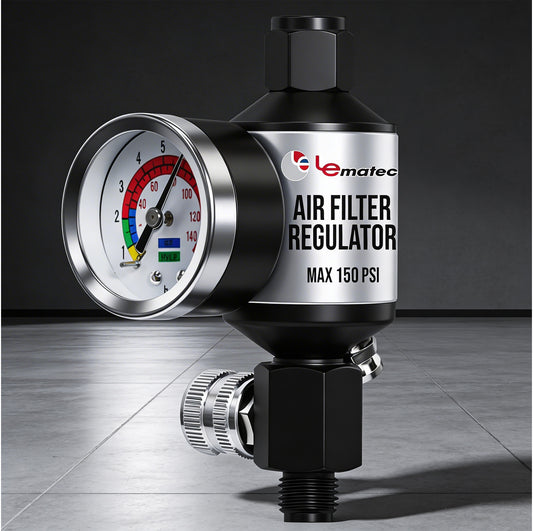


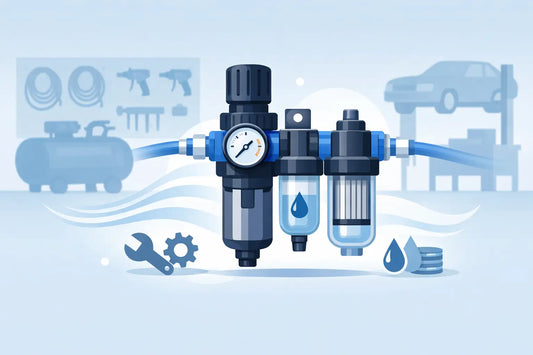
FRL stands for Filter, Regulator, and Lubricator — the three components that condition compressed air before it reaches your tools. Together, they remove contaminants, stabilize pressure, and add lubrication. Whether you need all three or just a filter-regulator combo depends on your tools and applications. This guide explains each component, how they work together, and how to choose the right configuration for your shop.
Written by Charles Rosenstein, Le Lematec / Factory Direct — over 15 years in pneumatic tool engineering and air system design.
The filter is always first in the chain. It removes three types of contaminants from compressed air:
Filters are rated by micron size — the smaller the number, the finer the filtration. A 5-micron filter catches most visible particles. A 1-micron coalescing filter removes oil aerosols. For general workshop use, our AI303 Inline Filter provides excellent particulate and water separation. For environments demanding ultra-dry air, add a ZN312E-3 Desiccant Dryer that uses color-change beads to show moisture saturation at a glance.
The regulator reduces and stabilizes downstream air pressure. Compressor tanks cycle between cut-in and cut-out pressures (typically 90–150 PSI), but most air tools operate best at 70–90 PSI. Without a regulator, tool performance fluctuates with every compressor cycle, and excessive pressure accelerates wear on vanes, bearings, and seals.
Regulators come in two styles:
For precise digital readout, the DAR03B Digital Regulator displays pressure in PSI, BAR, kPa, and kg/cm². For simple, reliable analog control, the AR-01 Analog Regulator delivers 89 SCFM at up to 150 PSI.
The lubricator injects a fine mist of pneumatic tool oil into the air stream. This oil lubricates internal moving parts — vanes, cylinders, bearings, and gears — that would otherwise run dry and wear prematurely. Impact wrenches, air ratchets, die grinders, and air drills all benefit from inline lubrication.
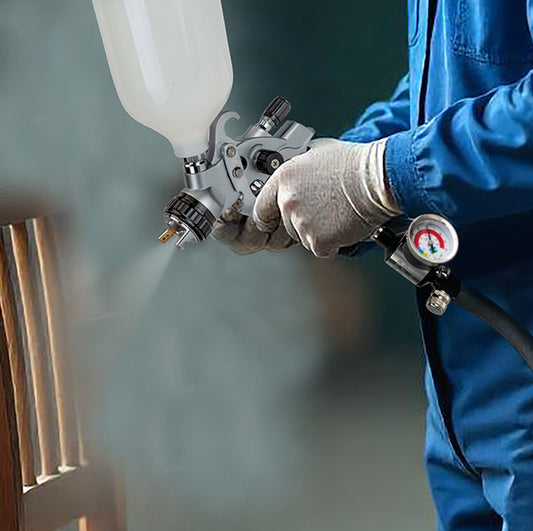
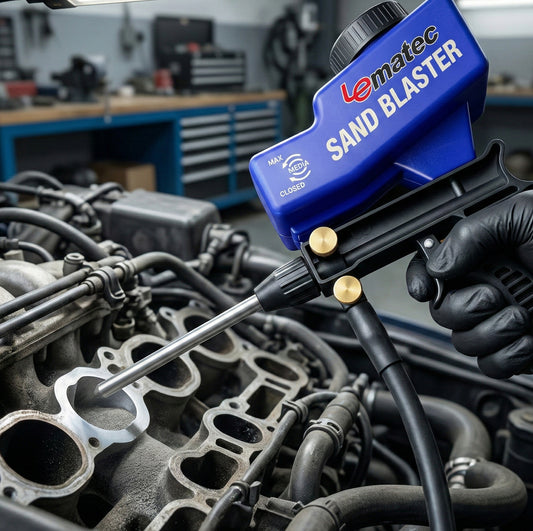
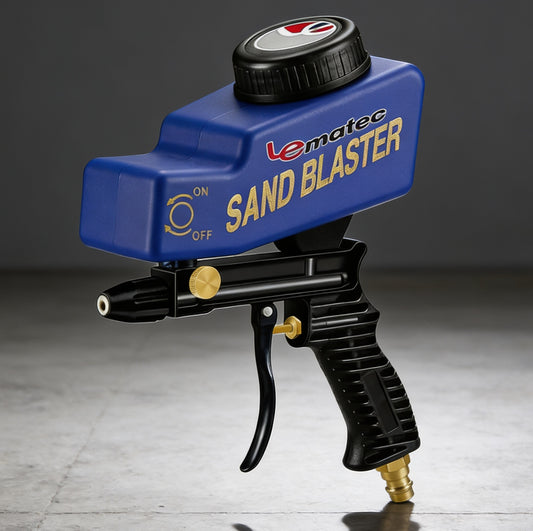
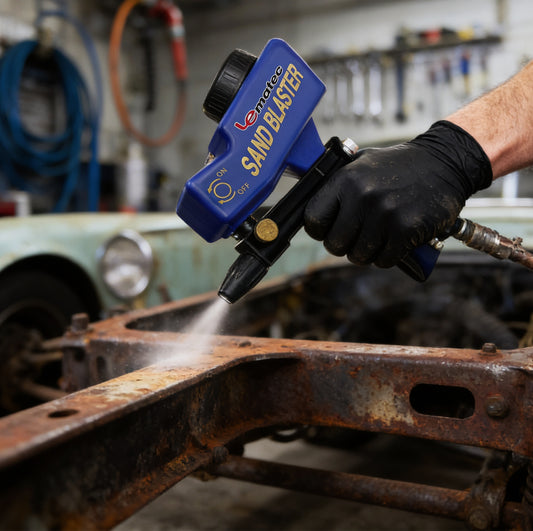
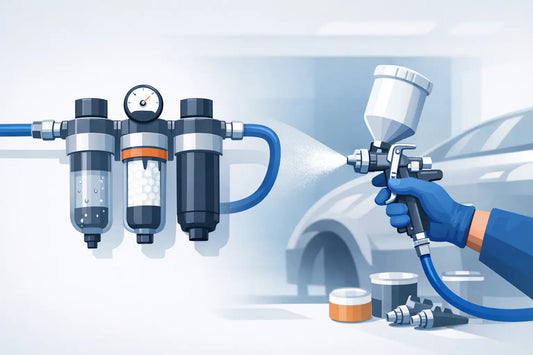
Important: Not all tools need lubrication. Spray guns, sandblasters, and blow guns should never receive oiled air — the oil contaminates finishes and clumps media. This is why many shops use FR (filter-regulator) combos instead of full FRL units, and lubricate individual tools manually.
| Configuration | Components | Best For | Avoid For |
|---|---|---|---|
| Filter Only | Particulate/water filter | Single-tool setups, basic protection | High-demand or precision applications |
| FR Combo | Filter + Regulator | Spray painting, sandblasting, mixed tool shops | — |
| Full FRL | Filter + Regulator + Lubricator | Dedicated impact wrench/ratchet stations | Spray painting, sandblasting (oil contamination) |
| FR + Desiccant | Filter + Regulator + Desiccant Dryer | Spray painting in humid climates, precision applications | — |
For most workshops, an FR combo is the sweet spot. It conditions the air for every tool type, and you simply add 2–3 drops of pneumatic oil directly into each tool's air inlet before use. This gives you lubrication where needed without contaminating your air supply.
Our AI303-R1 Filter/Regulator Combo is a compact FR unit with built-in gauge — one installation covers filtration and regulation. For higher-flow shops, the AI303-R1 Heavy-Duty Combo handles 160 PSI with a 1/2" NPT port for larger distribution systems.
FRL units have maximum flow ratings measured in CFM (or SCFM). Undersizing restricts airflow and starves your tools. Follow these rules:
This order is non-negotiable:
Install the FRL assembly as close to the point of use as practical. Long runs of pipe between the FRL and the tool allow moisture to re-condense, especially in unheated shops. If you have a long run, consider a secondary filter or desiccant dryer at the tool station.
For a deeper dive into every accessory category, see our Air Compressor Accessories Buying Guide.
An FRL system is the most cost-effective investment you can make in tool longevity and performance. A $50 filter-regulator combo protects thousands of dollars worth of air tools from the #1 cause of failure: contaminated, unregulated air. Start with an FR combo, add a desiccant dryer if you're in a humid climate, and manually oil your rotating tools before each use. That's the professional approach — simple, effective, and proven.
Factory direct from Le Lematec — professional quality, competitive prices.






 AIR REGULATORS

 ACCESSORIES