Shopping Cart
(0)
Free shipping included — no minimum on any US order

Quick Search:

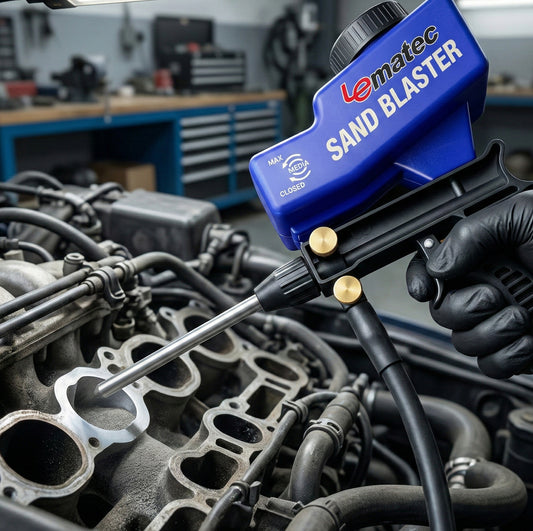
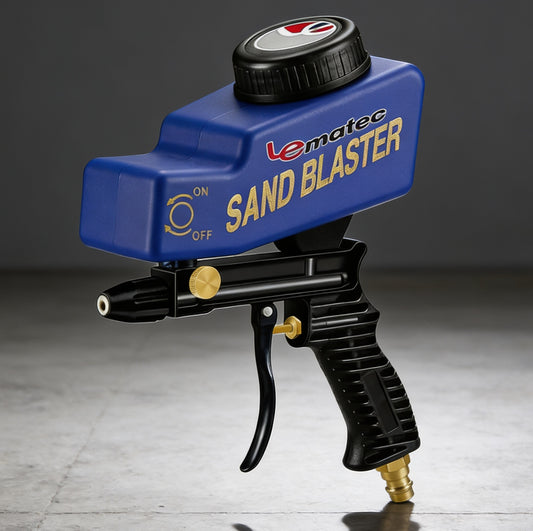
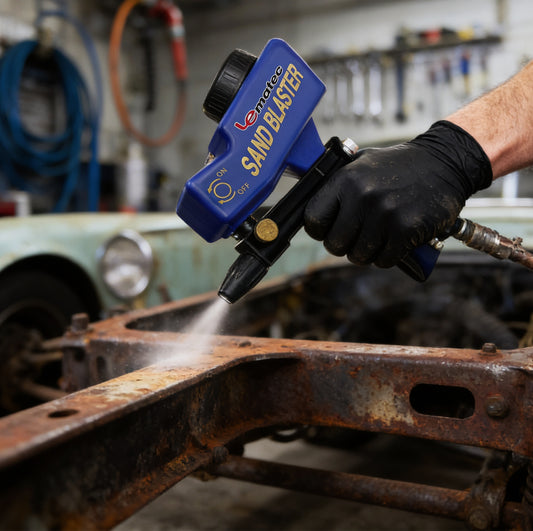
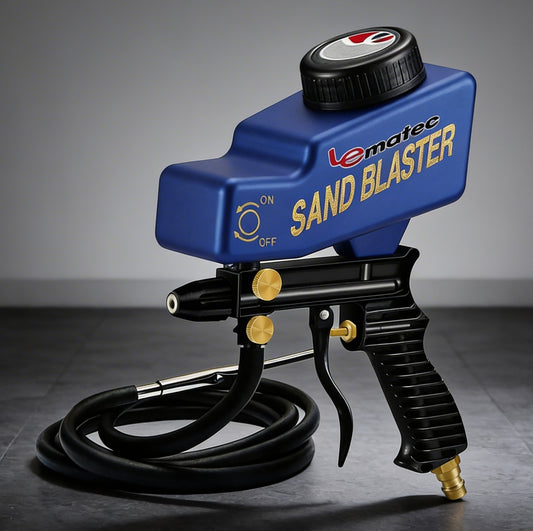
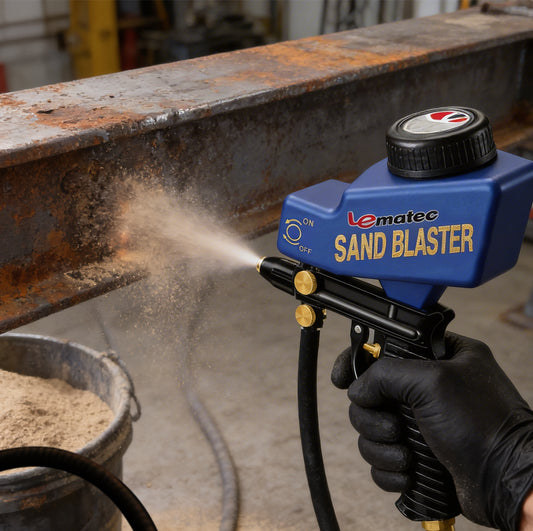
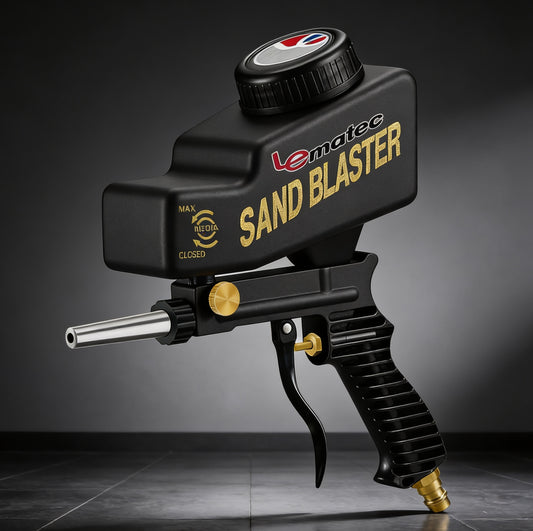
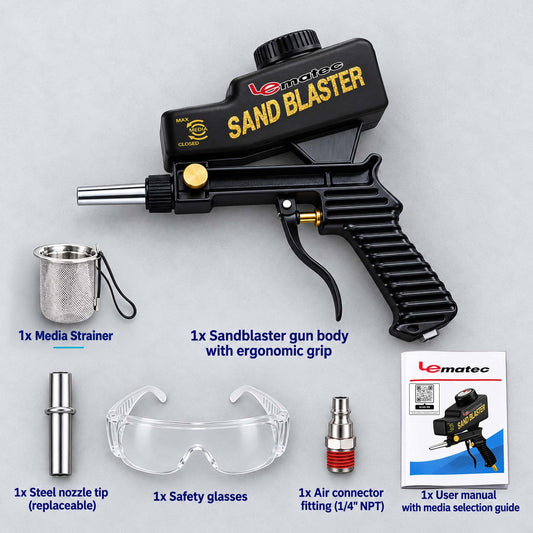

A cabinet makes small-part blasting cleaner, but it is not the only way to remove rust, paint, scale, or heavy corrosion. If you are asking, can I sandblast without a cabinet, the short answer is yes. Open blasting works well for frames, wheels, trailers, equipment parts, fencing, and other pieces that are too large or awkward for a cabinet. It also creates a much bigger safety, cleanup, and containment job.
The right choice comes down to the workpiece, the blast media, your available air, and where the debris can safely go. A blast gun and compressor are only part of the setup. If the work area is not controlled, open blasting can send abrasive, rust, old coating, and dust far beyond the part you are trying to clean.
Yes, but only when you treat the surrounding area as part of the job. A cabinet contains media and dust. Without one, you need to create that control yourself with location, barriers, proper protective equipment, and a cleanup plan.
Open-air blasting is generally a good fit for large steel parts and outdoor restoration work. It is a poor fit for a small garage, a shared driveway, an apartment complex, or any space near vehicles, open windows, neighbors, pets, or landscaping. Media rebounds farther than many first-time users expect, and fine dust can travel with even a light breeze.
Before blasting, inspect the coating you are removing. Old paint may contain lead or other hazardous materials. Coatings on industrial equipment, tanks, or automotive parts can also create contaminants that should not be released into the air or swept into a drain. If you do not know what is on the surface, stop and identify it before choosing a blasting method.
Never use silica sand for abrasive blasting. The dust can cause serious, permanent lung damage. Use a purpose-made blasting media suited to the surface instead, such as crushed glass, aluminum oxide, coal slag, garnet, walnut shell, or soda media. Each cuts differently, produces a different finish, and has different cleanup requirements.
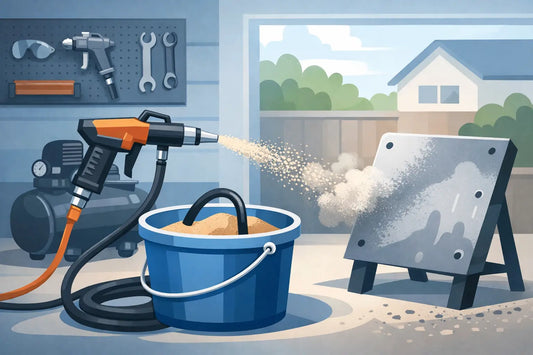
The best no-cabinet setup is usually outdoors on a calm, dry day. Keep the blast zone well away from people, vehicles, finished surfaces, and anything that could be damaged by abrasive dust. Avoid windy conditions. Wind makes containment nearly impossible and can turn a quick prep job into a cleanup problem for the entire property.
Set the part on a stable stand, grate, or sawhorses so you can reach all sides without blasting directly into the ground. Place heavy-duty tarps beneath and around the workpiece to catch spent media. For larger jobs, temporary plastic sheeting or portable containment walls can reduce spread, but they are not a substitute for choosing a safe location.
Think through the direction of rebound before you pull the trigger. Aim so the blast stream and ricochet stay inside your work zone. Do not blast toward a wall, a parked vehicle, glass, painted siding, or concrete you want to keep clean. Abrasive media can etch surfaces quickly.
A garage with the door open is not the same as outdoor blasting. Dust will settle on tools, shelving, electrical equipment, and every exposed surface. If you must work indoors, a cabinet, purpose-built blast room, or professional containment system is the practical answer.
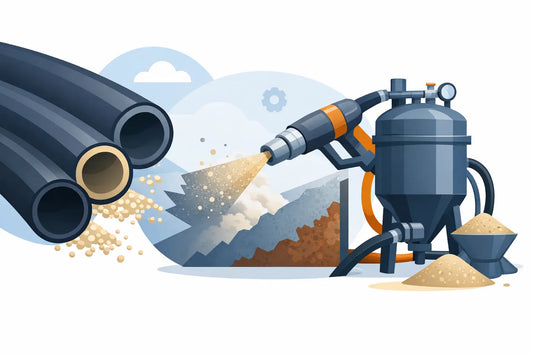
Without a cabinet, a portable pressure blaster is often the most productive option for bigger workpieces. Pressure systems push media under pressure and generally strip rust and coatings faster than a small siphon gun. They also consume more compressed air and media, so undersizing the compressor leads to frustrating stop-and-start work.
Check the blaster's required CFM at its working PSI, then compare that number with your compressor's actual delivered CFM. Do not rely only on tank size or maximum PSI. A large tank gives you a short reserve, but delivered airflow determines whether the blaster can keep working continuously.
For small spot repairs or light cleanup, a siphon-style blast gun may be enough. It uses less media and can be easier to move around, but it is slower on thick rust or broad panels. A pressure pot is usually the better fit when you are cleaning a vehicle frame, a trailer, farm equipment, steel wheels, or fabrication stock.
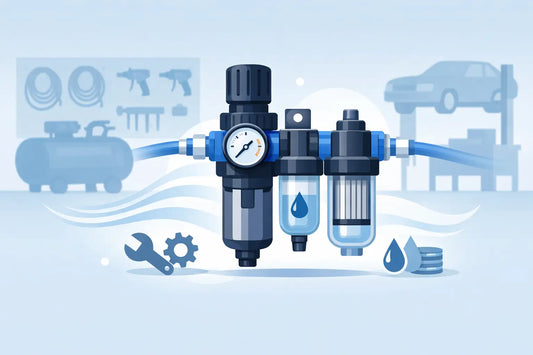
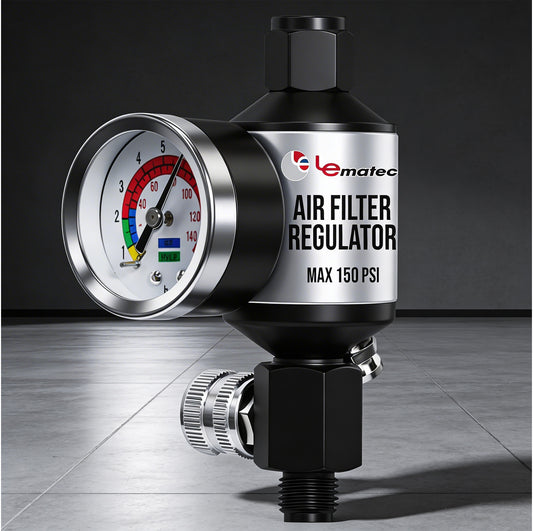
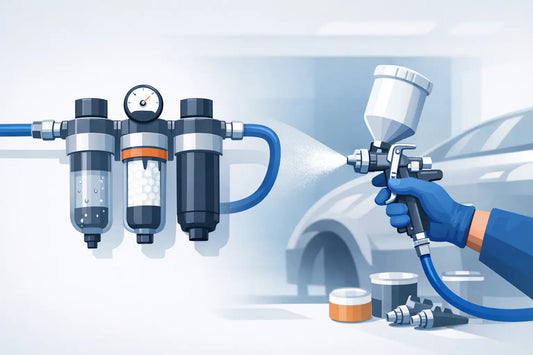
Dry, clean air matters just as much as airflow. Moisture in the airline causes media to clump, plugs hoses, and interrupts the job. Run a water separator and regulator close to the blasting setup, drain the compressor tank before starting, and check it again during long sessions. If the air is humid or the job demands a clean finish, better filtration is worth the time it saves.
The word sandblasting is common, but the media should never be an afterthought. Aggressive media can remove scale quickly from heavy steel, while softer media can clean delicate material with less risk of damage.
Crushed glass and coal slag are practical choices for rust removal and coating removal on steel. Aluminum oxide cuts aggressively and is useful when you need a sharp surface profile, but it can be too harsh for thin sheet metal. Garnet offers fast cutting with relatively low dust compared with some alternatives. Walnut shell and soda are gentler options for certain cleaning jobs, including surfaces where preserving the base material matters more than creating an etched profile.
For automotive sheet metal, use extra caution. Excessive pressure, a nozzle held too close, or staying in one spot can generate heat and warp panels. Start with a less aggressive media, lower pressure, and a test area on hidden metal. Keep the nozzle moving and work in short passes.
Do not assume spent media is safe to reuse. Once it hits rust, paint, grease, or old coatings, it may be contaminated and less effective. Reclaiming media can make sense in a controlled setup, but it is usually not worth doing on a tarp if the media is mixed with unknown debris.
A simple dust mask and safety glasses are not enough for open blasting. The blast stream produces airborne dust, while the media can rebound at high speed. Protect your lungs, eyes, ears, skin, and hands before starting.
Use a respirator specifically approved for abrasive blasting, ideally a supplied-air abrasive blasting respirator for serious open blasting work. Follow the respirator manufacturer's fit, filtration, and maintenance requirements. A standard shop mask does not provide the protection needed against blasting dust.
Wear a full face shield or blasting helmet, heavy gloves, long sleeves, durable pants, and closed work boots. Hearing protection is also necessary. The compressor, air discharge, and impact of media against metal create enough noise to damage hearing over time.
Keep the blast hose, fittings, and nozzle in good condition. Shut off air and relieve pressure before clearing a blockage or servicing the pot. Never point a blast nozzle at yourself or another person, even when you think the line is empty.
The job is not finished when the metal looks clean. You need to collect spent media and residue without washing it into soil, storm drains, or the street. That is why tarps are worth using even for a small project.
Let the dust settle, then carefully fold or gather the tarps inward to keep debris contained. Collect the waste in durable containers and dispose of it according to local requirements, especially when old paint, coatings, or unknown materials are involved. Do not use a leaf blower to clear the area. It simply puts the dust back into the air.
Blow the finished part clean with dry compressed air, then protect bare metal quickly. Freshly blasted steel can flash rust fast, particularly in humid conditions. Apply primer, coating, oil, or another appropriate protectant as soon as the surface is clean and dry.
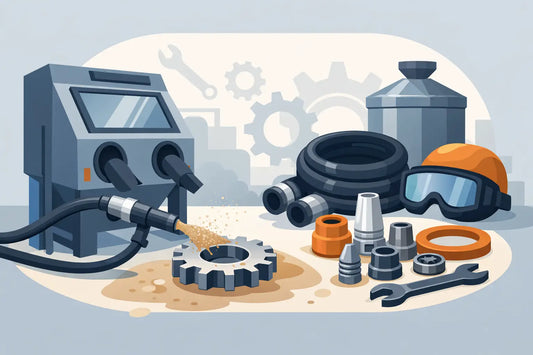
A cabinet is the practical choice when you regularly blast bolts, brackets, carburetor parts, tools, small wheels, or other hand-sized components. It reduces media waste, keeps the shop cleaner, makes reclaiming media easier, and lets you work without depending on calm weather.
It is also the better answer when your only work area is indoors or close to other people and property. A cabinet will not eliminate the need for eye protection, respiratory awareness, or good dust collection, but it greatly reduces exposure and cleanup compared with open blasting.
For oversized work, open blasting can save hours and let you clean parts a cabinet could never hold. Set up deliberately, use dry air and the right media, contain the debris, and protect yourself like the dust is hazardous - because until you know exactly what is coming off that surface, it may be.


 AIR REGULATORS

 ACCESSORIES