Shopping Cart
(0)
Free shipping included — no minimum on any US order

Quick Search:
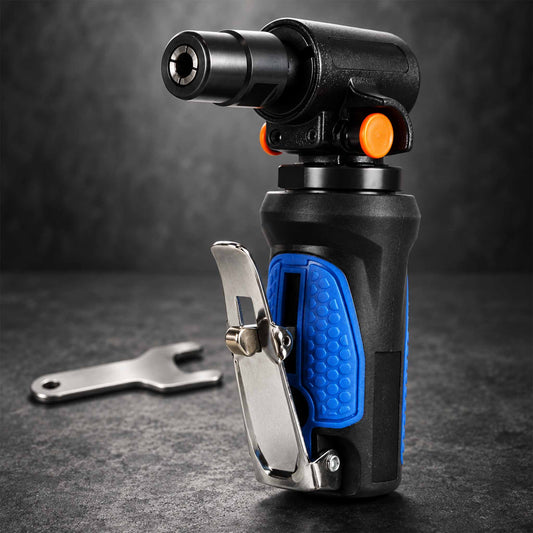


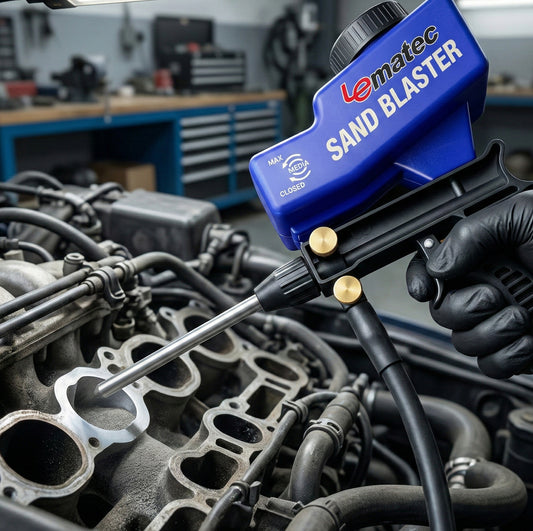
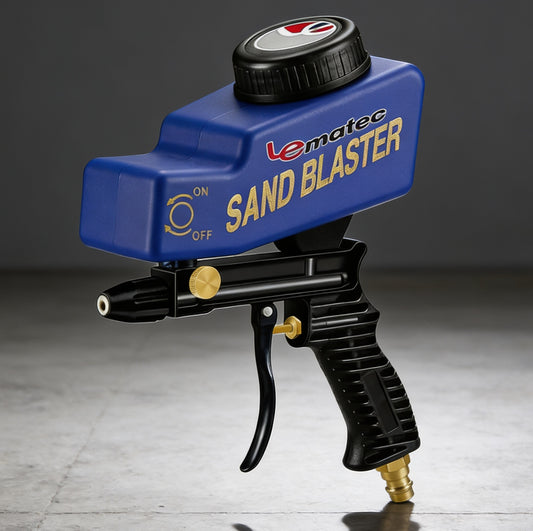
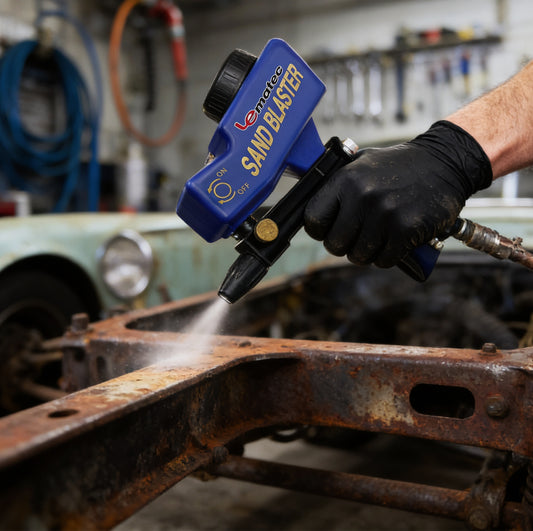

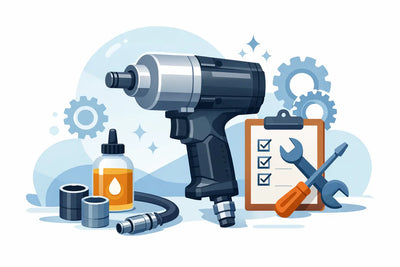
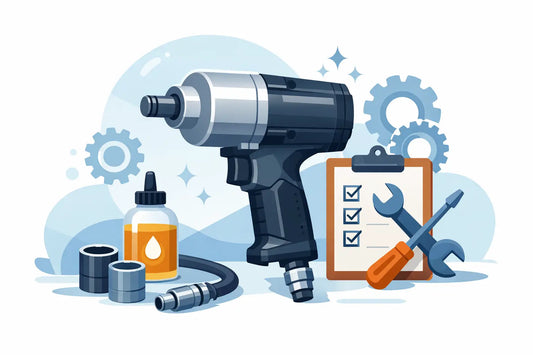
A hard-hitting impact that suddenly feels weak, a sticky air ratchet, or a grinder that starts sounding rough usually has the same root cause: dry internal parts. This guide to pneumatic tool oiling covers the simple maintenance step that protects the vanes, bearings, seals, and moving mechanisms that keep your air tools earning their place in the shop.
Pneumatic tools are built for work, but compressed air is not naturally friendly to them. It can carry moisture, dirt, and compressor residue through the line while also stripping away lubrication. A few seconds of proper oiling is cheaper than replacing a tool or losing time in the middle of a repair, fabrication job, or weekend project.
Inside most air-powered tools, moving parts operate at high speed. An impact wrench uses a motor and hammer mechanism. A die grinder spins at extremely high RPM. Air drills, sanders, ratchets, and hammers all rely on internal components that need a thin, stable lubricating film to move freely.
Without oil, friction rises quickly. The tool may lose torque, run slower, heat up, or develop a squeal, chatter, or rough exhaust sound. Long-term neglect can wear the air motor vanes and cylinder, damage bearings, and dry out seals. At that point, adding oil may quiet the tool temporarily, but it will not reverse mechanical wear.
Oiling also helps displace small amounts of moisture that enter through the air supply. It is not a substitute for a proper filter and water separator, especially in humid shops, but it gives the tool another layer of protection.
Use oil made specifically for pneumatic tools. Air tool oil is light enough to travel through the tool's air motor while providing the film strength needed for high-speed parts. It is formulated to resist the moisture common in compressed-air systems.
Motor oil is generally too heavy for this job. Grease will not travel through the air inlet or lubricate an air motor correctly. Penetrating sprays may make a dry tool feel better for a short time, but they are not a replacement for air tool oil and can leave inadequate lubrication behind.
For the average shop, keep a small bottle of pneumatic tool oil near the compressor or hose reel. That makes maintenance easy enough to do before the job starts, rather than after the tool begins acting up.
Manual oiling is the best choice for users who switch between different tools, use their compressor occasionally, or run equipment that should not receive oil through the air line. The process takes less than a minute.
First, disconnect the air hose and make sure the tool is not connected to a live air supply. Put a few drops of air tool oil directly into the tool's air inlet. For many common tools, two to five drops is enough for regular use. Larger or heavily used tools may need a little more, but flooding the inlet does not provide extra protection.
Reconnect the hose, point the exhaust away from people, painted surfaces, and finished work, then run the tool for several seconds. This distributes the oil through the internal motor. You may see a light oil mist at the exhaust. That is normal immediately after oiling. Wipe the exterior clean before putting the tool back to work.
If a tool has been sitting for months or feels unusually dry, add a few drops, run it briefly, then repeat once if needed. Do not keep adding oil in an attempt to solve a loss of power. Low pressure, restricted fittings, water contamination, worn internal parts, or an undersized hose can cause the same symptom.
Frequency depends on use, air quality, and the tool itself. A mechanic using an impact wrench and air ratchet all day should oil those tools at the start of each shift and again during long, heavy-duty use. A DIY user can usually oil a tool before each project or after several hours of operation.
High-speed tools deserve closer attention. Die grinders, cut-off tools, air sanders, and similar equipment can run fast enough to generate heat quickly when lubrication is low. A few drops before use is inexpensive insurance.
If you use an inline lubricator, manual oiling may not be needed every time. Still, it is smart to add a few drops before storing a tool for an extended period. The oil helps protect bare internal surfaces from moisture while the tool sits.
An inline lubricator automatically meters oil into the air stream. It can be a practical setup for a dedicated workstation where one type of tool gets constant use, such as an assembly bench or a service bay running impacts and ratchets throughout the day. Set correctly, it reduces the chance that a busy operator forgets routine lubrication.
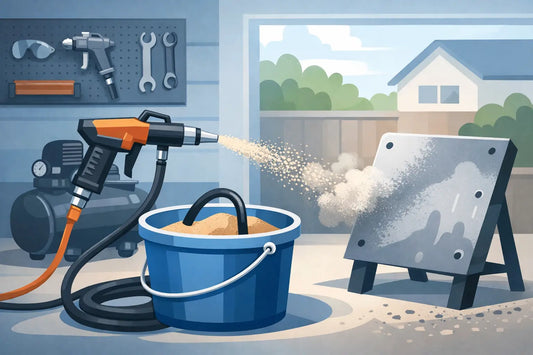
The trade-off is that lubricated air is not right for every application. Oil in the line can contaminate paint work, some sandblasting setups, and surfaces that need to stay clean for coating, bonding, or finishing. It can also be a problem for tools specifically labeled oil-free or for equipment whose manufacturer calls for a dry, clean air supply.
For mixed-use garages and fabrication shops, manual oiling is often the more controlled option. You can lubricate the impact or ratchet at the tool inlet while keeping a separate clean, filtered air line for paint prep, blasting, and other contamination-sensitive tasks.
Oil protects moving parts, but it cannot compensate for poor air quality. Moisture is one of the biggest threats to pneumatic tools. Water can corrode internal steel parts, wash away lubricant, and freeze in lines or fittings during cold conditions.
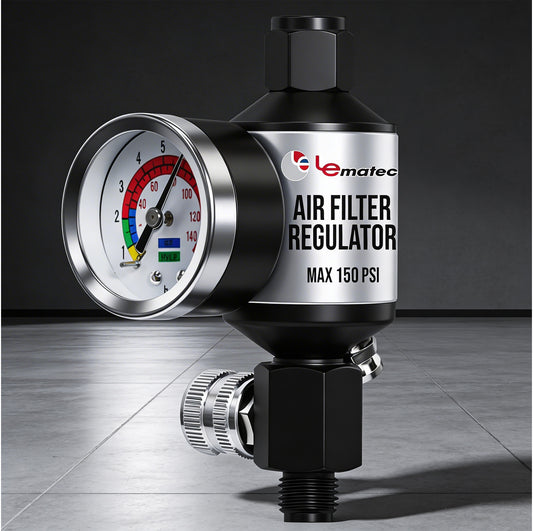
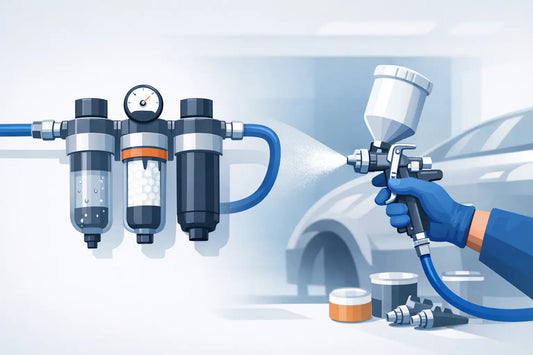
Drain the compressor tank regularly. How often depends on humidity and compressor run time, but a busy shop may need daily draining. A quality regulator and water separator near the compressor removes a large share of moisture before it reaches the hose. For finish work or other clean-air applications, add filtration appropriate to the job.
Dirt matters, too. Keep quick-connect couplers clean, cap unused hose ends when practical, and replace damaged hoses that may shed debris internally. A clean air supply supports longer tool life, more consistent power, and fewer frustrating performance issues.
The most common mistake is simply waiting until the tool sounds bad. Oiling is preventive maintenance, not an emergency repair. Once a pneumatic motor has been run dry long enough to score internal surfaces, performance may already be permanently reduced.
Another mistake is over-oiling. Excess oil can blow out of the exhaust, make a work area messy, and carry onto the surface you are working on. Use a few drops, then run the tool briefly to distribute them. More is not better.
Avoid assuming every air tool needs the same treatment. Always check the tool instructions for lubrication requirements. Some specialized tools have grease fittings, separate gear cases, or manufacturer-specific maintenance intervals. Others are designed to run without oil and can be damaged or contaminated by a lubricated line.
Finally, do not ignore air pressure. A properly oiled impact wrench still will not perform if it receives too little airflow. Check the tool's recommended operating PSI, the hose inside diameter, couplers, regulator setting, and compressor capacity. Pneumatic performance is a system issue, not just a tool issue.
When the work is done, disconnect the tool, add a few drops of air tool oil to the inlet, and run it briefly to coat the internal components. Wipe off excess oil, store the tool in a dry place, and avoid leaving it attached to a pressurized hose.
This routine is especially useful before seasonal storage or when a tool is used only occasionally. It takes less time than finding out an air ratchet has seized up when a vehicle is on the lift or a project has a deadline.
Good air, correct pressure, and a few drops of the right oil keep pneumatic tools ready when work cannot wait. Build oiling into the same routine as checking fittings and draining the tank, and your tools will deliver more reliable service job after job.



 AIR REGULATORS

 ACCESSORIES