Shopping Cart
(0)
Free shipping included — no minimum on any US order

Quick Search:


A compressor with the wrong hose, couplers, and air treatment setup can make a good impact wrench feel weak and turn a simple tire fill into a leak hunt. The best air compressor accessories bundle is not necessarily the one with the most pieces. It is the one that fits your compressor, supports the tools you actually use, and eliminates the small failures that slow work down.
For a home garage, that may mean a reliable hose, a tire inflator, and a basic fitting kit. For a mechanic, fabrication shop, or paint-prep operation, filtration, correct flow capacity, and standardized connectors matter just as much as the air tools themselves. Buy for the system, not the package count.
A good starter bundle normally covers the path from compressor outlet to tool: hose, fittings, couplers, a pressure gauge or regulator, and one or two everyday accessories such as an inflator or blow gun. That covers a lot of garage and maintenance work without forcing you to piece together mismatched components later.
The parts need to work together. A 1/4-inch NPT fitting may be common, but the connection style, hose inside diameter, and tool air demand determine whether that fitting is right for your job. A bargain bundle can look complete on the bench and still cause pressure drop at the tool.
For most buyers, the practical core is a hose that reaches the work area, compatible quick-connect couplers and plugs, thread sealant, and an accessory for routine tasks. Add a regulator and filter when moisture or consistent operating pressure can affect the result.
Hose selection is where many bundles become too generic. A compact 1/4-inch hose is easy to handle and works well for tire inflation, blow-off work, staplers, and light intermittent tools. It may not be the best choice for a high-demand impact wrench, die grinder, cutoff tool, or sander running for extended periods.
A 3/8-inch inside diameter hose generally delivers better airflow over distance. It is the smarter choice when you need to preserve tool performance, especially with a small compressor that already has limited CFM to spare. The trade-off is bulk. It weighs more, takes more room, and can be less convenient around a tight engine bay.
Material matters, too. Polyurethane is lightweight and flexible, making it popular for mobile garage work. Rubber stays flexible in colder conditions and handles tougher shop use well. PVC is often lower cost but can stiffen and fight you when temperatures drop. If the hose will be dragged around concrete, exposed to oils, or used every day, choose durability over the cheapest option.
Quick-connect fittings are small parts with an outsized effect on uptime. When every tool uses a different plug style, you end up keeping adapters in drawers, chasing leaks, and losing time each time you switch tools.
Industrial-style couplers are common in automotive and general shop applications. Automotive and ARO styles are also used, but they are not automatically interchangeable. Pick one style for the shop and use it on the compressor outlet, hoses, air tools, inflators, and blow guns. That makes swapping tools fast and keeps replacements straightforward.
Thread type is a separate issue. Most pneumatic accessories use NPT threads, but male and female ends still need to match the equipment. Before ordering a bundle, check the compressor outlet, hose ends, and the inlet on your most-used tools. A bundle that includes extra plugs and couplers is useful only if they match your selected standard.
Use thread sealant on NPT connections, but do not apply it to quick-connect plug surfaces. Sealant belongs on the threads, not inside the air path. Keep it back from the first thread so loose material does not travel into a regulator or tool.
The right bundle changes with the work. A single kit can be a good starting point, but high-airflow tools, paint work, and sandblasting often require additions that basic bundles do not include.
An automotive setup should prioritize versatility. A 3/8-inch hose, a standardized set of couplers and plugs, a tire inflator with gauge, and a blow gun cover a large share of routine work. This setup handles tire pressure checks, cleaning debris from parts, running an air ratchet, and supporting an impact wrench.
If you use an impact wrench frequently, check its stated CFM requirement at its operating pressure. The compressor, hose, coupler, and fitting restrictions all add up. A tool that feels underpowered may not be defective. It may be starved for air by an undersized hose or restrictive coupler.
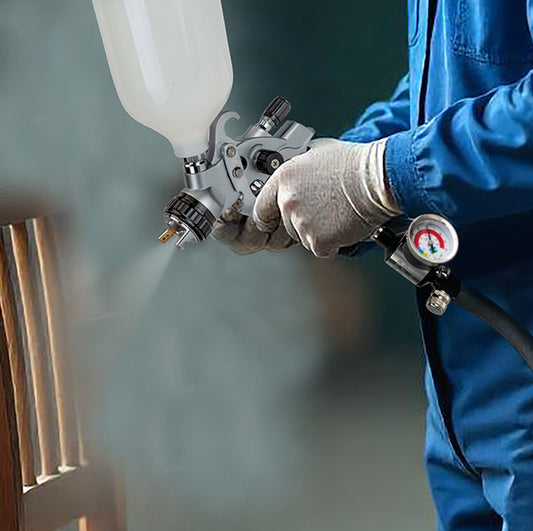
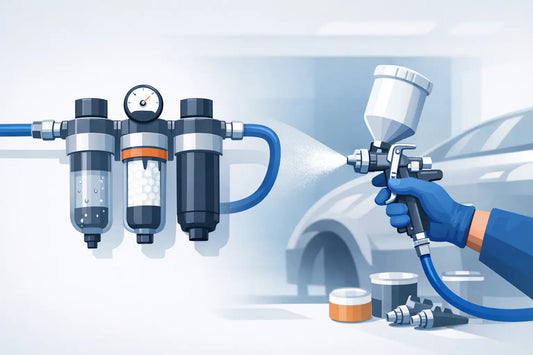
Paint work requires cleaner, more controlled air than tire service or basic wrenching. Moisture and oil in the line can damage a finish, create fisheyes, or leave inconsistent spray patterns. A basic fitting kit alone is not enough.
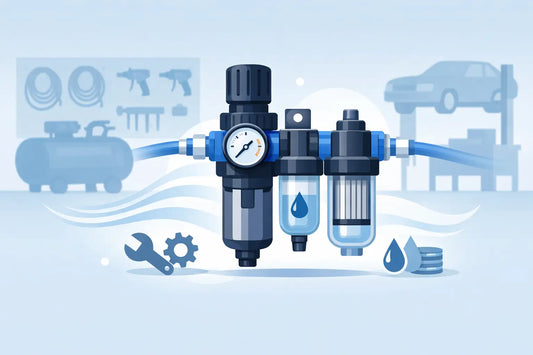
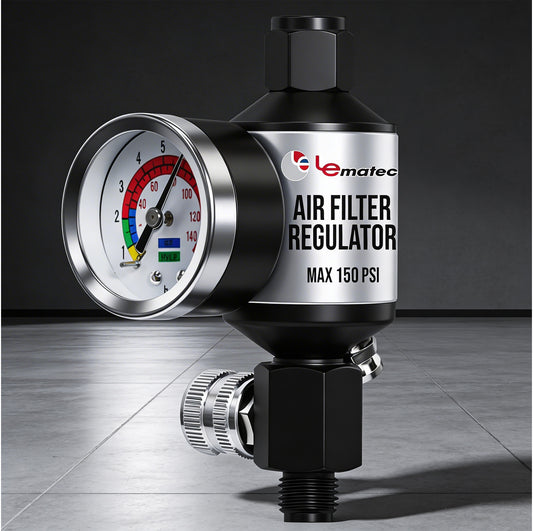
Use a regulator with a readable gauge near the point of use, plus moisture filtration appropriate for your finish requirements. A desiccant dryer or final-stage filter may be necessary for detail-sensitive paint work, particularly in humid conditions. Keep a dedicated clean hose for paint if possible. The hose used for oily shop air and general maintenance is not the one you want feeding a spray gun.
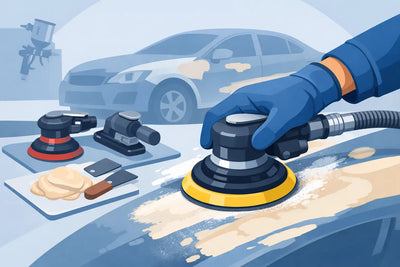
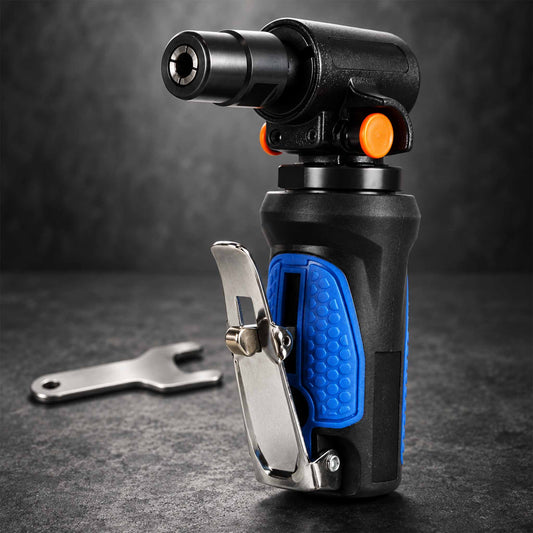
Continuous-use air tools demand airflow. Die grinders, angle grinders, belt sanders, and cutters can consume air faster than many small compressors recover it. A bundle for fabrication should include high-flow connections and a larger-diameter hose rather than a collection of low-demand accessories.
This is a case where buying a larger bundle is not always the answer. A smaller setup with a quality 3/8-inch hose, correctly sized fittings, and a regulator will outperform a crowded kit built around narrow passages. Confirm that your compressor can supply the tool's required CFM for the duty cycle you expect.
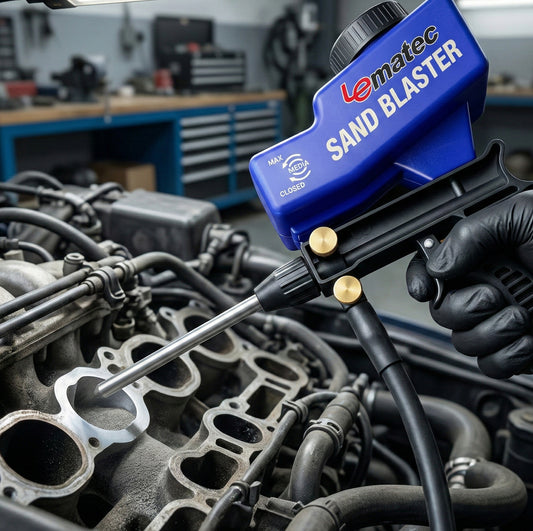
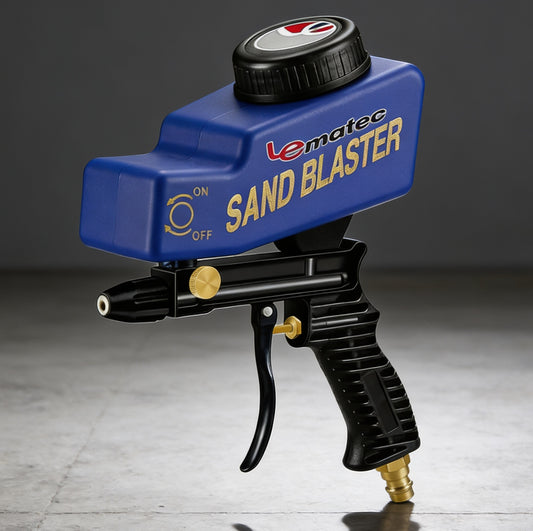
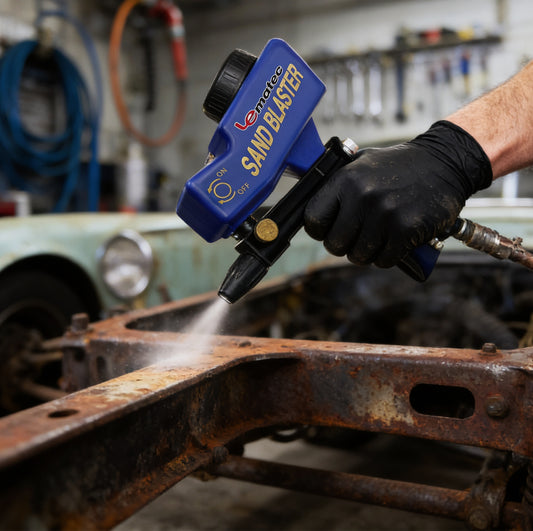
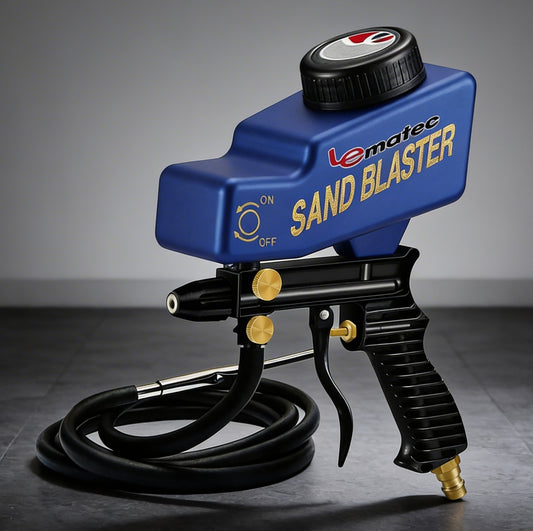
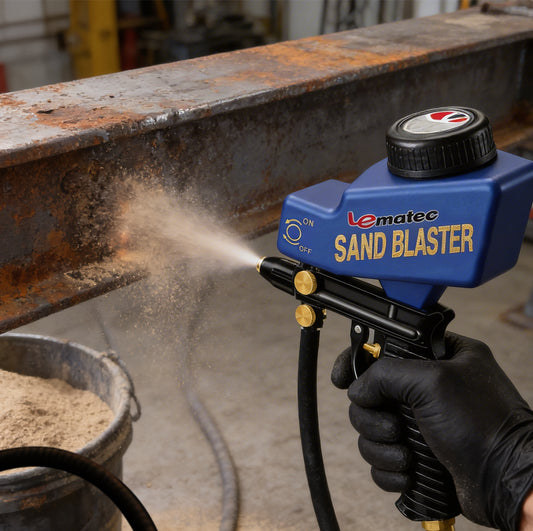
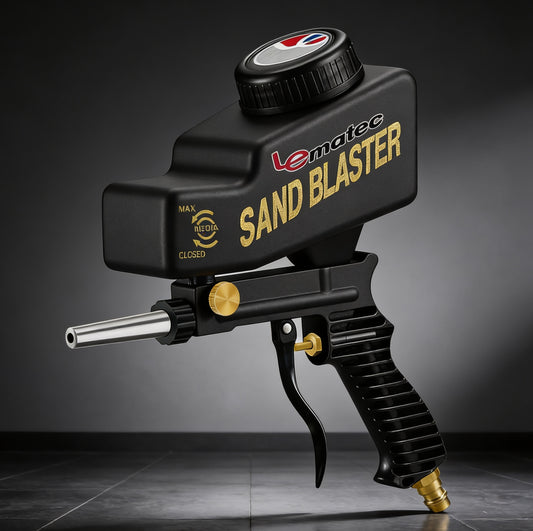
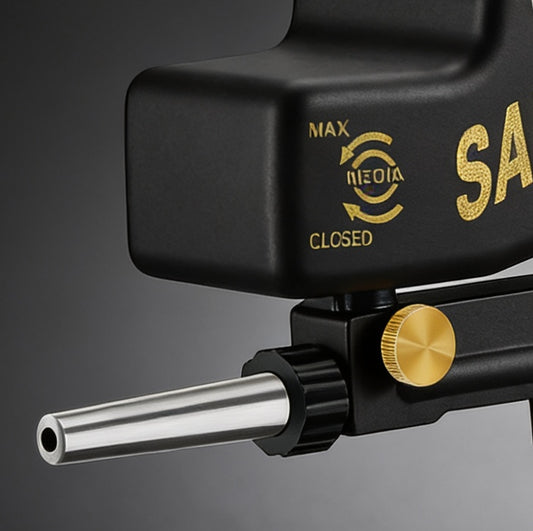
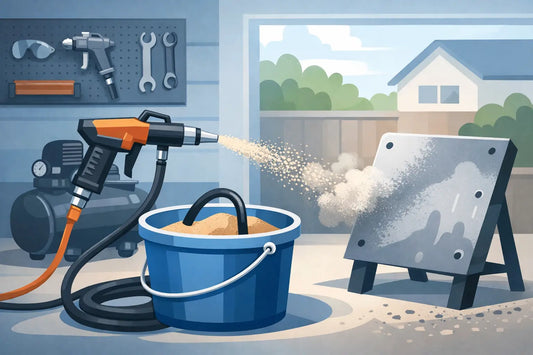
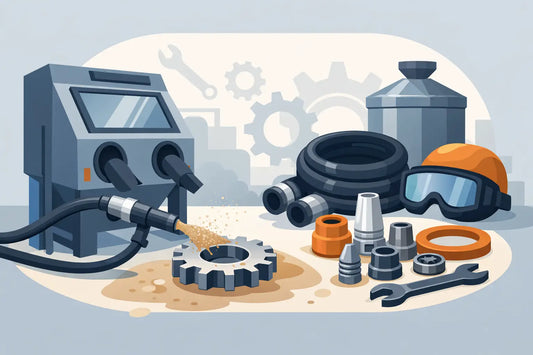
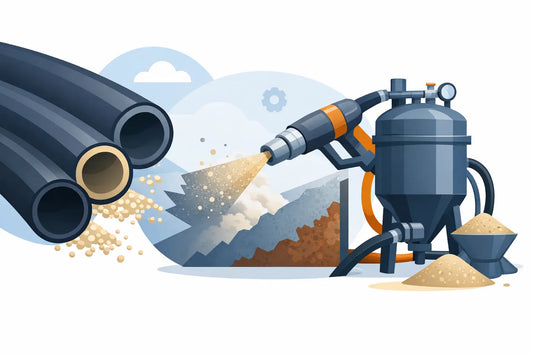
Sandblasting is demanding on both air volume and air quality. Moisture can clump media, interrupt flow, and make cleanup harder. A water separator close to the compressor is a good start, but a serious blasting setup may need additional moisture control depending on humidity, hose length, and runtime.
Use fittings that support the flow required by the blasting equipment, and inspect the hose for wear often. Abrasive work is hard on equipment. The accessory bundle should help protect the process, not create a restriction that reduces blasting performance.
Do not buy based on piece count alone. Forty fittings are not a value if you only need one standard and half the kit never gets used. Avoid unknown connection styles, especially when the product details do not clearly identify the coupler type or thread size.
Do not overlook pressure rating. Every hose, fitting, regulator, and accessory should be rated for at least the maximum pressure your compressor can produce. Also consider whether a compact regulator has enough flow for your tool. A regulator that works fine with an inflator may restrict a grinder under load.
Finally, do not treat leaks as normal. A small leak at a coupler forces the compressor to cycle more often, wastes air, and makes it harder to diagnose poor tool performance. After installing new accessories, pressurize the system and check every threaded joint and coupler connection.
Start with the tool that places the highest demand on your system. For some shops, that is an impact wrench. For others, it is a spray gun, grinder, or sandblaster. Choose hose diameter, coupler style, filtration, and regulation around that tool, then make lighter-duty accessories fit the same standard.
That approach costs less than replacing an undersized kit after a few frustrating jobs. At Pro Air Tools, practical bundles, compatible accessories, and job-ready air tools make it easier to build around the work in front of you, with a 36-month warranty and fast shipping when downtime is not an option.
A well-chosen accessory bundle should disappear into the workflow. Your tools connect quickly, pressure stays consistent, air stays clean where it needs to be clean, and the job keeps moving.


 AIR REGULATORS

 ACCESSORIES