Shopping Cart
(0)
Free shipping included — no minimum on any US order

Quick Search:



A die grinder can feel perfect for five minutes and become a problem halfway through a job. The difference usually comes down to air supply, accessory match, and control - not the biggest RPM number on the box. This air die grinder review explains what separates a useful shop tool from one that wastes air, chatters through cuts, and leaves you fighting the workpiece.
An air die grinder is a compact, high-speed tool built for detail work that bigger grinders cannot reach. It can clean gasket material from a tight flange, shape a weld in a corner, port-match an intake runner, deburr freshly drilled holes, or cut light sheet metal with the right accessory. That range is exactly why broad product claims can be misleading.
A good review starts with the job. A tool that is excellent for short bursts with a carbide burr may not be the best choice for extended surface prep with abrasive rolls. Likewise, a right-angle unit that clears an engine bay may feel awkward when you need a long, straight reach inside tubing.
The strongest tools deliver predictable speed under load, a throttle that is easy to feather, and a head or body that stays manageable in the hand. They should also use standard accessories without making setup a hassle. Cheap tools often look similar in product photos, but their shortcomings show up when the burr catches an edge or air pressure drops during a long pass.
A straight die grinder puts the collet in line with the body. It is the practical choice for reaching into ports, tubing, brackets, and other recessed areas. The layout gives a direct feel when using burrs, mounted stones, wire wheels, and small cutoff wheels.
For fabrication and automotive work, a straight model is often the more versatile first purchase. It works well for deburring sharp edges, removing spot welds in tight spots, blending metal, and cleaning up cast surfaces. The trade-off is access. The body length can prevent the accessory from getting close enough to a surface in cramped areas.
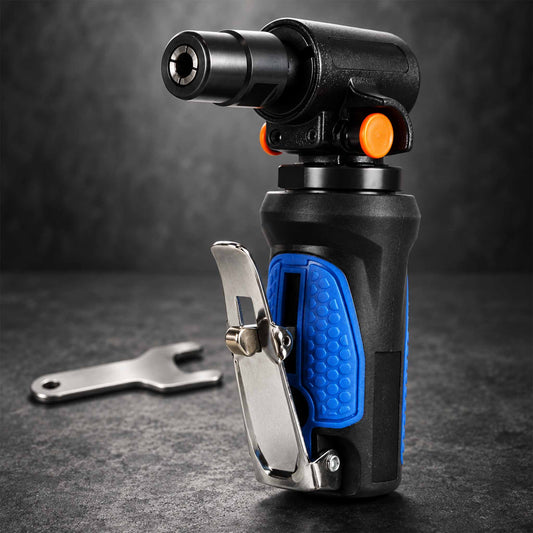
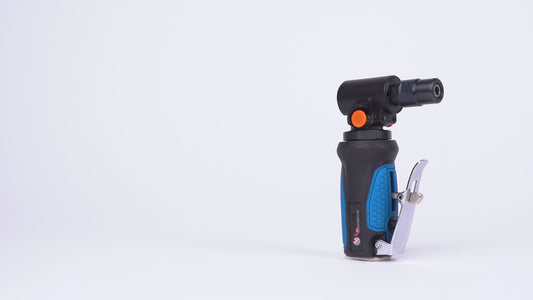
A right-angle die grinder turns the working end 90 degrees from the handle. That makes it easier to work parallel to a panel, frame rail, or engine component. It is especially useful for paint and rust prep, gasket removal, and finishing work where a straight tool would force an uncomfortable wrist angle.
The right-angle format is not automatically better for every job. Its head is bulkier, and it may not reach as deeply into narrow passages. Buyers who regularly work on body panels, wheel wells, and engines often benefit from owning both styles, but a single-tool buyer should choose based on the access problems they face most often.
CFM is the number to take seriously. A die grinder may list a modest average air-use figure, but it can demand much more air when held wide open. If the compressor cannot maintain the tool's required CFM at its rated PSI, speed falls off, cutting slows down, and the grinder can feel weak even when the tool itself is fine.
Check your compressor's delivered CFM at 90 PSI, not only tank size or motor horsepower. A small tank can handle occasional short bursts, such as touching up a burr edge or cutting a bolt, but it will cycle constantly during sustained grinding. For repeated fabrication work, more delivered air and storage make a noticeable difference.
Hose size matters too. A restrictive hose, small fitting, clogged filter, or poorly adjusted regulator can starve a high-speed tool. A 3/8-inch air hose is a safer choice for regular die grinder use than a narrow, long hose that creates unnecessary pressure loss. Set pressure at the tool while air is flowing, not when the trigger is released.
High free speed is valuable because burrs, stones, and abrasive cartridges need surface speed to cut cleanly. But free RPM is measured without a load. The better indicator is how well the grinder holds speed while it is actually removing material.
Never run an accessory above its rated RPM. Small cutoff discs, wire wheels, and mounted stones are not interchangeable just because they fit the collet. Read the maximum operating speed marked on the accessory and inspect it before use. A cracked stone or damaged disc at die-grinder speed is not a minor safety issue.
Most US die grinders use a 1/4-inch collet, which supports the common range of carbide burrs, sanding drums, flap wheels, mounted points, and abrasive rolls. Some tools include a 1/8-inch collet or adapter for finer detail accessories. That added flexibility is useful for precision cleanup, but a solid 1/4-inch setup is the core requirement for general shop work.
A collet should grip evenly and release accessories without excessive struggle. If you swap burrs and sanding rolls throughout the day, a poorly machined collet or thin wrench flats quickly becomes an annoyance. It is a small detail that has a big effect on daily use.
Control is more valuable than raw speed when you are working close to a finished surface. A responsive trigger lets you ease into a cut, feather an abrasive roll around an edge, or avoid grabbing a thin panel. An on-off throttle can make precise work harder and increase the chance of gouging metal.
Weight and balance deserve equal attention. A heavy grinder may be durable, but it can fatigue your wrist during overhead work or long cleanup sessions. A very light tool is not always the answer either. If it vibrates heavily or feels nose-heavy with a burr installed, the benefit disappears fast.
Look for a durable housing, protected exhaust, and a positive safety lever or trigger design. Rear exhaust helps direct air away from the work area and your hands. Front exhaust can blow chips and abrasive dust back toward the operator. Neither configuration is a deal-breaker, but rear exhaust is generally more comfortable for extended use.
Service life also depends on the air feeding the grinder. Water, scale, and unlubricated air wear pneumatic motors quickly. Use a filter and regulator close to the work area, drain the compressor tank, and add air-tool oil as specified by the manufacturer. An air tool is simple inside, but it is not immune to poor shop air.
Before choosing a die grinder, confirm these four points against the work you expect to do:
Start with clean, dry, regulated air. Install the correct fitting, connect a hose with enough inside diameter, and check for leaks before putting an accessory to work. Add a few drops of approved air-tool oil to the inlet when required, then run the tool briefly to distribute lubrication.
Secure the accessory fully in the collet, leaving only the amount of shank needed for access. Excessive stick-out increases vibration and puts more leverage on the accessory. Wear eye protection and hearing protection, keep loose clothing away from the rotating tool, and let the grinder reach speed before contacting the work.
Use light pressure. A die grinder cuts with speed, not brute force. Leaning hard on a burr or abrasive roll slows the motor, heats the work, shortens accessory life, and makes chatter more likely. Keep the tool moving during surface prep so you do not dig a low spot into thin material.
For occasional repairs, a dependable 1/4-inch straight die grinder paired with a capable compressor covers an impressive amount of work. For bodywork, under-hood repairs, and panel prep, a right-angle model can save time and wrist strain. Frequent users should place more value on air efficiency, trigger control, build quality, and warranty coverage than on an inflated free-speed claim.
Pro Air Tools backs its products with a free 36-month warranty and ships orders in one day, which matters when a failed tool or missing accessory is holding up a repair. Pair the grinder with the right regulator, hose, and consumables from the start, and it becomes a reliable part of the workflow rather than another tool waiting on the bench.
Pick the grinder that matches your access, your compressor, and the material in front of you. When those three line up, even the small jobs go faster, cleaner, and with far less rework.







 AIR REGULATORS

 ACCESSORIES