
Shopping Cart
(0)


 AIR REGULATORS

 ACCESSORIES

How to Set Up an Air Compressor Filtration System (Step-by-Step Guide)
Your air compressor pushes out more than just air. Every cycle sends moisture, oil vapor, and microscopic particles downstream toward your tools and work surface. Without proper filtration, that contamination ruins paint jobs, corrodes pneumatic tool internals, and shortens the life of everything connected to your air line.
Setting up a filtration system isn't complicated, but the order matters. This guide walks you through each component, where it goes in the line, and how to choose the right setup for your shop.
Why Filtration Matters
Compressed air naturally contains three contaminants: water, oil, and particulates. Water enters as humidity in the ambient air and condenses as the compressed air cools. Oil comes from lubricated compressor pumps. Particulates include rust from tank walls, pipe scale, and airborne dust pulled into the intake.
These contaminants cause real problems. Water in an air line creates fisheyes and orange peel in paint finishes. Oil vapor contaminates sandblasting media and clogs precision tools. Moisture accelerates rust inside impact wrenches, ratchets, and die grinders, reducing their service life significantly.
A properly configured filtration system removes all three. The cost of the filters is a fraction of what you'd spend replacing corroded tools or redoing a contaminated paint job.
Building your filtration setup?
The inline water/oil separator filter is the in-line workhorse this guide walks through — in stock now.
Shop the Inline Air Filter →The Components (In Order of Airflow)
A complete filtration system has up to four stages, installed between the compressor tank and your air tools. Not every shop needs all four — we'll cover which ones are essential and which are optional below.
Stage 1: Particulate Filter (Essential)
The first filter in line catches solid particles — rust flakes, pipe scale, dust, and debris. This is the coarsest filter and it protects everything downstream, including your finer filters and regulators. Install this as close to the compressor tank outlet as practical.
A basic inline water separator with a particulate element handles this stage. The ZN312 Inline Filter ($16.99) or AI303 Inline Filter ($16.99) both work well here. They catch particles and knock out bulk water at the same time.
Stage 2: Water Separator / Coalescing Filter (Essential)
After the particulate filter, a coalescing filter removes finer water droplets and oil aerosols. This stage uses a filter element that forces air through a media that merges (coalesces) tiny droplets into larger ones, which then drain to the bottom of the bowl.
The AI303-C1 Water Separator ($17.99) is purpose-built for this stage. For a compact option in tight installations, the AI-304 Ultra-Slim Filter ($19.99) fits where standard bowl filters won't.
Stage 3: Desiccant Dryer (Recommended for Paint and Precision Work)
Coalescing filters remove liquid water, but they can't remove water vapor. A desiccant dryer contains moisture-absorbing beads that strip water vapor from the air stream, delivering truly dry air. This stage is essential for spray painting, powder coating, sandblasting, and any application where even trace moisture causes defects.
The ZN312-D Desiccant Dryer ($17.99) uses color-indicating beads that turn from blue to pink when saturated — you can see exactly when it needs regeneration. The ZN312E-3 Desiccant Filter ($17.19) and the 3/8" ZN312E-3 Dryer ($18.29) offer similar desiccant drying in different port sizes.
Stage 4: Pressure Regulator (Essential)
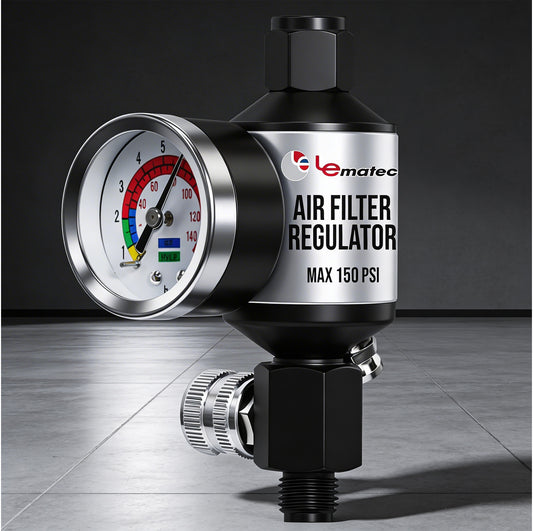
The regulator goes last, after all filtration stages. It steps the line pressure down to whatever your tool requires — typically 90 PSI for most air tools, 25-30 PSI for HVLP spray guns, and 40-60 PSI for sandblasters. Placing the regulator after the filters ensures it receives clean, dry air, which keeps its diaphragm and seals working properly.
For general shop use, the AR-01 Analog Regulator ($21.99) delivers 89 SCFM of high-flow capacity. If you want precise digital readout, the DAR01B Digital Regulator ($30.98) shows pressure in PSI, BAR, kPa, and kg/cm² simultaneously.
Combo Units: Simplified Setup
If you prefer fewer connections and a cleaner installation, combo units integrate filtration and regulation into a single body. These are ideal for smaller shops or dedicated tool stations where you want quick setup without plumbing multiple components.
- AI303-R1 Filter/Regulator Combo ($23.89) — Combines water/oil separation with pressure regulation in one aluminum body. 140 PSI rated.
- AI303-R2 Digital Filter/Regulator ($30.69) — Same filtration with a digital pressure display. 160 PSI rated.
- AI303-R1 Heavy-Duty Combo ($45.79) — 1/2" NPT for higher-flow main lines. 160 PSI rated with large filter bowl.
Point-of-Use Regulators
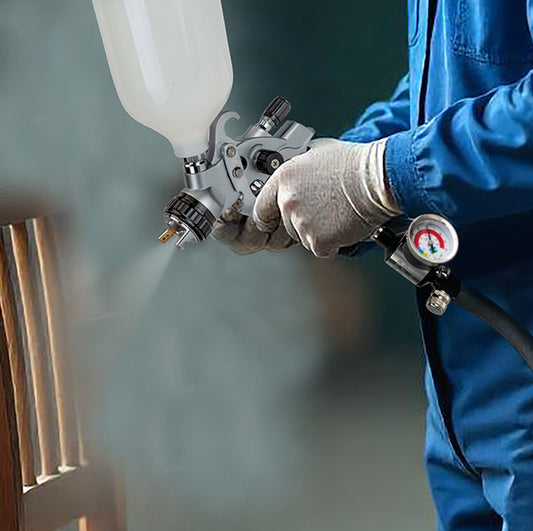
Some tools need their own dedicated pressure setting. Spray guns are the most common example — they typically run at much lower pressure than impact wrenches. A point-of-use regulator at the tool inlet gives you independent pressure control without affecting the main line.
The AR-08 Spray Gun Regulator ($23.99) threads directly onto your spray gun inlet. For a bench or wall-mount option, the AR-02 Inline Regulator ($22.99) works at any point in the line.
Recommended Setups by Application
General Shop (Impact Wrenches, Ratchets, Blow Guns)
Minimum setup: Inline particulate filter + water separator + regulator. The bulk water separator catches the worst of it, and most pneumatic hand tools tolerate trace moisture without issue. Budget: approximately $55-60 for all three components.
Spray Painting and Finishing
Full four-stage setup: Particulate filter + coalescing filter + desiccant dryer + regulator, plus a point-of-use regulator at the spray gun. Any moisture reaching the gun creates visible defects, so the desiccant stage is not optional here. Budget: approximately $75-95 for the complete system.
Sandblasting
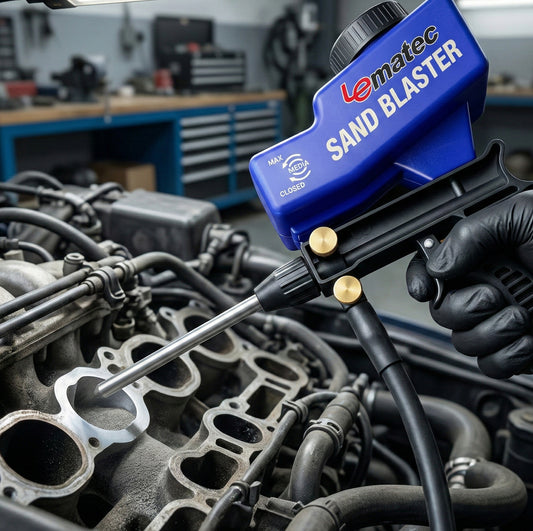
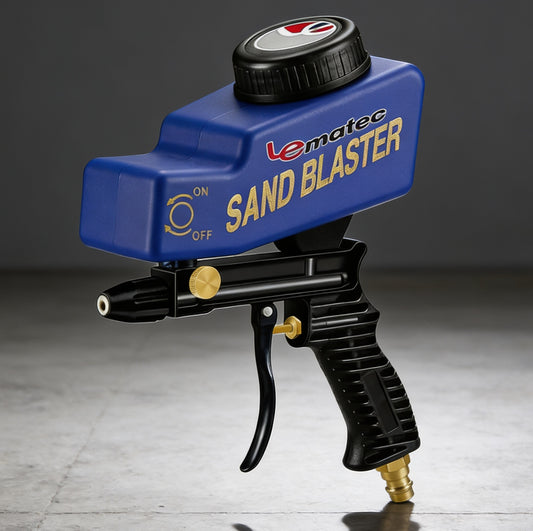
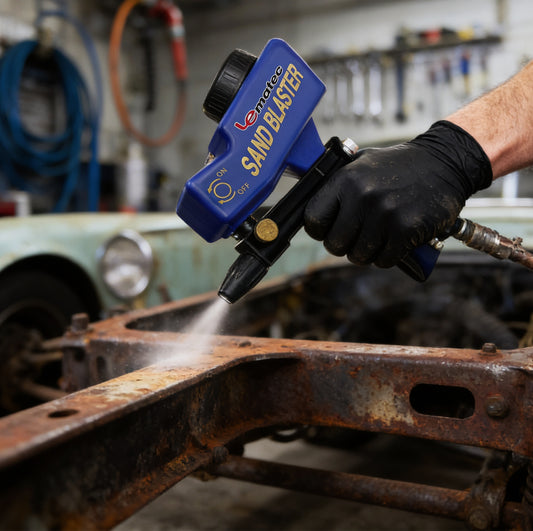
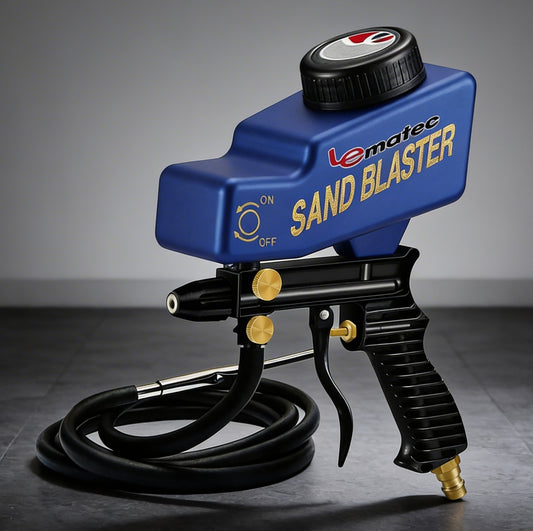
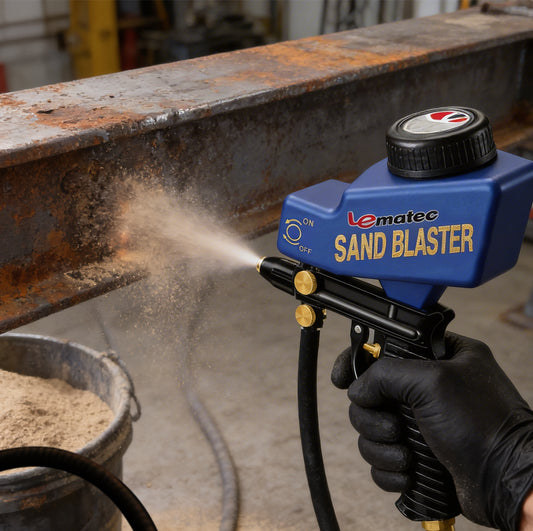
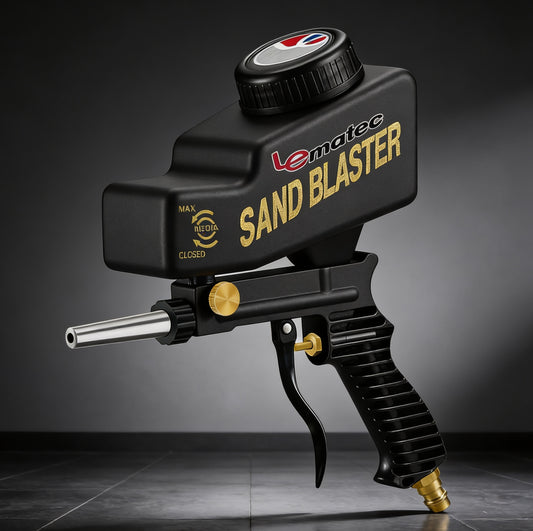
Three-stage setup: Particulate filter + coalescing filter + regulator. Moisture clumps blasting media and causes uneven coverage. A desiccant dryer is beneficial but not strictly required unless you're in a high-humidity environment. Budget: approximately $55-65.
Installation Tips
Mount filters vertically with the drain bowl pointing down — gravity helps collected water drain to the bowl. Drain the bowls before each work session, or choose filters with automatic drain valves. Use Teflon tape on all NPT connections (several of our filters include Teflon tape in the box). Keep the desiccant dryer as close to the point of use as practical, since any pipe run after the dryer allows re-absorption of ambient moisture.
One commonly overlooked step: drain your compressor tank regularly. Filtration handles what gets past the tank, but a tank full of standing water overwhelms any filter system. Pop the tank drain valve at the end of each work day.
Tags:
Previous
Air Ratchet vs Impact Wrench: Which One Do You Actually Need?
Next
Best Air Tools for Beginners: Complete Starter Guide (2026)
Related articles
How to Use a Pneumatic Angle Grinder Safely
Jul 19 2026
Best Air Blow Gun Attachments for Shop Work
Jul 18 2026
How to Choose a Pneumatic Sander for Bodywork
Jul 13 2026
Guide to Air Tool Quick Couplers
Jul 09 2026
Quick Change Coupler Leaks Fix That Lasts
Jul 07 2026
Portable Sandblaster Review: What Matters
Jul 05 2026