Shopping Cart
(0)
Free shipping included — no minimum on any US order

Quick Search:


Walking into a tool shop or scrolling through air tool listings for the first time can feel like reading a foreign language. CFM, NPT, twin-hammer, inline oiler — the terminology alone is enough to make a new buyer second-guess whether pneumatic tools are worth the learning curve. They are. And once you understand what to buy first and why, the decision becomes straightforward.
This guide covers the essential air tools every beginner should consider, in the order that makes the most sense for building a useful pneumatic toolkit from scratch. Whether you are setting up a home garage, a small workshop, or just want to stop borrowing tools, this is where to start.
Before diving into specific tools, it helps to understand what makes pneumatic tools worth the investment. Air tools are lighter than their electric equivalents because the motor is your compressor, not something built into the tool body. That weight difference matters a lot when you are working overhead or using a tool for extended periods. They also deliver consistent power without battery fade, last longer because there are fewer internal components to fail, and cost less per tool since you are not paying for a motor and battery pack every time.
The tradeoff is that you need an air compressor. If you already have one — even a modest pancake compressor — you can start with air tools immediately. If you do not, factor the compressor into your startup cost. A decent 20-gallon compressor in the $200-400 range will power every tool on this list.
It might not sound exciting, but an air blow gun is the single most-used tool in any shop that runs compressed air. You will use it to clean parts, dry surfaces, blow debris out of bolt holes, clear sawdust off workpieces, and a hundred other small tasks that come up constantly. It is the tool you reach for dozens of times a day without thinking about it.
A good blow gun connects to your air line with a standard 1/4-inch NPT fitting, operates at 90 PSI, and should feel comfortable in your hand since you will be holding it often. Low-noise models reduce hearing fatigue during extended use, which matters more than most beginners expect.
If you want more versatility from your first purchase, an extendable blow gun kit with interchangeable tips lets you reach into engine bays, inflate tires, and dust electronics with the same tool.
If you work on cars, motorcycles, or any kind of mechanical assembly, an air ratchet will change how you feel about repetitive fastener work. Hand-ratcheting twenty bolts on a valve cover or intake manifold gets old fast. An air ratchet spins them out in seconds while your wrist stays fresh.
For beginners, a 3/8-inch drive air ratchet covers the widest range of common bolt sizes. It fits into tight spaces better than a 1/2-inch model while still handling most automotive and light industrial work. The 3/8-inch drive also matches the socket sets most people already own.
When you are ready to step up, a 1/2-inch air ratchet handles larger fasteners and delivers more torque for suspension work, exhaust components, and heavier bolts. Many experienced mechanics keep both sizes within arm's reach.
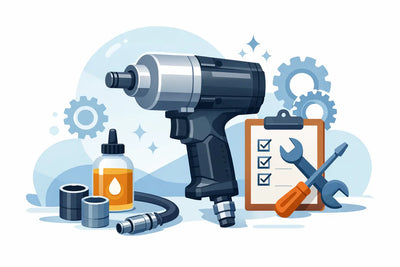
An air ratchet is fast but not powerful. When you hit a rusted bolt, a seized lug nut, or anything that needs real breakaway torque, you need an impact tool. For automotive work, a 1/2-inch air impact wrench delivering 1,000 ft-lbs of torque handles everything from wheel changes to suspension overhauls.
For lighter duty work — driving screws, working with smaller fasteners, assembling projects — an air impact driver with a 1/4-inch hex chuck is more appropriate. It delivers controlled torque without the violence of a full impact wrench, making it better suited for tasks where over-tightening would cause damage.
Most beginners should start with whichever matches their primary work. If you are doing automotive repair, get the impact wrench first. If you are doing woodworking, assembly, or maintenance, the impact driver is the better starting point.
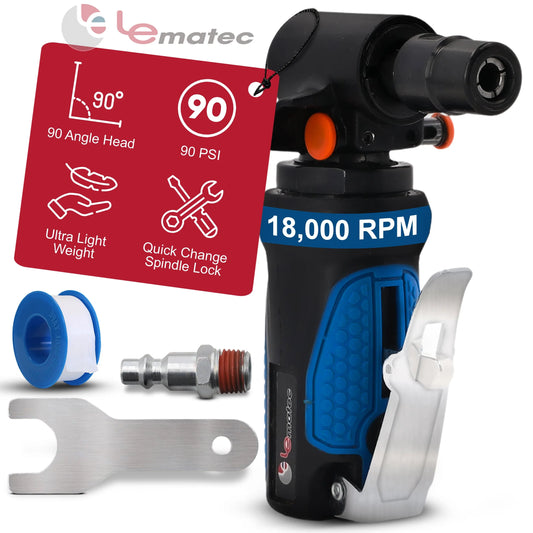
Grinding, deburring, polishing, porting, and shaping metal — a die grinder handles all of it. For a first die grinder, you have three options and the right choice depends on where you need to reach.
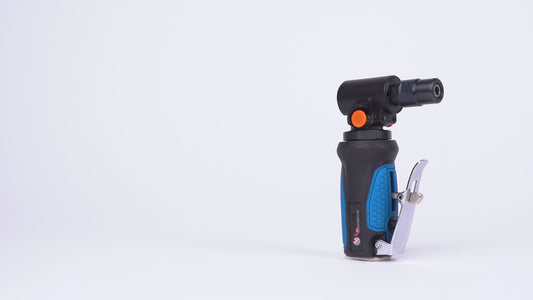
A straight die grinder gives you the best line-of-sight and reach into deep spaces. An angle die grinder works better in tight spots where a straight body cannot fit. And a flexible die grinder articulates into angles that neither of the others can reach.
If you can only buy one, the angle die grinder is the most versatile for a beginner. It handles 90% of common grinding tasks and fits into most workspace configurations. Add a straight or flexible model later as you encounter specific access challenges in your work.
If you have vehicles or equipment with tires, a digital tire inflator pays for itself in convenience almost immediately. It connects to your compressor, lets you set a target pressure digitally, and automatically stops when that pressure is reached. No more guessing, no more overshooting, no more hunting for a separate pressure gauge.
This is one of those tools that seems optional until you use one. After that, manually checking and adjusting tire pressure with a separate gauge and chuck feels like going back to a flip phone.
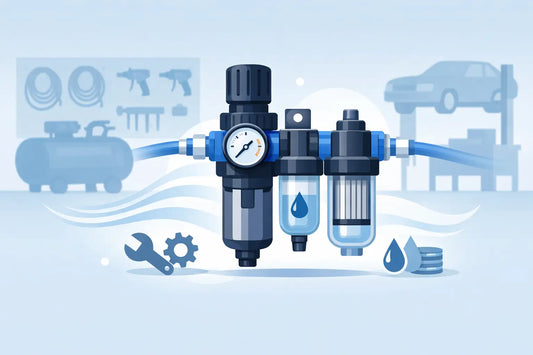
None of these tools work well — or last long — without clean, dry, regulated air. This is where beginners often cut corners, and it costs them in tool performance and lifespan.
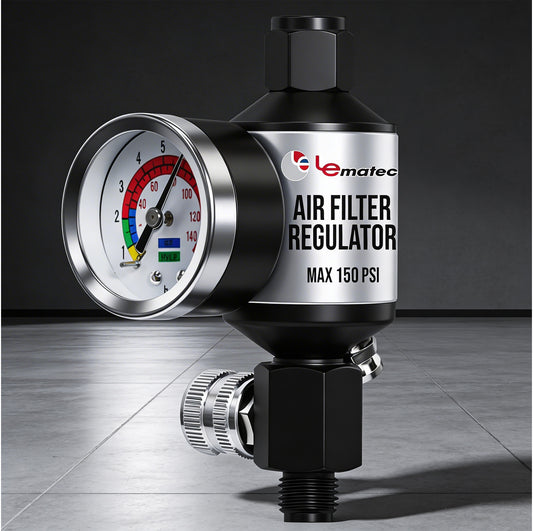
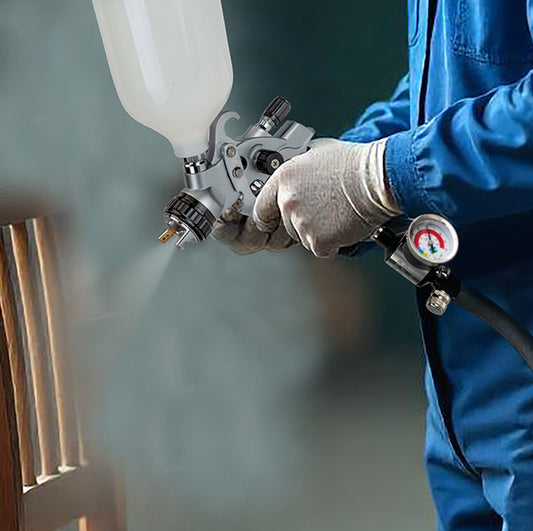
At minimum, you need an air pressure regulator between your compressor and your tools. Different tools need different pressures, and most compressors output well above what your tools want. A regulator lets you dial in the right PSI for each tool.
Add a water separator filter to catch moisture and particles before they reach your tools. Compressed air contains water vapor that condenses in your air lines, and that moisture damages tool internals and causes rust. A basic inline filter prevents this for a few dollars.
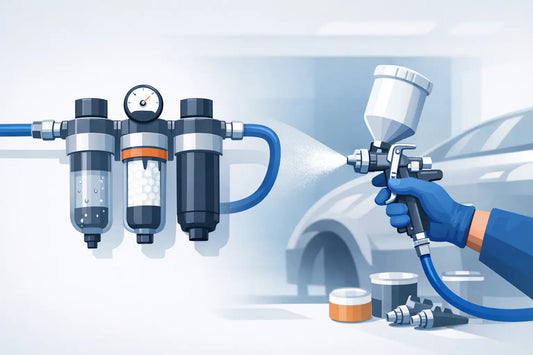
For the best protection, a filter-regulator combo unit combines both functions into a single piece of plumbing. This is the most popular setup for small shops and home garages because it simplifies the air line while providing both filtration and pressure control.
If you are starting from zero and want a practical, capable air tool collection, here is the buy order that gives you the most utility for each dollar spent:
First: Air blow gun — you will use it every single session, and it costs the least.
Second: Air ratchet (3/8-inch) — the biggest time-saver for mechanical work.
Third: Filter-regulator combo — protects every tool you buy after this point.
Fourth: Impact wrench or impact driver — depends on whether you work on vehicles or projects.
Fifth: Die grinder — opens up metalwork, finishing, and detail tasks.
Sixth: Digital tire inflator — convenience tool that you will appreciate more than you expect.
This order prioritizes the tools with the highest daily-use value first and builds up to more specialized equipment. Each tool on this list works with a standard home compressor running at least 4-6 CFM at 90 PSI.
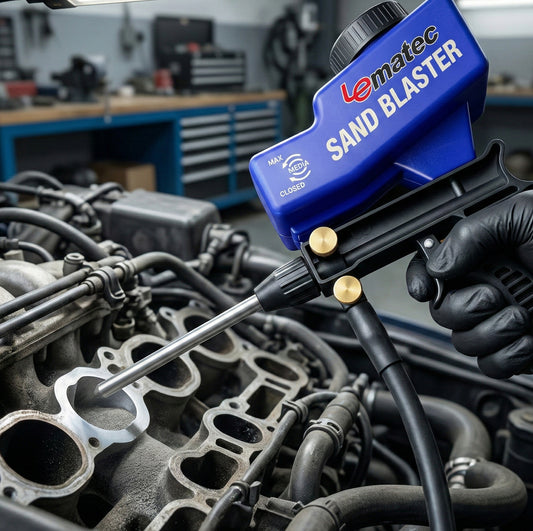
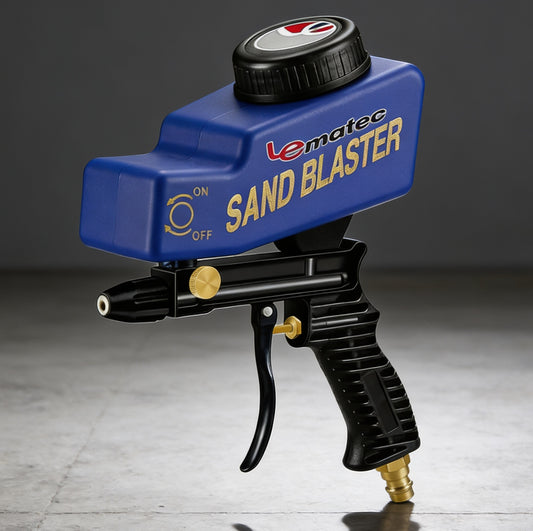
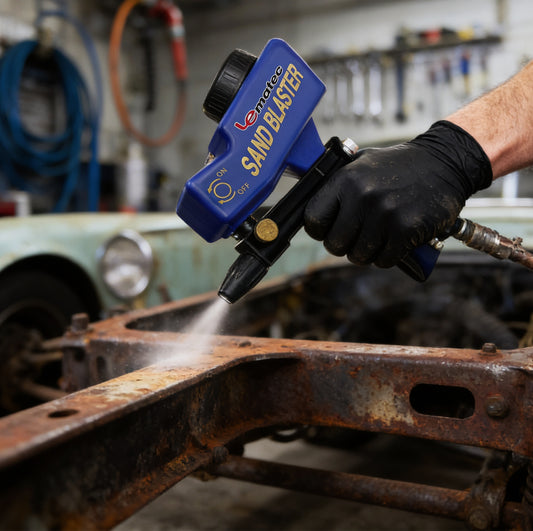
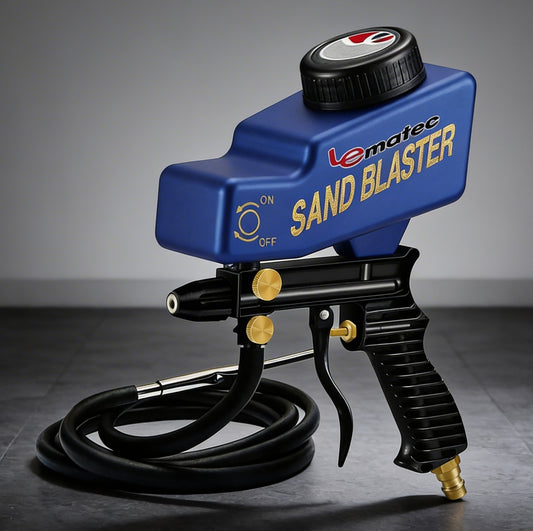
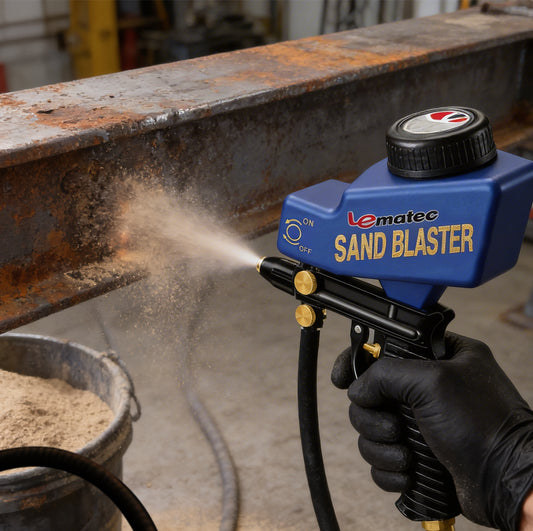
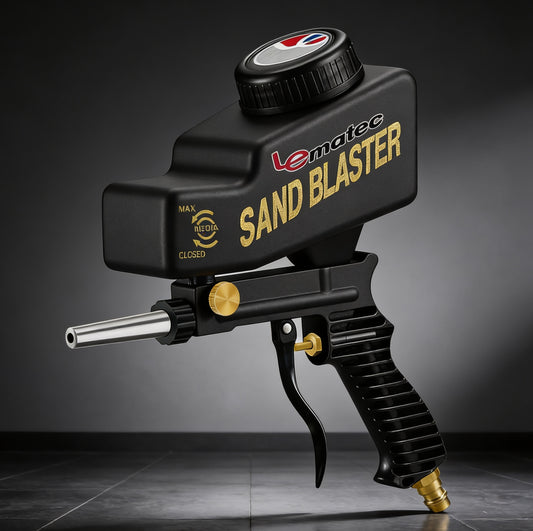
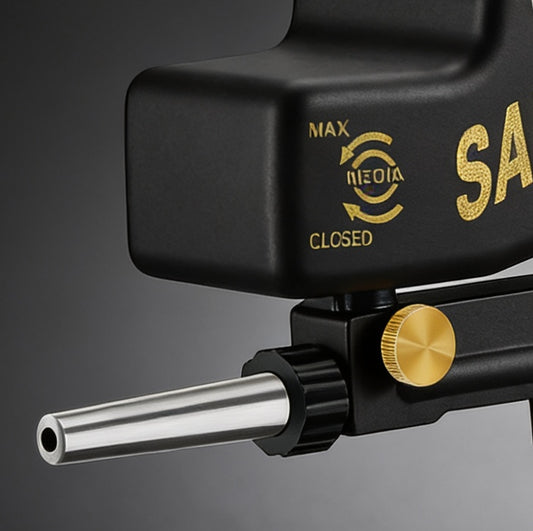
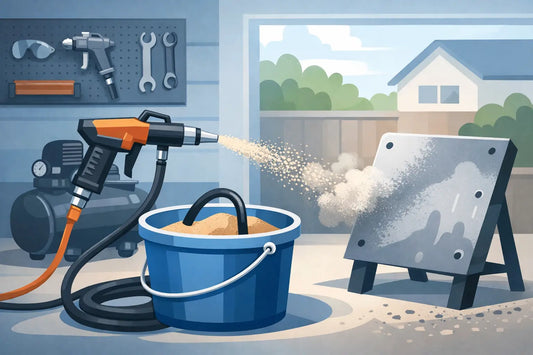
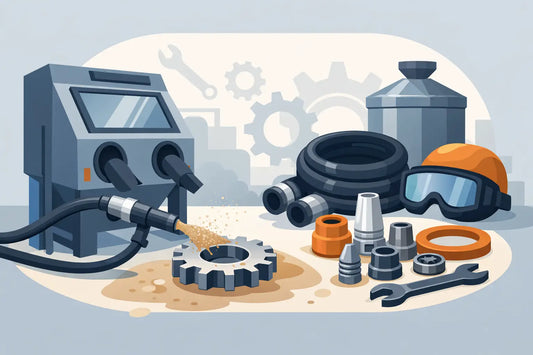
If rust removal, paint stripping, or surface preparation is part of your work, a sandblaster is one of the most satisfying air tools to own. A handheld gravity-feed sandblaster handles small parts and detail work, while a dual-feed sandblaster gun kit offers more flexibility for larger projects. They are not essential for every beginner, but if you restore furniture, clean tools, or work with metal surfaces regularly, they earn their place quickly.
The key is matching your blasting media to the job. Aluminum oxide handles most rust removal. Glass beads give a smooth finish. And soda blasting removes paint and grease without damaging the underlying surface — ideal for automotive work where you want to strip a panel without warping it.
The biggest mistake is skipping air filtration. Running dirty, wet air through your tools will shorten their lifespan dramatically. A $20 water separator filter saves hundreds in tool replacements over time.
The second mistake is ignoring CFM requirements. Every air tool has a CFM (cubic feet per minute) rating, and your compressor needs to meet or exceed it. If your compressor cannot keep up, the tool will work intermittently and underperform. Check CFM at 90 PSI, not the compressor's peak rating.
Third, add a drop of pneumatic tool oil to the air inlet before each use. Air tools need lubrication, and thirty seconds of maintenance prevents the most common failure mode — dried seals and vanes inside the motor.
Finally, start with quality tools rather than the cheapest option available. A well-made air tool with proper bearings and machining will outlast a bargain tool by years, and the performance difference is noticeable from the first use.



 AIR REGULATORS

 ACCESSORIES