Shopping Cart
(0)
Free shipping included — no minimum on any US order

Quick Search:

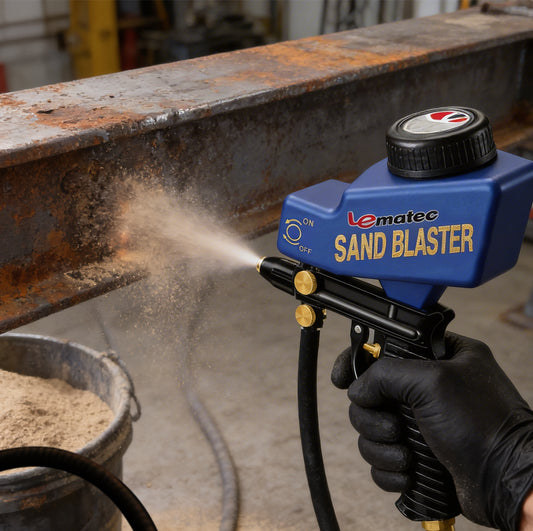
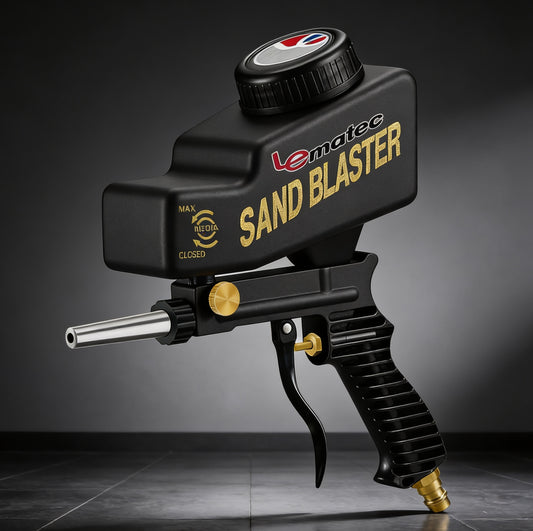
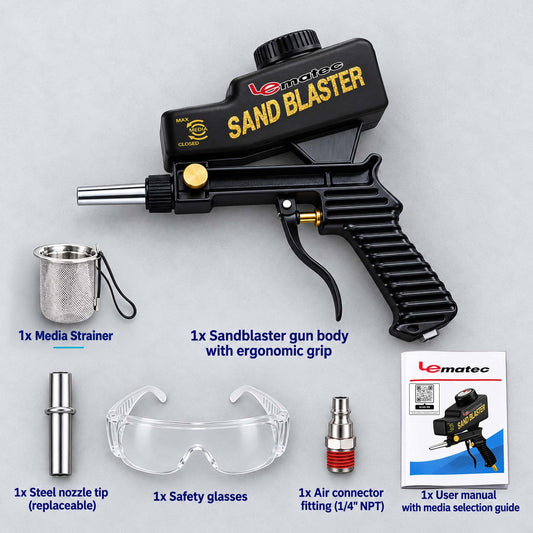

A compressor that looks good on paper can still leave your impact wrench weak, your grinder bogged down, or your blast cabinet waiting on air. Most sizing mistakes happen because buyers focus on tank size first and airflow second.
If you want to know how to size air compressor for tools, start with the tool that demands the most air, not the one you use most often. That one decision usually keeps you from buying a compressor that is too small for real work or too large for your shop and budget.
Air compressor sizing comes down to three numbers: CFM, PSI, and tank capacity. CFM tells you how much air volume the compressor can deliver. PSI tells you the pressure it can maintain. Tank size affects how long the system can supply air before the pump has to catch up.
For most air tools, CFM is the number that matters most. A compressor can hit the right PSI and still fail if it cannot deliver enough air volume. That is why a small portable unit may inflate tires just fine but struggle badly with an air grinder or sandblaster.
The practical way to size a compressor is simple. Check the tool's required CFM at its rated PSI, then add a safety margin. A good rule is to choose a compressor that can deliver at least 25% more CFM than your highest-demand tool. That buffer helps with real-world losses, hose restrictions, duty cycle, and the fact that many tools draw more air in actual use than the catalog number suggests.
If a tool needs 5 CFM at 90 PSI, aim for a compressor that delivers at least 6.25 CFM at 90 PSI. If your grinder needs 8 CFM, look for around 10 CFM. That extra capacity is what keeps the tool working instead of fading after a few seconds.
Not all pneumatic tools use air the same way. An impact wrench is usually an intermittent-use tool. You pull the trigger in short bursts. A die grinder, sander, or blast gun is closer to continuous use, which puts much more demand on the compressor.
That difference matters. A compressor that works fine for an air ratchet may be completely wrong for surface prep or cutting. If you own several tools, size for the most demanding one you plan to run regularly.
Here is the general pattern most shops see. Tire inflators, brad nailers, and blow guns need relatively low airflow. Impact wrenches, air ratchets, and drills sit in the middle. Grinders, sanders, polishers, cutoff tools, and sandblasting equipment usually need the most air and expose undersized compressors fast.
If you run one tool at a time, sizing is easier. If two people might use tools at once, add the CFM demands together and then add your safety margin on top of that.
A lot of buyers chase PSI because the number looks impressive. In practice, most common air tools are designed around roughly 90 PSI at the tool. If the compressor can supply that pressure but does not have enough CFM, performance still drops.
Think of PSI as force and CFM as supply. Your tool needs both, but low airflow is what causes the familiar problems: a grinder slows down, an impact loses torque, a blaster sputters, and the compressor runs constantly trying to recover.
This is why the compressor label matters, but so does the rating format. Look for delivered CFM at a stated PSI, usually 90 PSI. Ignore vague marketing language if it does not tell you actual airflow at working pressure.
Tank size gets too much attention because it is easy to compare. A bigger tank is useful, but only to a point.
The tank is a reserve. It gives you more stored air for short bursts and can reduce how often the motor cycles. That is useful for intermittent tools like impact wrenches. But if the pump cannot produce enough CFM, a large tank only delays the problem. It does not solve it.
For continuous-demand tools, pump output matters more than tank size. A 60-gallon compressor with weak CFM can still disappoint on a grinder or blast setup. A properly rated compressor with adequate airflow will usually outperform a larger tank unit that cannot keep up.
So yes, tank size matters, but after airflow. Buy CFM first, then choose a tank that fits how you work.
If your shop work is mostly tire service, fastening, and light automotive tasks, you can usually get by with a modest compressor as long as it meets the tool's CFM rating with some headroom. This setup is often enough for inflators, blow guns, nailers, and occasional ratchet or impact use.
If you regularly use impact wrenches, air drills, or cutoff tools, move up to a compressor with stronger sustained airflow. These tools are still manageable for many mid-size shop compressors, but they stop feeling strong when the air supply is barely adequate.
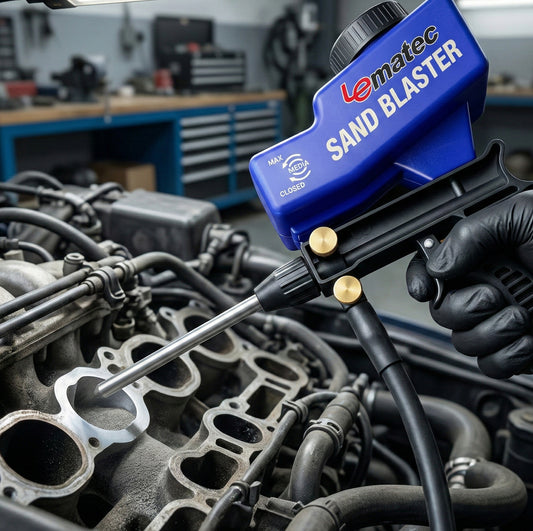
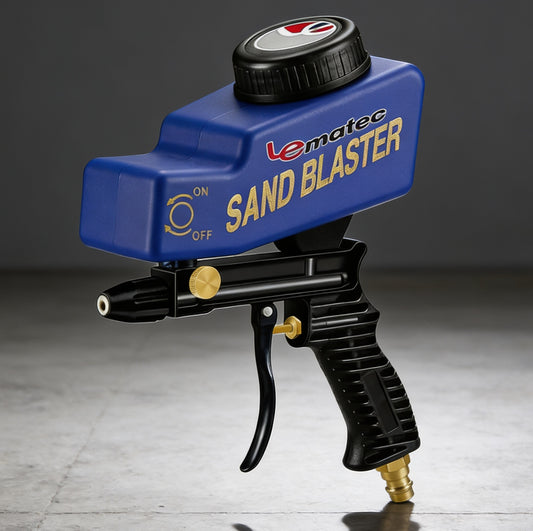
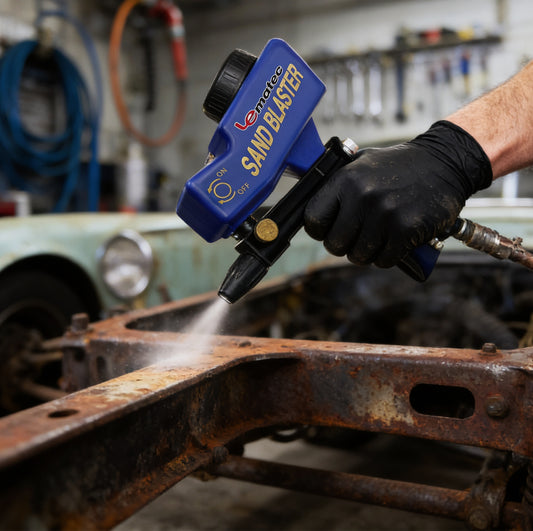
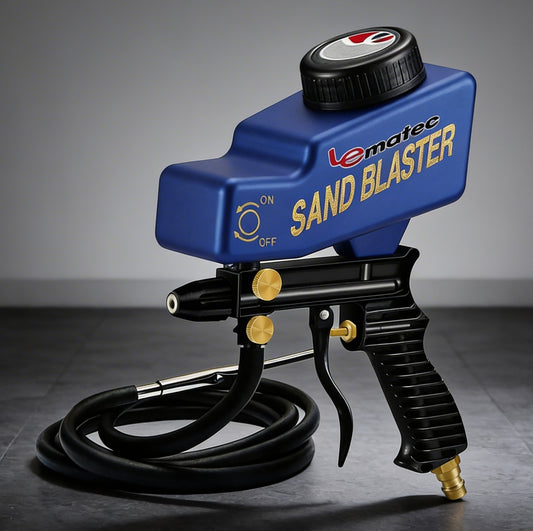
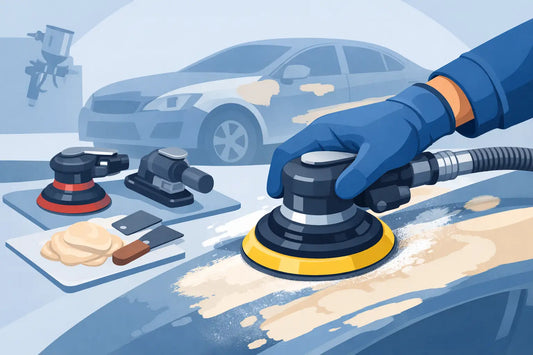
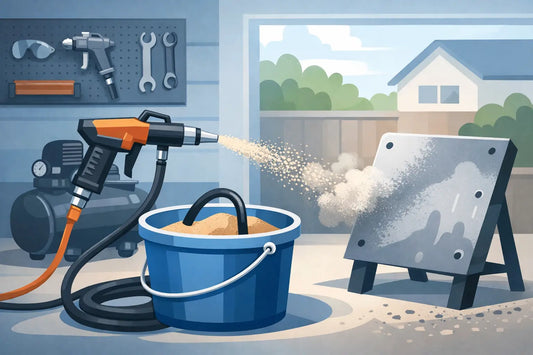
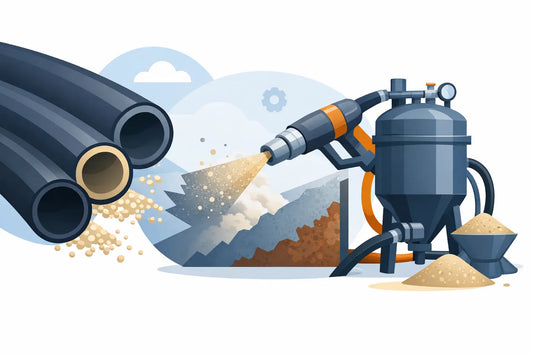
If you use die grinders, dual-action sanders, angle grinders, or sandblasting tools, plan for significantly more compressor. These are the tools that separate occasional-use compressors from true shop-ready systems. Surface prep and blasting especially punish undersized units because they need steady airflow for more than a few seconds at a time.
That is why buyers who mainly work in fabrication, body prep, restoration, or blast cleaning usually need to size around the air-hungriest task in the building, not around the easiest one.
Even a correctly sized compressor can underperform if the rest of the setup chokes airflow. Long hoses, small inside diameter hose, restrictive quick-connect fittings, dirty filters, and poorly set regulators all reduce tool performance.
If your compressor numbers look right but the tool feels weak, check the air path. A narrow hose can starve a grinder. A clogged filter-regulator can rob pressure. Cheap couplers can create a bottleneck that makes a good compressor act too small.
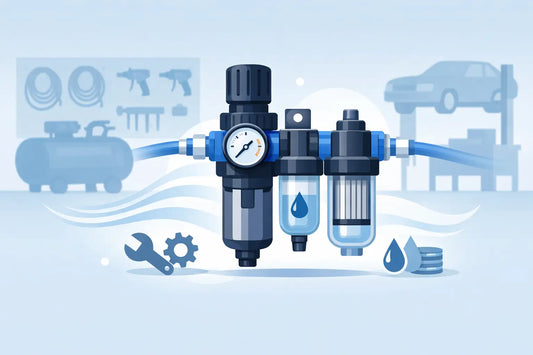
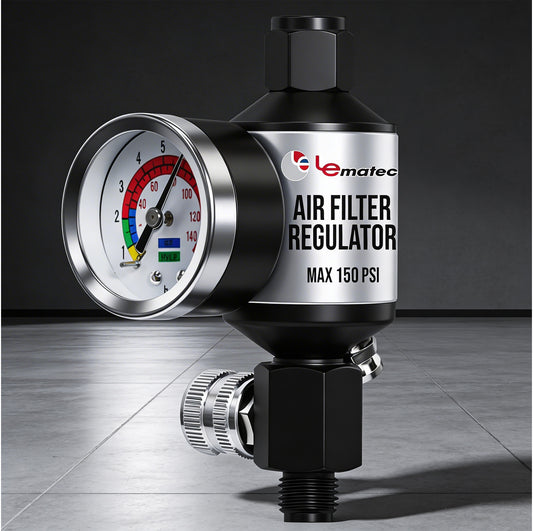
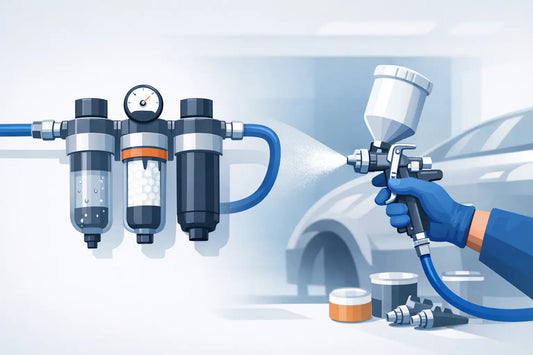
Moisture control matters too. Water in the line does more than annoy you. It can affect tool life, contaminate blasting media, and create inconsistent performance. A proper regulator and filter setup helps you get the performance you paid for.
Compressor sizing is not just about air demand. It is also about whether your shop can support the machine.
Larger compressors may require 240V power, more floor space, and a fixed installation. That is usually a fair trade for serious shop use, but not every garage or maintenance area is set up for it. If you are trying to run high-demand tools from a light portable compressor on standard household power, your ceiling is lower than you may want.
Duty cycle is another thing people skip. If the compressor is not designed to run as long as your application requires, heat and wear show up fast. For occasional impact use, that may never become a problem. For sanding, grinding, or blasting, it absolutely can.
That is where buying a little more compressor than the minimum usually pays off. You get better performance, less waiting, and less strain on the machine over time.
When you compare compressors, write down the highest CFM requirement among your tools, the PSI those tools need, and whether the job is intermittent or continuous. Then match the compressor's delivered CFM at working PSI with at least 25% headroom.
If your work is mostly short bursts, tank size gives you more flexibility. If your work is steady and air-hungry, prioritize pump output and duty cycle. If you plan to grow into grinding, sanding, or blasting later, buy for where your shop is headed, not just where it is today.
That approach costs less than replacing an undersized unit after a few frustrating weekends or losing time on the job because the compressor cannot keep up.
For buyers who want jobsite-ready air tools, regulators, blasting gear, and shop accessories in one place, Pro Air Tools keeps the process straightforward at https://proairtools.com/. The goal is simple: get equipment that works, ships fast, and keeps your project moving.
A compressor should make your tools feel stronger, not slower. Size it for real airflow, give yourself a margin, and your whole setup works the way it should when the trigger is pulled.
Factory direct from Le Lematec — professional quality, competitive prices.


 AIR REGULATORS

 ACCESSORIES