Shopping Cart
(0)
Free shipping included — no minimum on any US order

Quick Search:

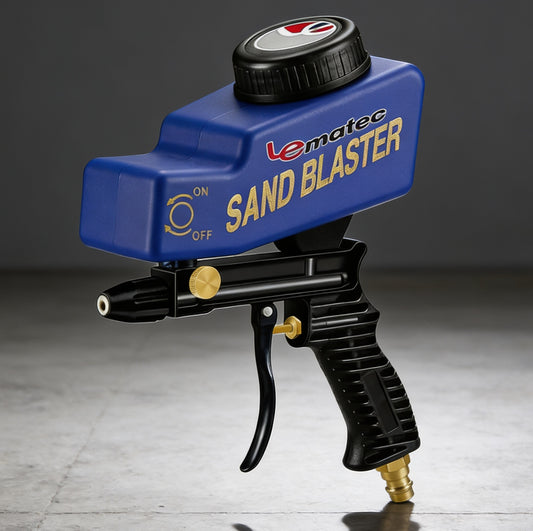
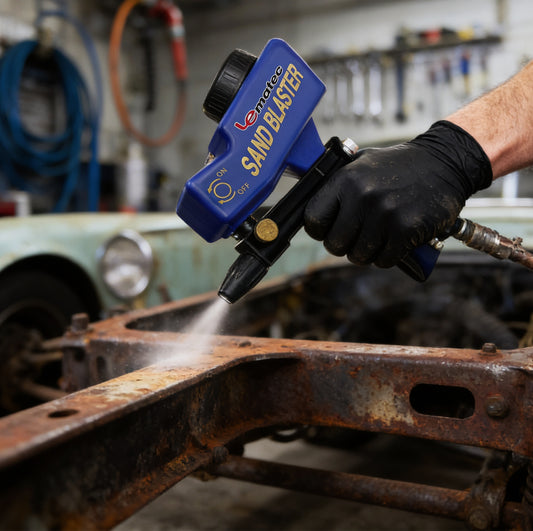
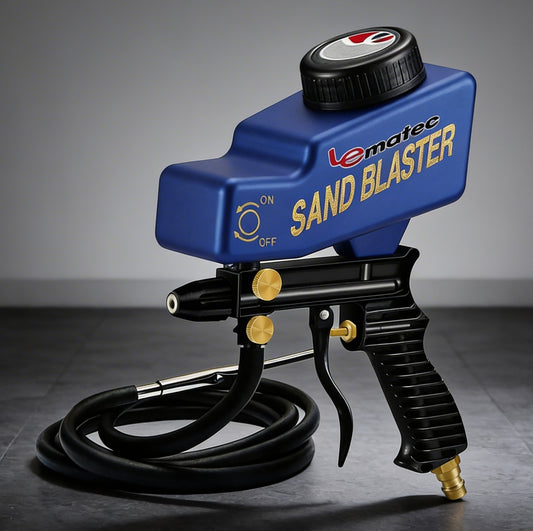
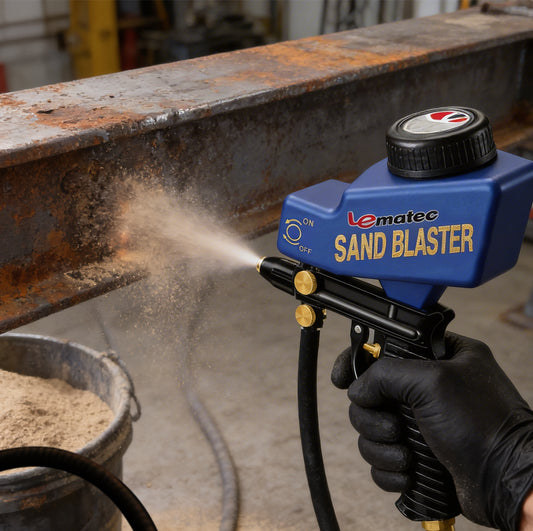
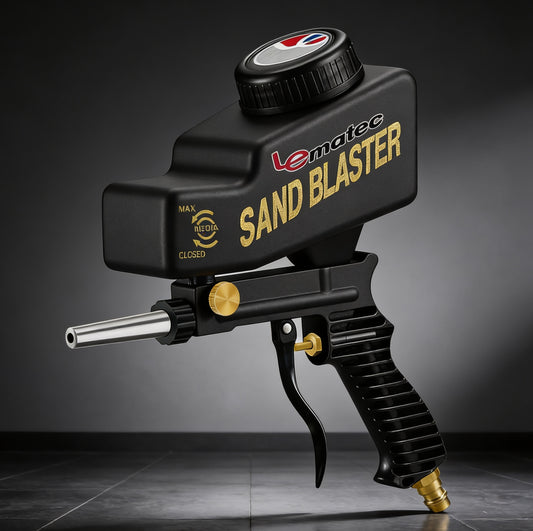
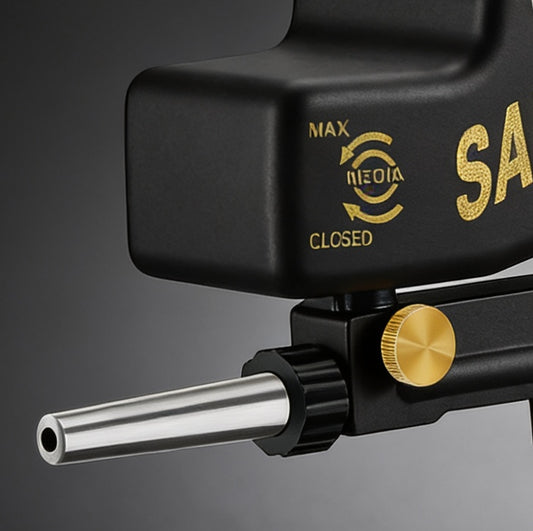

Rust doesn’t fail politely. It creeps under paint on a truck frame, blooms around welds on a trailer, and turns a “quick scuff and shoot” into a weekend you didn’t plan for. A sandblaster can erase that problem fast - but only if the blaster matches your compressor, the parts you’re cleaning, and the finish you actually need.
This is how to choose the best sandblaster for rust removal for your shop or garage without wasting air, media, or time.
The best sandblaster isn’t the biggest or most expensive unit. It’s the one that removes rust at the speed you need, with a surface profile you can coat, using the compressor you already own (or are willing to buy). If any one of those three is out of balance, blasting turns into frustration - slow cutting, constant clogging, or a compressor that never catches up.
Rust removal also has a different goal than stripping paint off a flat panel. You’re often chasing pitting, scale, and tight edges. That means you need consistent media flow and enough energy at the nozzle to actually cut, not just dust the surface.
Most buyers land in one of three categories. Each can be the “best sandblaster for rust removal” depending on the work.
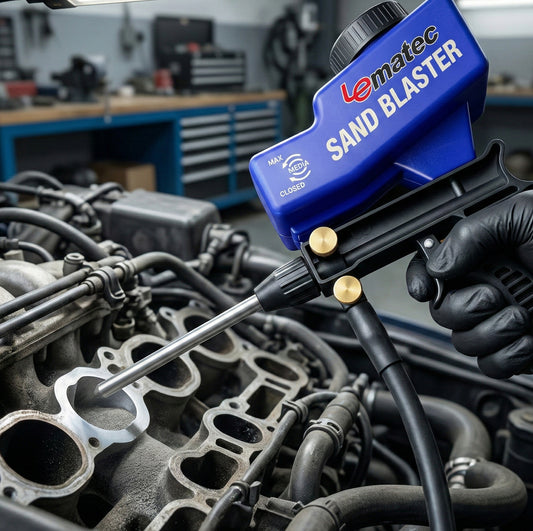
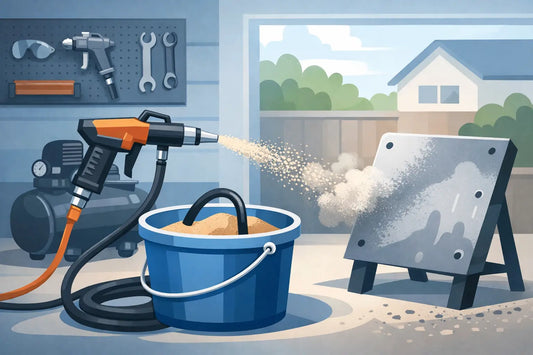
A siphon gun pulls media up a pickup tube using airflow. It’s inexpensive and easy to set up, which makes it appealing for occasional projects. The trade-off is cutting speed. Siphon systems typically need more air to move the same amount of media compared to pressure systems, and they’re less forgiving if your media has moisture or inconsistent size.
If you’re knocking surface rust off brackets, hinges, small tools, or doing quick spot work, siphon can be fine. If you’re trying to strip heavy scale off a frame section, you’ll feel the limit fast.
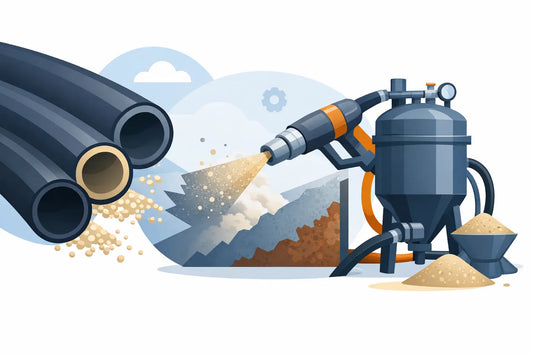
Pressure pots push media out under pressure, so you get higher media volume and more aggressive cutting at the same nozzle size. For rust removal on automotive parts, suspension components, wheels, and medium-to-large steel, pressure blasters are usually the best value because time saved is real money - even in a home shop.
The trade-offs are that you need a decent compressor, you’ll want better air drying/filtration, and setup is a bit more involved. But if you’re serious about rust removal, pressure is where most people end up.
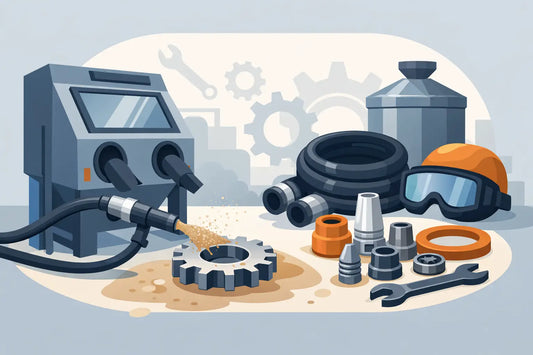
A blast cabinet isn’t a “type” of feed so much as a controlled workspace. Cabinets keep media contained, improve visibility with lighting and a window, and make it easy to do consistent prep on smaller parts. If you restore carbs, brackets, calipers, or fabricate small parts all the time, a cabinet can be the best rust-removal tool because it’s always ready and doesn’t turn your shop into a sandbox.
The trade-off is part size. If it doesn’t fit, it doesn’t ship.
Rust removal performance lives and dies on CFM at pressure. Marketing loves PSI, but CFM is what keeps the nozzle cutting continuously.
As a practical rule, small compressors can run small nozzles for short bursts, but rust removal punishes short bursts. You want steady airflow so the media stream stays consistent and your finish stays even.
Here’s the mindset that saves headaches: choose the nozzle size your compressor can support continuously, then choose the blaster that uses that nozzle effectively.
A small siphon gun with a modest nozzle can work on a 20- to 30-gallon compressor for intermittent jobs. A pressure pot with a larger nozzle will outperform it, but only if your compressor can keep up. If your compressor is always running and pressure keeps dropping, you’re not blasting - you’re waiting.
If you’re already in the 60- to 80-gallon class with solid CFM output, pressure blasting becomes a different experience. You can run larger nozzles, remove scale faster, and get into a rhythm that makes rust removal almost enjoyable.
If you’re focused on rust removal, you need a media that cuts oxide efficiently without ruining the base metal or leaving you with a coating problem later. For softer surfaces like chrome, brick, glass, or food-contact equipment where you don't want to remove metal, a soda blaster with sodium bicarbonate media is the better choice.
Crushed glass is a common go-to for rust because it cuts fast, doesn’t embed like some harder media can, and leaves a profile that takes primer well on steel. Aluminum oxide cuts aggressively and lasts longer, which can make sense in a cabinet where you reclaim media. For delicate parts or thinner material, you may step down to something less aggressive to avoid warping or over-profiling.
Two realities to keep in mind:
First, the best blaster in the world will clog if your media is damp. Rust removal jobs often happen in garages with humid air, and compressors make water. Dry air and dry media are not optional if you want consistent flow.
Second, coarse media removes heavy scale faster, but it also increases surface profile. If you’re doing paint prep, that profile can be helpful - up to a point. Too rough and you’ll spend your time burying it in primer and sanding.
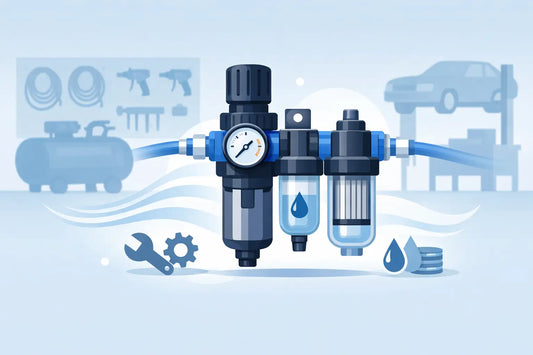
A sandblaster is basically an air system with consequences. Moisture causes clumping, clogging, and inconsistent cutting. Oil can contaminate surfaces right before coating.
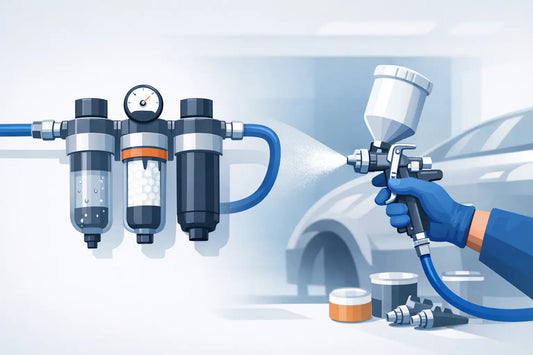
For reliable rust removal, plan on at least a regulator and moisture separation at the tool. For pressure pot and cabinet setups, adding better filtration and drying upstream pays back fast in fewer shutdowns and less media waste. If you’ve ever had a blast stream surge and sputter, you’ve already met water in the line.
This is also where small-shop buyers get tripped up: the compressor may be “big enough,” but the air delivery isn’t. Undersized fittings, long hose runs, and restrictive couplers can choke flow and make a good blaster feel weak.
If most of your rust work is small-to-medium parts and you do it often, a cabinet is hard to beat. You get media containment, better visibility, and the ability to reuse media. You also avoid blasting grit into bearings, tools, and everything else you own.
The best cabinet setup is the one with enough interior room for the parts you actually work on, a gun/nozzle combo your compressor can feed, and a dust collection approach that keeps the window clear. If you can’t see, you’ll overblast and waste time.
Frames, axles, bumpers, wheels, heavy brackets, and fabrication projects typically point to a pressure pot. It’s faster than siphon, more flexible than a cabinet, and it scales well with compressor upgrades.
For rust removal specifically, look for a pot with stable media metering and fittings that don’t feel like an afterthought. You want the ability to tune media flow - not just blast harder. Too much media can actually slow cutting and waste abrasive; too little makes you linger and heat the surface.
If you’re doing a couple of brackets, a lawn equipment deck, or touching up a rusty area before welding, siphon-feed can be the practical answer. It’s less setup, lower initial cost, and it’s easy to store.
Just be honest about your expectations. If you need production speed or you’re fighting thick scale, siphon will feel like pushing a broom through gravel.
Rust removal isn’t just “blast until it’s shiny.” Thin sheet metal, body panels, and edges can warp or erode if you hammer them with a large nozzle at high pressure and close distance.
The safest approach is to control four things: pressure, nozzle distance, nozzle angle, and dwell time. Back off the pressure for thinner material, keep the nozzle moving, and avoid sitting on edges. If you need to remove rust from something that can’t tolerate aggressive blasting, consider a less aggressive media or a different prep method for that part.
On heavy steel, you can lean in more - but even then, you’ll get better results by letting the media do the work instead of maxing everything out.
“Best” buying criteria are boring, which is why they matter.
Start with build quality where it counts: valves that don’t leak, hoses that don’t kink, and threads that don’t feel like they’ll strip the second time you change a fitting. Rust removal chews through weak components because you’re running longer cycles.
Next is adjustability. Being able to fine-tune pressure at the tool and dial media flow is what separates clean removal from wasted abrasive and rough finishes.
Finally, think about uptime. Blasting media, nozzles, gloves (for cabinets), and filters are consumables. Having spares on hand and a supplier that ships fast matters more than people admit when a job is waiting.
If you want a single place to build out a rust-removal setup - blaster, media, and the air prep accessories that keep it running - you can do that at Pro Air Tools. The practical upside is less guesswork on matching components, plus the kind of warranty and ship-speed policies that keep projects moving.
They buy a blaster based on the size of the job, not the size of the air system.
Then they fight low pressure, wet media, and slow removal and assume blasting “doesn’t work that well.” In reality, the setup is out of balance. If you match the blaster type to the job and the nozzle to your compressor, rust removal turns into a predictable process: blast, blow off, wipe down, and coat.
A helpful closing thought: if you’re on the fence between two setups, choose the one that you’ll actually use without dreading the cleanup and downtime. The best rust removal tool is the one that makes you start the job instead of putting it off another month.
Factory direct from Le Lematec — professional quality, competitive prices.


 AIR REGULATORS

 ACCESSORIES