The fastest way to crack a socket is to treat your impact wrench like it is doing the thinking for you. If you have ever rounded a lug nut, split a chrome socket, or watched a socket wobble on an adapter like a loose tooth, you already know the real problem: the socket was the weak link.
This guide to choosing air impact sockets is built for people who actually use air tools - home garages, small shops, maintenance bays, and fabrication benches. The goal is simple: get sockets that hit hard, fit right, and don’t fail when the job is already fighting you.
Start with the job, not the “big set”
A giant kit looks like value until you realize half the sizes never touch a fastener you own, and the sizes you do need are missing in deep or in impact-rated form. Before you buy, think about what you actually turn.
If you live on wheels and suspension, you are mostly in SAE or metric midrange sizes, with heavy use on 17-22 mm and 3/4 in to 1 in equivalents, plus thin-wall needs around some lug pockets. If you do engine and accessory work, you will want more smaller sizes and more deep sockets for studs. If you maintain equipment or build steel, you may need larger drive sizes and a lot more deep impact coverage.
The “right set” is the one that covers your most common fasteners in impact rating, in the depth you need, with minimal adapters.
Drive size: match the socket to the impact
Drive size is where a lot of buying goes sideways. Bigger drive is not automatically better - it is heavier, more expensive, and can be awkward in tight spaces. But undersizing a drive can twist an anvil, shear a pin, or make your impact work harder than it should.
1/4 in drive: almost never for air impact work
There are exceptions in light-duty cordless, but for pneumatic impacts, 1/4 in is not where you want to be. If you are using an
air ratchet, that is a different tool category.
3/8 in drive: for tight spaces and lighter torque
A 3/8 in impact socket set makes sense for smaller fasteners, interior work, brackets, and situations where access is limited. If your shop work involves lots of 10-15 mm or similar, this drive can save time and busted knuckles.
1/2 in drive: the daily driver
For automotive, light truck, and general maintenance, 1/2 in drive is the sweet spot. It covers lug nuts, suspension hardware, and most common shop fasteners. If you buy one impact socket set first, this is usually it.
3/4 in and 1 in drive: when torque is serious
These drives are for heavy equipment, fleet, industrial maintenance, and big structural fasteners. The sockets are larger, the wall thickness increases, and the whole system needs to be matched to higher air demand and tool weight.
A quick reality check: if you are constantly using drive adapters to step up or down, you are adding slop and stress. Adapters are fine when you have to, but they are not a plan.
Impact vs chrome: the non-negotiable difference
Chrome hand sockets are hard and brittle compared to impact sockets. An impact wrench hits in pulses, and those pulses can crack chrome sockets, especially on stubborn fasteners. Impact sockets are typically made from tougher alloy steel and are designed to flex slightly instead of shattering.
Beyond safety, there is uptime. A broken socket means a stopped job, and that is never worth the few dollars saved.
Material and finish: what actually matters
Most good impact sockets are made from alloy steel (often chrome-moly). You do not need to obsess over the exact metallurgy as much as you need to buy impact-rated sockets from a seller that stands behind them.
Finish is a practical call. Black oxide is common and grips well, but it can show rust if you leave sockets wet or salty. Phosphate finishes are also common and can handle shop abuse. Either way, wipe them down and keep them out of the puddle at the bottom of the tool cart.
Depth: shallow, deep, and the “why is this still not fitting” problem
Depth is where people lose time.
Shallow impact sockets are stronger and often give better access when you are tight to a surface and the fastener is not on a long stud. They also tend to have less wobble under load.
Deep impact sockets are the fix for studs, recessed nuts, and situations where the fastener sits down in a pocket. If you do suspension, exhaust, or a lot of engine bay work, deep sockets stop you from stacking extensions and universals just to reach.
There is also the “semi-deep” or “mid-length” style that can cover a lot of use cases without being as bulky as full deeps. If you hate swapping between shallow and deep all day, a mid-length set is worth a look.
Socket design details that affect real-world performance
Small design choices show up fast when you are hammering on stuck hardware.
6-point vs 12-point
For impacts, 6-point is the default for a reason. It grabs flats, reduces rounding, and holds up better under high torque. 12-point can be useful where you need more indexing positions, but on a high-torque impact it is easier to slip, especially on worn or rusty fasteners.
If you are buying one core set for impact work, go 6-point.
Thin-wall sockets
Modern wheels and some tight clearances demand thin-wall sockets. The trade-off is strength. A quality thin-wall impact socket can be the difference between removing wheels quickly and chewing up a finish because you had to force a too-thick socket into a tight lug pocket.
If you do wheels often, it can make sense to add a small thin-wall impact set instead of relying on standard wall thickness.
Retention style: friction ring vs pin detent
Many air impacts use a hog ring (friction ring) for retention. Some use a pin detent system. Your sockets can be compatible with both, but retention behavior changes.
A hog ring holds well and is fast for socket swaps, but it can feel tight when new. Pin detent is very secure for heavy work, but slower for changes. If you are running big torque all day, more secure retention can be worth the extra seconds.
Size system: SAE, metric, and the “just buy both” reality
If you work on mixed fleets or older equipment, you will run into both SAE and metric. If you only buy one system, you will end up forcing close sizes and that is how fasteners get rounded.
If your work is mostly late-model automotive, metric will dominate. If you touch older trucks, farm equipment, or certain industrial gear, SAE comes back into the picture.
A practical approach is to buy the system you use most in a complete range, then fill the other system in the sizes you actually encounter. That beats paying for a giant duplicate set that sits.
Sets vs singles: where money gets wasted
Sets are usually a better deal per socket, and they keep you covered when the job surprises you. Singles make sense when you are replacing the one size you always lose or you need one oddball size for a specific machine.
The biggest set trap is buying a kit with lots of tiny increments but missing the common deep sizes you actually need. Look for sets that include duplicates of the sizes you hammer on most, like common lug sizes, or at least offer easy add-on singles.
Also pay attention to storage. A solid case or rail that actually holds sockets matters in a mobile cart or service truck. Loose sockets become lost sockets.
Extensions, swivels, and adapters: use them, don’t live on them
Extensions and swivels are normal in impact work, but they add flex and absorb energy. That can mean less torque at the fastener and more hammering time. It can also mean more chance of rounding if the socket is not sitting square.
If you routinely need three extensions, a swivel, and an adapter, it is usually a sign you need the right drive size, a deeper socket, or a different tool approach for that location.
When you should step up to impact-rated accessories
Impact-rated extensions, universal joints, and reducers are not the same as hand-tool accessories. They are built to take shock. If your impact is doing real work and you routinely use accessories, buy impact-rated versions. That is not upselling - it is preventing downtime.
Choosing for air tools specifically: torque delivery and air supply
Pneumatic impacts hit differently than many cordless tools, especially when air supply is dialed in. A strong air system can make even a mid-size
impact wrench deliver consistent blows, which means your sockets see repeated shock loads.
That is why “good enough” sockets fail in air setups: they might survive occasional use, but repeated hammering finds weak heat treat, sloppy fit, or thin walls fast. If you are running a shop compressor and using an impact daily, treat sockets like consumables you refuse to consume.
If you are shopping for impact sockets alongside other shop essentials, Pro Air Tools focuses on job-ready pneumatic gear with factory-direct deals, fast 1-day shipping, and a 36-month warranty, which is the kind of support that keeps a tool wall from turning into a problem pile.
A quick fit check that prevents rounded fasteners
Even the best socket will fail if the fit is sloppy. Before you lean on the trigger, push the socket fully onto the fastener and make sure it bottoms out and sits square. If it rocks, stop and choose a better size or a different depth. If the fastener is already rounded, stepping down “almost the same size” is usually a mistake - you are better off using an extractor-style solution.
The same goes for the anvil. If the socket feels loose on the drive, check wear, confirm you are not mixing worn adapters, and verify the retention ring or pin is doing its job.
Closing thought
When an impact setup feels unstoppable, it is rarely because the wrench is exotic - it is because the sockets fit clean, the drive size matches the torque, and nothing in the stack-up is flexing or slipping. Buy sockets like you buy downtime insurance, and your air tools will make the hard jobs feel routine.
Shop Impact Tools
Factory direct from Le Lematec — professional quality, competitive prices.

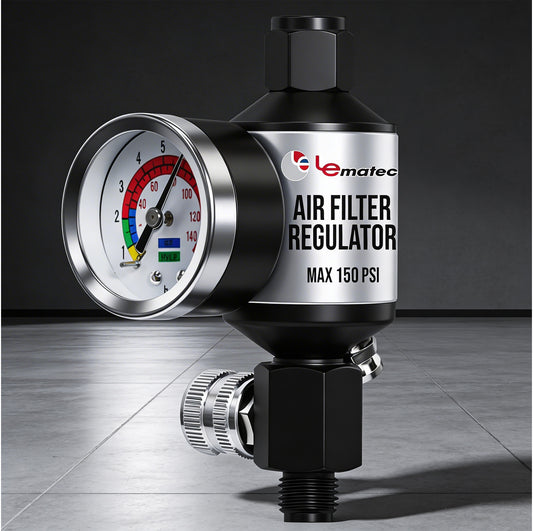
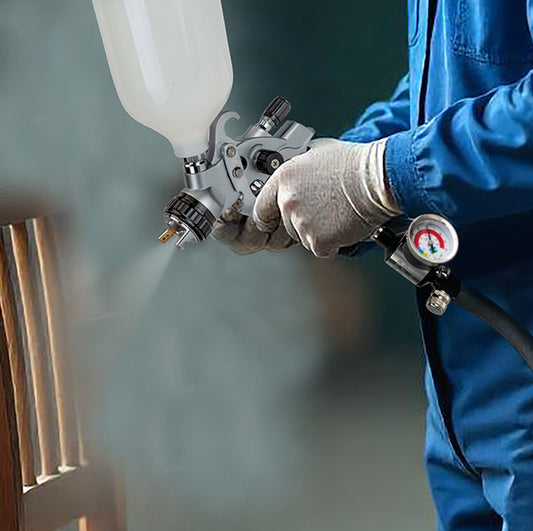
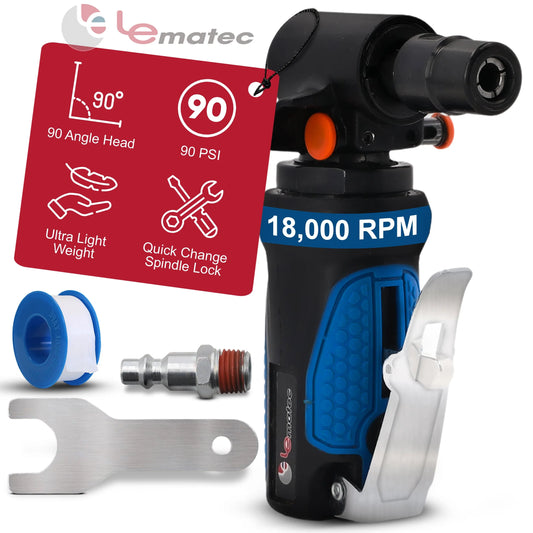




 AIR REGULATORS

 ACCESSORIES