Shopping Cart
(0)
Free shipping included — no minimum on any US order

Quick Search:




If you run a compressor every day, the pneumatic angle grinder vs electric question usually comes down to one thing fast - what keeps you working with fewer slowdowns. On paper, both tools spin a disc and get the job done. In the shop, they behave very differently once heat, duty cycle, hose management, startup torque, and daily use start to matter.
For automotive work, fabrication, maintenance, and serious DIY jobs, the better choice depends less on brand loyalty and more on how you actually work. A grinder that feels great for quick garage repairs can become a bottleneck during long prep sessions. The opposite is true too - a high-speed air grinder can be the right production tool and still be the wrong fit for a buyer without enough compressor capacity.
The biggest difference is the power source. A pneumatic angle grinder runs on compressed air, so its performance depends on your air system, hose size, fittings, regulator setup, and compressor output. An electric angle grinder runs from a corded outlet or a battery, so it is more self-contained and easier to grab when you need it.
That sounds simple, but the practical difference is in how each tool handles long jobs. Air grinders tend to run cooler, stay lighter for their power level, and tolerate repeated use well in shop environments. Electric grinders are easier to deploy, especially for mobile work or occasional use, but they usually carry more weight in the tool body and can heat up faster under continuous load.
If your workbench already has a properly sized compressor, filtered air, and room to move with a hose, pneumatic starts to make a lot more sense. If you need portability or you only grind now and then, electric often wins on convenience.
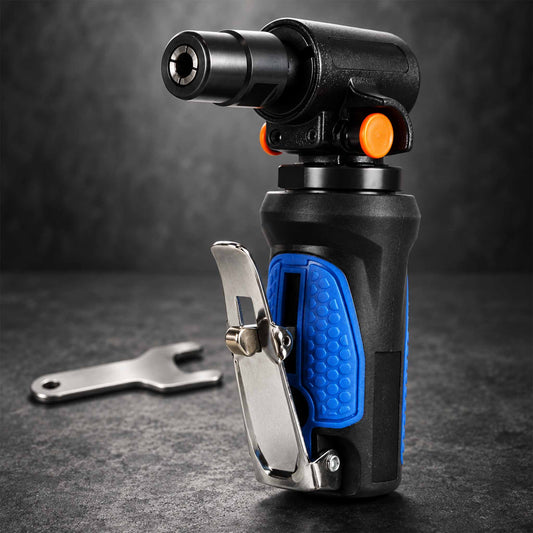
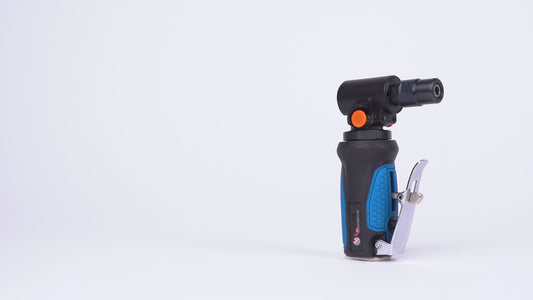
Air grinders earn their place in shops that value uptime. They are especially strong for metal prep, deburring, weld cleanup, surface conditioning, and repeat-use grinding where the tool may run for long stretches. Because the motor is simpler and air-powered, the tool body is often compact and easier to control in tight positions.
That lower tool weight matters more than many buyers expect. Over the course of a long day, a lighter grinder can reduce fatigue in your wrist and forearm, especially when you are working on vertical panels, awkward brackets, or overhead angles. In body and fabrication work, control often beats raw spec-sheet power.
Pneumatic grinders also handle heat differently. Instead of building as much heat in the motor housing, they generally stay cooler in use. For shops doing repeated passes or extended surface prep, that can mean more consistent operation and less waiting around.
There is also durability. In a shop set up for air tools, pneumatic grinders are hard to beat for day-in, day-out service. Fewer electrical components means fewer things exposed to dust, sparks, and jobsite abuse. That does not make every air grinder automatically better, but it explains why many mechanics and fabrication shops stay with pneumatic once the air system is already in place.
Electric grinders win on simplicity. Plug one in, or grab a charged battery, and you are working. There is no compressor recovery time, no concern about CFM matching, and no need to think about whether a long hose run is choking performance.
That matters for homeowners, mobile repair, and mixed jobsite use. If you move around a lot, work away from your main shop, or only need a grinder for short bursts, electric is the straightforward choice. You also avoid the upfront cost of building out an air system if you do not already own one.
Battery grinders in particular have improved a lot. For quick cut-and-grind tasks, they are practical and fast to deploy. The trade-off is runtime, added tool weight, and reduced appeal for nonstop use. Corded grinders avoid battery limits but still put you on a leash, just with a cord instead of a hose.
This is where buyers often expect a simple winner, but it depends on the task. Electric grinders usually feel strong and immediate, especially at startup. Many deliver solid torque and are easy to use for cutting, heavier grinding, and general-purpose work.
Pneumatic grinders feel different. They can be very fast and smooth, with excellent throttle control, but only if the air supply is right. Starve them with undersized hose, weak fittings, or a compressor that cannot keep up, and they will underperform no matter how good the tool is.
In a properly set up shop, air grinders are extremely capable and responsive. In a weak air system, electric will seem more powerful simply because it is getting what it needs. That is why comparing the tools without comparing the setup can lead to the wrong decision.
An electric grinder usually has the lower barrier to entry. Buy the tool, add a wheel, and go to work. If you do not already own a compressor, pneumatic looks more expensive because the tool is only one part of the system.
But long-term cost can flip in a working shop. If you already use compressed air for impact wrenches, ratchets, tire inflators, sanders, or blasting equipment, adding a pneumatic grinder may be the more efficient move. You are using infrastructure you already paid for, and the tool itself can offer strong service life for the money.
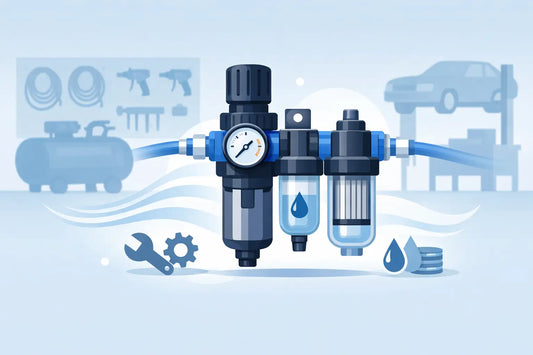
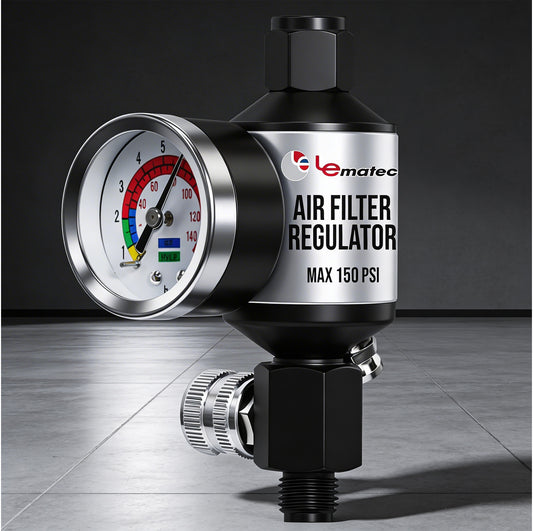
Consumables also matter. Poor air quality shortens the life of pneumatic tools, so filtration and regulation are not optional if you care about performance. On the electric side, battery replacement cost can add up over time if you are buying into cordless platforms and using them hard.
For detailed work, many users prefer the feel of pneumatic grinders. They are often easier to feather with the trigger, easier to maneuver in tight areas, and less tiring over a long session. That makes them popular in auto body prep, weld dressing, and general fabrication cleanup.
Electric grinders can feel bulkier, but they may offer a more familiar all-in-one setup for users who do not want hoses across the floor. For some shops, that alone is enough to justify electric, especially where the compressor is far from the work area or already committed to other equipment.
Noise is worth mentioning too. Pneumatic tools are often louder at the point of use, and the compressor adds another layer of noise in the background. Electric grinders are not quiet, but the noise profile is different and may be easier to manage in smaller spaces.
From a safety standpoint, both demand the same basic respect - correct wheel selection, guards in place, PPE, and secure workholding. The bigger risk is usually misuse, not whether the grinder is air or electric.
If you are a small-shop mechanic, fabricator, or maintenance buyer already running air lines, pneumatic is often the better production choice. It is lighter in hand, well suited for repeat use, and a natural fit in shops where compressed air already supports multiple tools.
If you are a weekend DIYer doing occasional metal work, electric is usually the easier buy. You get fast setup, less equipment to manage, and enough performance for repair and project work without building an entire air system around one tool.
If you split time between a fixed shop and off-site jobs, the answer may not be either-or. A lot of experienced buyers keep both. They use pneumatic in the shop where the compressor is ready, and electric for mobile work where portability matters more than all-day runtime.
The wrong grinder is often the result of the wrong system. Buyers choose pneumatic without checking compressor output, then blame the tool. Or they choose electric for long, repetitive shop work and end up fighting weight, heat, or battery downtime.
Before you decide, look at your real workflow. How long do you grind at one time? Are you cutting heavy material or doing controlled surface prep? Do you already have clean, regulated air available at the bench? Are you buying for occasional use or every-day production?
That is the practical way to answer the pneumatic angle grinder vs electric question. Buy for the work, not the label.
If your shop is already built around compressed air, a good pneumatic grinder is usually the smarter long-term tool. If convenience and mobility drive the job, electric is hard to argue against. The best choice is the one that keeps your work moving without adding friction every time you pick it up.


 AIR REGULATORS

 ACCESSORIES