
Shopping Cart
(0)


 AIR REGULATORS

 ACCESSORIES

How to Set Air Regulator Pressure Right
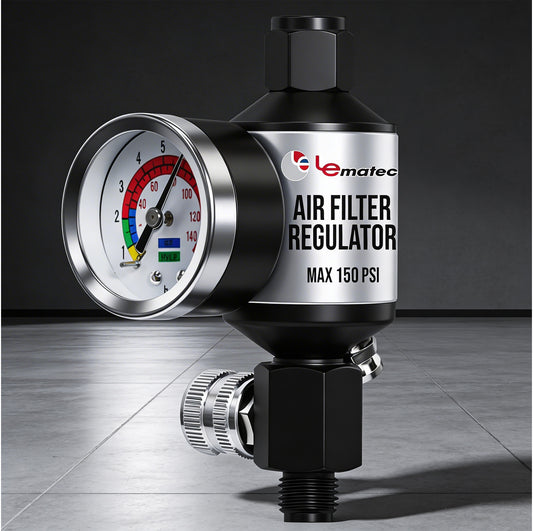
A tool that hits weak, sprays rough, or burns through air too fast usually has the same problem - the regulator is not set where it should be. If you're wondering how to set air regulator pressure, the goal is simple: give the tool the pressure it needs at the point of use, not just whatever the compressor tank happens to hold.
That distinction matters more than a lot of people realize. Tank pressure and working pressure are not the same thing, and guessing between them is how you end up with lazy impact wrenches, inconsistent blast patterns, and air tools that wear out sooner than they should. A regulator is there to control delivery pressure so the tool sees a steady, usable PSI.
What the regulator is actually doing
An air regulator reduces the higher, fluctuating pressure coming from the compressor or tank and holds the outlet side near a set level. In a typical shop setup, the compressor may cycle between two pressures while the regulator feeds a lower, more controlled pressure downstream to the tool, hose, or blast cabinet.
This is why setting pressure by reading the tank gauge alone does not work. The tank gauge tells you what the compressor stored. The regulator gauge tells you what you're delivering. For actual tool performance, the outlet side is the number that counts.
Most problems start when users set pressure with no air flowing. The gauge may look right at rest, then drop hard once the trigger is pulled. That pressure drop under load is what the tool actually experiences.
How to set air regulator pressure the right way
The fastest way to do it is also the correct way. Start with the tool manufacturer's recommended operating pressure. For many air tools, that will be around 90 PSI, but sanders, spray guns, inflators, and sandblasting setups can differ quite a bit.
Start at the tool requirement, not the compressor max
Set your compressor high enough to supply the system, then use the regulator to dial down to the tool's working pressure. If a tool calls for 90 PSI, you do not set the tank to exactly 90 and call it done. You need enough upstream pressure for the regulator to maintain 90 PSI while air is moving through the hose and fittings.
In practical terms, that usually means the compressor cut-in and cut-out pressures need to stay comfortably above the regulator setting. If the compressor cannot keep up, the regulator cannot fix a supply problem.
Pull the trigger while adjusting
This is the part people skip. Connect the tool, turn the regulator knob to lower pressure first, then run the tool and adjust upward while air is flowing. On a blasting setup or spray system, open the flow the way you would during real use. On an impact wrench or die grinder, hold the trigger and watch the regulator gauge.
Set the pressure under load, not at idle. That gives you a true working pressure instead of a misleading no-flow reading.
Lock the setting if your regulator allows it
Many regulators have a push-pull or twist-lock knob. Once the pressure is where it belongs, lock it so vibration or accidental contact does not move the setting. In a busy garage or fabrication shop, that small step saves a lot of troubleshooting later.
Common PSI ranges by tool type
A lot of air tools are designed around 90 PSI at the inlet, but that is not universal. Always check the tool specs first.
Impact wrenches, ratchets, air hammers, and many drills often run at 90 PSI. Die grinders and cutoff tools may also call for around 90 PSI, but they are more sensitive to flow restrictions than some users expect. A tool can show the right PSI and still feel weak if the hose is too small or the couplers are choking volume.
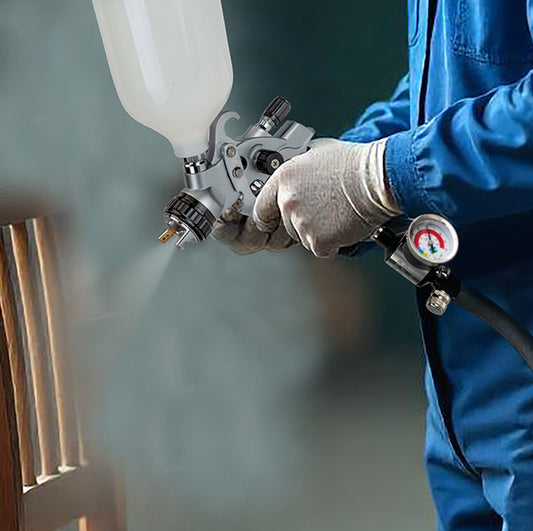
Spray guns are a different story. Some HVLP setups want much lower pressure at the gun cap than what you set at the regulator. Sandblasting can vary based on nozzle size, media, hose length, and whether you're using a cabinet or a pressure pot. Higher pressure can increase cutting speed, but it also increases media consumption, wear, and air demand.
So yes, more PSI can make a tool hit harder or blast faster. It can also shorten runtime, reduce control, and push equipment beyond what it was meant to handle. The best setting is the one that matches the job and the tool, not the biggest number on the gauge.
Why the pressure changes when the tool runs
If you set the regulator to 90 PSI and it falls to 70 when you pull the trigger, the regulator may not be the only issue. Pressure loss across the system is common, especially in longer or undersized air lines.
Hose size and length matter
A long 1/4-inch hose can starve a high-demand tool even if the regulator is set correctly. Impact tools, grinders, and blasting equipment often perform better with a shorter run or a larger inside diameter hose. If the regulator is doing its job but the hose cannot move enough air, the tool still loses performance.
Fittings and quick couplers can restrict flow
A cheap or narrow coupler can become a bottleneck. This shows up most on tools with continuous demand, like grinders, sanders, and blasters. If your pressure looks acceptable but the tool still feels flat, check the whole path from compressor to tool.
Moisture and dirty filters affect consistency
Water in the line, a clogged filter, or debris inside the regulator can cause unstable readings and inconsistent output. If the pressure wanders or reacts slowly to adjustment, maintenance may be overdue.
How to know your setting is wrong
The symptoms are usually obvious once you know what to watch for. Low pressure can make an impact wrench feel weak, a sander bog down, or a blast pattern look uneven. High pressure can make tools harsher to control, increase wear, and waste air.
With painting, the wrong setting often shows up in finish quality. With blasting, it shows up in media use, speed, and consistency. With general air tools, it usually shows up as poor performance or unnecessary strain.
If a tool suddenly changes behavior, don't assume it's failing. Check the regulator setting under load first. It is one of the quickest fixes in the shop.
A better process for repeating the same setup
If you run the same tool often, stop resetting by guesswork. Once you find the correct pressure under working conditions, make note of it for that exact setup - same hose length, same fittings, same attachment, same material if you're blasting or spraying.
That matters because real-world pressure is system-specific. A 90 PSI setting with a short 3/8-inch hose may not behave the same as 90 PSI through a longer 1/4-inch line with multiple couplers. Repeatable results come from repeatable setups.
For shops running several pneumatic tools, dedicated regulators near the point of use can save time and keep settings more stable. It also reduces the chance that one adjustment throws off everything else on the line.
When the regulator is the problem
Sometimes the pressure will not hold no matter how carefully you adjust it. If the gauge creeps, the outlet pressure drifts, or the knob feels inconsistent, the regulator may be worn, dirty, or undersized for the application.
That last point gets missed a lot. A small regulator on a high-demand blasting or grinding setup can become the restriction. Even if it technically adjusts pressure, it may not flow enough air to maintain it. Matching regulator capacity to the tool is just as important as choosing the right PSI.
If your setup needs dependable air for daily work, this is not the place to cut corners. Good regulation keeps tools performing the way they were built to perform and helps avoid wasted time chasing problems that start with the air supply, not the tool itself.
One setting does not fit every job
The right answer to how to set air regulator pressure is not a single number. It depends on the tool, the hose, the fittings, the duty cycle, and whether you are cutting, sanding, painting, blasting, or fastening. The best approach is straightforward: check the tool spec, adjust while air is flowing, and pay attention to what happens under real load.
Get that part right and the rest of the setup gets easier. Your tools run closer to their rated performance, your air system behaves more predictably, and the job stops fighting you every step of the way.
Tags:
Related articles
Ceramic vs Tungsten Blast Nozzle - Which Lasts?
Jul 29 2026
Best Air Blow Gun for Shop Work: How to Choose
Jul 27 2026
How to Set Air Tool PSI for Reliable Performance
Jul 25 2026
A Guide to Air Tool Maintenance Schedules
Jul 23 2026
How to Reduce Moisture in Blast Air Line
Jul 21 2026
How to Use a Pneumatic Angle Grinder Safely
Jul 19 2026
Best Air Blow Gun Attachments for Shop Work
Jul 18 2026