Shopping Cart
(0)
Free shipping included — no minimum on any US order

Quick Search:

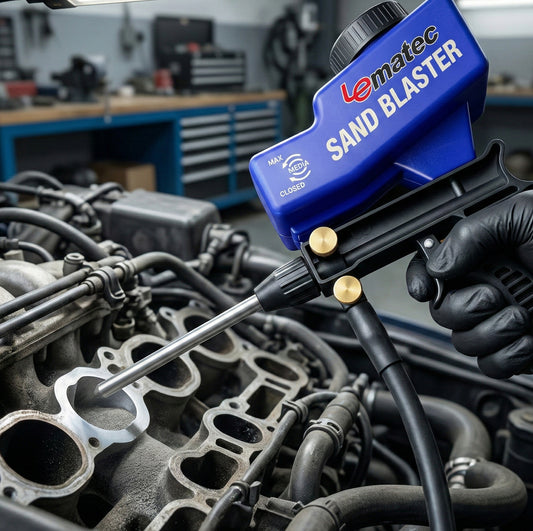
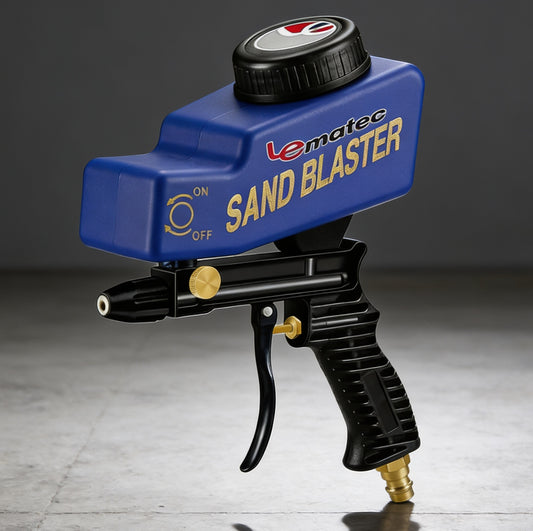
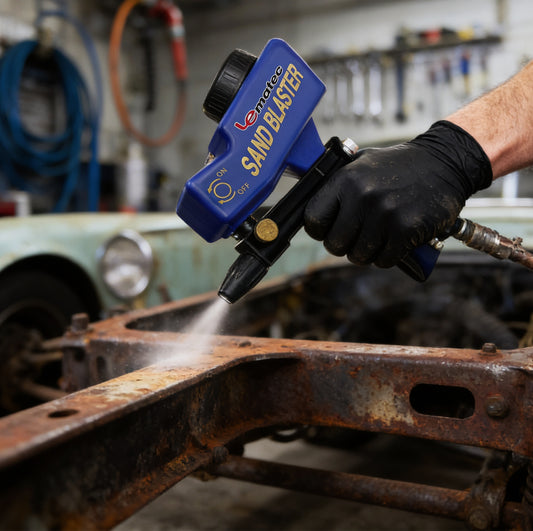
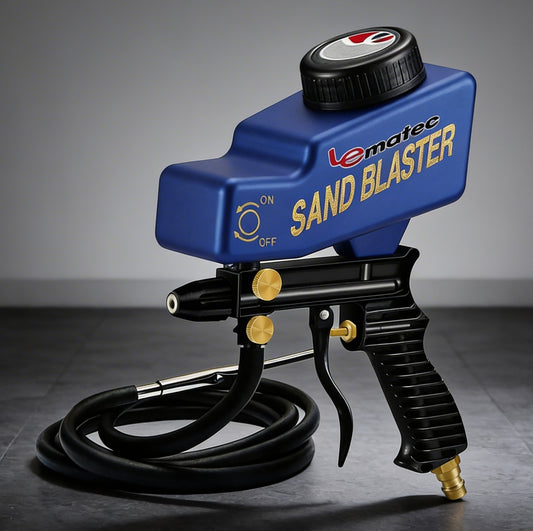
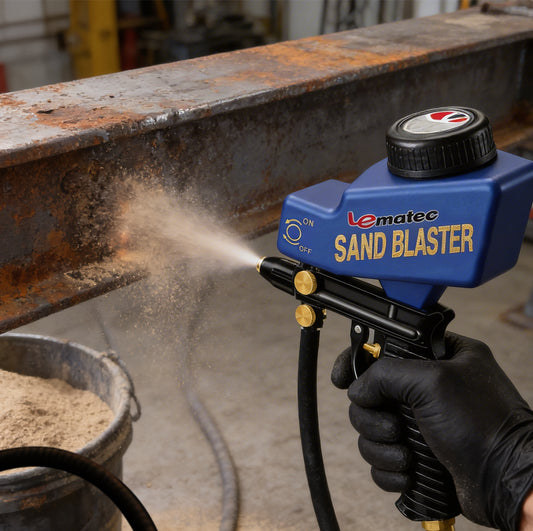
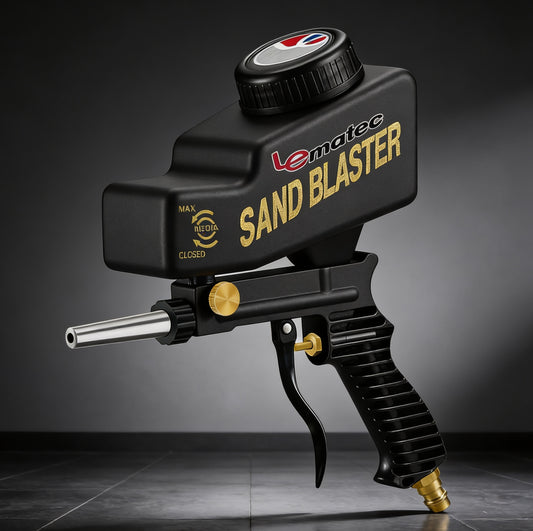

If you're new to sandblasting, the short answer is: you need five things — a sandblasting gun, an air compressor capable of sustaining the gun's required pressure, a silica-free abrasive media, a pressure regulator with a water-separating filter, and personal protective equipment. Everything else is optional or task-specific.
That's the answer. The rest of this article explains why each piece matters, how to choose between options, and the setup mistakes that send beginners back to YouTube looking for help.
Looking for a complete kit? Browse all Pro Air Tools bundles — save 8% on curated sandblasting, hookup, and detailing kits.
The gun is the tool that combines compressed air with abrasive media and shoots it at the surface you're cleaning or shaping. There are three main styles, and the right one depends on what you're trying to do.
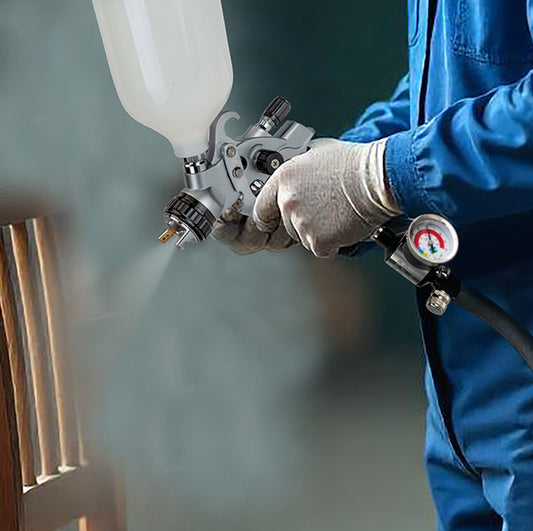
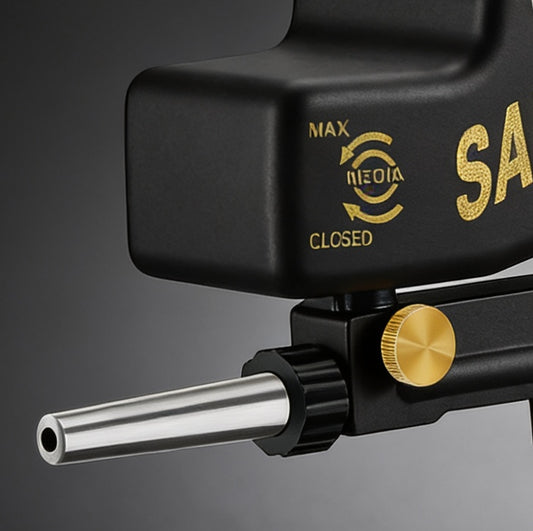
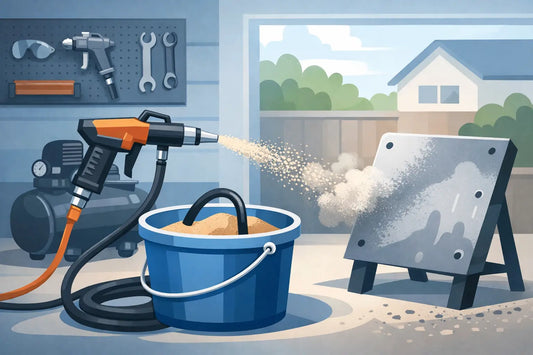
Gravity-feed guns have a hopper on top that drops media into the air stream by gravity. They're the most common DIY style — compact, affordable, easy to refill, and good for small to medium projects like rust removal on tools, paint stripping on motorcycle parts, and glass etching. The Pro Air Tools Professional Sandblaster Kit is a gravity-feed gun with a control valve that lets you dial in the media flow rate.
Siphon-feed guns draw media up from a separate container via vacuum, like a paint sprayer. They handle larger media reservoirs and are better for longer continuous work, but the trade-off is they need higher air volume to maintain suction.
Pressure-feed (blast pot) systems pressurize the entire media container. They cut faster and use less air per unit of work, but they're heavier, more expensive, and overkill for most DIY use cases.
For most homeowners, hobbyists, and small shops, a gravity-feed gun is the right starting point.
This is where most beginners get stuck. Sandblasting guns advertise an operating pressure (commonly 60 to 120 PSI), but the number that actually matters is CFM at 90 PSI — how much air the gun consumes per minute. Most DIY sandblasting guns need 4 to 8 CFM at 90 PSI.
A small 6-gallon pancake compressor delivers maybe 2 to 3 CFM at 90 PSI. It will keep up with a sandblaster for about 20 seconds before the gun starts losing pressure and the media flow stutters. For continuous work, you want a 20-gallon or larger compressor rated for at least 5-6 CFM at 90 PSI.
If you're not sure about your compressor, check the data plate on the side. It will list the CFM rating at 90 PSI. If it's under 4 CFM, you can still sandblast — but in bursts, with rest breaks while the tank refills.
Do not use regular sand. Sandblasting with traditional silica sand releases respirable crystalline silica dust, which causes silicosis — a serious, progressive, and incurable lung disease. OSHA, NIOSH, and the CDC all warn against it, and most countries have effectively banned silica blasting in commercial settings.
The good news: there are excellent silica-free abrasives, and the right one depends on your job.
Silicon carbide is a hard, fast-cutting abrasive that works well on steel, cast iron, aluminum, and other hard surfaces. Best for paint stripping, rust removal, and preparing metal for powder coating. Pro Air Tools' 60-grit silicon carbide media is the workhorse choice for most general-purpose work.
Soda (sodium bicarbonate) is much softer and water-soluble. Designed for delicate surfaces — wood furniture, brick masonry, glass etching, engine block cleaning, motorcycle frames with intricate machined parts — where you want to remove a coating without altering the underlying material. Rinses away with water, leaving no residue. Pro Air Tools' soda blasting media is food-grade sodium bicarbonate.
Other silica-free options you'll encounter: aluminum oxide (similar profile to silicon carbide, slightly different cutting behavior), garnet (medium-aggressive, common in commercial blasting), walnut shells (very soft, used for engine cleaning and antique restoration), and glass beads (peening / polishing surfaces).
Browse the full silica-free lineup in our sandblasting media collection.
Your air compressor probably has a built-in regulator that sets a single pressure, often 90 to 120 PSI. Sandblasting wants you to dial pressure in for the specific media + substrate combination — too high and you destroy the surface or stress the gun; too low and the media barely cuts.
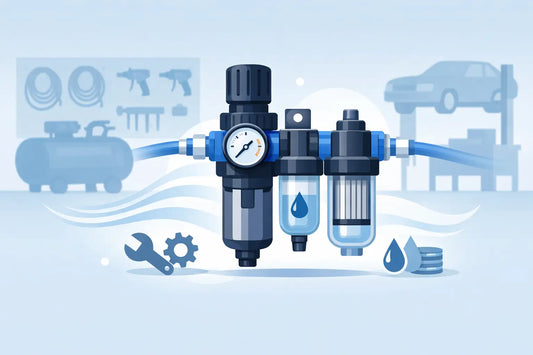
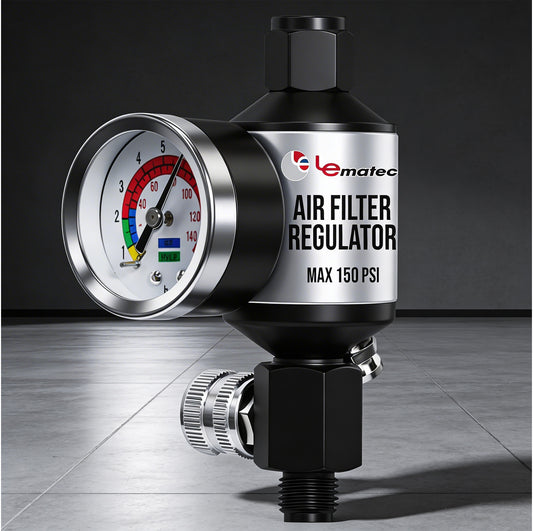
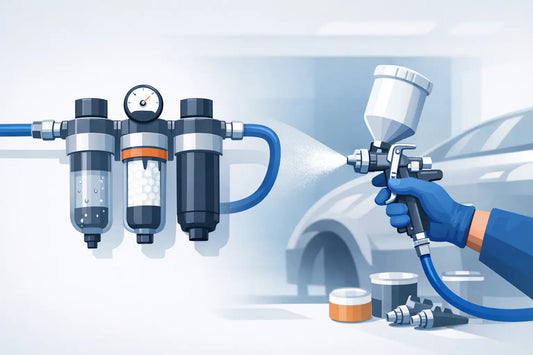
A secondary regulator installed inline between the compressor and the gun gives you that control. The DAR01B Digital Air Pressure Regulator displays current PSI on an LCD and supports up to 160 PSI, so you can fine-tune pressure mid-job.
The water separator part matters because compressors generate moisture as a side effect of compressing air. Moisture in the air line clumps the abrasive media, slows cutting, and rusts internal gun components. An inline water separator — installed between the compressor and the regulator — traps and drains that moisture before it reaches the gun.
Sandblasting kicks up high-velocity abrasive particles. You need:
You can sandblast outside or in a ventilated workspace, but in either case PPE is required, not optional.
If you'd rather not piece this together one item at a time, Pro Air Tools sells everything you need (except the compressor and PPE) as a single bundle: the Sandblasting Starter Kit. The kit includes:
You save 8% versus buying the components individually, and the bundle ships to your door from Amazon's network. Items ship in separate packages from different warehouses, typically arriving within 1 to 2 days of each other — every component is fully inventoried and trackable.
Once you have the equipment, here's the order to set it up:
Expect the first 30 minutes to be experimentation. You'll learn how your specific gun, media, and compressor combination feels — what pressure cuts cleanly versus what stalls.
Underpowered compressor. The number one beginner mistake. If your gun stutters or starves for air after 10-15 seconds of continuous work, your compressor can't keep up. Either upgrade the compressor or work in shorter bursts with rest periods.
Too much pressure. New users often crank pressure to the maximum thinking it'll cut faster. It doesn't — it just wastes media, damages the surface, and shortens gun life. Start at 60 PSI and only increase if cutting is too slow at the lower setting.
Holding the nozzle too close. 12 to 18 inches is the sweet spot. Closer than 8 inches and you concentrate the abrasive into a damaging point; farther than 24 inches and the media loses energy and bounces off without cutting.
Skipping the water separator. Moisture in the line is invisible until your media clumps and stops flowing. Always run the separator, especially in humid environments.
Using silica sand. Re-emphasizing this because it matters: silica sand causes silicosis. Use a silica-free abrasive. Period.
No respirator or an inadequate one. A standard N95 dust mask does not protect against high-concentration blasting dust. Use a NIOSH-certified blasting respirator with a positive-pressure helmet.
Most DIY sandblasting guns require 4 to 8 CFM at 90 PSI. A 20-gallon or larger compressor rated for at least 5-6 CFM at 90 PSI will support continuous work. Smaller portable compressors (under 4 CFM) can still sandblast in short bursts with rest periods.
Yes, but with ventilation and PPE. Sandblasting kicks up significant airborne particles. Either work near an open garage door with airflow, or use a dedicated blast cabinet to contain the dust. Always wear a NIOSH-certified blasting respirator.
For most general-purpose DIY work the two are interchangeable — both are hard, silica-free, and fast-cutting. Silicon carbide is slightly sharper-edged and cuts marginally faster on hard materials; aluminum oxide lasts slightly longer per pass. Use what's available and cost-effective.
A standard 3/8-inch or 1/2-inch ID rubber air hose works fine for most DIY sandblasting. For continuous heavy-duty pressure-pot blasting, dedicated heavy-wall blast hose is recommended, but it's overkill for gravity-feed gun work.
Silicon carbide can be recycled 2-3 times if you collect it cleanly (using a media reclaim funnel or working over a tarp). Each pass slightly fractures the grains, so cutting speed gradually drops. Most users blend fresh media into recycled media to maintain performance.
No. Keep children, pets, and bystanders out of the work area entirely. Even at distance, fine abrasive dust can reach the eyes and lungs, and ricocheting particles can travel surprisingly far.
Ready to start sandblasting? The Pro Air Tools Sandblasting Starter Kit includes everything in the checklist above except the compressor and PPE — save 8% versus buying the components individually.


 AIR REGULATORS

 ACCESSORIES