Shopping Cart
(0)
Free shipping included — no minimum on any US order

Quick Search:
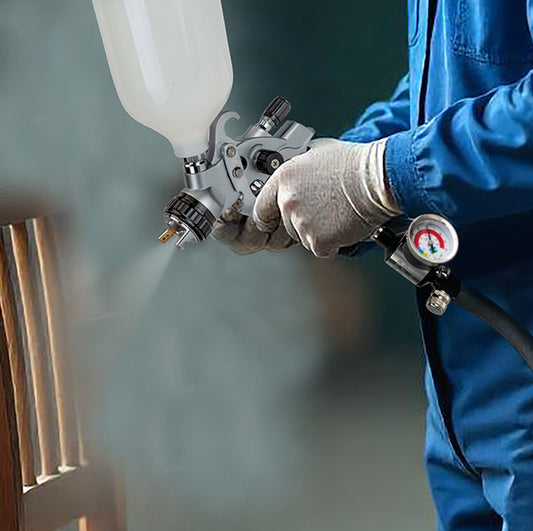
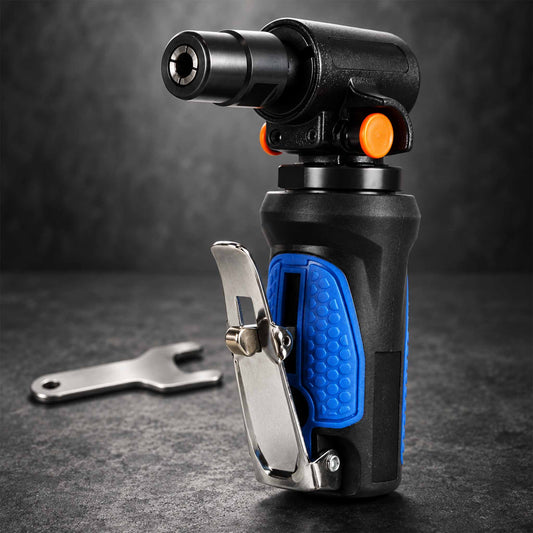

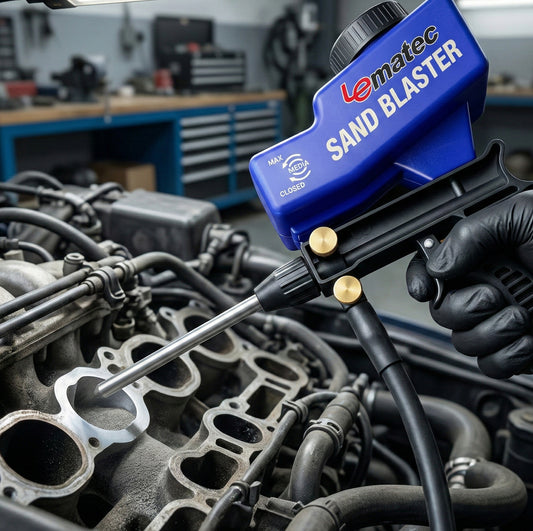



A weak impact wrench usually tells on itself fast. Lug nuts that should break loose in seconds suddenly fight back, grinders slow under load, and sanders stop feeling smooth. If you're wondering why air tools lose power, the answer is usually not the tool alone. Most of the time, the real problem is somewhere between the compressor tank and the air inlet.
That matters because pneumatic tools are only as strong as the air system feeding them. You can buy a solid impact, ratchet, grinder, or sandblaster, but if the setup is choking airflow, performance drops immediately. The good news is that power loss is usually fixable without much guesswork if you know where to look.
Air tools need two things at the tool: correct pressure and enough volume. A lot of users focus on PSI because that is what shows on the regulator gauge, but CFM is what keeps the tool working under load. You can have a tank showing decent pressure and still have a tool fall flat because the system cannot deliver enough air volume when the trigger is pulled.
This is where a lot of problems start. A compressor may be rated high enough on paper, but once you add a long hose, quick-connect fittings, a regulator, a water separator, and maybe a swivel, every restriction starts taking a bite out of flow. The tool feels weak, and it is easy to blame the motor when the air supply is really the bottleneck.
Heat and duty cycle also play a role. In a home garage, an impact wrench used for a few bolts may seem fine. In a working shop or during a longer fabrication job, the compressor has to keep up continuously. Once it starts chasing demand, pressure sag shows up at the tool.
In most setups, the biggest cause of power loss is undersized air delivery. That usually means one or more of these problems: the hose inner diameter is too small, the hose is too long, the fittings are restrictive, or the compressor does not produce enough CFM for the tool.
An impact wrench is a good example. Many users run it through a 1/4-inch hose with standard couplers because that is what came in a starter kit. The tool may still run, but it will not hit as hard as it should. Move the same tool to a shorter 3/8-inch hose with high-flow fittings, and the difference is obvious. The same goes for grinders and sanders, which can be even more sensitive because they need steady airflow over longer periods.
Pressure drop adds up faster than people expect. Every extra connection, bend, reducer, and accessory creates resistance. None of those restrictions looks dramatic by itself, but together they can turn a capable setup into a frustrating one.
If your tool feels lazy, check the hose before anything else. A long, narrow hose acts like a restriction no matter what the gauge says near the compressor. For many common shop tools, a 3/8-inch hose is the better starting point, especially for impacts, grinders, and sanders. Heavier-demand tools may need even more flow depending on run length.
Length matters too. A 25-foot hose and a 100-foot hose do not deliver air the same way. If the tool only performs poorly at the far end of the shop, the distance is part of the problem.
Cheap or undersized couplers are small parts that cause big headaches. Standard quick-connects can limit flow enough to weaken tool performance, especially on high-demand tools. If everything else checks out and the tool still feels soft, restrictive fittings are worth replacing.
Sometimes the compressor is simply outmatched. If the tool's air consumption is close to or above the compressor's delivered CFM, the system may work for a few seconds and then fade. That is a classic sign that the compressor cannot sustain demand.
Tank size can hide this for a short burst, but it does not solve it. A bigger tank gives you a little more reserve air. It does not increase the compressor's actual output. For intermittent use, that may be enough. For grinding, sanding, cutting, or blasting, sustained CFM is what matters.
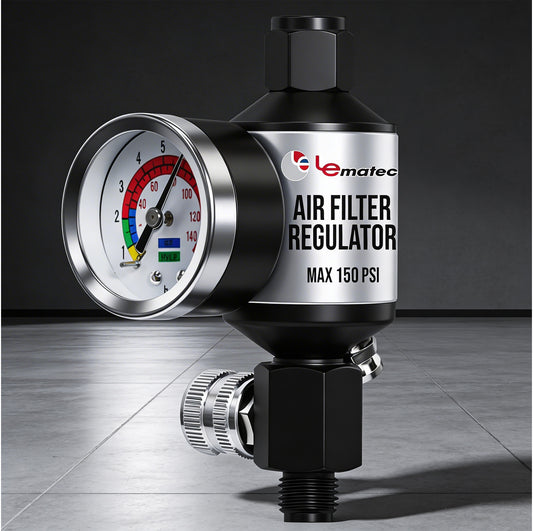
Regulator settings are another common issue. If the regulator is set too low, or if it is failing internally, the tool never sees the pressure it needs. Gauges can also be misleading if you only read them at rest. The real test is pressure at the tool while air is flowing.
A worn compressor pump can also show up as weak tool performance. If recovery time is getting longer, pressure falls off faster than it used to, or the unit runs hot and struggles to keep up, the supply side needs attention.
Air quality affects power more than many buyers realize. Moisture in the line can interfere with tool operation, especially in humid conditions or during long runs when the compressor builds heat. Water can cause internal drag, corrosion, and inconsistent valve action.
Dirt and rust scale inside older hoses or hard lines can restrict passages and contaminate the tool. If a tool has ever been run without proper filtration, that contamination may already be inside the motor.
Lubrication is another factor. Some pneumatic tools need regular air-tool oil to keep internal vanes moving freely. Too little lubrication creates friction and wear. Too much, or the wrong type of oil, can attract debris and create its own problems. Oil-free claims do not apply to every air tool, so it pays to check the tool's requirements instead of assuming.
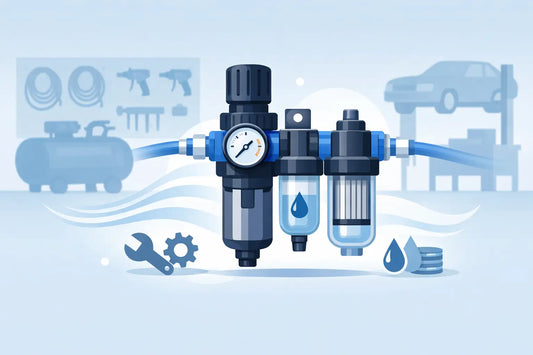
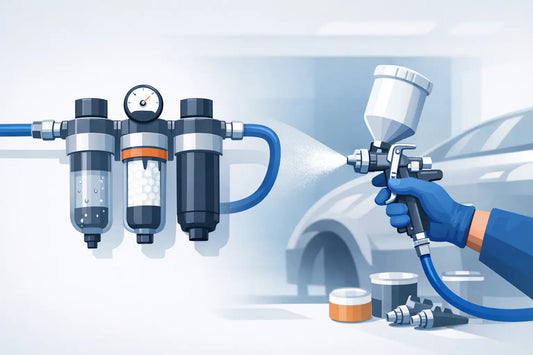
A proper filter and regulator help protect performance, but only if they are sized correctly and maintained. A clogged filter bowl or a cheap regulator can become a restriction point. If your setup includes a filter-regulator-lubricator unit, check whether it is clean, adjusted correctly, and large enough for the tool demand.
Sometimes the supply is fine and the tool is worn out. Internal vanes, seals, bearings, and hammers wear over time. As clearances open up and moving parts lose efficiency, power drops off. This is especially common with older impacts, grinders, and ratchets that have seen heavy use with inconsistent lubrication.
A sticking throttle valve can also reduce airflow into the tool. On an impact wrench, worn hammer components may let the tool spin without delivering full torque. On a grinder, internal wear can make the motor bog sooner under pressure.
The practical way to diagnose this is to compare the suspect tool against another known-good tool on the same hose and fittings. If one performs normally and the other does not, the issue is likely inside the tool.
Start at the tool and work backward. Check the inlet screen if there is one, verify lubrication requirements, and make sure the coupler is not damaged or undersized. Then look at the hose diameter and length. If the hose is too small for the tool, that alone may be the fix.
Next, confirm regulator setting and test pressure while the tool is running, not just sitting idle. If pressure drops hard under use, you are dealing with a flow problem, compressor limitation, or a serious restriction in the line.
Then look at the compressor's delivered CFM against the tool's actual demand. Not the marketing number on the tank, but the real output at working pressure. If the numbers are too close, the setup may be fine for occasional use and wrong for continuous work.
Finally, pay attention to air treatment. Drain the tank, empty moisture traps, replace dirty filter elements, and use the right air-tool oil when required. Small maintenance steps often bring noticeable power back.
A lot of air tool frustration starts with mixed parts that were never selected as a system. A strong tool connected to a weak hose and bargain fittings will still act weak. Matching compressor output, regulator capacity, hose size, and coupler flow to the actual application is what keeps performance consistent.
That is especially true if you run sanders, grinders, cutters, or blasting equipment where airflow demand stays high. In those cases, buying for price alone often costs more in lost time and poor results. Reliable air delivery is part of tool performance, not an accessory.
If you are replacing worn hoses, regulators, filters, or adding higher-demand pneumatic tools, it helps to build the setup around how you actually work. Pro Air Tools carries the core air tools, regulators, filters, and accessories that make that easier without forcing you to piece together guesswork from random sellers.
A strong air tool setup should feel predictable. When power drops, do not just look at the tool in your hand. Look at the whole path the air takes to get there, and the real fix usually shows up fast.


 AIR REGULATORS

 ACCESSORIES