Shopping Cart
(0)
Free shipping included — no minimum on any US order

Quick Search:
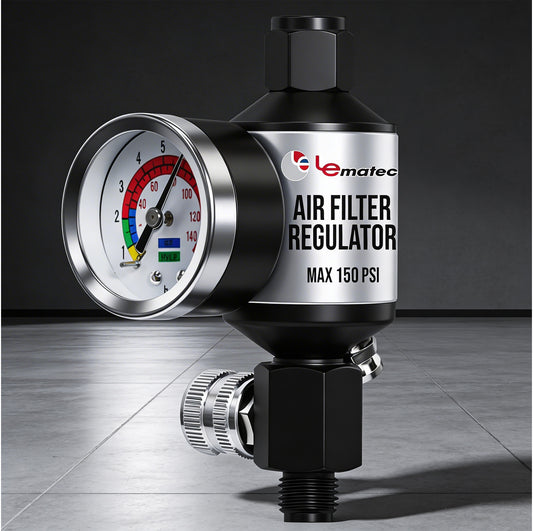
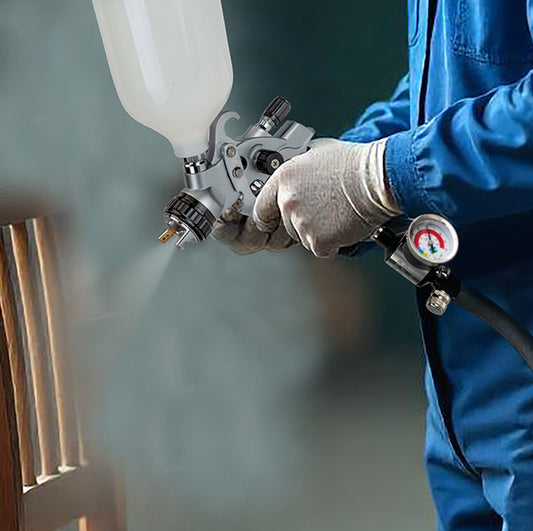



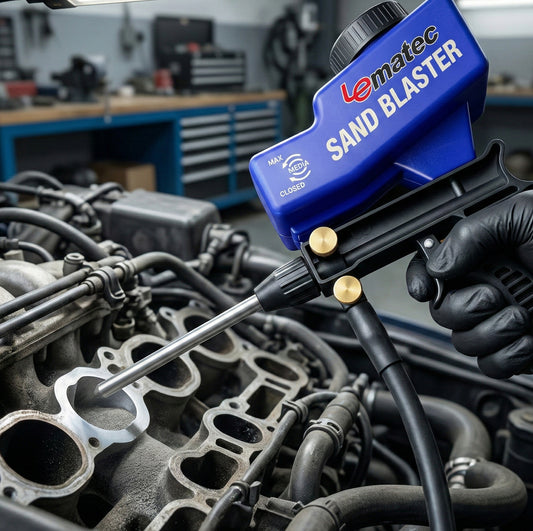

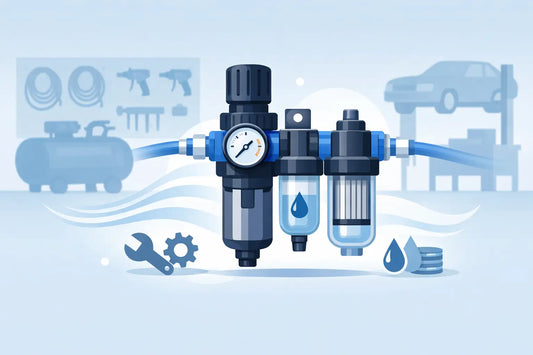
A blast pot that suddenly surges, spits media, or loses its cutting action usually has one problem upstream: wet compressed air. To reduce moisture in blast air line setups, you need to do more than add a small filter at the pot. You need to cool the air, collect the water, drain it reliably, and keep the air line from carrying that moisture back to the work.
For automotive restoration, fabrication, maintenance, and serious DIY blasting, dry air protects more than the finish. It keeps media flowing, helps the nozzle maintain a consistent pattern, and prevents downtime caused by clogged valves and damp abrasive. The right setup depends on your compressor size, CFM demand, climate, and how clean the final surface needs to be.
Every compressor pulls humid shop air into the pump. Compressing that air heats it up, allowing it to hold more water vapor. Once the hot compressed air enters a cooler tank, hose, or pipe, it drops in temperature and releases that water as liquid condensation.
Sandblasting makes the issue worse because it uses a lot of air for an extended period. A short burst from an impact wrench may not reveal a moisture problem. Run a blast nozzle at high CFM for 30 minutes, and the tank, hoses, and filter bowls can fill with water fast.
Moisture can cause abrasive to clump in the pot, restrict the metering valve, and create an uneven blast stream. It can also flash-rust bare steel after blasting, especially in humid conditions. If you are preparing a panel for primer or coating, water and oil contamination can create adhesion problems that show up after the job is supposedly finished.
The most reliable approach is staged air treatment. Each component handles a different part of the problem. Trying to make one small regulator-filter do all the work usually leads to restricted airflow and wet air at the nozzle.
Hot air will not give up much moisture until it cools. An aftercooler between the compressor pump and the receiver tank helps bring discharge temperature down quickly, so water can condense where you can remove it. A water separator installed after that cooling stage can then capture liquid water before it travels farther through the system.
A compressor tank also acts as a first collection point for condensation. Drain it every day you use the compressor, and drain it more often during long blasting sessions or humid weather. Manual drains work if they are actually opened. Automatic tank drains are often the better choice for busy shops, since forgetting a drain can leave gallons of water sitting at the bottom of the tank.
Do not expect a separator mounted directly on a hot compressor outlet to solve the problem. If the air has not had time to cool, most of the moisture is still vapor and will pass through the separator.
For occasional small jobs, an aftercooler, tank drain, and properly sized water separator may be enough. For recurring blasting work, a refrigerated air dryer is a practical upgrade. It lowers the compressed air temperature enough to condense and remove a large amount of water before the air reaches your distribution line.
A refrigerant dryer is a strong fit for many home garages and small professional shops because it provides consistent dry air with limited maintenance. Size it for the actual air demand, not the compressor's advertised horsepower. Check the dryer flow rating at your expected operating pressure and account for hot ambient conditions. A dryer rated just barely above your demand may not keep up in a hot shop or during continuous blasting.
Desiccant dryers take air dryness further and are useful when low dew point air is required, such as precision coating, sensitive media, or cold-weather operation. The trade-off is maintenance and operating cost. Desiccant must be replaced or regenerated, and an overloaded desiccant system can stop drying effectively without obvious warning.
A water separator removes bulk liquid water. It does not remove all fine particles, aerosols, or compressor oil. If your compressor is oil-lubricated, install filtration appropriate for oil carryover before air reaches the blast equipment. Oil can contaminate media, coat the workpiece, and foul filters over time.
Place the main filter and regulator where the air is cool and accessible for service. Watch the bowl during use, and make sure its drain is functioning. A filter bowl that stays full cannot separate more water.
Do not undersize filters just because the inlet and outlet threads fit your hose. A blast cabinet or pressure pot can demand far more CFM than a typical air tool. Restrictive filters, fittings, quick couplers, and small-diameter hoses lower pressure at the nozzle. That slows blasting, wastes media, and encourages operators to turn up compressor pressure rather than fix the airflow restriction.
Your air piping layout matters as much as the dryer. A long hose lying across a cool concrete floor can become a condensation trap. As hot air from the compressor cools in that hose, water forms and gets pushed straight toward the blast pot.
Run a main air line away from the compressor before dropping down to equipment. If possible, slope the main line slightly away from the compressor toward a drain leg. Take branch connections from the top of the main line, not the bottom, so liquid water stays below the takeoff point. At each drop, extend the pipe below the connection to create a drip leg with a drain valve.
For a dedicated blasting station, place a final moisture trap close to the blast pot, but treat it as the last line of defense rather than the whole solution. Keep the final hose as short as the job allows, use adequate inside diameter, and avoid unnecessary reducers. A larger hose helps maintain flow, although it cannot replace drying equipment.
If you already have filters and still see wet media, inspect the basics before buying more equipment. Many moisture problems come from a setup that is technically equipped but poorly maintained.
No moisture-control setup can fully compensate for an undersized compressor running nonstop at its limit. When a compressor runs continuously, discharge temperatures rise and the system has less time to cool, separate, and drain moisture. The air supply may also fall below the CFM required by the nozzle, causing poor blast performance even if the air is dry.
Check your nozzle's air requirement against the compressor's delivered CFM at the pressure you actually use. If the numbers are close, step down to a smaller nozzle for longer jobs or upgrade the air supply. A smaller nozzle may blast more slowly, but it can produce steadier pressure and less moisture trouble than pushing an undersized system beyond its capacity.
For a practical blasting setup, prioritize airflow first, then build moisture control in stages: cooling, collection, drainage, separation, drying, and final filtration. Pro Air Tools carries the blasting accessories, filters, and air-system components that help keep that chain working without adding guesswork to your setup.
Dry air is not a luxury add-on when you are blasting. It is what lets your media stay free-flowing, your nozzle stay productive, and your freshly cleaned metal leave the cabinet or work area ready for the next step.






 AIR REGULATORS

 ACCESSORIES