Shopping Cart
(0)
Free shipping included — no minimum on any US order

Quick Search:



Moisture is usually the reason a sandblasting setup starts acting up halfway through a job. Media clumps, the blast pattern gets inconsistent, and clean steel starts showing flash rust before you are even done. That is where an inline air dryer for sandblasting earns its keep. It is not a luxury add-on. In the right setup, it is the difference between steady blasting and wasted time.
If you blast only once in a while, it is easy to underestimate how much water your compressor is pushing downstream. Compressing air creates heat, and as that air cools, water drops out inside the tank, hose, and tool line. Sandblasting makes that problem obvious fast because abrasive media does not tolerate moisture well. The result is simple - wet air costs you finish quality, productivity, and media.
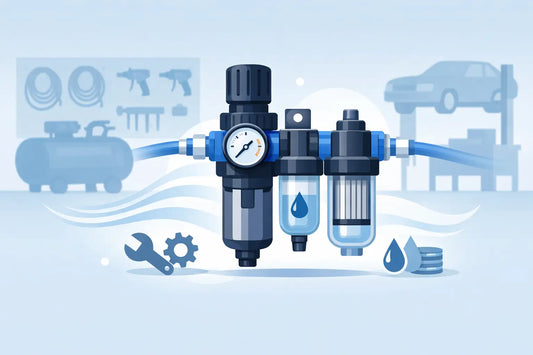
An inline air dryer for sandblasting removes moisture from the compressed air line before that moisture reaches the blast pot, gun, or media path. Depending on the design, it may separate condensed water, trap fine mist, or dry the air more aggressively using desiccant or refrigerated treatment upstream.
That distinction matters. Some buyers use the term air dryer loosely when they are really looking at a basic water separator. A separator helps, but it is not the same thing as a true drying system. If your compressor runs hard, your shop is humid, or your hose run is long, a simple bowl filter near the tool may not be enough to keep blasting dry.
For light intermittent work, a compact inline unit can make a noticeable improvement. For longer sessions or larger nozzles, it often works best as part of a system that includes aftercooling, tank drainage, and filtration staged before the blast setup.
Sandblasting is unforgiving because the media flow has to stay consistent. Once water gets into the line, media starts bridging, packing, or sticking where it should stay loose. Even a small amount of moisture can create pulsing, sputtering, or complete blockage.
The finish suffers too. Wet abrasive can hit the surface unevenly, which changes the cut rate and leaves the operator chasing a result instead of working at a steady pace. On bare steel, moisture in the air supply can also contribute to flash rust, especially in warm and humid conditions.
There is also a cost issue. Damp media does not just slow the job down. It gets wasted. If you are using premium blasting media or trying to reuse media where appropriate, moisture works against you from the start.
The short answer is not always right at the blast gun.
A lot of people assume the dryer should go as close as possible to the tool. Sometimes that helps, but only if the air has already had a chance to cool and shed moisture upstream. If the air is still hot when it reaches the dryer, more water can condense farther down the line after the dryer, which means the problem is not solved.
A better approach is to think in stages. Let the compressed air cool first. Drain the tank regularly. Use a separator or filter where bulk water can be removed effectively. Then place a dryer or final moisture control point before the blast equipment. In higher-demand setups, adding hose length or hard line between the compressor and the dryer can help the air cool enough for water removal to actually work.
In other words, placement depends on your compressor size, duty cycle, ambient humidity, and how long you blast at a time. There is no single location that fixes every system.
For small or occasional blasting jobs, an inline desiccant dryer is often the practical choice. It is compact, relatively easy to add to an existing setup, and effective at pulling moisture out of the line. The trade-off is maintenance. Desiccant gets saturated and has to be replaced or regenerated, especially in humid environments or during long blasting sessions.
Basic inline water separators are affordable and useful, but they are best treated as the first line of defense, not the full solution. They remove liquid water and some condensate, but they do not dry compressed air to the level many blasting jobs really need.
A refrigerated dryer is the better fit when blasting is frequent, production matters, or the air system supports multiple tools. These units dry a higher volume of air more consistently, but they cost more up front and take more space. For a serious shop, that investment usually pays off in less downtime and more predictable results.
Disposable mini dryers and small point-of-use filters can help on spot jobs, mobile work, or hobby setups. Just do not expect them to carry the load of a high-CFM blasting system for long. If your blaster is consuming air faster than the dryer can handle, moisture problems will come right back.
You do not need gauges everywhere to spot an air drying problem. The symptoms show up in the work.
If the media starts flowing well and then weakens after a few minutes, your system may be collecting moisture as it heats up. If you see water in filter bowls, moisture at the nozzle, or clumped media in the hopper, the line is already too wet. If you are draining your tank and still fighting wet blasting, the issue is likely air treatment capacity, placement, or both.
Another clue is weather sensitivity. When the setup works acceptably on a cool dry day but struggles in summer humidity, your moisture control margin is too narrow. That usually means a bigger or better-staged dryer is the answer, not another small filter added at random.
Start with airflow, not just fittings. Sandblasting is air-hungry, and many inline dryers that look fine on paper are not rated for the actual CFM your blaster needs under load. If the dryer chokes the line or cannot process enough air, performance drops even if moisture control improves slightly.
Check the dryer’s rated CFM against the compressor output and the blast nozzle demand. If those numbers are close, give yourself margin. Real shops do not run under perfect conditions, and heat plus humidity will expose any weak point fast.
Pay attention to pressure drop too. A dryer that dries well but starves the blaster is still a problem. You want moisture control without sacrificing usable pressure at the nozzle.
Build quality matters more than buyers sometimes admit. Sandblasting is a rough environment. Filters, housings, drains, and seals need to hold up around dust, vibration, and regular use. If a component feels like a disposable add-on, it probably will behave like one.
For buyers who want fewer surprises, it makes sense to source from a supplier focused on pneumatic tools and blasting equipment rather than a generic marketplace listing. That usually means clearer specs, better fit with common shop setups, and support if you need to match filters, regulators, hoses, or accessories into one working system.
An inline dryer is not a cure for every blasting issue. If your compressor is undersized, your hose is too restrictive, your media is contaminated, or your blast pot setup is inconsistent, drying the air will not solve those problems.
It also will not replace basic maintenance. Tanks need draining. Filters need service. Desiccant needs replacement. Hoses and fittings still have to be sealed properly. Shops that skip those basics tend to blame the dryer when the real problem is the whole air system.
That said, moisture control is one of the most common weak links in blasting, and it is one of the easiest to improve with the right parts in the right order.
If blasting is part of your weekly workload, not just an occasional task, a small inline fix may stop being economical. Replacing saturated desiccant constantly, dealing with pressure loss, or fighting recurring moisture during long sessions costs time just like bad media flow does.
At that point, a more complete air treatment setup makes sense. A refrigerated dryer upstream, proper filtration, and a final point-of-use moisture control stage can give you much more stable blasting performance. It is a bigger investment, but so is reworking a job because the surface prep was inconsistent.
For many shops, the right move is not the most expensive setup. It is the setup sized honestly for the way the equipment is used.
Dry air keeps sandblasting simple. When the media flows clean and the finish stays consistent, the whole job moves faster and with less frustration. If your current setup keeps feeding water into the line, fixing that problem first is usually the fastest way to get better results.




 AIR REGULATORS

 ACCESSORIES