Shopping Cart
(0)
Free shipping included — no minimum on any US order

Quick Search:


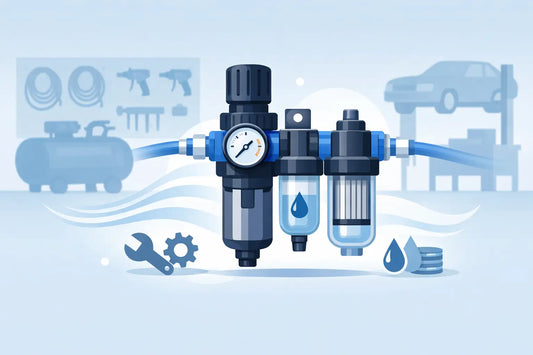
A compressor can make plenty of air and still cause trouble at the tool. Water spits from a blow gun, an impact loses punch, blast media clumps, or a paint finish fisheyes. The best air filters for compressor lines solve those problems by removing the contamination that matters for the job, without starving your tools of airflow.
There is no single filter that is right for every line. A mechanic running an impact wrench needs a different setup than a fabricator running a blast cabinet or a painter applying a final coat. Start with the air quality your work demands, then match the filter's micron rating, flow capacity, drain style, and placement to your compressor system.
Ambient air enters the compressor with humidity, dust, and airborne debris. Compression concentrates that moisture, and the air then picks up additional contamination from the tank, fittings, old hoses, and lubricated compressor components. What reaches the tool can include liquid water, rust scale, oil aerosol, fine dirt, and vapor.
A basic water separator is a strong first defense for most garage and shop systems. It spins or redirects the incoming air so larger water droplets and particles fall into a bowl. That protects everyday pneumatic tools, but it does not produce dry, oil-free air for finishing work. The more demanding the job, the more stages your air treatment needs.
The right purchase starts with the job at the end of the hose. Buying a very fine filter for every outlet sounds safe, but undersizing it can create a pressure drop that makes tools run poorly. Use the level of filtration that fits the work.
For impact wrenches, ratchets, air hammers, inflators, drills, and general cleanup, use a particulate and water-separating filter at the main line or at the point of use. A common range is 40 micron for basic protection, while a 5 micron filter catches finer debris and offers better protection for valves and internal tool parts.
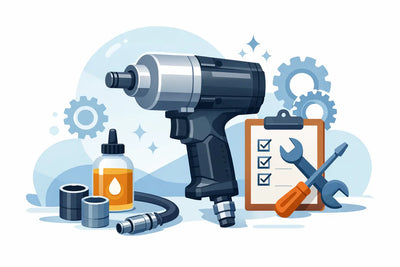
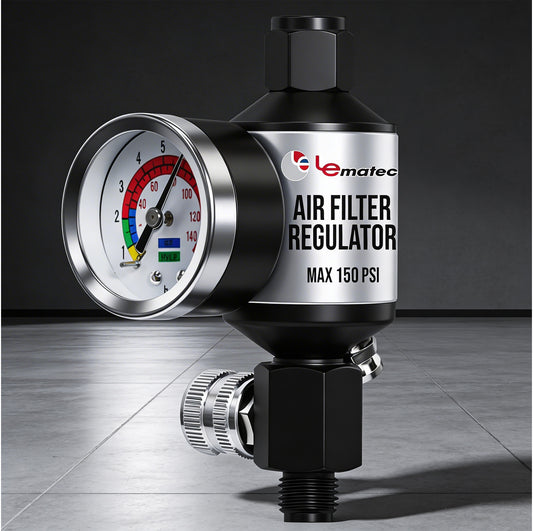
For a busy automotive bay, a 5 micron filter-regulator combo is often the practical choice. It removes more than a coarse separator, lets you set working pressure at the outlet, and keeps the setup compact. Follow it with the correct air-tool oiling practice if your tool manufacturer calls for lubrication. Do not assume a filter-lubricator package belongs on every line, especially where paint or blasting is done.
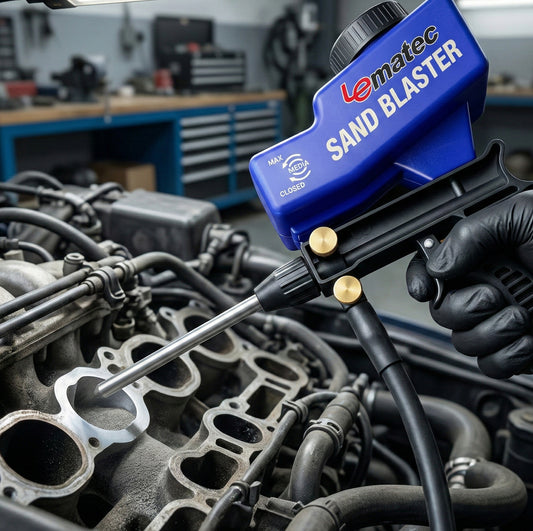
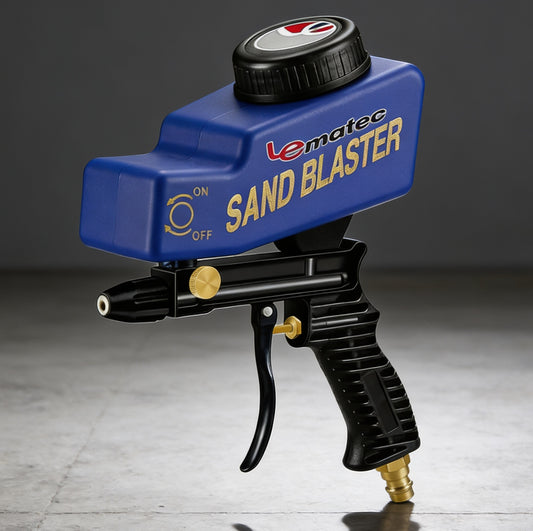
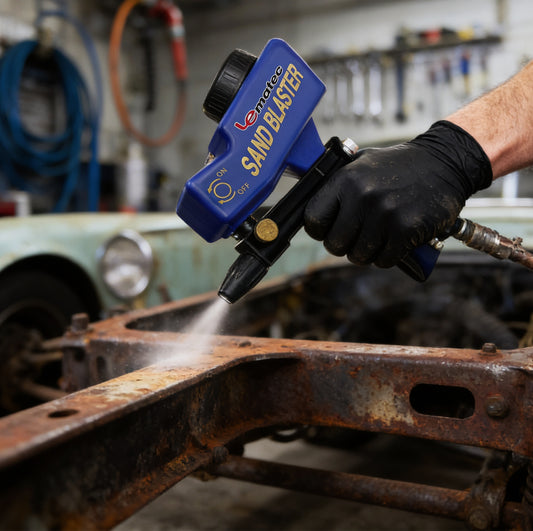
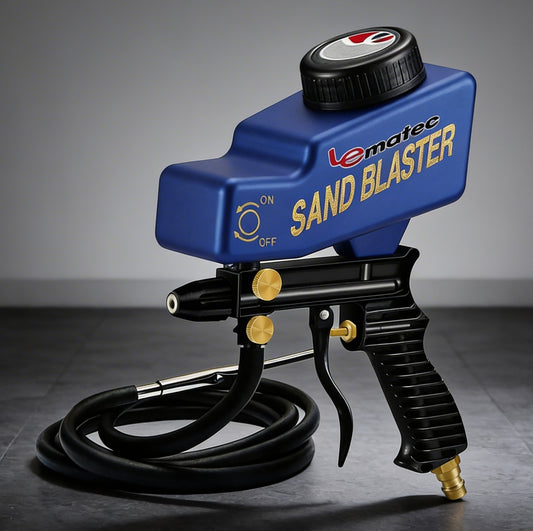
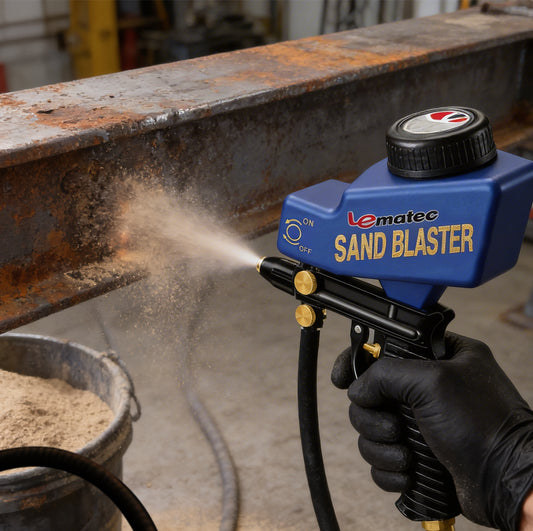
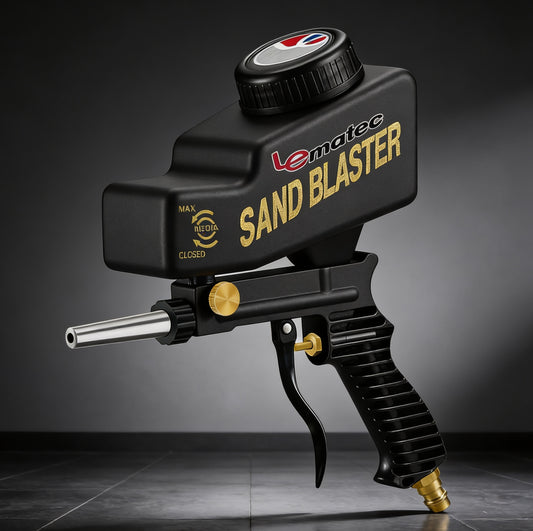
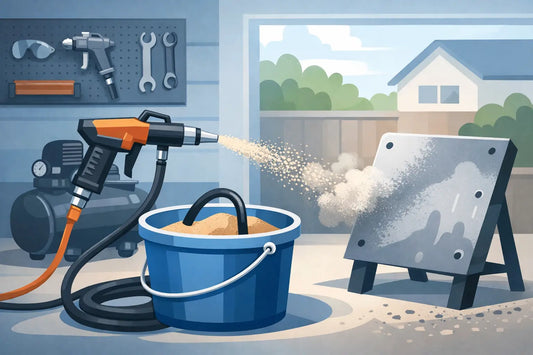
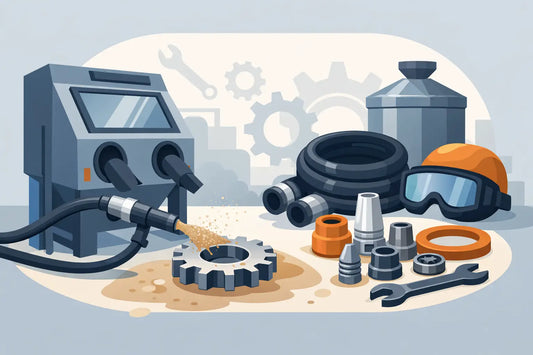
Sandblasting needs dry air. Moisture can cause abrasive media to bridge in the hopper, clog a metering valve, and create an uneven blast pattern. A water separator near the compressor is necessary, but it may not be enough when the compressor runs continuously and the line gets hot.
For blasting, use a staged setup: a main moisture separator after the tank, adequate pipe or hose length to cool the air, and a final filter at the blast station. A desiccant dryer or high-quality point-of-use moisture filter is worth considering when humidity is high, run times are long, or media clumping has become a recurring problem.
Keep the final filter sized for the blast cabinet or pressure pot's real air demand. Blasters can consume far more CFM than a typical impact wrench. A small filter with restrictive ports may look fine on paper, then become the bottleneck that leaves you with weak blasting pressure.
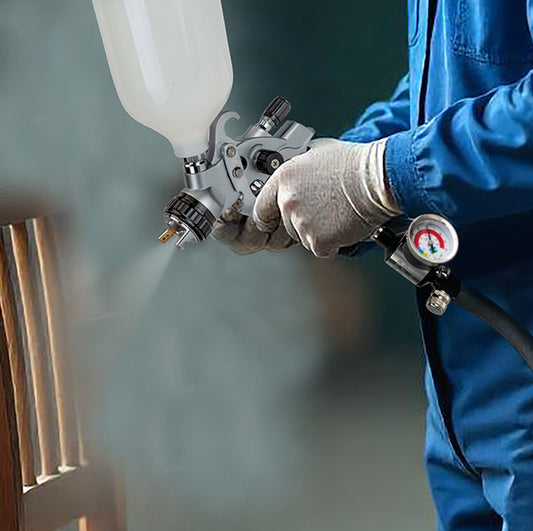
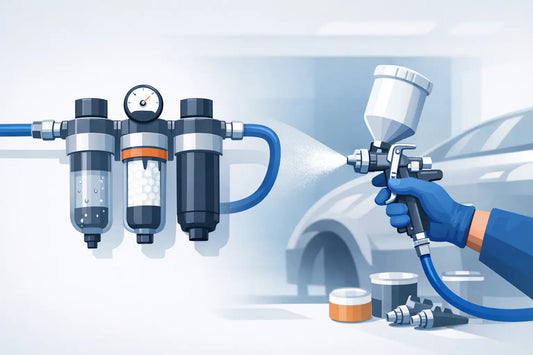
Paint lines require the cleanest air in most shops. Water, oil, and silicone contamination can ruin a finish that took hours to prep. For primer and basic shop coatings, a well-maintained particulate and water filter may be sufficient depending on the coating system. For basecoat, clearcoat, and other finish-sensitive work, use multi-stage filtration.
A typical paint setup starts with a water separator, adds a fine coalescing filter to capture oil aerosols, and uses a final desiccant or dedicated clean-air filter near the spray gun. Coalescing filters are designed for very small liquid droplets. They are not substitutes for a water separator handling a large volume of condensed water upstream.
Keep lubricated air-tool lines separate from paint lines whenever possible. Once oil is introduced into a hose or regulator, it can be difficult to remove completely. A dedicated clean hose and final filter at the paint station prevent a lot of expensive rework.
Some air-operated controls, instrumentation, and plasma systems have strict air-quality requirements. These applications may need fine particulate filtration, oil removal, and a dryer. Check the equipment manual rather than guessing from the fitting size. A plasma cutter that receives wet air can suffer from poor consumable life and inconsistent cuts, even if the compressor seems to be working normally.
Micron rating matters, but CFM and port size matter just as much. A 5 micron filter can be an excellent choice, yet still fail in practice if it cannot flow enough air for your tool at the pressure you need.
Start with your highest-demand tool, not your average tool. If a blast cabinet needs 18 CFM at 90 PSI, choose a filter rated above that requirement at your working pressure. Give yourself headroom for dirty elements, long hose runs, quick-connect restrictions, and future tool upgrades. A system running near a filter's maximum rating will lose pressure as the element loads up.
Port size should match the line feeding it. A 1/4-inch filter may work well at a small bench station, but it can restrict a larger shop line or high-CFM tool. For main distribution lines and blasting stations, larger ports are often the better call. The goal is clean air with stable pressure at the tool, not simply the smallest filter that threads onto the hose.
Also pay attention to bowl capacity and bowl material. A larger bowl makes sense where water accumulation is heavy. Metal bowl guards improve durability in active work areas. If chemicals or solvents are used nearby, confirm the bowl material is compatible with the environment.
Every separator needs its collected water removed. A manual drain costs less and works well when someone regularly checks the bowl. It is a good fit for a home garage, occasional maintenance work, or a low-use air line.
Automatic drains are more convenient for production use, humid regions, and systems that run all day. They empty the bowl without relying on memory, reducing the chance that water gets carried downstream after the bowl fills. They do need periodic inspection. Dirt or oil can cause an automatic drain to stick, so it is not a set-it-and-forget-it component.
Placement changes performance. Installing a filter directly at a hot compressor outlet is usually a poor choice because the air has not had time to cool and condense its moisture. Let the air travel through a tank and sufficient line length first, then place the main separator where liquid water can actually be removed.
For a practical shop layout, install the main water separator and regulator after the tank and before the primary distribution line. Use drop legs in fixed piping so moisture settles away from outlets. Add point-of-use filters for workstations that need additional protection, such as a blast cabinet, paint area, or precision tool bench.
A final filter should be close to the tool when the job is moisture-sensitive. Long hoses can cool air further and create new condensation after the main filter. That is why a clean, dry line at the compressor does not always guarantee clean, dry air at a spray gun 50 feet away.
Even the right filter will not perform if the element is loaded with dirt or the bowl is full of water. Check bowls frequently during humid weather or long compressor cycles. Drain them before they reach capacity, inspect for cracks, and replace damaged O-rings or bowls promptly.
Replace filter elements on schedule, or sooner if pressure drop becomes noticeable. Do not clean disposable elements with compressed air and put them back into service unless the manufacturer specifically allows it. Blasting or washing can damage the media and send contamination downstream.
Track the pressure before and after a frequently used filter. A growing difference is a straightforward sign that the element is becoming restrictive. This simple check can prevent the familiar problem of a tool that feels underpowered even though the compressor pressure gauge looks normal.
For most tool users, a quality water separator and regulator at the main line is the best starting point. Add fine filtration for cleaner tool air, then add coalescing and drying stages only where paint, blasting, plasma cutting, or sensitive equipment demands them. This approach controls cost while protecting the work that cannot tolerate contamination.
Pro Air Tools customers often use one compressor for several jobs. Separate your clean-air stations from lubricated tool lines, size every filter for the highest CFM demand it will serve, and keep replacement elements on hand. Clean, dry air is one of the least visible upgrades in a shop, but it is often the difference between a tool that merely runs and a job that comes out right.




 AIR REGULATORS

 ACCESSORIES