


 AIR REGULATORS

 ACCESSORIES
Sandblasting Media Comparison Guide: Choose the Right Abrasive for Every Job
Sandblasting Media Comparison Guide — Find the Right Abrasive for Every Surface
Choosing the right sandblasting media is the single biggest factor in getting clean, professional results. The wrong abrasive can warp thin metal, etch glass you meant to frost evenly, or waste hours on a job that should take minutes. This guide breaks down every major media type, compares them head-to-head, and tells you exactly which one to reach for based on your material, your surface finish goal, and your budget.
Written by Charles Rosenstein, Le Lematec / Factory Direct — with over 15 years in pneumatic tools and surface preparation.
How Sandblasting Media Works
Abrasive blasting propels media particles at high velocity against a surface. The media's hardness, shape, and size determine how aggressively it cuts. Harder, angular media (like aluminum oxide) cuts fast and removes heavy coatings. Softer, rounded media (like glass bead) cleans gently without removing base material. Understanding this relationship between media properties and surface impact is the key to choosing correctly.
Media Hardness Scale (Mohs)
Hardness is measured on the Mohs scale from 1 (talc) to 10 (diamond). Here's where common blasting media falls:
- Walnut Shell: 3.0–4.0 Mohs — Extremely gentle, won't damage soft substrates
- Baking Soda: 2.5 Mohs — Softest blasting media, food-safe cleaning
- Glass Bead: 5.5–6.0 Mohs — Medium hardness, excellent for peening and finishing
- Aluminum Oxide: 9.0 Mohs — Aggressive cutting, reusable up to 20+ cycles
- Silicon Carbide: 9.5 Mohs — Hardest common media, fastest material removal
Aluminum Oxide — The All-Around Workhorse
Aluminum oxide (also called brown corundum or alox) is the most versatile blasting media for professionals. At 9.0 on the Mohs scale, it cuts through rust, mill scale, paint, and powder coating efficiently. Its angular grain shape creates an aggressive cutting profile that anchors coatings when you're prepping for paint or powder.
Best for: Rust removal, paint stripping, weld cleaning, surface profiling before coating, heavy industrial prep work
Not ideal for: Thin sheet metal (risk of warping), delicate parts, automotive body panels where you want zero profile
Reusability: 15–20+ cycles depending on pressure and target hardness — making it extremely cost-effective
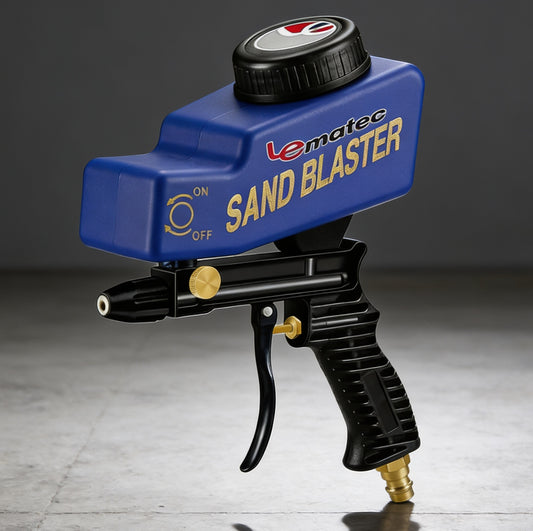
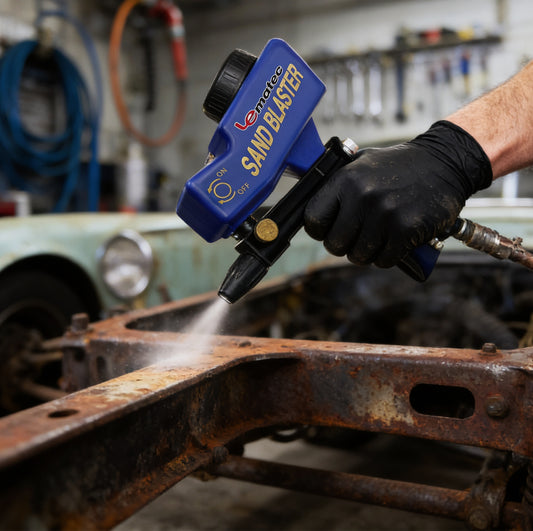
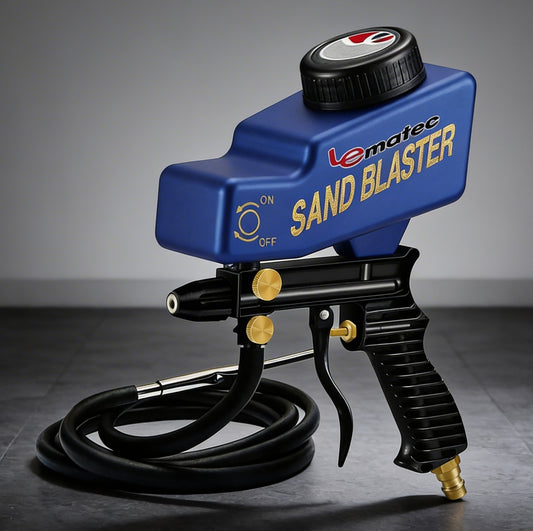
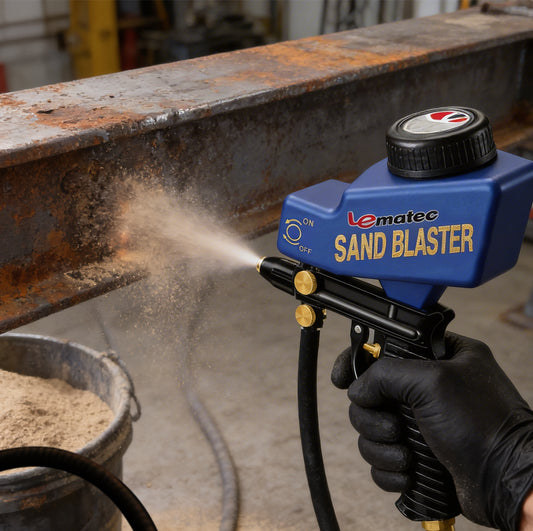
Our Professional Brown Corundum Blasting Media (220 Grit) is a fine-grade aluminum oxide optimized for detail work and surface finishing. Pair it with the LE LEMATEC Handheld Sandblaster Kit for portable rust and paint removal.
Silicon Carbide — Maximum Cutting Power
Silicon carbide is the hardest common blasting media at 9.5 Mohs. It cuts faster than aluminum oxide and produces a sharper surface profile. The angular, razor-sharp grains make it the go-to choice for hard metals, ceramics, stone, and glass etching. It's also the preferred media for precision surface finishing in aerospace and automotive applications.
Best for: Glass etching, stone carving, hard metal prep, ceramic finishing, removing stubborn coatings from hardened steel
Not ideal for: Soft metals (aluminum, copper), wood, plastic — too aggressive for these substrates
Reusability: 10–15 cycles — slightly less than aluminum oxide due to fracturing at high impact
Our Professional Silicon Carbide Blasting Media (100 Grit) delivers premium cutting performance for demanding surface prep applications.
Glass Bead — Clean Finishing Without Material Removal
Glass bead media is spherical, not angular, which means it peens the surface rather than cutting into it. This makes it ideal for cleaning, deburring, and creating a uniform satin finish without changing the part's dimensions. It's the standard choice for cosmetic finishing in automotive restoration, aerospace component prep, and medical device manufacturing.
Best for: Surface peening, cosmetic finishing, cleaning without dimensional change, stainless steel finishing, aluminum cleaning
Not ideal for: Heavy rust removal, paint stripping on large surfaces, creating anchor profile for coatings
Reusability: 5–10 cycles — breaks down faster than angular media due to spherical shape
Walnut Shell — The Gentle Giant
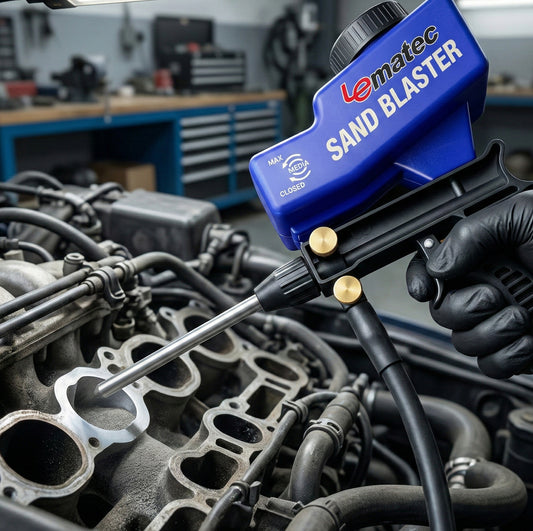
Crushed walnut shell is an organic media that's extremely soft compared to mineral abrasives. It removes surface contaminants, grease, carbon deposits, and light coatings without scratching or etching the substrate. Automotive restorers use it to strip paint from fiberglass without damaging the gel coat. Engine builders use it to clean intake manifolds and cylinder heads.
Best for: Fiberglass cleaning, engine component degreasing, wood stripping, removing graffiti from masonry, cleaning molds and dies
Not ideal for: Rust removal from steel, removing heavy industrial coatings, any application requiring surface profile
Reusability: 3–5 cycles — organic media breaks down quickly
Baking Soda (Sodium Bicarbonate) — Food-Safe Precision
Soda blasting uses sodium bicarbonate crystals that dissolve on impact and leave zero embedded particles. This makes it the only blasting media that's truly food-safe and non-toxic. It's ideal for sensitive cleaning applications where you can't risk contamination or surface damage.
Best for: Food processing equipment, fire/smoke damage restoration, automotive paint removal on classic cars, mold remediation, graffiti removal
Not ideal for: Creating surface profile, rust removal on heavily corroded steel, any high-aggression application
Reusability: Single use only — dissolves on impact
Our Professional Soda Blaster Kit (AS118) is purpose-built for multi-media blasting including baking soda, sand, and aluminum oxide.
Head-to-Head Comparison Table
| Media Type | Mohs Hardness | Grain Shape | Aggressiveness | Reusability | Cost per Job | Best Application |
|---|---|---|---|---|---|---|
| Aluminum Oxide | 9.0 | Angular | High | 15–20+ cycles | Low (reusable) | General rust/paint removal |
| Silicon Carbide | 9.5 | Angular | Very High | 10–15 cycles | Medium | Hard metals, glass etching |
| Glass Bead | 5.5–6.0 | Spherical | Low | 5–10 cycles | Medium | Cosmetic finishing |
| Walnut Shell | 3.0–4.0 | Angular (soft) | Very Low | 3–5 cycles | High | Delicate surface cleaning |
| Baking Soda | 2.5 | Crystalline | Minimal | Single use | High | Food-safe, sensitive cleaning |
| Steel Grit | 7.0–8.0 | Angular | High | 50+ cycles | Very Low | Heavy mill scale, shipyards |
| Plastic Media | 3.0–4.0 | Angular | Low | 5–8 cycles | High | Aerospace paint stripping |
Choosing Media by Material
Here's a quick reference for matching media to your substrate:
- Mild steel (rust removal): Aluminum oxide (80–120 grit) → Brown Corundum 220 Grit
- Hardened steel/cast iron: Silicon carbide (60–100 grit) → Silicon Carbide 100 Grit
- Aluminum/soft alloys: Glass bead (100–170 mesh) or walnut shell
- Wood/fiberglass: Walnut shell or baking soda
- Glass etching/stone: Silicon carbide (fine grit)
- Automotive restoration: Soda blasting for paint, glass bead for finishing → Soda Blaster Kit
- Engine components: Walnut shell for intake/heads, glass bead for cosmetic finishing
Grit Size Guide
Grit size affects both cutting speed and surface finish. Lower numbers mean coarser, more aggressive media. Higher numbers produce smoother finishes.
- 24–60 grit: Heavy material removal, aggressive profiling. Use for thick rust, heavy mill scale, structural steel prep.
- 80–120 grit: General purpose. Best balance of speed and finish for most rust removal and paint stripping jobs.
- 150–220 grit: Fine finishing and light cleaning. Ideal for detail work, precision parts, and pre-coating prep.
- 320+ grit: Ultra-fine polishing and micro-finishing. Used in aerospace and medical device manufacturing.
CFM and PSI Requirements by Media
Different media types require different air pressure and volume settings. Running too much pressure with soft media wastes it instantly. Running too little pressure with hard media means slow, inconsistent results.
- Aluminum oxide/silicon carbide: 80–100 PSI, 6–12 CFM depending on nozzle size
- Glass bead: 60–80 PSI, 5–10 CFM — lower pressure preserves bead integrity
- Walnut shell: 40–60 PSI, 4–8 CFM — too much pressure pulverizes the media
- Baking soda: 30–50 PSI, 3–6 CFM — gentlest settings for maximum control
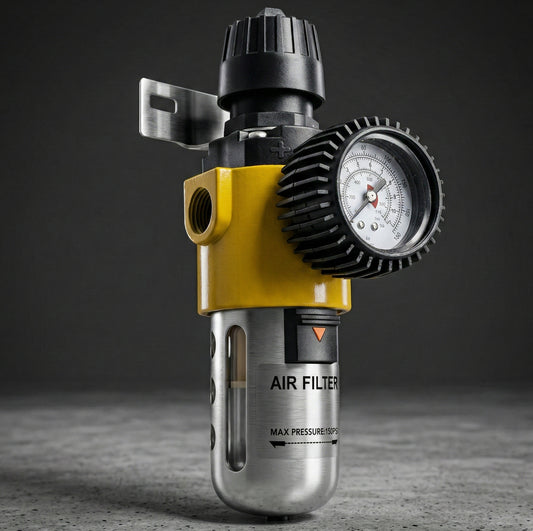
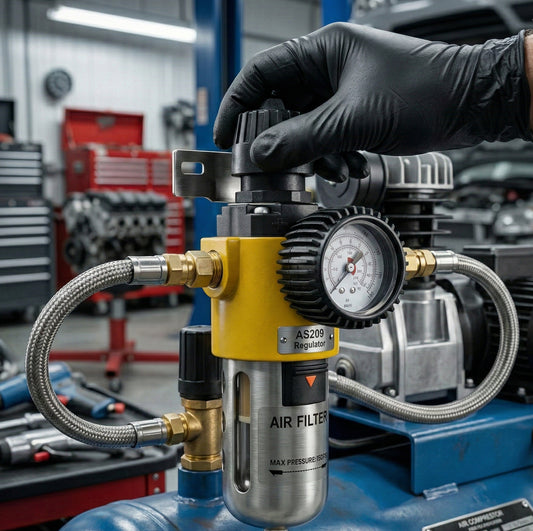
Make sure your air supply is clean and dry. Moisture contamination clumps media and causes uneven blasting. An inline air filter or desiccant dryer is essential for consistent results.
Cost-Per-Job Analysis
When calculating media cost, don't just look at the price per pound — factor in reusability. Aluminum oxide at $2/lb that lasts 20 cycles costs far less per job than walnut shell at $1.50/lb that lasts 3 cycles. Here's a rough comparison for a typical small-to-medium rust removal job:
- Aluminum oxide: ~$0.15–0.25 per job (after reuse cycles)
- Silicon carbide: ~$0.30–0.50 per job
- Glass bead: ~$0.40–0.60 per job
- Walnut shell: ~$0.50–0.80 per job
- Baking soda: ~$0.60–1.00 per job (single use)
Essential Equipment for Any Media
Regardless of which media you choose, you need:
- A quality sandblaster gun — Our Professional Dual-Feed Sandblaster Gun Kit (AS118-2) handles gravity feed and siphon feed, works with all media types from soda to silicon carbide.
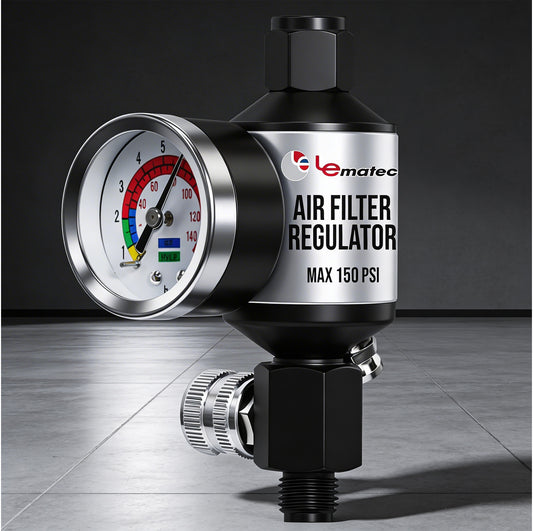
- Clean, dry air supply — An air filter/regulator combo ensures consistent pressure and removes moisture that clumps media.
- Proper nozzle — Ceramic tips last 10x longer than steel with abrasive media. Our Sandblaster Accessory Kit includes ceramic replacement tips.
- Precision blasting attachment — For detail work, the Professional Long Nozzle Attachment gives you pinpoint accuracy in tight spaces.
Bottom Line: Which Media Should You Buy First?
If you're starting out or need one media that handles the widest range of jobs, aluminum oxide is the answer. It's aggressive enough for rust and paint, reusable enough to be cost-effective, and compatible with any sandblaster gun. Start with our 220-grit Brown Corundum for general purpose work.
If you do automotive restoration or work with delicate substrates, add a soda blaster to your setup for paint-safe cleaning.
For maximum cutting power on hardened steel or glass etching projects, step up to silicon carbide.
Shop Sandblaster Kits
Factory direct from Le Lematec — professional quality, competitive prices.
Shop Related Products
All products ship free to the US with same-day processing.
Tags:
Previous
How to Set Blast Pressure Properly
Next
Gravity Feed vs Siphon Feed Sandblaster: Which Design Is Right for Your Project?
Related articles

How to Troubleshoot Air Tool Stalling
Apr 16 2026
Guide to Sandblasting Rusted Frames
Apr 14 2026
Pneumatic Impact Wrench Review Guide
Apr 12 2026
How to Install Air Filter Regulator Right
Apr 10 2026