Shopping Cart
(0)
Free shipping included — no minimum on any US order

Quick Search:
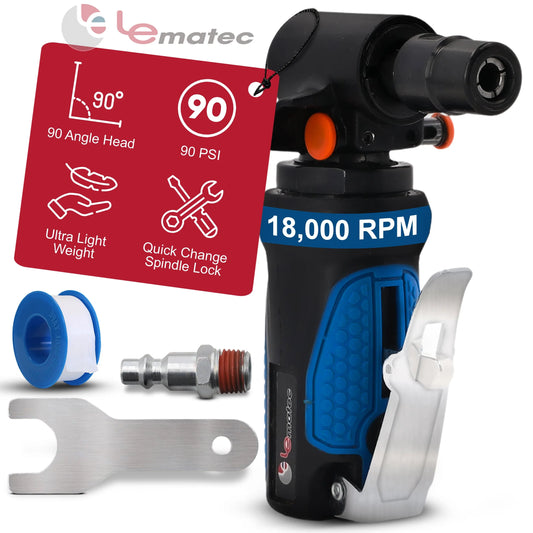
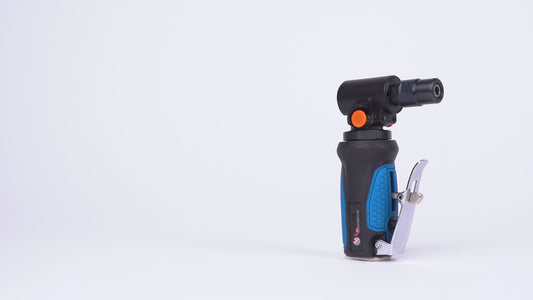

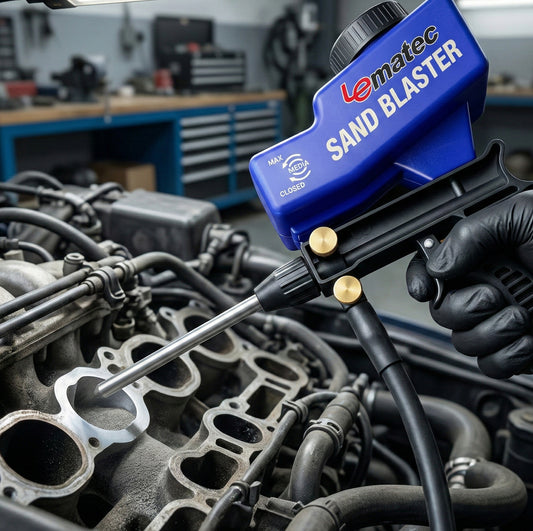
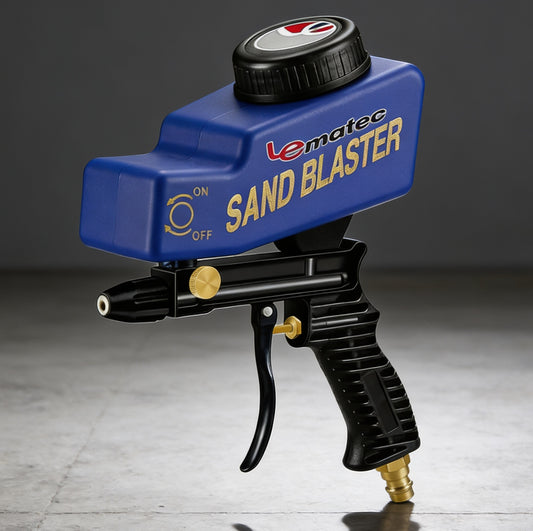

A stalled air tool usually shows up at the worst possible moment - halfway through breaking loose a rusted fastener, smoothing a weld, or finishing a panel edge. If you need to know how to troubleshoot air tool stalling, start with the air supply before you assume the tool itself is bad. Most stalling problems come from restricted airflow, pressure loss under load, poor lubrication, or worn internal parts, and the fix is often simpler than it looks.
Pneumatic tools are straightforward, but they only perform as well as the system feeding them. A strong compressor paired with a weak hose, a clogged coupler, or a bad regulator can make a good impact wrench or grinder feel underpowered. That is why the right approach is to check the full setup in order, from compressor to fitting to tool.
The fastest way to diagnose stalling is to separate supply problems from tool problems. If the tool runs briefly and then bogs down, stalls under load, or only works in short bursts, look at airflow and pressure first. If it has proper air volume and still drags, the issue is more likely inside the tool.
Start by listening to what the tool is doing. A tool that slows gradually often points to pressure drop or restricted flow. A tool that suddenly locks up, chatters, or stops even with good air pressure may have internal wear, debris, or a lubrication problem. That difference matters because replacing tool parts will not fix an undersized hose, and adding a bigger compressor will not fix seized vanes in an air grinder.
One of the most common mistakes is reading the compressor gauge and assuming the tool is getting the same pressure. It usually is not. Pressure can fall off across regulators, long hoses, quick-connect couplers, swivels, and water separators, especially once the tool is under load.
If your tool is rated for 90 PSI, check for 90 PSI at the tool inlet while it is running if possible. Static pressure can look fine when the trigger is off, then drop hard once the tool starts demanding volume. An impact wrench, die grinder, or sander that stalls while working often has enough pressure on paper but not enough delivered air in real use.
If the compressor is cycling constantly and cannot keep up, that is a volume problem, not just a pressure problem. CFM matters as much as PSI. A small compressor may run a tire inflator without issue and still struggle badly with a grinder or sander that needs sustained airflow.
Air tools stall when they are starved. That starvation often happens in the hose and fitting setup. A long 1/4-inch hose, restrictive quick couplers, or adapters stacked together can choke flow enough to make a healthy tool feel weak.
This is especially common in garage setups that grew over time. One reducer here, one swivel there, an older coupler with a smaller internal bore - it adds up. If the tool improves noticeably when connected to a shorter, larger-diameter hose, you found the issue.
For higher-demand tools, hose size matters. Impacts, grinders, and sanders usually perform better with larger inside diameter hose and full-flow fittings. Smaller tools with lower air demand are more forgiving, but even they can stall if the coupler is partly blocked or leaking.
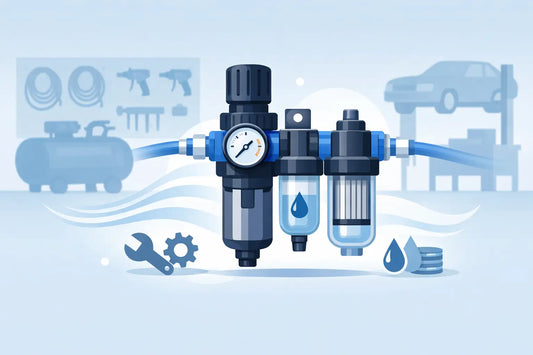
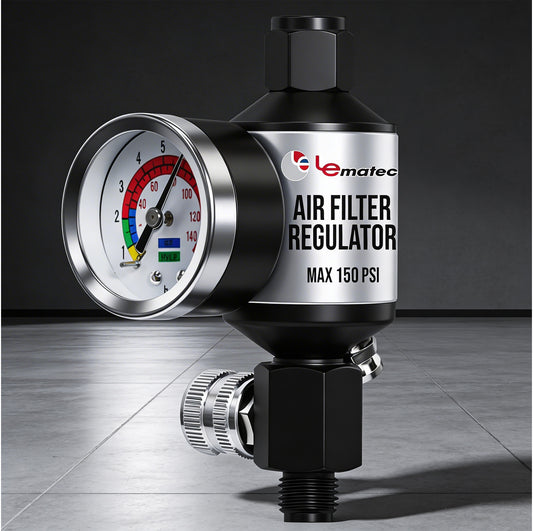
Regulators fail quietly. They can stick, drift out of adjustment, or restrict flow even when the set pressure looks correct. If your air tool stalls intermittently, bypassing a suspect regulator for a quick test can tell you a lot.
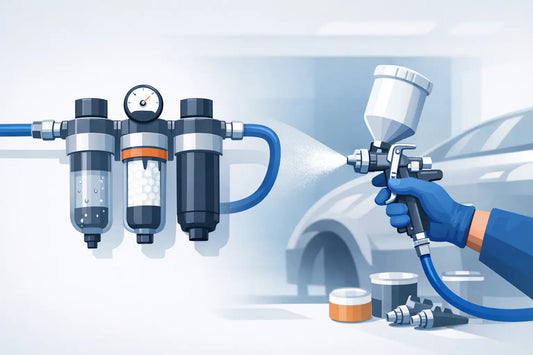
Filters and water separators are another common choke point. If the filter bowl is dirty or the element is saturated, airflow drops. Moisture in the line can also cause tools to run rough, especially if corrosion or sludge starts forming inside the tool. In colder conditions, moisture can even contribute to icing around the exhaust or inside the valve area, which creates erratic performance.
A clean, correctly sized filter-regulator setup helps tool life as much as it helps performance. If you use pneumatic tools regularly, this is not an accessory issue. It is part of the system.
Once the supply side checks out, move to the tool itself. Internal issues usually build over time. The tool gets a little slower, needs more trigger time to do the same work, then starts stalling under jobs it used to handle easily.
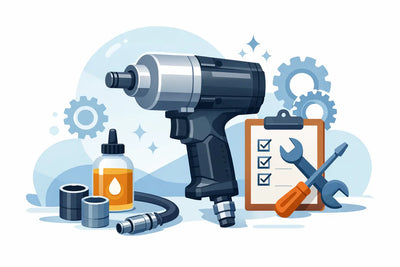
Many air tools need regular oiling unless they are set up on a proper inline lubricator. Dry vanes, bearings, and rotor surfaces create drag, heat, and power loss. In a grinder or sander, that often feels like sluggish startup or stalling when you lean into the tool. In an impact, it can show up as weak hammering or inconsistent output.
Add a few drops of the correct air tool oil into the inlet, run the tool briefly, and see whether performance improves. If it does, lack of lubrication was at least part of the problem. If the tool has been run dry for a long period, oil may help temporarily, but worn internals may already be in play.
Use the right oil and do not substitute random shop fluids. Heavy oils can gum things up, and the wrong product can attract debris or attack seals.
Air motors wear. Vanes lose edge contact, bearings develop drag, seals leak internally, and impact mechanisms lose efficiency. When that happens, the tool may still spin or hammer at no load but stall quickly once work starts.
This is where experience with the tool matters. A well-used ratchet or die grinder that suddenly feels weak after months of regular use may simply be due for a rebuild. On an impact wrench, worn hammer parts can make the tool sound active without delivering the torque you expect.
There is a trade-off here. On some tools, rebuilding makes sense and restores solid performance. On lower-cost units or heavily worn tools, replacement may be the faster and better-value move. If downtime costs you work, the cheapest fix is not always the best fix.
Contaminated air lines cause more trouble than most users think. Rust from the tank, thread sealant fragments, hose debris, and moisture-related sludge can travel straight into the tool. Once inside, debris can interfere with the throttle valve, scratch motor components, or cause sticking.
Check the air inlet screen if the tool has one. Look for contamination around the fitting and exhaust. If the tool was stored for a long time or used on a wet system, internal corrosion is possible. A tool that stalls after sitting unused may not have failed from age alone - it may simply be gummed up.
If the trigger feels sticky, inconsistent, or slow to return, the throttle valve may not be opening fully. That limits airflow before it ever reaches the motor. Sometimes the symptom feels like low pressure, but the restriction is actually right at the valve.
You may also hear hissing around the trigger area or notice the tool runs only at partial power. In that case, inspect the valve components, seals, and spring if the tool design allows it. If not, service or replacement is the practical route.
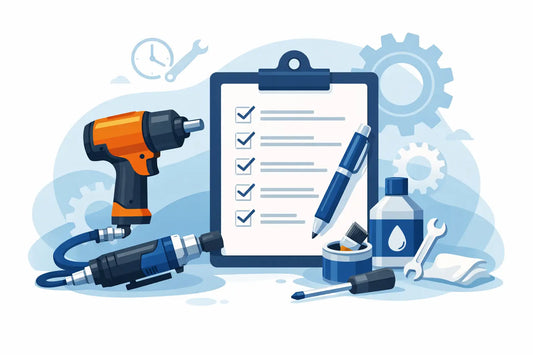
If you want a fast shop-floor process, check the compressor output, then confirm regulator setting, hose size, couplers, and filter condition. After that, oil the tool, inspect the inlet for blockage, and test again. If the tool still stalls with known-good air supply, internal wear is the next likely cause.
This order saves time because it starts with the problems that are easiest to verify and most common to fix. It also prevents misdiagnosing a system issue as a bad tool. Plenty of tools get blamed when the real problem is a restrictive fitting or a compressor that cannot deliver enough CFM.
Sometimes the tool is not broken at all. It is just being asked to do work beyond its design or being paired with a supply setup that does not support it. A compact impact may struggle on suspension hardware that needs a larger torque class. A small compressor may run a ratchet fine but stall a cutoff tool during continuous use.
That is why application matters. Intermittent tools and continuous-duty tools put very different demands on your air system. Matching hose size, fittings, regulator capacity, and compressor output to the tool category makes a bigger difference than many buyers expect.
For serious users, reliability comes from the whole setup, not one component. That is the practical advantage of buying from a source that understands air tools, regulators, filters, accessories, and replacement needs as one system instead of separate products.
When an air tool stalls, do not start by assuming the worst. Follow the air, confirm the flow, then judge the tool. Most of the time, the problem tells on itself if you check it in the right order.



 AIR REGULATORS

 ACCESSORIES