Shopping Cart
(0)
Free shipping included — no minimum on any US order

Quick Search:


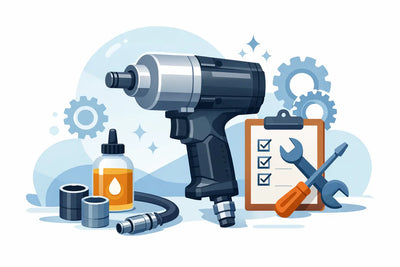
The cordless vs pneumatic debate has intensified as battery technology improves. Modern cordless impact wrenches are impressive — but does that mean air-powered impacts are obsolete? Not even close. Each type has clear advantages depending on your application, budget, and usage pattern. This guide compares them objectively on the metrics that actually matter: torque output, sustained power, weight, cost of ownership, and reliability.
Written by Charles Rosenstein, Le Lematec / Factory Direct — over 15 years in pneumatic tool design and manufacturing.
Pneumatic impact wrenches use compressed air to drive a hammer mechanism. They produce torque as long as air flows — no batteries to die, no motors to overheat. The trade-off is you need an air compressor and hose, which limits mobility.
Cordless impact wrenches use rechargeable lithium-ion batteries to power an electric motor. They offer complete portability with no hose. The trade-off is limited runtime, declining performance as the battery drains, and significantly higher upfront cost.
| Factor | Pneumatic | Cordless | Winner |
|---|---|---|---|
| Max Torque (1/2") | 800–1,500+ ft-lbs | 700–1,400 ft-lbs | Pneumatic (by margin) |
| Sustained Torque | Constant — never drops | Declines as battery drains | Pneumatic (clear winner) |
| Weight (tool only) | 3–5 lbs | 5–8 lbs (with battery) | Pneumatic |
| Continuous Runtime | Unlimited (with compressor) | 20–45 min per charge | Pneumatic |
| Portability | Limited by hose | Completely portable | Cordless |
| Upfront Cost | $50–200 (tool only) | $200–600 (with battery) | Pneumatic (2–5x cheaper) |
| Ongoing Cost | Oil + air filter replacements | Battery replacement ($80–150 every 2–3 years) | Pneumatic |
| Noise Level | Louder (exhaust noise) | Quieter | Cordless |
| Cold Weather | Works fine (oil before use) | Battery capacity drops 20–40% | Pneumatic |
| Maintenance | Simple — oil and filter | Battery management, motor brushes | Pneumatic |
| Spark Risk | None (no electrical components) | Low but possible | Pneumatic |
Let's compare 5-year cost of ownership:
If you already own an air compressor, a pneumatic impact wrench is the obvious financial choice. If you don't own a compressor and only need occasional impact wrench use, cordless makes sense — but know that you're paying a premium for convenience.
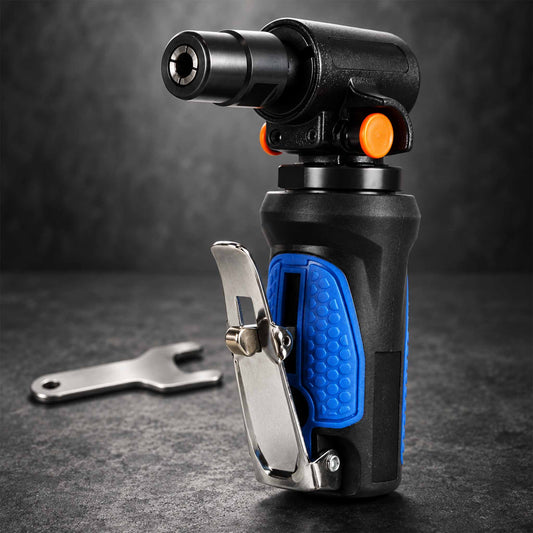
For lighter-duty fastening, our LE-ID413 Air Impact Driver (40 ft-lbs, 13,000 RPM) handles screws and small bolts with precision that heavy impact wrenches can't match. It's the complementary tool for trim work, dashboard panels, and electronic assemblies.
A 1/2" pneumatic impact wrench needs 5–8 CFM at 90 PSI. A 20-gallon compressor with 5+ CFM output handles intermittent use; 30+ gallon with 7+ CFM is better for sustained work. See our CFM & PSI Chart for detailed compressor sizing.
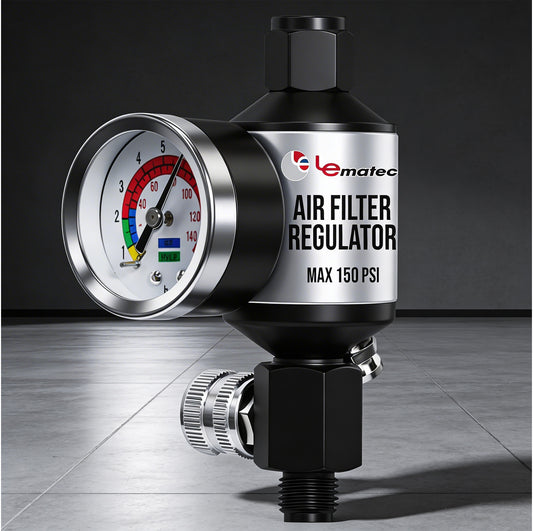
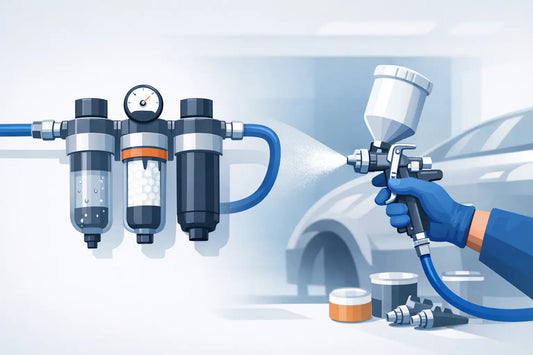
Don't forget air preparation: an air filter/regulator protects your impact wrench from moisture damage, and proper oiling before each use extends tool life dramatically. See our Pneumatic Tool Maintenance Guide for the full care routine.
Pneumatic impact wrenches remain the performance king for shops with compressed air. They deliver more torque, sustain it longer, weigh less, cost less, and outlast cordless alternatives by years. Cordless wins on portability and convenience. The ideal professional setup? A pneumatic wrench for the shop and a cordless for the field. But if you're choosing one — and you have a compressor — pneumatic delivers more power for your money, period.
Factory direct from Le Lematec — professional quality, competitive prices.


 AIR REGULATORS

 ACCESSORIES